The Superseding Trump Indictment Is about Obstruction as Much as Immunity

In this Xitter thread, I went through everything that had been added or removed from the superseding indictment against Trump, based on this redline. The changes include the following:

  1. Removal of everything having to do with Jeffrey Clark
  2. Removal of everything describing government officials telling Trump he was nuts (such as Bill Barr explaining that he had lost Michigan in Kent County, not Wayne, where he was complaining)
  3. Removal of things (including Tweets and Trump’s failure to do anything as the Capitol was attacked) that took place in the Oval Office
  4. Addition of language clarifying that all the remaining co-conspirators (Rudy Giuliani, John Eastman, Sidney Powell, Kenneth Chesebro, and — probably — Boris Epshteyn) were private lawyers, not government lawyers
  5. Tweaked descriptions of Trump and Mike Pence to emphasize they were candidates who happened to be the incumbent
  6. New language about the treatment of the electoral certificates

Altogether, the changes incorporate not just SCOTUS’ immunity decision, but also the DC Circuit’s Blassingame decision deeming actions taken as a candidate for office are private acts, and SCOTUS’ Fischer decision limiting the use of 18 USC 1512(c)(2) to evidentiary issues.

The logic of Blassingame is why Jack Smith included these paragraphs describing that Trump and Pence were acting as candidates.

1. The Defendant, DONALD J. TRUMP, was a candidate for President of the United States in 2020. He lost the 2020 presidential election.

[snip]

5. In furtherance of these conspiracies, the Defendant tried–but failed–to enlist the Vice President, who was also the Defendant’s running mate and, by virtue of the Constitution, the President of the Senate, who plays a ceremonial role in the January 6 certification proceeding.

As I’ve said repeatedly, it’s not clear that adopting the Blassingame rubric will work for SCOTUS, even though they did nothing to contest this rubric.

That’s because Chief Justice Roberts used Pence’s role as President of the Senate to deem his role in certification an official responsibility, thereby deeming Trump’s pressure of Pence an official act. Smith will need to rebut the presumption of immunity but also argue that using these conversations between Trump and Pence will not chill the President’s authority.

Whenever the President and Vice President discuss their official responsibilities, they engage in official conduct. Presiding over the January 6 certification proceeding at which Members of Congress count the electoral votes is a constitutional and statutory duty of the Vice President. Art. II, §1, cl. 3; Amdt. 12; 3 U. S. C. §15. The indictment’s allegations that Trump attempted to pressure the Vice President to take particular acts in connection with his role at the certification proceeding thus involve official conduct, and Trump is at least presumptively immune from prosecution for such conduct.

The question then becomes whether that presumption of immunity is rebutted under the circumstances. When the Vice President presides over the January 6 certification proceeding, he does so in his capacity as President of the Senate. Ibid. Despite the Vice President’s expansive role of advising and assisting the President within the Executive Branch, the Vice President’s Article I responsibility of “presiding over the Senate” is “not an ‘executive branch’ function.” Memorandum from L. Silberman, Deputy Atty. Gen., to R. Burress, Office of the President, Re: Conflict ofInterest Problems Arising Out of the President’s Nomination of Nelson A. Rockefeller To Be Vice President Under the Twenty-Fifth Amendment to the Constitution 2 (Aug. 28, 1974). With respect to the certification proceeding in particular, Congress has legislated extensively to define the Vice President’s role in the counting of the electoral votes, see, e.g., 3 U. S. C. §15, and the President plays no direct constitutional or statutory role in that process. So the Government may argue that consideration of the President’s communications with the Vice President concerning the certification proceeding does not pose “dangers of intrusion on the authority and functions of the Executive Branch.” Fitzgerald, 457 U. S., at 754; see supra, at 14.

At the same time, however, the President may frequently rely on the Vice President in his capacity as President of the Senate to advance the President’s agenda in Congress. When the Senate is closely divided, for instance, the Vice President’s tiebreaking vote may be crucial for confirming the President’s nominees and passing laws that align with the President’s policies. Applying a criminal prohibition to the President’s conversations discussing such matters with the Vice President—even though they concern his role as President of the Senate—may well hinder the President’s ability to perform his constitutional functions.

It is ultimately the Government’s burden to rebut the presumption of immunity. We therefore remand to the District Court to assess in the first instance, with appropriate input from the parties, whether a prosecution involving Trump’s alleged attempts to influence the Vice President’s oversight of the certification proceeding in his capacity as President of the Senate would pose any dangers of intrusion on the authority and functions of the Executive Branch.

This is the most important advantage of superseding the indictment. When someone boasted to Bloomberg that Jack Smith’s purported decision not to have a mini-trial on these issues was a “win” for Trump, they envisioned that this meant there would be no media friendly election-season developments, providing a way to get through (a successful or stolen) election so future President Trump could throw the case out.

Such a hearing would have been the best chance for voters to review evidence about Trump’s efforts to overturn the 2020 election result as he campaigns to regain the White House.

The decision is a win for Trump and his lawyers, who have fought efforts to reveal the substance of allegations against the former president.

The decision to supersede this indictment may have turned what could have been an immediate dispute about the viability of the indictment at all into an evidentiary dispute to be managed later. We’ll find out more on Tuesday.

At the very least, Jack Smith suggests he has something viable on which to arraign Trump (and Trump’s Xitter wails treating this as a real indictment suggest he may believe that).

Smith will still need to overcome the presumption created out of thin air by John Roberts on all of this. But he may do so from a posture where the utter absurdity of Roberts’ ruling are made obvious.

That’s one reason it’s important that Smith has included the tweet via which Trump almost got Mike Pence assassinated.

Smith rationalized doing so by emphasizing that Trump wrote it neither in the Oval Office nor with anyone’s assistance.

92. Beginning around 1:30 p.m., the Defendant, who had returned to the White
House after concluding his remarks, settled in the dining room off of the Oval Office. He spent much of the afternoon reviewing Twitter on his phone, while the television in the dining room showed live events at Capitol.

[snip]

94. At 2:24 p.m., the Defendant personally, without assistance, issued a Tweet intended to further delay and obstruct the certification: “Mike Pence didn’t have the courage to do what should have been done to protect our Country and our Constitution, giving States a chance to certify a corrected set of facts, not the fraudulent or inaccurate ones which they were asked to previously certify. USA demands the truth!” [my emphasis]

This situates this Tweet, which almost got Mike Pence killed, a private act for which Trump has no immunity. It may not work. But that’s the logic.

But the other changes in this passage are all about Fischer, about showing how Trump deliberately sicced a mob on the Capitol with the goal of making it impossible to count the certifications.

After adding language from Trump’s speech (included based on the justification that the rally was paid for by private funds) in which he emphasized the certification process, Smith added other language describing how Trump’s mob disrupted the vote certification over which Pence was presiding.

Everything italicized below is new.

86d. The Defendant specifically referenced the process by which electoral votes are counted during the proceeding, including by stating, “We have come to demand that Congress do the right thing and only count the electors who have been lawfully slated, lawfully slated.”

[snip]

90. On the floor of the House of Representatives, the Vice President, in his role as President of the Senate, began the certification proceeding. At approximately 1:11 p.m., the Vice President opened the certificates of vote and certificates of ascertainment that the legitimate electors for the state of Arizona had mailed to Washington, consistent with the ECA. After a Congressman and Senator lodged an objection to Arizona’s certificates, the House and Senate retired to their separate chambers to debate the objection.

91. A mass of people-including individuals who had traveled to Washington and to
the Capitol at the Defendant’s direction-broke through barriers cordoning off the Capitol grounds and advanced on the building, including by violently attacking law enforcement officers trying to secure it.

92. Beginning around 1:30 p.m., the Defendant, who had returned to the White
House after concluding his remarks, settled in the dining room off of the Oval Office. He spent much of the afternoon reviewing Twitter on his phone, while the television in the dining room showed live events at Capitol.

93. At 2:13 p.m., after more than an hour of steady, violent advancement, the
crowd at the Capitol broke into the building, and forced the Senate to recess. At approximately 2:20 p.m., the official proceeding having been interrupted, staffers evacuating from the Senate carried with them the legitimate electors’ certificates of vote and their governors’ certificates of ascertainment. The House also was forced to recess.

94. At 2:24 p.m., the Defendant personally, without assistance, issued a Tweet intended to further delay and obstruct the certification: “Mike Pence didn’t have the courage to do what should have been done to protect our Country and our Constitution, giving States a chance to certify a corrected set of facts, not the fraudulent or inaccurate ones which they were asked to previously certify. USA demands the truth!”

95. One minute later, at 2:25 p.m., the United States Secret Service was forced to evacuate the Vice President to a secure location.

96. At the Capitol, throughout the afternoon, members of the crowd chanted, “Hang Mike Pence!”; “Where is Pence? Bring him out!”; and “Traitor Pence!”

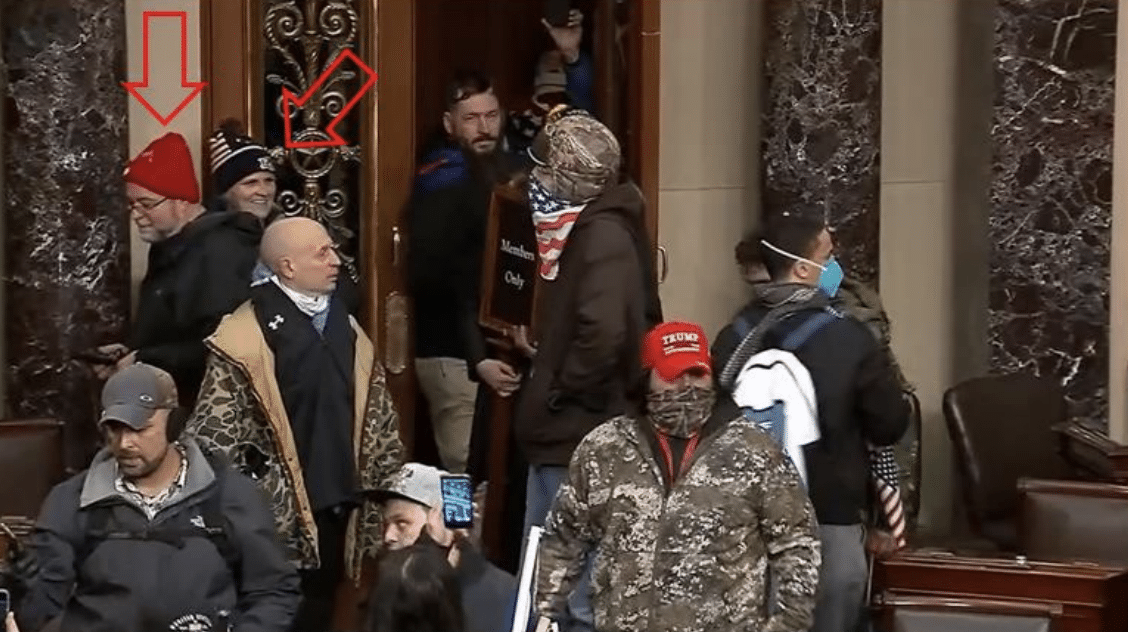
This narrative ties the mob, particularly the storming of the Senate chamber, directly to Trump’s goal of interrupting the counting of the electoral certificates. This instrumentality was always a part of the indictment — has been part of this investigation since no later than January 5, 2022. But Roberts’ dual interventions in the January 6 prosecutions forced Smith and crime scene prosecutors working under US Attorney Matthew Graves to make it far more explicit.

A significant number of mobsters either knew the import of the certificates ahead of time, and/or heard Trump describe the goal at the Ellipse, and when they stormed the Capitol, assaulted cops, and occupied the space that the Vice President had only just evacuated, they had the goal of preventing the authentic certificates from being counted.

And Jack Smith is making this argument before Judge Chutkan even as other prosecutors are making a parallel argument before other judges.

As DOJ laid out in their filing describing how they plan to retry Matt Loganbill (who joined Alex Jones as he opened a second, eastern front on the attack on the Capitol) under the new Fischer standard, Loganbill had the goal of getting Pence to shred the envelopes as early as December 20, 2020, and after he stormed the Capitol, he headed towards the Senate where he believed they were counting the vote.

  • On December 20, 2020, the defendant wrote to Facebook, “This would take place Jan 6 Witnesses should be 60 feet away while Pence counts the Electoral College votes . . . Pence should open all the envelopes and then stack all the EC ballots in a pile, he should then shred all the envelopes and burn the shreds.” Gov. Ex. 302.47.
  • On December 30, 2020, the defendant wrote to Facebook, “CALL SENATOR JOSH HAWLEY’S OFFICE T O D A Y AND LET HIM KNOW YOU SUPPORT HIS INTENT TO BE THE FIRST REPUBLICAN SENATOR TO CHALLENGE THE ELECTORAL VOTE ON JANUARY 6.” Gov. Ex. 302.49.
  • On January 6, 2021, at 1:20 p.m., the defendant sent a text message, “Are you watching what’s going on in the house/ elector certification.” Gov. Ex. 303.
  • On January 7, 2021, the defendant replies to a comment by another person on Facebook saying, “Why do you think we were trying every means possible to stop these idiots from stealing the presidency and destroying this nation.” Gov. Ex. 302.65

Evidence at trial showed Loganbill entered the Capitol, the location where the Electoral College ballots were located and where Congress and the Vice President were conducting the official proceeding.6 Gov Exs 101.1 and 701. Once inside, the defendant proceeded towards the Senate, where Congress would be handing objections to the Electoral College vote – attempting to obstruct Congress’ certification of the Electoral College ballots. The defendant knew where he was going. The government admitted a Facebook post by the defendant on January 7 and 8, 2021, he wrote, “They didn’t [let us in] at the chamber, we could have over run them, after 10-15 minutes of back and forth, we walked out” and “The only place [the police officers] wouldn’t give was the hallway towards the Rep. chamber.” Gov Exs 302.66 and 302.82, respectively. The “chamber” and “Rep. chamber” were where the Vice President and members of Congress would have been counting and certifying the Electoral College ballots. Gov Ex 701

[snip]

From this evidence, including the defendant’s express statement related to the destruction of the electoral ballots, the Court would be able to find, beyond a reasonable doubt, that the defendant acted to obstruct the certification of the electoral vote, and specifically, that he intended to, and attempted to, impair the integrity or availability of the votes (which are documents, records, or other things within the meaning of Fischer) under consideration by the Joint Session of Congress on January 6, 2021.

Of course, with any retrial, both parties would be permitted to introduce new evidence, or start the record over anew. Indeed, the government would likely introduce additional evidence related to the ballots and staffers attempts to remove the ballots from the chambers when the riot started.

6 According to the testimony of Captain Jessica Baboulis’ testimony, “[t]he official proceeding had suspended due to the presence of rioters on Capitol Grounds and inside the Capitol. ECF No. 31 at 23. As the Court said in its verdict, “It doesn’t matter to this count if he entered the building after the official proceeding had been suspended and Pence had been evacuated.” ECF No. 40 at 5. Loganbill attempted to and did obstruct the Electoral College vote, including the counting of ballots, the presence of members of Congress, and the presence of the Vice President.

Here’s how DOJ plans to prove that the Chilcoats, Shawndale and Donald, planned to prevent the votes from being counted by occupying the Senate.

[A]t approximately 2:46 p.m., the defendants watched rioters attempt to break open windows, then entered the Capitol building itself through a broken-open door on the building’s northwest side. A cell phone video shows that, after they learned of the breach, Donald Chilcoat cautioned Shawndale Chilcoat that they should let other rioters enter first. That way, if the police deployed pepper spray, those other rioters, and not the Chilcoats, would bear the brunt of it. In other words, the defendants knew they were not welcome, and they knew their entry might be met with force. After the defendants entered the building, they traveled to the Senate Chamber – the very place where the proceeding was taking place – and joined other rioters in occupying it. There, they took photographs and remained in the chamber while other rioters searched desks belonging to the former Vice President and to Senators.

Through their conduct, the defendants demonstrated an intent to invade and occupy the Capitol building and to stop the certification of the electoral college vote. And, critically, they were aware that this proceeding involved records, documents, or other things—specifically, the electoral votes that Congress was to consider. On January 4, 2021, via Facebook, a friend of Shawndale Chilcoat told her to “give Rob Portman a call and let him know what you think of him not rejecting the fraudulent votes.” Shawndale Chilcoat affirmed “just did.” Then, late on January 5 or early on January 6, Shawndale Chilcoat posted a message to Facebook saying that “[Vice President] Pence is stating he can not reject the votes.” On January 7, 2021, after the riot, Shawndale Chilcoat admitted “we were just trying to stop them from certifying the votes and didn’t know they were already gone.” On the same day, she also bragged, “[o]k so antifa is being blamed for breaking windows and storming congress. Um no, it was us I was with them and couldn’t be more proud.”

Here’s one of the most interesting things about yesterday’s superseding indictment.

The efforts to address Fischer are intertwined. While DOJ might be able to sustain some obstruction cases against rioters based on their own communications, and while Jack Smith might rescue this indictment with a focus on the effort to create fake elector certificates, Smith can only show that Trump almost got his Vice President assassinated if enough of the crime scene obstruction cases survive DC District review (and jury verdicts) such that Smith can show the mob was his instrument.

Jack Smith did things (describing that Trump was in his private Dining Room, not the Oval Office, noting that he sent the threatening Tweet with no assistance, labeling the rally a privately-funded speech, labeling Trump and Pence as candidates) that increase his chances of overcoming the presumption of immunity that John Roberts invented. But a number of judges (and some juries) are going to have to buy that a handful of members of the mob stormed the Capitol, and especially the Senate, with the intent of making it impossible to count vote for Joe Biden.

Here’s where things get interesting. As far as I’m aware, we have yet to see any of the superseding indictments for crime scene defendants against whom DOJ wants to sustain obstruction charges (we have seen superseding indictments against people against whom DOJ has replaced obstruction with something else, like rioting).

DOJ could have used a combined grand jury to do both, Trump and his mob. They’re each going to focus on the same issues: What staffers did to preserve the certificates as mobster came in, and the intent to prevent their counting.

They appear not to have done so; yesterday’s indictment lacks the date the grand jury was seated, which normal DC District grand juries have.

If that’s right, then Jack Smith (appears to have) seated a grand jury that could spend the next several months examining different charges, perhaps boosted by whatever precedents come out of the proceedings before Judge Chutkan and others, rather than simply sharing a grand jury with prosecutors doing much the same thing, addressing Fischer.

If Jack Smith succeeds in preserving this indictment — and that’s still a big *if* — then he will do so by making the argument that Trump, in his role as candidate, had the intention of using a mob to target the guy who played the ceremonial role of counting the vote. It would result in a collection of judicial holdings that presidential candidate Donald Trump had a mob target his Vice President in an attempt to remain President unlawfully.

Sure, John Roberts and his mob might yet try to overturn that. John Roberts might endorse the idea that presidential candidates, so long as they are the incumbent, can kill members of Congress to stay in power.

But doing so would clarify the absurdity of such a ruling.

Correction: Kyle Cheney reports that this is a grand jury seated last year. It has indicted other Jan6ers and so could do any 1512 indictments that require superseding.
Share this entry

The Pared Down Superseding Indictment for January 6

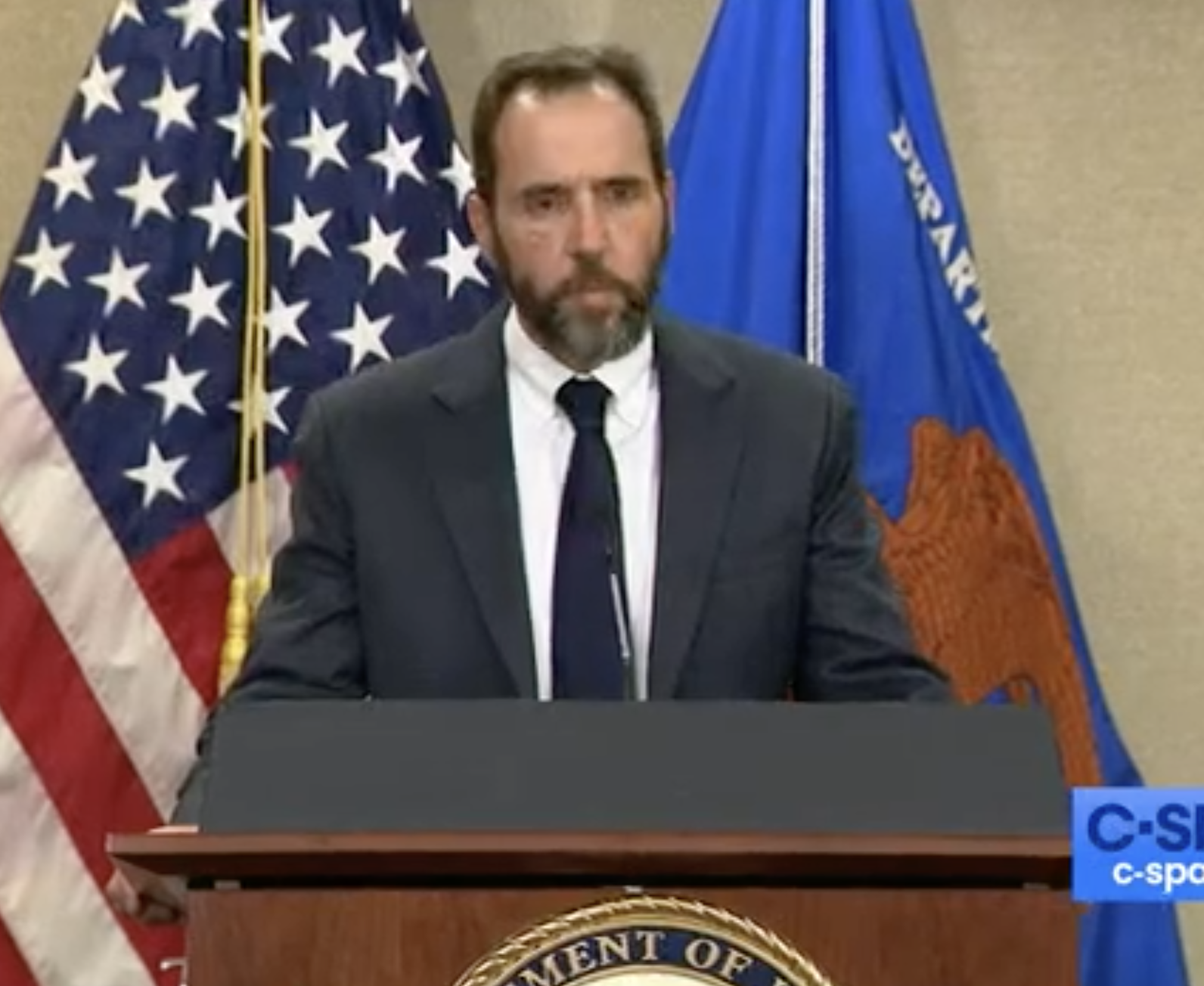
As I predicted in this post, Jack Smith did not wait around for a dispute before Tanya Chutkan to talk about which allegations in the January 6 indictment against Trump are and are not official acts. He superseded the existing indictment.

But Smith took the “pared down” approach NYT’s Alan Feuer imagined: The indictment takes out all reference to Jeffrey Clark. It emphasizes throughout that Trump worked with private individuals to try to steal the election.

That said, it does keep the Mike Pence allegations in the indictment, emphasizing that those actions were exclusively about remaining in power.

Update: In his notice regarding this superseding indictment, Smith emphasized that he used an entirely new grand jury. He would have had to do that anyway — the one he had used previously expired last summer, probably over a year ago.

Today, a federal grand jury in the District of Columbia returned a superseding indictment, ECF No. 226, charging the defendant with the same criminal offenses that were charged in the original indictment. The superseding indictment, which was presented to a new grand jury that had not previously heard evidence in this case, reflects the Government’s efforts to respect and implement the Supreme Court’s holdings and remand instructions in Trump v. United States, 144 S. Ct. 2312 (2024). The Government does not oppose waiver of the defendant’s appearance for arraignment on the superseding indictment. See Fed. R. Crim. P. 10(b). As this Court directed, ECF No. 197, the Government will confer with the defense and make a joint proposal, to the extent possible, regarding pretrial litigation in the status report due Friday.

But the mention of “pretrial litigation” suggests he wants to pick up where he left off.

Update: Here are the parts of my post from Saturday explaining what the logic here would be.

Now, as I suggested, even if you were doing nothing more than removing the Jeffrey Clark references, doing so would be smart in any case. Not only could Smith excise all the Jeffrey Clark materials, thereby giving Trump less surface area to attack the indictment, but he could tweak what is already there to address some of the other concerns raised by SCOTUS, for example, to clarify how candidate Trump’s reliance on fake elector certificates do not threaten Executive authorities. But minor tweaks, even the excision of the Jeffrey Clark stuff, would not require consultation with DOJ, and if Jack Smith were just excising the Jeffrey Clark stuff, he could have done that before DOJ’s election prohibition on indictments kicks in on roughly September 1.

So let’s talk about what would require consultation with DOJ, consultation requiring two full months from the immunity ruling, because it raises ways that Smith might supersede the indictment that would be a lot more interesting than simply excising the Clark stuff:

  • Consultation with the Solicitor General’s office regarding edge cases on official acts
  • Consultation with DC USAO on how to apply obstruction more generally

[snip]

Consultation with the Solicitor General’s office regarding edge cases on official acts: First, and least controversially, DOJ would consult with the Solicitor General’s office regarding any more difficult issues regarding official acts. Perhaps the most obvious of these — and one squarely raised in SCOTUS’ ruling — is the status of Mike Pence in conversations about certifying the electoral certificates. If Pence was acting exclusively in his role as President of the Senate, then Trump’s relationship to him would be as a candidate, and so under Blassingame, an unofficial act. But the Republicans on SCOTUS want to argue that some of these conversations were official acts, making Pence’s testimony inadmissible under their order. If DOJ is superseding an indictment to excise the things that need to be excised, DOJ would want the Solicitor General involved in such decisions not just because they’ll have to defend whatever stance Jack Smith adopts, but also so as to protect the equities of the Executive Branch, which DOJ traditionally guards jealously.

Consultation with DC USAO on how to apply obstruction more generally: More interestingly (and as I focused on here), if Jack Smith were to supersede the indictment against Trump, he would undoubtedly tweak the language on the two obstruction charges to squarely comply with the Fischer decision limiting it to evidentiary issues.

Since Smith got his extension, DOJ has started weighing in on a handful of crime scene cases where (unlike around 60 others) it thinks it can sustain obstruction charges under a theory that the defendant knew the import of the electoral certifications themselves and took steps to obstruct the actual counting of them.

[snip]

DOJ is making the effort of trying to sustain the obstruction charges for defendants who can’t be charged with one of several other felonies (obstructing the cops or rioting), but whose conduct — DOJ believes — should still be a felony. They’re going to have to do this with some members of the two militia conspiracies, the felony convictions on which are often the primary felonies (though DOJ used the obstruction of cops with them too).

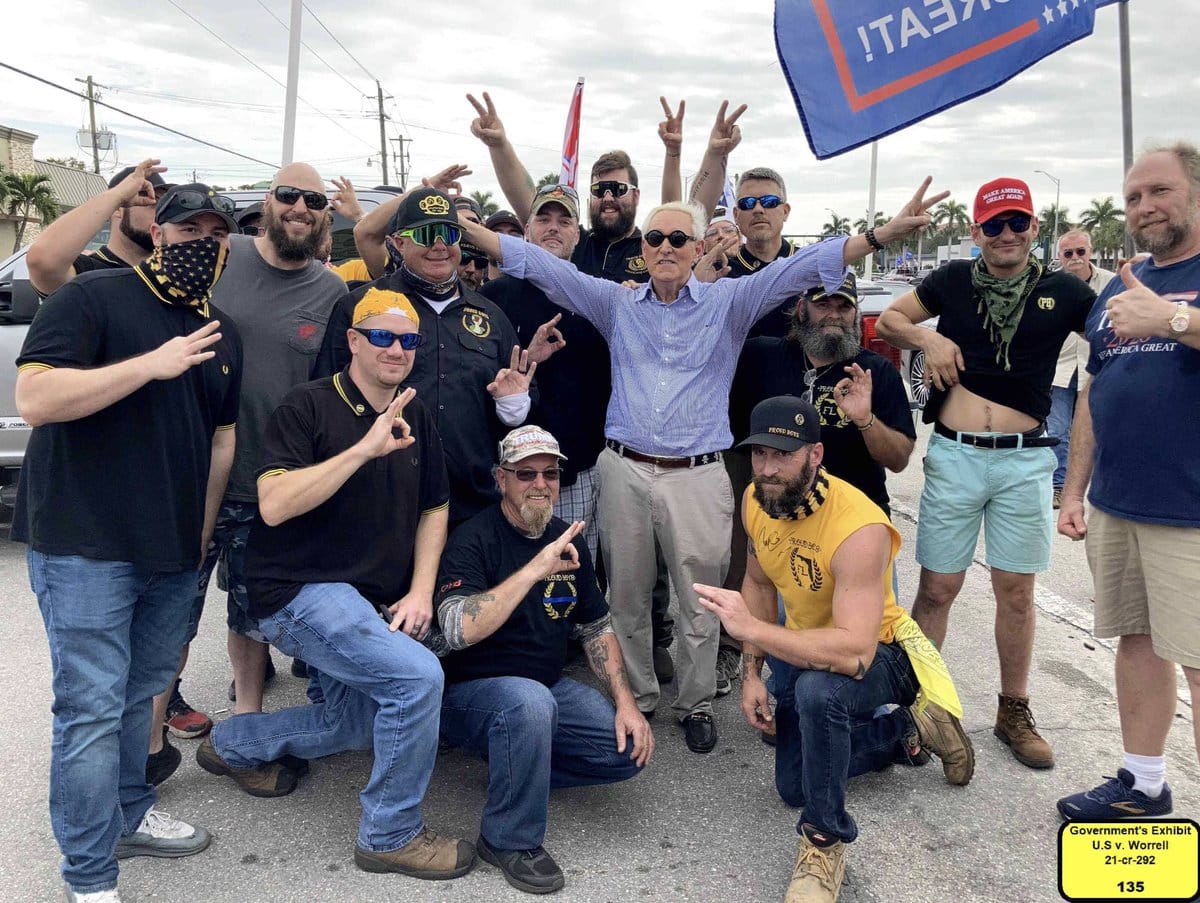
It’s fairly easy to see how this effort has to harmonize with however Smith revamps the obstruction charges against Trump. And given the evidence that Smith was moving to include the Proud Boys in Trump’s case, that harmonization may be key to sustaining obstruction charges against the Proud Boys.

The other parts — on if Smith decided to add new charges — aren’t relevant here.

Share this entry

The Proud Boys’ Reliance on Telegram Didn’t Save Them, But It Thwarted Preventing the Attack

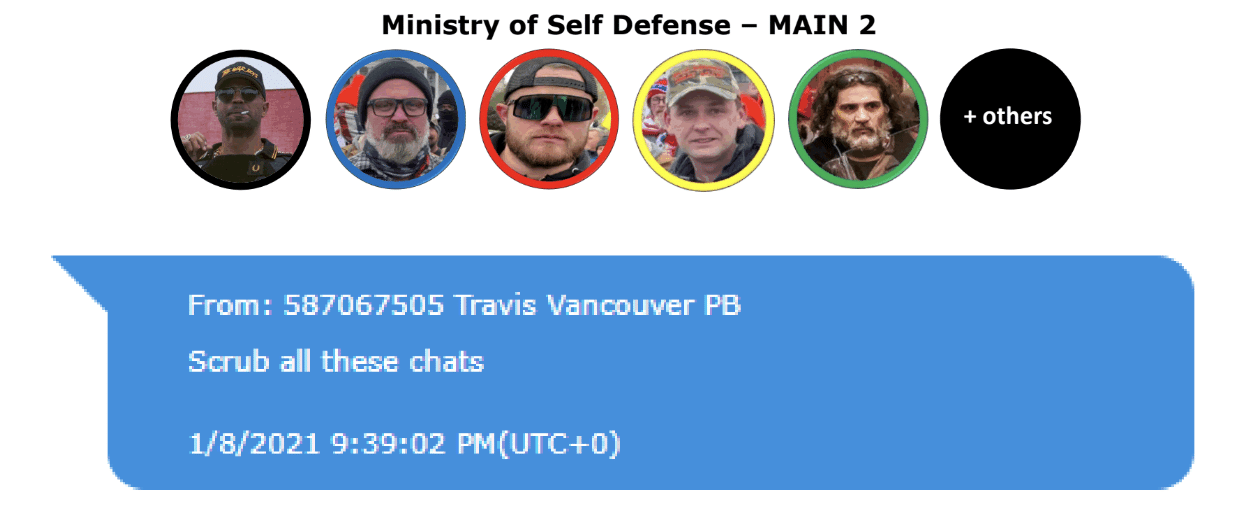
At 8:06PM on January 4, 2021, shortly after the arrest of Enrique Tarrio, a Proud Boy named Travis instructed everyone on the Proud Boys’ Ministry of Self Defense Telegram list to “nuke everything.”

Because of the way Telegram persists on individual phones, it didn’t work. Two years later, that text was introduced as evidence against the Proud Boys to show that already on January 4, they knew they had something to hide.

Four days later, on the Ministry of Self Defense list that had replaced the first one, Aaron of the Bloody East — a senior Proud Boy in Philadelphia — announced the arrest of Proud Boy Nicholas Ochs as he landed in Hawaii (the avatars for the Proud Boys were added for the trial exhibit; only the monikers and user numbers came from Telegram itself). The conversation immediately turned to deleting two channels used to organize the Proud Boys during January 6. But because Jeremy Bertino, who had set up the chat, had already left it, the men once again struggled to cover their tracks.

Organizing on Telegram did not prevent the government from prosecuting the Proud Boys for their roles in January 6. On the contrary, those chats — complete with their boisterous efforts to delete them after every arrest — were a central part of the evidence used to prosecute Enrique Tarrio, Joe Biggs, and Ethan Nordean on sedition charges, with help from Bertino, who had flipped and who continues to cooperate in the investigation.

It started no later than Nordean’s own arrest on February 3, 2021, when Nordean’s spouse provided the FBI with the passcode to his phone, where many of these texts were still available. It continued as the FBI acquired one after another of the Proud Boys’ phones (one of the only known exceptions was Joe Biggs, whose phone the FBI never got).

A letter to Zach Rehl’s attorney from 2022 gives a sense of how the FBI had to exploit as many phones as they could, one after another, because the set of texts still available on any individual’s phone varied. Some people, like Nordean, were successful at deleting their voice notes and other attachments. Others didn’t even try.

Altogether, DOJ relied on at least 11 separate lists, as well as a slew of individual Telegram texts (as well as a number of Parler texts), at trial. In that sense, the investigation of the Proud Boys was little different than that of the Oath Keepers, who used Signal rather than Telegram for that kind of organization.

That’s important background to news of the French arrest of Pavel Durov on charges implicating (at least) child sexual exploitation, terrorism, cybersecurity, fraud, and organized crime. Authorities can still prosecute people who use Telegram to plan and organize their crimes.

But there are impediments. The cops took Tarrio’s phone when they arrested him — with those damning Telegram threads still on it — two days before the Proud Boys would lead a mob that attacked the Capitol. But it took over a year before they cracked the encryption on his phone, exploited it, and did a privilege review. Even after seizing Tarrio’s phone, then, prosecutors couldn’t prevent January 6 having decided that Tarrio posed a risk to the certification of the vote only days before the attack.

It might have been different if the Proud Boys had been considered a terrorist group (which it still is not, in significant part because of an asymmetry in US law regarding domestic and foreign extremist groups). Contrary to what a lot of coverage is reporting, the vast majority of Telegram usage is not encrypted. As far as I’m aware, none of the texts introduced at the Proud Boy trials were protected by Telegram’s hard to use encryption, not even the private texts in which Tarrio told one after another of his girlfriends of his imminent arrest.

But the encryption itself would not have saved him. On December 18, 2020 DC cop Shane Lamond did turn on Telegram’s encryption in texts he was exchanging with Tarrio, warning him about both the investigation into his role in burning a BLM flag (the crime for which Tarrio would be arrested on January 4), as well as observations about public Proud Boys statements in advance of January 6.

To contact Tarrio, the Defendant used a chat on Telegram with the highest level of encryption available. The Defendant then asked Tarrio if he had called in the anonymous tip. Tarrio responded “I did more than that. It’s on my social media.” The Defendant told Tarrio “I’m curious to see what happens too. I will check with our CID [Criminal Investigations Division] people if they have you on video.”

But those were still available on the phones after the fact.

Even after Lamond and Tarrio set Telegram to auto-delete messages, Telegram’s functionality didn’t entirely save them.

On December 22, 2020, approximately two minutes after Tarrio sent the Defendant a screenshot of a message he received from an MPD detective assigned to the BLM Banner Burning Investigation through Telegram, the Defendant changed the settings of his encrypted chat with Tarrio on Telegram so that future messages would delete 5 seconds after the recipient opened them.

Some of their auto-delete texts were reconstructed, especially those sent after Tarrio’s pre-trial release on the DC case.

And after Lamond called Tarrio using Telegram to warn him about the warrant for his arrest, Tarrio went to the Ministry of Self Defense thread — the same one the Proud Boys failed to delete after his arrest — and told them that his contact had just warned him of the arrest. There are texts between Lamond and Tarrio, especially from January 1 and 4, which were lost to law enforcement. But enough of their texts were preserved to substantiate obstruction charges on which Lamond will go to trial in October.

The encryption didn’t save Shane Lamond. It would probably do little for intelligence targets either — in part because the encryption may not be all that great, but also because a determined spook is going to get texts via the phones, just like the FBI did with Lamond. France certainly has the intelligence capabilities to defeat Telegram’s encryption, as does the US, both of which would be happy to share with Ukraine.

Rather, one of France’s reported complaints is that Telegram won’t cooperate with law enforcement requests. Even though all these threads via which the Proud Boys planned January 6 and the texts sent between the allegedly corrupt cop Lamond and Tarrio before December 18 were likely readily available on Telegram’s servers, even if the FBI had asked after Tarrio’s arrest, Telegram wouldn’t have provided them, at least not without a whole bunch of squawking. That also means that Telegram wouldn’t provide a whole bunch of other information that proves useful to solving crimes. In the Proud Boys case, because prosecutors couldn’t get metadata directly from Telegram, it likely required cooperating witnesses like Bertino to attribute the handles used by some of the Proud Boys to specific users (at the time, Signal did not yet have this capability, so investigators could more easily match phone numbers to users).

By comparison, prosecutors could and did serve preservation orders on Google and Facebook, which preserved a lot but by no means all relevant content, even as individual users were trying to cover their tracks just like the Proud Boys were. In response to legal process, those platforms, as well as Twitter and others (but not Signal, which doesn’t keep most of this data), provided user data, address, credit card data, and access times.

But it’s the issue of prevention for which Telegram poses the biggest concern. Telegram is the platform of choice for extremists of all ideologies, both for broadcast messaging and for more discreet threads like the ones the Proud Boys used. And in quick moving situations, like the extremist mobilization in the wake of the Southport stabbing in the UK, Telegram channels can grow to include tens of thousands before they’re even discovered. While Telegram took the rare step, in that case, of shutting down the most violent channels tied to British riots, it left many of them up.

It’s still too early to know the scope of the French investigation, beyond that it implicates both non-cooperation and slow moderation. It’s a complaint both that Telegram won’t provide information to solve crimes already committed and won’t take steps to prevent them from happening.

Two of the most important questions are whether Durov derives a material benefit from letting crime and extremism flourish on Telegram. Another is whether Durov gives the Russian government preferential access to all the channels that are otherwise difficult to access. This post provides a sense of the degree to which Durov’s likely cooperative relationship with Russia conflicts with his public claims of animosity.

There are a lot of people claiming that France is targeting Durov because Telegram is an encrypted messaging platform. While that may be a factor, the far more important one is that Telegram allows crime to flourish on its platform, and until he arrived in France, where his French citizenship will actually help France thwart any Russian attempts to help him, he was protected by regimes that similarly preferred to let certain kinds of noxious content to thrive.

Update: The French have released the possible charges. There is one charge of refusing to cooperation in criminal investigations.

They include six charges of “complicité,” what I guess is the US equivalent to aid and abetting:

  • Illegal transactions for organized crime
  • Child sexual abuse material
  • Organized dissemination of CSAM
  • Narcotics sales
  • Hacking tools
  • Organized fraud

Then there are three crimes pertaining to the provision of encryption and importation of encryption without declaration.

The most interesting — and the ones that might make this prosecution akin to those of people like Ross Ulbricht — are:

  • Association with criminals with the intent to commit crimes punishable by 5 years
  • Money laundering

I noted above that one of the big questions is whether Durov derives a material benefit from letting crime flourish on Telegram. If he’s personally involved in money laundering, he may.

Note, none of the crimes suggest an unlawful relationship with Russia (though some of those encryption crimes may originally have been targeted towards spooks).

Share this entry

Be Careful What Trump’s Lawyers Wish For, Superseding Indictment Edition

On Friday, first Bloomberg (Yahoo version), then NYT reported that Jack Smith “has decided against seeking a major hearing” to address which of the allegations charged against Donald Trump were official versus unofficial acts. Here’s Bloomberg:

Special Counsel Jack Smith has decided against seeking a major hearing to present evidence in the election-interference case against Donald Trump before voters go to the polls Nov. 5, according to people familiar with the matter.

The move means that it’s unlikely a so-called mini-trial, which would include evidence and testimony from possible blockbuster witnesses like former Vice President Mike Pence, would take place before the presidential election.

Such a hearing would have been the best chance for voters to review evidence about Trump’s efforts to overturn the 2020 election result as he campaigns to regain the White House.

The decision is a win for Trump and his lawyers, who have fought efforts to reveal the substance of allegations against the former president. If Trump wins the election, the case would collapse as the Justice Department has a policy against prosecuting sitting presidents. Trump could also order the department to throw it out.

Instead, Smith and his team are carefully revising the case against Trump, according to the people familiar, who asked not to be named discussing a confidential matter. [my emphasis]

The emphasis here was on a supposed “win” for Trump’s lawyers, though they haven’t actually done anything to get that win. They haven’t filed a brief, they haven’t made any formal requests. This is a “win” that they did nothing — at least, nothing since SCOTUS rewrote the Constitution for Trump — to earn. Though the piece is right: If Trump wins the election, it seems impossible that this prosecution will lead anywhere, and Smith’s reported decision not to ask to explain the charges in more detail makes it less likely that such a mini-trial could have a bearing on whether Trump does win or not. (While Bloomberg states that “Trump’s lawyers didn’t immediately respond to a request for comment,” that description doesn’t rule out that this story was sourced to someone close to Trump, and the story does cite Trump’s spox, who seems to have just ranted about witch hunts.)

The NYT provides a better sense of whence the hopes for a mini-trial before the election came — from outside commentators (probably including me), not from anything Smith had officially said — which is important to making sense of this development.

Still, the ruling left open the possibility that Mr. Smith’s prosecutors could use a public hearing to air some of the evidence they had collected against the former president before Election Day. Several legal experts and commentators seized on the idea, saying that a hearing like that would almost resemble the trial itself — albeit without the finality of a jury verdict.

And yet such a proceeding was always going to be fraught with complications — not least if it ended up being held in the homestretch of an election in which Mr. Trump is seeking to return to the White House.

Neither of these stories mentions the last official thing we did hear from Jack Smith: that his team needed an extra three weeks, from August 9 to August 30, to consult with other DOJ components, as required by Special Counsel regulations.

The Government continues to assess the new precedent set forth last month in the Supreme Court’s decision in Trump v. United States, 144 S. Ct. 2312 (2024), including through consultation with other Department of Justice components. . See 28 C.F.R. § 600.7(a) (“A Special Counsel shall comply with the rules, regulations, procedures, practices and policies of the Department of Justice,” including “consult[ing] with appropriate offices within the Department for guidance with respect to established practices, policies and procedures of the Department . . . .”). Although those consultations are well underway, the Government has not finalized its position on the most appropriate schedule for the parties to brief issues related to the decision.

So two weeks before these stories, Jack Smith said, we need more time to talk to other people at DOJ to decide our “position on the most appropriate schedule … to brief issues,” though, as I noted here, Special Counsel regulations would not technically require consultation about the timing of hearings or briefs regarding the case in its current posture, especially given Jack Smith’s past representations that DOJ guidelines on elections would not have prohibited holding an actual trial in the pre-election period. And then, in the two weeks since, “people familiar with the matter” have decided, heard, or learned that the most appropriate schedule does not include a mini-trial, which is not something that Smith had ever publicly considered in the first place.

And neither of these stories fully address that, in most circumstances, this would not be Smith’s decision to make. Bloomberg says, “Chutkan could overrule Smith and order a major hearing prior to the election.” NYT describes that, “Judge Chutkan could in theory still order such a hearing to be held.” NYT does walk through the range of alternatives to do what SCOTUS ordered, that is, to sort through which parts of the indictment are official acts and which are not. But, in most circumstances, it was never Smith’s position to demand a public hearing, and nothing he ever said indicated he intended to do so. The goal of a mini-trial, as NYT reported, came from outside commentators.

There is one circumstance, however, where Judge Tanya Chutkan would not have a chance to weigh in. And it is one circumstance that is alluded to by both of these pieces, without addressing its potential implications. NYT states that prosecutors might seek what it assumes would be a pared-down indictment.

The prosecutors could also seek to bring a new, pared-down indictment against Mr. Trump focusing on charges they believed arose from acts undertaken in his private role as a candidate for office, not in his official role as president.

Bloomberg cites (and includes in its subhead) that prosecutors “are carefully revising the case.”

You can’t change a word in that indictment — you can’t take out all references to Jeffrey Clark’s role in subverting the election, the one thing SCOTUS said has to happen — without going back to a grand jury and superseding the original indictment. But even just doing that would put Jack Smith in the driver’s seat, effectively giving him the first shot at drafting what should and shouldn’t be included among unofficial acts that constitute crimes.

If Jack Smith is really doing what Bloomberg says — revising the case — then they have decided that they will supersede the indictment.

Now, as I suggested, even if you were doing nothing more than removing the Jeffrey Clark references, doing so would be smart in any case. Not only could Smith excise all the Jeffrey Clark materials, thereby giving Trump less surface area to attack the indictment, but he could tweak what is already there to address some of the other concerns raised by SCOTUS, for example, to clarify how candidate Trump’s reliance on fake elector certificates do not threaten Executive authorities. But minor tweaks, even the excision of the Jeffrey Clark stuff, would not require consultation with DOJ, and if Jack Smith were just excising the Jeffrey Clark stuff, he could have done that before DOJ’s election prohibition on indictments kicks in on roughly September 1.

So let’s talk about what would require consultation with DOJ, consultation requiring two full months from the immunity ruling, because it raises ways that Smith might supersede the indictment that would be a lot more interesting than simply excising the Clark stuff:

  • Consultation with the Solicitor General’s office regarding edge cases on official acts
  • Consultation with DC USAO on how to apply obstruction more generally
  • Approval from Merrick Garland for new types of charges against Trump on January 6 actions
  • Approval from Merrick Garland for charges pertaining to January 6 aftermath

Consultation with the Solicitor General’s office regarding edge cases on official acts: First, and least controversially, DOJ would consult with the Solicitor General’s office regarding any more difficult issues regarding official acts. Perhaps the most obvious of these — and one squarely raised in SCOTUS’ ruling — is the status of Mike Pence in conversations about certifying the electoral certificates. If Pence was acting exclusively in his role as President of the Senate, then Trump’s relationship to him would be as a candidate, and so under Blassingame, an unofficial act. But the Republicans on SCOTUS want to argue that some of these conversations were official acts, making Pence’s testimony inadmissible under their order. If DOJ is superseding an indictment to excise the things that need to be excised, DOJ would want the Solicitor General involved in such decisions not just because they’ll have to defend whatever stance Jack Smith adopts, but also so as to protect the equities of the Executive Branch, which DOJ traditionally guards jealously.

Consultation with DC USAO on how to apply obstruction more generally: More interestingly (and as I focused on here), if Jack Smith were to supersede the indictment against Trump, he would undoubtedly tweak the language on the two obstruction charges to squarely comply with the Fischer decision limiting it to evidentiary issues.

Since Smith got his extension, DOJ has started weighing in on a handful of crime scene cases where (unlike around 60 others) it thinks it can sustain obstruction charges under a theory that the defendant knew the import of the electoral certifications themselves and took steps to obstruct the actual counting of them.

Here’s what such an argument looks like in the case of Matt Loganbill:

At the time Fischer was decided, approximately 259 cases of the over 1,400 cases charged in the January 6 prosecution involved the application of §1512(c)(2). Some of the 259 cases were convictions at trial, while others were convictions through pleas. Some of those are currently pending trial, whereas other defendants have served their sentences of incarceration fully. As a result of Fischer, the government has endeavored to review cases – particularly those cases pending appeal, pending trial, or actively serving a sentence – in a timely and responsive fashion. Of those original 259 cases, the government has, as of the date of this filing, sought to forgo application of §1512(c)(2) – either post-conviction, pending appeal, or pending trial, in over 60 cases.5 The government continues to evaluate and/or litigate §1512(c)(2) in a variety of contexts. In this case, after a careful analysis of the Fischer opinion, the government contends that the defendant violated the statute and intends to proceed with the charge.

[snip]

  • On December 20, 2020, the defendant wrote to Facebook, “This would take place Jan 6 Witnesses should be 60 feet away while Pence counts the Electoral College votes . . . Pence should open all the envelopes and then stack all the EC ballots in a pile, he should then shred all the envelopes and burn the shreds.” Gov. Ex. 302.47.
  • On December 30, 2020, the defendant wrote to Facebook, “CALL SENATOR JOSH HAWLEY’S OFFICE T O D A Y AND LET HIM KNOW YOU SUPPORT HIS INTENT TO BE THE FIRST REPUBLICAN SENATOR TO CHALLENGE THE ELECTORAL VOTE ON JANUARY 6.” Gov. Ex. 302.49.
  • On January 6, 2021, at 1:20 p.m., the defendant sent a text message, “Are you watching what’s going on in the house/ elector certification.” Gov. Ex. 303.
  • On January 7, 2021, the defendant replies to a comment by another person on Facebook saying, “Why do you think we were trying every means possible to stop these idiots from stealing the presidency and destroying this nation.” Gov. Ex. 302.65

Evidence at trial showed Loganbill entered the Capitol, the location where the Electoral College ballots were located and where Congress and the Vice President were conducting the official proceeding.6 Gov Exs 101.1 and 701. Once inside, the defendant proceeded towards the Senate, where Congress would be handing objections to the Electoral College vote – attempting to obstruct Congress’ certification of the Electoral College ballots. The defendant knew where he was going. The government admitted a Facebook post by the defendant on January 7 and 8, 2021, he wrote, “They didn’t [let us in] at the chamber, we could have over run them, after 10-15 minutes of back and forth, we walked out” and “The only place [the police officers] wouldn’t give was the hallway towards the Rep. chamber.” Gov Exs 302.66 and 302.82, respectively. The “chamber” and “Rep. chamber” were where the Vice President and members of Congress would have been counting and certifying the Electoral College ballots. Gov Ex 701

[snip]

From this evidence, including the defendant’s express statement related to the destruction of the electoral ballots, the Court would be able to find, beyond a reasonable doubt, that the defendant acted to obstruct the certification of the electoral vote, and specifically, that he intended to, and attempted to, impair the integrity or availability of the votes (which are documents, records, or other things within the meaning of Fischer) under consideration by the Joint Session of Congress on January 6, 2021.

Of course, with any retrial, both parties would be permitted to introduce new evidence, or start the record over anew. Indeed, the government would likely introduce additional evidence related to the ballots and staffers attempts to remove the ballots from the chambers when the riot started

5 The government’s decision to forgo charges should not be read as a concession that the defendant’s conduct does not meet the test as articulated by Fischer. Rather, we are evaluating the facts on a case-by-case basis, including whether the defendant committed other felonies, whether the criminal penalties of other applicable crimes sufficiently serves the goals of 18 U.S.C. § 3553(a), and whether additional litigation is warranted. This process is appropriately time-consuming.

6 According to the testimony of Captain Jessica Baboulis’ testimony, “[t]he official proceeding had suspended due to the presence of rioters on Capitol Grounds and inside the Capitol. ECF No. 31 at 23. As the Court said in its verdict, “It doesn’t matter to this count if he entered the building after the official proceeding had been suspended and Pence had been evacuated.” ECF No. 40 at 5. Loganbill attempted to and did obstruct the Electoral College vote, including the counting of ballots, the presence of members of Congress, and the presence of the Vice President.

DOJ is making the effort of trying to sustain the obstruction charges for defendants who can’t be charged with one of several other felonies (obstructing the cops or rioting), but whose conduct — DOJ believes — should still be a felony. They’re going to have to do this with some members of the two militia conspiracies, the felony convictions on which are often the primary felonies (though DOJ used the obstruction of cops with them too).

It’s fairly easy to see how this effort has to harmonize with however Smith revamps the obstruction charges against Trump. And given the evidence that Smith was moving to include the Proud Boys in Trump’s case, that harmonization may be key to sustaining obstruction charges against the Proud Boys.

Approval from Merrick Garland for new types of charges against Trump on January 6 actions: In my last post, I also suggested that Jack Smith could be considering adding insurrection charges against Trump. I argued that the three opinions protecting Trump — Immunity, Fischer, and Colorado — squarely permit such a charge. Notably, the immunity ruling said that acquittal on a charge, like the insurrection charge on which Trump was impeached, does not prohibit criminal charges for the same crime. And the Colorado decision noted that insurrection remains good law. If Smith decided he wanted to do this, it would require approval from Garland. I consider it an unlikely move (not least because some of the evidence to prove it would still be inadmissible under the immunity decision). So go read my earlier post for more on this.

Approval from Merrick Garland for charges pertaining to January 6 aftermath: By design, SCOTUS has made it really hard to prove the case against Trump, because it requires Jack Smith to successfully argue that Trump’s own speech — even his Tweets!! — are unofficial acts, when SCOTUS has made them presumptively official. Smith would not face the same difficulty for his speech as a private citizen. And a significant swath of the known investigation actually pertained to things Trump did after he left office: That investigating how he used donations made in the name of election integrity to do things entirely unrelated. It’s unclear why Smith dropped that side of his investigation, but it’s something that would face fewer of the challenges created by the immunity ruling.

Similarly, Smith had already asked to use statements Trump made after the period of the charged conspiracies (which go through January 7 or January 20) to threaten those who debunked his voter fraud claims.

In apparent response [to January 6 Committee testimony], the defendant then doubled down and recommenced his attacks on the election workers in posts on Truth Social. He even zeroed in on one of the election workers, falsely writing that she was an election fraudster, a liar, and one of the “treacher[ous] . . . monsters” who stole the country, and that she would be in legal trouble.

The Government will introduce such evidence to further establish the defendant and his co-conspirators’ plan of silencing, and intent to silence, those who spoke out against the defendant’s false election fraud claims; the defendant’s knowledge that his public attacks on officials—like those on his Vice President as described in the indictment—could foreseeably lead to threats, harassment, and violence; and the defendant’s repeated choice to attack individuals with full knowledge of this effect. It also constitutes after-the-fact corroboration of the defendant’s intent, because even after it was incontrovertibly clear that the defendant’s public false claims targeting individuals caused them harassment and threats, the defendant persisted—meaning that the jury may properly infer that he intended that result. Finally, evidence of the defendant’s encouragement of violence and the consequences of his public attacks is admissible to allow the jury to consider the credibility and motives of witnesses who may be the continuing victims of the defendant’s attacks.

Smith also asked to introduce evidence of Trump ratifying the violence of and promising to pardon those who engaged in it, other statements after he left office that would not be entitled to any immunity.

Of particular note are the specific January 6 offenders whom the defendant has supported— namely, individuals convicted of some of the most serious crimes charged in relation to January 6, such as seditious conspiracy and violent assaults on police officers. During a September 17, 2023, appearance on Meet the Press, for instance, the defendant said regarding Proud Boys leader Enrique Tarrio—who was convicted of seditious conspiracy—“I want to tell you, he and other people have been treated horribly.” The defendant then criticized the kinds of lengthy sentences received only by defendants who, like Tarrio, committed the most serious crimes on January 6. Similarly, the defendant has chosen to publicly and vocally support the “January 6 Choir,” a group of defendants held at the District of Columbia jail, many of whose criminal history and/or crimes on January 6 were so violent that their pretrial release would pose a danger to the public. The defendant nonetheless has financially supported and celebrated these offenders—many of whom assaulted law enforcement on January 6—by promoting and playing their recording of the National Anthem at political rallies and calling them “hostages.”

Any crimes that focus on things Trump has done since he left office to undermine democracy would not be entitled to any immunity.

In a presser the other day, Garland pointed to the number of prosecutions DOJ has pursued for January 6, arguing that the prosecutions have “shown to everybody how seriously we take an effort to interfere with the peaceful transfer of power: The last January 6, the coming January 6, and every January 6 after that.” Charging Trump for his continued efforts to undermine democracy would be one way to do that.

I’m not sure if Smith believes he could prove that these constituted crimes. But if he does, he would need Merrick Garland’s approval to charge them.

All that said, there’s the issue of timing. Usually, when DOJ is considering superseding someone, they tell defense attorneys. So I had been wondering, given Trump’s recent rumpiness, whether DOJ had indicated they would. If last week’s stories were sourced to people close to Trump, as opposed to people in DOJ, then it would seem Smith did not do that.

Which gets to another thing Jack Smith would have to consult on: If he were to supersede, when he could do that. And while he would have one more week to roll out an indictment to avoid DOJ’s pre-election deadlines, I think in this case, Garland likely would require Smith to hold off a superseding indictment itself until after the election.

We’ll learn more on Friday. But it’s possible we’ll learn that DOJ intends to supersede the indictment after the election, meaning everything would halt until then.

Update: Tweaked what I meant by Tweets being official or unofficial speech.

Share this entry

A Manufactured Fight over Incumbency Hides Trump’s Fascism

Thinking of Trump in terms of presidential administrations — reading this race as a fight over incumbency — is a category error that serves to hide the threat Trump poses to democracy.

Yet a slew of reviews of the DNC have adopted that rubric in an effort to declare that Kamala Harris has positioned herself as a change candidate treating Donald Trump as an incumbent.

I first saw this argument from NYT’s Shane Goldmacher. Then, in response to a Tim Murtaugh tweet complaining about Harris, Josh Marshall wrote this column, in which he opined, “there’s little doubt that [Kamala making Trump the incumbent] is an accurate description of the campaign we are in the midst of.” Then Byron York wrote this nonsense plea for Trump to define Kamala (over a month after she joined the race) in which he claimed that her campaign argued, “the bad things that have happened in the last few years are the work of Donald Trump and not the Democratic president and vice president.”

Goldmacher adopted the rubric of Kamala as a change candidate from two sources (if not from the six paragraphs where Trump’s team complained about it). First, a misrepresentation of the directionality of the chants adopted from rally-goers and the secondary of two slogans chosen by the campaign, preferring “Forward” over “Freedom.”

With chants of “we’re not going back” ringing through a convention hall and her campaign’s “A New Way Forward” slogan plastered outside, the vice president is making a bold bid to position the same Democratic Party that now holds the White House as bringing a fresh start to the country.

[snip]

Forward has been the watchword for Democrats in Chicago, as the party embraces its most future-leaning posture since Mr. Obama’s first campaign in 2008. Delegates and supporters have circulated a new poster designed by the artist Shepard Fairey, who made Mr. Obama’s famous “Hope” poster in 2008. The refreshed Harris one features the word “Forward” at the bottom.

Even if you prefer “Forward” to “Freedom” (and ignore how much more central the latter has been to Kamala’s imagery), it still doesn’t invoke presidential administrations. Rather, it contrasts reactionary policy to moderate progressivism. Political movement does not require incumbency.

From there, Goldmacher invests his misinterpretation with great significance using the same tools that most mediocre campaign punditry masquerading as journalism does: polling.

The battle over the mantle of change is especially significant at a moment when polls show a sizable majority of Americans are unhappy with the state of the nation’s affairs.

Former President Donald J. Trump had established a clear edge as the candidate who would upend the status quo when he was still facing President Biden. He was the insurgent; Mr. Biden was the incumbent. But now Ms. Harris, a 59-year-old who would make history as the first female president, has altered the dynamics of a contest that had previously pitted two men seeking to break the record of the oldest president.

[snip]

In a New York Times/Siena College poll this spring of battleground states, an overwhelming 69 percent of voters said that major changes were needed to the country’s political and economic system — or that the system needed to be torn down entirely.

The problem for Democrats was that only 24 percent of voters thought Mr. Biden would do either of those things.

But recent polls of swing states in the Sun Belt show that voters do not view Ms. Harris the same way they do Mr. Biden. While far more voters still see Mr. Trump as more likely than Ms. Harris to make major changes — 80 percent to 46 percent — they are more divided on whether he would bring the kind of change that they want.

Exactly the same share of voters — 50 percent each — said Ms. Harris would bring about the right kind of changes compared with Mr. Trump. [my emphasis]

That is, Goldmacher is interested in this for horserace reasons. The electorate is disaffected, ergo whoever can adopt the mantle of change can win the election.

Like I said: building entire stories around polling makes for facile punditry.

The claim that Kamala is running as a change candidate fails once you look at policy. Goldmacher claims that, “she is trying to differentiate herself, both stylistically and with some new economic plans.” The story he links, claiming it describes an effort to “differentiate herself” from Joe Biden in fact quotes Kamala in ¶3 describing the economic vision she presented as one belonging to a third person plural, we. “One — ours — focused on the future and the other focused on the past.” Kamala did that in a speech where she repeatedly talked about the success of the Biden Administration, we.

And, today, by virtually every measure, our economy is the strongest in the world. (Applause.)

We have created 16 million new jobs. We have made historic investments in infrastructure, in chips manufacturing, in clean energy. And new numbers this week alone show that inflation is down under 3 percent. (Applause.)

And as president of the United States, it will be my intention to build on the foundation of this progress.

This situates the movement that Goldmacher has spun, with no evidence, in terms of administrations, as a joint movement, Joe Biden and Kamala Harris, together pursuing policies focused on the future. Moreover, the story Goldmacher links admits that,

Much of Ms. Harris’s agenda represents an expansion of policies proposed by Mr. Biden in his latest presidential budget and during his re-election campaign.

This gets to one of the core things I think is leading people to get distracted about who is the incumbent. Journalists, especially those at NYT, largely ignored Joe Biden’s policy successes. They were too busy writing the twelfth Joe Biden Old story of the day to bother themselves with policy. And so simply because Kamala is new and younger and better able to pitch the very same policy — or natural extensions of that policy — all of a sudden journalists are labeling it as new, as Kamala’s effort to distance herself from Biden. Kamala is and will increasingly (especially assuming the Fed will cut interest rates next month) benefit from Biden’s successes, and the journalists who were too lazy to talk policy the first time will label it change. But that’s something that arises from journalistic laziness, not any effort by Harris to distance herself from Biden.

This is apparent even in right wing attempts to insist on continuity. When Byron York claims that Kamala is trying to distance herself, he cites a campaign video listing her accomplishments as VP.

Then came the section on Harris’s vice presidency. It claimed that she 1) capped insulin costs for older people, 2) helped replace lead pipes and provide clean water to communities, 3) helped create 16 million jobs, 4) fought gun violence, 5) “traveled the world to strengthen our national security,” 6) helped unite NATO in defense of Ukraine, and 7) “led the fight for reproductive freedom.”

Four of those things — insulin costs, gun violence, supporting NATO, and fighting for reproductive freedom — have been central in Kamala’s future policy promises; three figured prominently in her DNC speech. To a significant extent, Kamala claims she wants to continue the unfinished business of the Biden Administration.

Byron’s real complaint (as well as that of Murtaugh) is that Kamala is not capitulating to Trump’s primary digs against both Biden and her — inflation and immigration.

The two biggest items left off the list just happen to be the two biggest concerns of voters in 2024. One is Harris’s role in the disastrous Biden economic policy that helped feed inflation and made it far more difficult for millions of people to buy the basics of life, such as groceries. The other is Harris’s role in the even more disastrous Biden policy on the U.S-Mexico border, in which the administration allowed more than 7 million unvetted migrants to stay in the U.S. after crossing the border illegally.

As we saw in the North Carolina speech, when directly addressing actual inflation, Kamala would and did point to the ways that Biden has tamed it (which is what will lead to that interest rate cut next month). But on top of that, she’s promising ways to bring cost of living down, such as a child tax credit that failed under Biden but would become possible if (and only if) Democrats somehow keep their Senate majority after Ruben Gallego replaces Kyrsten Sinema.

Nor is there a discontinuity on immigration. Kamala is addressing immigration precisely the same way Biden did: by talking about how Trump tanked a bipartisan deal to fix it.

And let me be clear — and let me be clear, after decades in law enforcement, I know the importance of safety and security, especially at our border. Last year, Joe and I brought together Democrats and conservative Republicans to write the strongest border bill in decades. The border patrol endorsed it. But Donald Trump believes a border deal would hurt his campaign, so he ordered his allies in Congress to kill the deal.

Well, I refuse to play politics with our security, and here is my pledge to you. As president, I will bring back the bipartisan border security bill that he killed, and I will sign it into law.

You may not like that dodge. This effort to flip Trump’s favorite campaign issue back onto him may have limited success. But that’s not change. It’s more continuity.

And it goes to a point that Marshall makes as he puzzles through why there may be a sense that Trump is the incumbent. Trump is still acting like he’s president.

[T]here’s another paradoxical way that Trump himself laid the groundwork for this campaign, and made it possible for Harris to turn his own political heft against him. The centerpiece of Trump’s post-presidency is the wicked conceit that he never stopped being president at all.

[snip]

He still calls himself president. He demands and universally receives that billing from his followers.

He demands to be treated as president. More importantly, his demand for and policing of absolute loyalty is precisely how he was able to order the GOP to tank the immigration bill.

Immigration is not the only legislation that Trump tanked — a renewed effort to pass the child tax credit is another.

But the most lasting testament to Trump’s power as president, not mentioned by any of these men, may be the most important electorally: The decisions his hand-picked judges dictated to the American people. That starts with Dobbs, a policy on which both Trump and Harris believe he should get credit. Trump wasn’t president in 2022, but his judges were still dictating policy to half the country.

And it’s not just SCOTUS. By November I hope Kamala’s campaign points to all the other policies — student loan relief, a ban on non-competes, environmental regulations, and others — that Trump’s judges have vetoed to deprive Joe Biden of policy wins. Trump remade the way judges judge, blasting Stare decisis, and allowing a small number of judges in Texas and the Fifth Circuit to dictate policy for the entire country.

Which is one of the reasons I care about this: because so much of Trump’s lasting influence is about his lasting attack on rule of law. The insistence that this is about incumbency obscures the real threat Trump poses to democracy, whether or not he’s president.

Take this crazy Goldmacher paragraph.

For nearly a decade, Mr. Trump’s bulldozing approach has been premised on the idea that the nation was staring into an abyss and only urgent upheaval could save the country. The question for Ms. Harris is whether she can frame Democrats keeping power in 2024 as a break from that dark and divisive era.

It is true that Trump has been claiming that “only urgent upheaval could save the country.” But that was a fascist trope. It wasn’t true and even if it were, none of the policies Trump pushed would do anything but enrich people like him. Journalism should do more than observe that he made those false claims; it should explain why they’re false.

In the very next sentence, though, Goldmacher asserts that the challenge for Kamala (again adopting the dumb poll-driven assumption that she’ll only win if she is the change candidate) is by offering, “a break from that dark and divisive era.” What “era”? By reference, Goldmacher must mean that the near-decade in which Trump has told fascist lies is the “dark and divisive era” (though Trump’s racist birtherism started long before that). But it’s not an era. It’s a fascist belief, a means of exercising power, a means of dehumanizing your political opponents, one that had huge influence, but one that with the exception of the political violence it fostered, only held sway over a minority of the country (albeit a large one).

Look at how Goldmacher obscures this dynamic in the polls he cites. Of the 80% who responded that Trump would “make major changes,” 32% actually answered that he would, “tear down the system completely.” That’s fairly consistent with the 36% of people polled who believe that the changes Trump would make would be, “Very bad for the country.” (Those numbers are, respectively, 23% and 30% for Harris.) This is not a question about change. At worst, it’s a question about polarization, those who buy Trump’s fear-mongering against those who value democracy. For the 30-plus percent who believe Trump would destroy the country, it may well be a question about fascism. And in a piece where Goldmacher calls a man who launched an “insurrection” an “insurgent,” ignoring Trump’s assault on democracy while discussing those numbers is malpractice.

Trump’s assault on democracy also pervades the issues that Marshall points to in his attempt to understand this dynamic.

Marshall’s best example of Trump pretending that he remains President — that he continues to meet with heads of state — obscures the likelihood that when Viktor Orbán and Bibi Netanyahu meet with Trump, it served a multi-national effort to replace American democracy with authoritarianism. Trump is not meeting with Orbán to discuss possible policy towards the EU, he’s meeting with him as a key ally in a Christian nationalist project, one intimately tied to Putin, one committed to ending the Western liberal order.

Marshall situates Trump’s bid for revenge — which he claims is Trump’s entire platform — as a continued obsession about his ouster.

Trump’s entire platform is retribution — retribution for his 2020 defeat, which he lacks the character to recognize, and retribution for what he considers his mistreatment during his term as president.

[snip]

[A]t the most basic level it’s about the past, relitigating, being made about, wanting to fix things that happened in 2017, 2018, etc.

But even there, I think it’s a misstatement. Trump does pitch this as “revenge.” But the word is designed to obscure the degree to which even before his 2016 election, Trump led his mob to expect that he would use government to criminalize any opposition. Lock her up was the goal, not just beating Hillary at the polls. The word revenge is Trump’s way of legitimizing that assault on rule of law: it covers up how he criminalized not just Hillary Clinton and Hunter Biden but also those who deigned to investigate him. It also undermines — is intended to undermine — the legitimacy of all his criminal prosecutions, sowing doubt that he really is just a fraud conning his followers. Using the word “revenge” is in fact a false claim that he didn’t start this, when even his first impeachment was an effort to do just that.

Of course, revenge is not Trump’s entire platform. There are other key ingredients, like tax cuts for people like him. But the other foundational policy in his platform is a draconian approach to immigration, one of two reasons why Murtaugh is so desperate to claim that Harris is dodging her role in the Biden Administration.

If Trump were to win, a fascist definition of citizenship (including an assault on birthright citizenship) would serve as the excuse to “deport” (or at least to round up and detain) broader swaths of the population. More importantly, the constant efforts to inflame voters about immigration — particularly crimes attributed to “illegals” — lays the groundwork, is intended to lay the groundwork, not just the kind of fearmongering politics that failed in the past, but for the kind of Internet-mobilized right wing thuggery first tested in Ireland (including, but not limited to, the Dublin riot) and then further perfected after the UK’s Southport stabbing, with the unabashed involvement of one of JD Vance’s biggest backers, Elon Musk.

This effort from Trump’s team to falsely claim that Kamala is trying to distance herself from the Biden Administration is only partly about policy. It is, just as importantly, about laying the groundwork to stoke political violence when electoral politics fails.

Look, I get it. There are reasons why it’s easy to interpret this moment as a fight over incumbency.

  • The nearly unprecedented situation, which original pitted two former presidents against each other
  • Kamala’s continuation of the successful Joe Biden policies the political press ignored because they were too busy writing their 137th Joe Biden old story
  • The ongoing damage Trump has done since he left the presidency, without the incumbency of the office, both with court decisions like Dobbs and with successful efforts to undermine political compromise
  • Kamala’s repackaged response to Trump’s fascist threat as a way forward

The last one is the one people aren’t seeing. But it’s right there in her speech, as it was in the speeches of all of the Republicans who endorsed Kamala at the convention. Kamala’s Freedom agenda — even her Forward agenda — is in significant part an attempt to protect democracy and rule of law.

And with this election, and — and with this election, our nation — our nation, with this election, has a precious, fleeting opportunity to move past the bitterness, cynicism and divisive battles of the past, a chance to chart a new way forward. Not as members of any one party or faction, but as Americans.

[snip]

In many ways, Donald Trump is an unserious man. But the consequences — but the consequences of putting Donald Trump back in the White House are extremely serious.

Consider — consider not only the chaos and calamity when he was in office, but also the gravity of what has happened since he lost the last election. Donald Trump tried to throw away your votes. When he failed, he sent an armed mob to the U.S. Capitol, where they assaulted law enforcement officers. When politicians in his own party begged him to call off the mob and send help, he did the opposite — he fanned the flames. And now, for an entirely different set of crimes, he was found guilty of fraud by a jury of everyday Americans, and separately — and separately found liable for committing sexual abuse. And consider, consider what he intends to do if we give him power again. Consider his explicit intent to set free violent extremists who assaulted those law enforcement officers at the Capitol.

His explicit intent to jail journalists, political opponents and anyone he sees as the enemy. His explicit intent to deploy our active duty military against our own citizens. Consider, consider the power he will have, especially after the U.S. Supreme Court just ruled that he would be immune from criminal prosecution.

Kamala is running on democracy just as much as Biden did in 2020. It just looks different, because she has more successfully wrapped it in a bipartisan flag. Even there, there’s real continuity (don’t forget that one of Biden’s most important speeches about democracy in 2022, one that had a real impact on the election, was at Independence Hall).

Largely enabled by Trump’s ongoing effect — again, especially on Choice — Kamala has just found a way to make democracy matter more personally, more viscerally.

Kamala is not eschewing the incumbency she has Vice President. On the contrary, she is running on a continuation and expansion of Joe Biden’s successful policies (even if journalists are missing that). And she is running, just as Biden did, on defeating both Trump’s electoral bid but also the threat he poses to democracy itself.

Update: Swapped the featured image to show that Murtaugh continues to bullshit about Kamala distancing herself from the White House.

Update: Corrected Southport/Southgate.

Share this entry

In Attempting To Claim WaPo Doesn’t Chase Rat-Fucks, WaPo Lies about Chasing Rat-Fucks

I’m the rarity among lefties who supports the decision of Politico, WaPo, and NYT (thus far) to not publish the actual files that a persona suspected to have ties to Iranian hackers sent them. That’s true, partly because I think this hack could be even more dangerous than the one of Hillary. But it’s also true because of the opportunity cost that publishing stolen documents incurs.

I prefer Kamala Harris’ message to remain the affirmative message she’s running on, and to the extent that those outlets are doing reporting like the story further developing the suspected $10 million payment via Egypt to Trump, I’d like them to continue to pursue real reporting, as well.

One of the real impacts of the files Russia hacked in 2016 is that they distracted journalists from harder work, work about what a corrupt man Trump is. Campaign reporters are already distracted too easily by nonsense stuff; they don’t need any further distractions from their day job.

That said, reporters don’t have to publish the actual documents to address something that is clearly newsworthy about the files. As Politico explained, the main thing the persona has sent so far was a draft of the vetting document for JD Vance and Marco Rubio.

A research dossier the campaign had apparently done on Trump’s running mate, Ohio Sen. JD Vance, which was dated Feb. 23, was included in the documents. The documents are authentic, according to two people familiar with them and granted anonymity to describe internal communications. One of the people described the dossier as a preliminary version of Vance’s vetting file.

The research dossier was a 271-page document based on publicly available information about Vance’s past record and statements, with some — such as his past criticisms of Trump — identified in the document as “POTENTIAL VULNERABILITIES.” The person also sent part of a research document about Florida Sen. Marco Rubio, who was also a finalist for the vice presidential nomination.

Note, this mirrors one of the first things Guccifer 2.0 released in 2016: Hillary’s oppo dossier on Trump. So in addition to its use of an AOL account, this persona is adopting another of the Russian persona’s tactics.

Again, I’m cool with outlets sitting on the dossier itself. But the content of it is newsworthy. That’s because after JD Vance’s rocky rollout, both donors and Trump himself are asking whether vetters were surprised by Vance’s misogynist public statements.

Over the past two weeks, Mr. Trump has fielded complaints from donors about his running mate, JD Vance, as news coverage exploring Mr. Vance’s past statements unearthed — and then exhaustively critiqued — remarks including a lament that America was run by “childless cat ladies.”

Mr. Trump dismissed out of hand donors’ suggestions that he replace Mr. Vance on the ticket. But Mr. Trump privately asked his advisers whether they had known about Mr. Vance’s comments about childless women before Mr. Trump chose him.

I’d also like to know if Trump’s vetting team knew of the pictures of JD wearing drag while at Yale, which have become the subject of memes on social media.

Whether the dossier was comprehensive matters (particularly given that a law firm also involved in Trump’s criminal defense completed it). It matters, most of all, because Trump has swapped the mediocre Ivanka as his primary familial advisor for the incompetent Don Jr, and the failson had a key role in picking JD.

So it would be newsworthy to reveal the scope and the thoroughness (or not) of the vetting document.

That said, I think every outlet that is sitting on these documents, particularly if they’re withholding details about any oversights in JD’s vetting document, owes the public an explanation of why they’re adopting a double standard as compared to their poor choices from 2016.

WaPo, which is trying to hunker through controversy about Will Lewis’ possible role in covering up Murdoch’s phone hacking,  tried to do that yesterday. Matt Murray boasted that outlets were taking a breath, and then went on to claim that the vetting document isn’t newsworthy because the six-month old vetting document isn’t, “fresh or new enough.”

“This episode probably reflects that news organizations aren’t going to snap at any hack that comes in and is marked as ‘exclusive’ or ‘inside dope’ and publish it for the sake of publishing,” said Matt Murray, executive editor of The Post. Instead, “all of the news organizations in this case took a deep breath and paused, and thought about who was likely to be leaking the documents, what the motives of the hacker might have been, and whether this was truly newsworthy or not.”

[snip]

“In the end, it didn’t seem fresh or new enough,” Murray said.

WaPo even attempted to address something virtually all discussions about using rat-fucked documents in the context of the suspected Iranian hack do not: the treatment of the Hunter Biden laptop, the most innocent provenance explanation for which is that, after pursuing a laptop from foreigners with ties to Russian intelligence for a year, Rudy Giuliani received just such a laptop out of the blue from a blind computer repairman.

Here’s what WaPo claims about how reserved news organizations were with the hard drives described as the Hunter Biden laptop.

News organizations have been tested since 2016. Wary of (1) hacked materials since then, many proved reluctant to report on the contents of Hunter Biden’s laptop out of concerns that they were the result of a hack. As the conservative press latched on to (2) allegedly incriminating emails found on the computer in the final weeks of the 2020 campaign, more mainstream outlets did not join in a 2016-style frenzy over the material, and Facebook and Twitter limited distribution of a New York Post story about the laptop.

An analysis by The Post nearly two years later confirmed the authenticity of many of the emails on the laptop and found no evidence of a hack. [my annotation]

Note the two reasons alluded to in this passage, both of which show up in Murray’s claimed explanation for sitting on the JD Vance dossier. There were two concerns, according to the WaPo:

  1. Was the laptop “hacked”?
  2. Did the “allegedly incriminating emails” prove what the NYPost claimed they did?

Then, in the next paragraph, WaPo addresses just one of those two issues, whether the hard drive copied from a copy of a laptop, was hacked. WaPo claims, falsely, that the linked story describing the results of Jake Williams and Matt Green’s analysis “found no evidence of a hack.”

For starters, that’s a category error. This is a copy of a copy of a laptop, not the laptop itself. What their analysis attempted to assess was the authenticity of the emails on the laptop — but two different security researchers were only able to do so for a fraction of the emails. This analysis made no attempt to assess whether the stuff on the laptop was packaged up from authentic files (or from a combination of authentic and doctored files). Far more importantly, given details of Hunter’s cloud accounts, it did not assess whether people besides Hunter Biden had access his cloud data (evidence at his gun case described that not just his mistress, Zoe Kestan, accessed his cloud data, but his drug dealers accessed at least his bank account).

But it did find that the copy of a copy of a laptop lacked marks of reliability and did include files placed there by someone other than Hunter Biden.

Most of the data obtained by The Post lacks cryptographic features that would help experts make a reliable determination of authenticity, especially in a case where the original computer and its hard drive are not available for forensic examination. Other factors, such as emails that were only partially downloaded, also stymied the security experts’ efforts to verify content.

[snip]

In their examinations, Green and Williams found evidence that people other than Hunter Biden had accessed the drive and written files to it, both before and after the initial stories in the New York Post and long after the laptop itself had been turned over to the FBI.

[snip]

“From a forensics standpoint, it’s a disaster,” Williams said. (The Post is paying Williams for the professional services he provided. Green declined payment.)

[snip]

Neither expert reported finding evidence that individual emails or other files had been manipulated by hackers, but neither was able to rule out that possibility.

[snip]

Analysis was made significantly more difficult, both experts said, because the data had been handled repeatedly in a manner that deleted logs and other files that forensic experts use to establish a file’s authenticity.

“No evidence of tampering was discovered, but as noted throughout, several key pieces of evidence useful in discovering tampering were not available,” Williams’ reports concluded.

There are several details, disclosed subsequent to the story, that it lacks: It doesn’t talk about the ways the story John Paul Mac Isaac’s attorney told WaPo conflict with the story JPMI would tell in his book (one very significant conflict pertains to the date when JPMI reached out to the FBI). It doesn’t describe that JPMI himself disavowed some of the content on the Jack Maxey hard drive, the one shared with the WaPo. It doesn’t describe that Hunter has sued Garrett Ziegler and Rudy Giuliani for hacking him (the former survived Ziegler’s motion to dismiss; the latter was dismissed pending the end of Rudy’s bankruptcy; as far as I know, Hunter has not yet renewed the suit against Rudy given the imminent dismissal of Rudy’s bankruptcy). It doesn’t describe that in court filings, Abbe Lowell affirmatively claimed that the data on the laptop itself — not the copy! — had been compromised before being shared with the FBI.

Defense counsel has numerous reasons to believe the data had been altered and compromised before investigators obtained the electronic material from Apple Inc. and The Mac Shop, such that the Special Counsel’s claim that the underlying data is “authentic” (id. at 4) and accurately reflects “defendant’s Apple Macbook Pro and [] hard drive” (id. at 2) is mistaken.

Mr. Biden’s counsel told the Special Counsel on May 10, 2024 it agrees not to challenge the authenticity of the electronic data the Special Counsel intends to use with respect to it being what law enforcement received on December 9, 2019 from John Paul Mac Isaac (owner of The Mac Shop), and from Apple on August 29, 2019 and in a follow-up search on July 10, 2020. (Mot. at n.3.) However, Mr. Biden cannot agree this electronic data is “authentic” as to being his data as he used and stored it prior to Mac Issac obtaining it.

WaPo relies on a two year old story that has been significantly preempted to claim that the copy of the copy of the laptop was not hacked. The story never made such a claim, and the claims it has made have been undermined since.

But there’s an even more telling aspect of WaPo’s self-satisfied claim that reporters gave up their rabid addiction for rat-fuckery after 2016. It doesn’t address whether the laptop subsequently became newsworthy.

There’s good reason for that: Because after the election, WaPo did embrace the laptop, even the doctored one they got from Maxey, as part of a years-long campaign of dick pic sniffing. Their lead dick pic sniffers, Matt Viser and Devlin Barrett, even made shit up when disgruntled IRS agents released details that raised questions about the integrity of the original copy. Since then, prosecutors themselves have described that the extraction of the copy of the laptop they received — the one whence all the data that sloppy reporters call “the laptop” came — is 62% bigger, measured in terms of pages, than the laptop itself. There are potentially innocent explanations for why the hard drive purporting to be a copy of the laptop would not match it, but those explanations would conflict with JPMI’s explanations for how he made the copy. And, scandalously, the FBI never made an index of the laptop, and Judge Maryellen Noreika allowed it to be used in the trial against Hunter without ever even assuring that the forensic reports on the extraction of the two devices matched what got certified to her in a court filing.

And WaPo is not alone in its continuing addiction to relying on a copy of a copy of a laptop with such provenance problems. Just yesterday, NYT’s Ken Vogel did a story that relied on the laptop which basically said, Hunter Biden asked the Commerce Department for help on Burisma but it blew him off (unsurprisingly, Vogel also struggles with the court filings on which he bases his news hook). Four years after Vogel’s chum Rudy Giuliani released the laptop, three weeks after Joe Biden dropped out, NYT is still reporting the absence of news in an 8-year old email as news, precisely the kind of attention suck that rat-fuckers seek when they provide stolen documents to people like Vogel.

Again, in my opinion, WaPo is right not to publish the JD Vance dossier, though that’s different than using it to assess whether there were big gaps in the vetting of Trump’s unpopular running mate.

But WaPo is telling fairy tales about whether mainstream outlets gave up their fondness for rat-fuckery.

They did not. For four years, they have been utterly addicted to the rat-fuckery of the laptop, to the exclusion of reporting on all the details that should raise cautions disclosed since then.

And as such, the decision not to embrace this rat-fuckery, however correct it might be, is a double standard.

Share this entry

After Serving as a Pawn for Russia, Roger Stone Became a Pwn of Iran

Yeah, I know. I know.

I should have immediately written up the news — first reported by WaPo and then matched by CNN — that Roger Stone was hacked by suspected Iranian hackers and then his compromised account was used in an attempt to compromise a top Trump advisor.

Trump’s rat-fucker provided an interview in a story that WaPo appears to have subsequently buried, one in which the habitual liar claimed he was cooperating.

People familiar with the matter said the phishing attempt appears to have succeeded in compromising the communications of at least one person not formally connected to either campaign: Roger Stone, a longtime friend and adviser to Trump.

“I was informed by the authorities that a couple of my personal email accounts have been compromised,” Stone said in a brief interview. “I really don’t know more about it. And I’m cooperating. It’s all very strange.”

Stone’s account was used to send emails to the Trump campaign containing a link that, if clicked, could have allowed Iran to intercept the target’s other emails, the people familiar with the matter said.

His long-time lawyer, Grant Smith, confirmed Roger’s purported cooperation to CNN.

The FBI and other investigators probing the apparent hack-and-leak of Trump campaign documents, which Donald Trump has blamed on Iran, suspect that the hackers were able to compromise the personal email account of longtime Republican and Trump operative Roger Stone, multiple sources familiar with the matter told CNN.

The hackers used access to Stone’s email account to try to break into the account of a senior Trump campaign official as part of a persistent effort to access campaign networks, one of the sources said. The hacking incident, which occurred in June, set off a scramble in the Trump campaign, the FBI and Microsoft, which spotted the intrusion attempts, to contain the incident and to determine if there was a broader cyber threat from Iran.

Stone was informed by Microsoft and the FBI that his personal email was compromised by a “Foreign State Actor,” with the intention of utilizing the account to phish officials in the Trump campaign into opening a link that would give perpetrators access to that person’s computer, one of the sources familiar said.

“Mr. Stone was contacted about this matter by Microsoft and the FBI and continues to cooperate with both,” said Grant Smith, an attorney for the Republican operative. “Mr. Stone will have no further comment at this time.”

Maybe we’ll get around to uncertainty over whether Stone was the account whence, Microsoft describes, someone on the Trump team was targeted or the more interesting question of whether Iran, or someone else, is the source of the files shared with Politico, WaPo, and NYT. Thus far, it seems clear that three Biden-Harris people avoided being hacked and the Trump advisor may have avoided being hacked too.

It’s just Roger, so far.

Until we learn more (such as the source of the materials shared with the press, which Roger Stone wouldn’t have an obvious purpose to have), the involvement of Roger in this — the fact that Iran successfully pwned him, of all people — is interesting for a different reason.

If you ignore the whole Andrii Derkach information operation from 2020 (which, questions about Hunter Biden’s laptop aside, didn’t involve digital compromise), the most successful known operation from 2020 actually involved the Iranians.

As former Cybersecurity and Infrastructure Security Agency Director Chris Krebs (who has already weighed in that this Iranian attempt is serious) described it in his January 6 Committee, some Iranian actors pretending to be Proud Boys targeted Democrats and pushed them to vote for Trump.

So I give you an example. 2020, October 22nd and 23rd, a series of emails start popping up in people’s email in-boxes throughout Florida and elsewhere. The emails claim to be from the Proud Boys, and they are saying, hey — and they tend to be targeting Democrats and – registered Democrats at least. And so the claims say, hey, we know you’re a registered Democrat. You have to change your registration and vote for Trump.

If you don’t, we’re going to come after you and we’ll know who you voted for.

And so we saw these coming in. And we —you know, the way we would address — deal with this, with any of these themes or claims is we would just systematically reverse engineer the claim. So the claim here is that we will know who you voted for. So it’s the law of the land in all 50 States of a secret ballot. That’s kind of the magic of American elections.

And so that was the hook for us, to say, these sorts of emails are coming out. The –it’s actually untrue that anyone would ever know who you voted for unless you tell them.

There is a secret ballot. So disregard, this is disinfo.

And that was the crux of rumor control, which we launched that Monday or Tuesday of the week of 21, 22, whatever it was, October.

[snip]

Q Now, I don’t want you to get into certainly any classified information, but I do think you’ve spoken publicly or it was disclosed that it turns out it was a foreign actor involved with the Proud Boys emails.

A It was Iran. Yes. And we went from first discovery of that email 11 a.m., 2 noonish maybe, when reports came out on Tuesday to standing in FBI headquarters that evening, Wednesday evening about 7 p.m., attributing that attack to Iranian — that influence operation to Iranian actors.

In other words, in 2020, Iran used the threat of Roger Stone’s mob, the Proud Boys, to intimidate Democratic voters (precisely the danger that made Stone’s threats to both Randy Credico and Amy Berman Jackson so bad during the Mueller investigation and aftermath).

And then, of all the people to exploit as a way to get to Trump, Iran chooses Trump’s rat-fucker, the same guy with close ties to the Proud Boys?

Iran seems to have a thing for Roger and his mob.

Share this entry

Elon Musk’s Machine for Political Violence

Last October, I wrote a post called “Elon Musk’s Machine for Fascism,” describing how Twitter had twice served Donald Trump’s electoral ambitions.

In 2016, trolls — including Don Jr — workshopped memes on a DM list and then used their reach to pressure MSM to adopt their narratives. In 2020, trolls — including Trump himself, his two sons, and other key advisors — used the platform to sow intentional disinformation about the election. Only by shutting down Trump’s account after January 6 was he prevented from further sowing violence in advance of Joe Biden’s inauguration.

Since then, Elon Musk has bought the platform and right wingers have successfully pushed to defund any effective civil society checks on the social media platform.

As I reflected last year, Musk’s purchase of Xitter seemed to be an effort to perfect on the 2016 and 2020 models.

By welcoming outright Nazis to the platform, though, he has undermined its ability to reach traditional journalists and normies, which made me hope that some of Xitter’s past utility to fascists might be weakened.

But in the last year, Musk and his far right allies have tested another model. First in Ireland and more recently and systematically in the UK, far right thugs like Tommy Robinson have used Xitter to enflame far right violence masquerading as organic anti-immigrant unrest.

Even before Musk got involved, high profile accounts on Xitter magnified disinformation from other platforms.

Much of the false information about the attack seemed to come from a website called Channel 3 Now, which generates video reports that look like mainstream news channels. But its video and its false claims about the name of the attacker might have stayed relatively obscure if they were not highlighted by larger accounts.

On X, users with considerable followings quickly shared that video and spread it across the site. And on other platforms such as TikTok – where videos can go viral quickly even if the accounts posting them do not have large followings, because of the app’s algorithm – they racked up hundreds of thousands of views. At some point, the false name of the attacker was a trending search on both TikTok and X, meaning that it showed to users who might otherwise have shown no interest in it at all.

But Musk did get involved personally, repeatedly stoking more violence.

Elon Musk just can’t help himself.

The billionaire X owner sparked fury in the British government this weekend after he responded to incendiary footage of the far-right disorder that’s sweeping the country by saying “civil war is inevitable.”

The post on X was roundly condemned by U.K. Prime Minister Keir Starmer’s office, which said there was “no justification” for Musk’s comments.

But Musk doubled, tripled, then quadrupled down after that dig. Responding to a statement from Starmer vowing his government would “not tolerate attacks on mosques or on Muslim communities,” the X boss effectively accused the British prime minister of wearing blinkers. “Shouldn’t you be concerned about attacks on all communities?” Policing of the unrest “does seem one-sided,” he offered in a third post.

He then branded Starmer “#twotierkeir” — riffing on a popular far-right talking point that British police treat disorder by white people differently to that by perpetrated by minorities. Justice Minister Heidi Alexander called Musk “deplorable.”

Musk has complained about British efforts to police content that, in the UK, is illegal.

And things would be worse in the US, because the laws against incitement are far more limited.

Plus, Xitter has twice fought back against legal process, one time on behalf of Donald Trump.

Xitter has also throttled pro-Kamala Harris accounts, even as Musk repeatedly boosts Trump.

Today, in advance of an “interview” with Musk and the roll-out by Trump’s sons of a new crypto currency scam and on the 7th anniversary of the Charlottesville riot, Donald Trump returned to Xitter.

Share this entry

Michael Sherwin Failed to Brief Merrick Garland on Trump’s Suspected Egyptian Payment

WaPo significantly advances the story of the suspected $10 million Egyptian payment to Trump — including the role of China in it.

The investigation started when the CIA got a tip from a reliable informant that Egypt had paid Trump the money.

In early 2017, Justice Department officials were briefed on initial reports from the Central Intelligence Agency that Sisi had sought to send money to Trump.

The intelligence had come partly from a confidential informant who had previously provided useful information, according to people familiar with the matter.

That led to Mueller’s focus on Trump’s decision to inject the same amount into his campaign after meeting with Abdel Fattah El-Sisi in September 2016.

Trump repeatedly declined — until Oct. 28, roughly five weeks after the meeting with Sisi, when he announced the $10 million infusion.

As described, Mueller focused on Trump’s finances in 2016, but prohibited investigators from looking at his finances after he became President. Instead, they subpoenaed the Egyptian National Bank, which led to the extended legal fight. Materials finally provided by the bank showed a transfer from Shanghai…

The Research and Studies Center opened an account at the bank’s Heliopolis branch in November 2015, the bank’s records showed. In August 2016, the center opened a second account, this time in the bank’s Shanghai branch. Five days after that, a company that investigators believed was tied to an Egyptian oligarch initiated a transfer of $10 million into the center’s Shanghai account, records showed.

The transfer was held up, then cleared for deposit in Shanghai in December, the records showed. The same amount was transferred from that account to the center’s account at the Heliopolis branch shortly before the cash withdrawal there on Jan. 15, 2017.

Three days later, the center closed its account in Shanghai. Within 90 days, its account in Heliopolis was closed, too.

… And following that, a request from a likely Egyptian intelligence front to withdraw the same sum in cash.

A short handwritten letter dated Jan. 15, 2017, in which an organization called the Research and Studies Center asked that the bank “kindly withdraw a sum of US $9,998,000” from its Heliopolis branch, located about seven miles from Cairo International Airport. According to the bank records, employees assembled the money that same day, entirely in U.S. $100 bills, put it in two large bags and kept it in the bank manager’s office until two men associated with the account and two others came and took away the cash.

In summer 2019, after being spun under DC USAO, the FBI was asking for permission to subpoena records from Trump’s 2017 finances. But then Jessie Liu met with Bill Barr, reviewed the underlying CIA intelligence herself, and grew hesitant about further investigative steps.

Sometime after her June meetings with the FBI, Liu met with Barr to discuss the Egypt case. He urged her to personally review the underlying information from the CIA that had prompted the opening of the criminal investigation two years earlier, according to people with knowledge of the discussions.

[snip]

Sometime around September 2019, FBI agents and a supervisor from the field office presented what they considered an ultimatum to Liu: authorize getting Trump’s 2017 bank records or it wasn’t worth continuing to investigate, according to people later briefed on the exchange. Liu listened but turned them down; she said she wasn’t closing the case and was open to subpoenaing Trump’s records later on if agents turned up more compelling evidence to justify doing so, these people said.

After Barr replaced Liu with first Tim Shea and then Michael Sherwin, Sherwin shut down the investigation on June 7, 2020.

Sherwin, the only person quoted in the piece, taunted that Merrick Garland could have reopened the case.

In an interview with The Post, Sherwin said Biden administration appointees, including Attorney General Merrick Garland, who took over the department months later, could have relaunched the probe if they disagreed. “The case was closed without prejudice,” he said. “Anyone could have reopened the case the second I left that office.”

The case was not reopened.

Except, as the last paragraph of the story describes, partly amid the rush of cases in the wake of January 6, Garland and his top aides were never briefed on the case in their first year in office — which for Garland, who wasn’t sworn in until March 11, 2021, would be March 2022.

Garland, senior members of his team, and Biden’s new U.S. attorney in D.C. were never briefed on the Egypt investigation in their first year in office, one former and one current government official told The Post.

The Statute of Limitations expired on January 15, 2022.

There’s still at least one hole in this story.

The money was deposited in Shanghai in August 2016. That’s before the September meeting between al-Sisi and Trump. Though at a time when Trump’s people — including both George Papadophoulos, who played a key role in setting up the meeting with al-Sisi, and Walid Phares, who was investigated for ties to Middle Eastern intelligence — were negotiating a meeting with Russia, in London, in September 2016.

Papadopoulos communicated with Clovis and Walid Phares, another member of the foreign policy advisory team, about an offthe-record meeting between the Campaign and Russian government officials or with Papadopoulos’s other Russia connections, Mifsud and Timofeev.480 Papadopoulos also interacted directly with Clovis and Phares in connection with the summit of the Transatlantic Parliamentary Group on Counterterrorism (TAG), a group for which Phares was co-secretary general.481 On July 16, 2016, Papadopoulos attended the TAG summit in Washington, D.C., where he sat next to Clovis (as reflected in the photograph below).482

Although Clovis claimed to have no recollection of attending the TAG summit,483 Papadopoulos remembered discussing Russia and a foreign policy trip with Clovis and Phares during the event.484 Papadopoulos’s recollection is consistent with emails sent before and after the TAG summit. The pre-summit messages included a July 11, 2016 email in which Phares suggested meeting Papadopoulos the day after the summit to chat, 485 and a July 12 message in the same chain in which Phares advised Papadopoulos that other summit attendees “are very nervous about Russia. So be aware.”486 Ten days after the summit, Papadopoulos sent an email to Mifsud listing Phares and Clovis as other “participants” in a potential meeting at the London Academy of Diplomacy.487

Finally, Papadopoulos’s recollection is also consistent with handwritten notes from a journal at that time.488

[snip]

These are the notes that Papadopoulos professed to be unable to read when meeting with Mueller’s investigators.

This story is also silent about Russia’s role in convincing Egypt to withdraw a UN resolution against Israel after Trump intervened in December 2016.

Finally, recall that Erik Prince and Kyrill Dmitriev met in the Seychelles on January 11 and 12.

Share this entry

America’s Whimpering Democracy Is Trump’s Past, as Well as Future

There was a bit of a kerfuffle yesterday in response to an Erik Wemple claim that the media has not shirked media coverage of the risk posed by Trump while focusing non-stop on Biden’s (but not Trump’s) age.

Wemple made a list — and given the prevalence of lefty columnists, not a particularly impressive one, once you look closely.

But it also betrays the degree to which journalists have the same blind spots I have noted in NYT’s series on the subject (which makes up 15 entries in Wemple’s list): they ignore or understate how much of this Trump did in his first term and continues to do it via his right wing allies in Congress.

Charlie Savage, Maggie Haberman, and Jonathan Swan keep teaming up to write the same story over and over: A second Trump term is going to be bad … really bad.

Just some of these stories, in reverse order from Tuesday’s latest installment, are:

There are several aspects to these stories: a bid to eliminate civil service protections, a personalization of power, and the elevation of people who proved willing to abuse power in his first term: Russel Vought (who helped obstruct the Ukraine investigation), Stephen Miller, and Johnny McEntee (who even before January 6 was making a willingness to invoke the Insurrection Act a litmus test for hiring at DOD), and Jeffrey Clark.

The series, thus far, skirts the language of authoritarianism and fascism.

[snip]

These stories admit that Trump did some of this in his first term. But they describe a process of retribution by the guy who got elected — with abundant assistance from Maggie Haberman — on a platform of “Lock her up!,” who breached the norm of judicial independence 24 days into office when he asked Jim Comey to “let this” Mike Flynn “thing go,” as something that took a while to “ramp up.”

[snip]

[T]hese pieces always vastly understate how much politicization Trump pulled off in his first term, and never describe how that politicization continues at the hands of people like Jim Jordan.

Such reporting will be most salient, I believe, if reports show voters the costs of such abuses of the judicial system have already had and are already having.

Even as the kerfuffle was unrolling, Rosa Brooks published a piece in The Bulwark describing the lessons from a series of five nonpartisan simulations on how American democracy might fare if Trump wins in November.

The simulations showed that the risk Trump poses isn’t necessarily the immediate totalitarianism or civil war liberals sometimes raise, but instead targeted persecution against those who speak up.

The exercises produced some “good news”: None of the simulations devolved into mass violence or civil conflict, and Team Trump found it difficult to fully execute its most ambitious plans. For instance, in one of our exercises, Trump’s efforts to detain millions of undocumented migrants floundered; the money and infrastructure for such a massive operation proved too challenging.

[snip]

High-profile nonprofit groups are undergoing IRS audits, forcing their senior staff to spend most of their time huddled with accountants and lawyers. More university presidents have resigned in the face of investigations, audits, and threats to yank federal funding over curricula and the actions of student protests. Meanwhile, a number of high-profile journalists are the targets of leak investigations. The owners of several major media outlets are under investigation for specious criminal tax code violations, and the FCC is considering revoking the broadcast licenses of a dozen television stations. Liz Cheney, Adam Schiff, and retired Gen. Mark Milley are under investigation for allegedly mishandling classified materials.

The nation’s streets are largely peaceful. But around the country, numerous civil servants, reporters, teachers, librarians, election officials, and other community leaders are being doxxed and threatened.

You can imagine how this unfolds. Most people will see the writing on the wall: Speak out, and life becomes unpleasant. Your address and children’s names will be posted on social media. You’ll get a nasty letter from the IRS. Perhaps your brother’s undocumented girlfriend will go to work one day and never come home, and you won’t know if she’s been detained or deported. Your pregnant niece might be stopped by police as she drives from Texas to New Mexico, and grilled about whether she’s heading to an abortion clinic. Maybe the FBI and Homeland Security will use undercover agents—or even government surveillance capabilities—to spy on organizations from school boards to church groups, in search of “illegals,” “Christian-hating communists,” the “woke,” and other “vermin.”

The chilling effect on our politics would be intense. Ordinary citizens would self-censor. Many federal, state, and local leaders, rightly worried about the effects on themselves and their families, will quietly step down from their roles.

Definitely read the piece. As you do, though, consider the ways that this, too, is a story of Trump’s past and present, not just his future.

Just yesterday, for example, FBI’s Deputy Direct Paul Abbate said that he “absolutely did not” sign off on the settlement of Peter Strzok and Lisa Page’s lawsuits and “would never sign off on something like that.”

The allegations in the Privacy Act part of the complaint — the only part included in the settlement — show that before the misconduct allegations against Peter Strzok had been resolved, someone shared his texts with the White House, which in turn got leaked to the press before Sarah Isgur released them en masse, with Rod Rosenstein’s approval.

59. Between late July and December 2017, someone from the Department of Justice alerted the White House to the existence of these texts and, at least, their general content. On information and belief, officials in the White House, in turn, began to contact members of the news media about the texts as a means to try to undermine the Special Counsel’s investigation.

60. No later than December 2, 2017, at least two news organizations printed stories including characterizations of the contents of some of Special Agent Strzok’s texts.

[snip]

62. On December 12, 2017, DOJ willfully and intentionally disclosed to numerous news outlets approximately 375 text messages to, from, and about Special Agent Strzok. In a press release, DOJ called this act a “public release” of the messages.

Years ago, I was told this was a clear violation of the Privacy Act. Having gone through discovery, DOJ appears to agree.

By saying he would never sign a settlement with someone targeted in violation of the law, Abbate was (wittingly or not) stating an unwillingness to make things right after the government violates the rights of a long-valued FBI employee. And Abbate has to know that there are plenty of right wing agents who never got disciplined for sending pro-Trump texts on their phones, including the agents who handled one of the informants targeting the Clinton Foundation.

Republicans threw a similar tizzy fit after DOJ settled Andrew McCabe’s lawsuit for a similar violation of his rights — in that case, of his due process rights. And in McCabe’s case, granting McCabe’s due process would likely have revealed that the allegations he willfully lied about his role in a story that exposed the investigation into the Clinton Foundation were unproven.

The time to stand up to the kind of individualized targeting that Trump has long used is now, was last year, was seven years ago, when the extended campaign to turn Strzok and Page into the face of the Deep State first began.

Waiting to learn the outcome of the election is a cop out.

The time to catalog the damage Trump has already done by the kind of treatment the Bulwark projects in the future is now. All the more so given that its anonymous participants, described to include “former senior officials from President Trump’s first administration, along with former senators and members of Congress,” surely include a number of people who’ve received this treatment. If the way to combat Trump involves solidarity to prevent this isolating doxxing, then such a group is precisely the kind of group that should set an example.

LOLGOP and I are working on a podcast episode that talks about all the people at the FBI that Trump targeted: in addition to Strzok and Page, McCabe and Jim Comey, every person mentioned in the Carter Page IG Report, a number of key witnesses in the Durham investigation, often leveraged to cultivate the testimony Durham needed to sustain his conspiracy theory. That retaliation did real damage to the FBI’s expertise on Russia.

But it has continued even since Trump left office. After first being investigated in the wake of the IG Report, a top Russian analyst, Brian Auten, remains a target because he tracked Russia efforts to influence the 2020 election. Laura Dehmlow — then a unit chief in FBI’s Foreign Influence Task Force and now the Deputy Director of the National Counterintelligence Center, was bullied because she didn’t come out and say that the FBI had obtained a laptop attributed to Hunter Biden from a computer repairman (which remains inconclusive regarding any Russian influence). Tim Thibault, who in 2016 was one of the people who predicated investigations of the Clinton Foundation, was targeted in part because he made the decision — at the request of FBI agents trying to preserve the integrity of the Hunter Biden investigation — to shut down Peter Schweizer as an informant. Elvis Chan, long one of the most important FBI agents in fighting Russian hacking, was misrepresented as part of the Twitter Files, and ever since, the House GOP has been demanding he sit for a deposition either represented by his personal lawyer or the FBI’s lawyer.

Other members of the “Deep State” that Trump or his flunkies have targeted include:

  • The 51 former spooks who signed a letter stating that the release of the Hunter Biden laptop before the 2020 elections “has the earmarks of a Russian information operation”
  • Witnesses at either of Trump’s impeachments
  • January 6 Committee witnesses and members
  • Capitol Hill Police who testified in January 6 trials
  • Witnesses in the Durham investigation
  • Former Trump officials who’ve spoken out against Trump (again, these likely include some participants in Bulwark’s simulations)
  • Members of the Hunter Biden investigative team, including those who were engaged in the more aggressive targeting of him
  • Every judge, prosecutor, and identified FBI agent who has investigated Trump (note: Aileen Cannon was also targeted)
  • Judges who’ve overseen January 6 trials or those of Trump’s associates
  • Those who didn’t support Jim Jordan as speaker

This has a noticeable effect. Not only does Abbate (along with Chris Wray) cow before Congress rather than explain that Trump’s Administration violated the law, which has repercussions, but it led the FBI to hesitate before going after Trump and his people both before January 6 and during the stolen documents case.

There are those outside of government, too.

A sustained campaign to shut down efforts, both within and outside social media companies, to limit mis- and disinformation has led many programs and experts to quit, largely after sustained doxing and disinformation campaigns.

Perhaps most alarmingly, Trump and his mob have targeted election administrators around the country, both prominent and not. Even if Kamala Harris wins more votes than Trump in November, there are known localities and states where there’s real question whether election denying voting officials will certify the vote. Patrick Byrne has even started issuing death threats against those prosecuting Tina Peters for tampering with election equipment back in 2020.

This is not just about loyalty. This is not just about cowing law enforcement. This is not just retribution — though that serves as cover.

Particularly taking account of the election workers targeted in service of Trump’s Big Lie, this must be understood as systematic: an attack on particular institutions and norms of liberal society: the rule of law, elections, and truth.

We don’t have the luxury of waiting until after November to start defanging the right wing’s stochastic terrorism. That’s true, because they’ll be using it to stoke fear leading up to the election. That’s true because Jim Jordan still has three months wielding a gavel to elicit lynching threats. But it’s also true because the guy managing the FBI is so afraid of Congress that he’s unwilling to say that people selectively targeted for such treatment by Donald Trump are entitled to due process.

Share this entry