Why No One Went to Prison for Rudy Giuliani’s Hunter Biden Corruption

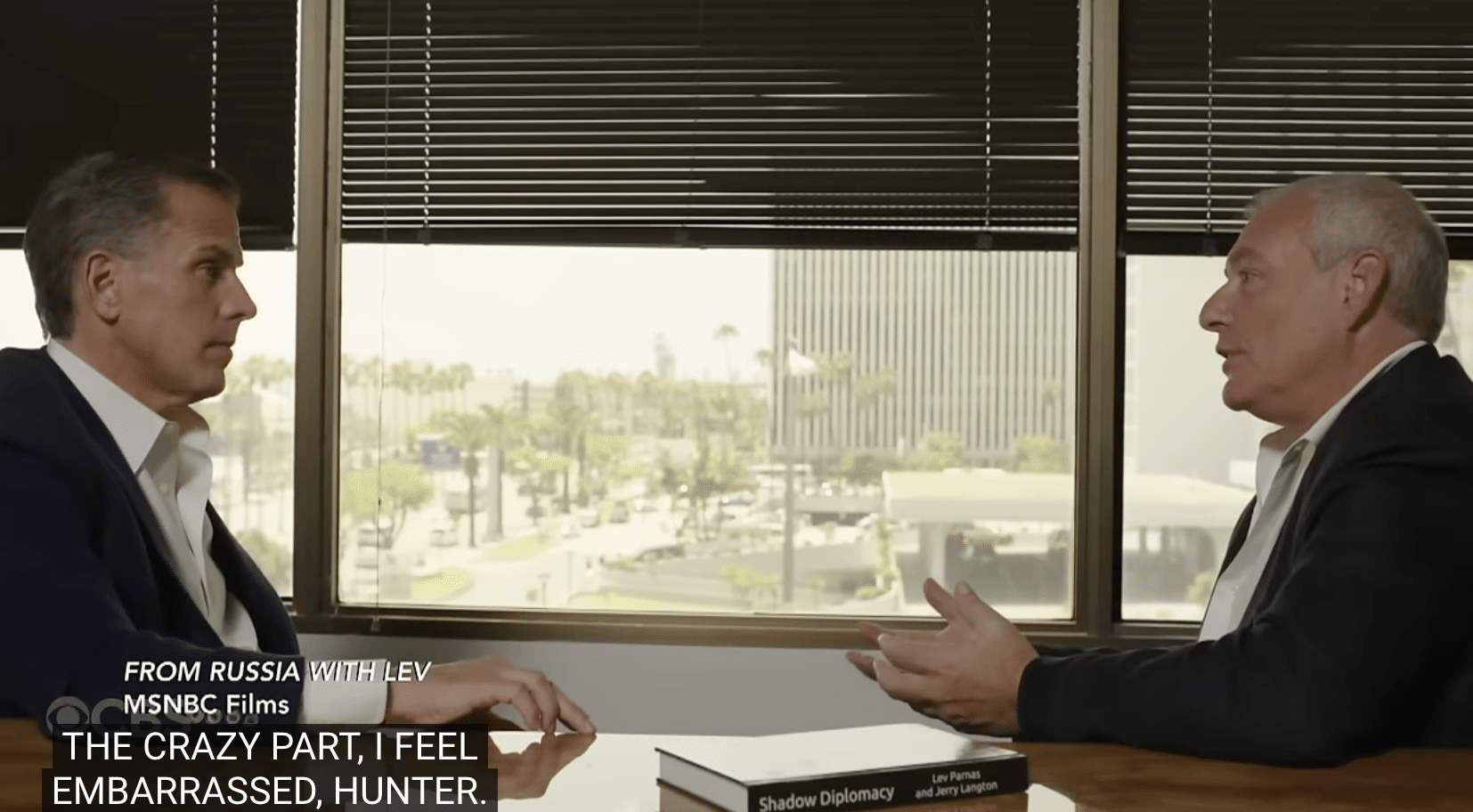
Like many people, I’ve watched From Russia with Lev since it was released the other day.

The documentary tells a story I’ve covered here in real time: of how, with Lev Parnas’ help, Rudy Giuliani solicited dirt on Hunter (and Joe) Biden from foreigners, mobsters, and Russian spies, in hopes of helping Trump stay in office.

As told, with Lev’s spouse Svetlana serving as a key narrator, it’s a compelling, personal story.

I’ve also told — am one of the only people who has told — the story that many people are now asking: why no one went to prison for this caper. The documentary has led many people, understandably, to demand to know why no one (besides Lev, they sometimes say, inaccurately) went to prison for all this, which has, predictably, led to the same conspiratorial bashing of Merrick Garland we saw with the January 6 investigation.

The question is premised on certain choices the filmmakers made: focusing away from Dmitry Firtash and especially from Andrii Derkach (who got involved after Lev was done), crediting the spin of Lev’s attorney, Joseph Bondy, and simplifying the investigation of Hunter Biden. The film doesn’t fill in any of the gaps I noted in Lev’s book, and creates new ones. It creates the appearance that Lev was prosecuted solely to protect Trump from impeachment and that the investigation into Hunter arose solely out of Rudy’s efforts. Those choices make sense for narrative and legal reasons, but as a good story does, it simplifies the issue.

And I promise you, the film vastly understates the corruption that went on. Wildly understates it. One goal I have for Ball of Threads is to unpack what is currently known of that far deeper corruption, but that still just scratches the surface.

The quick explanation of why Rudy didn’t go to prison for this is that:

  • Bill Barr did wildly corrupt things to protect him, Donald Trump, and himself
  • By the time, shortly into the Biden administration, DOJ tried to pursue Rudy, Rudy’s phones were corrupted

Trying to hold Garland responsible for failing to prosecute the underlying crime amounts to doing Bill Barr’s propaganda work, because Barr worked relentlessly to protect Rudy.

You can, however, hold Garland responsible for one thing: the continued appointment as Special Counsel of David Weiss, who as a witness to Barr’s corruption, is conflicted in any investigation pursuing Alexander Smirnov’s attempts to criminally frame Joe Biden.

This post explains all that in more detail.


Lev didn’t go to prison for the Hunter Biden stuff

As I said, the film leaves the impression that Lev was arrested to protect Trump during impeachment by silencing the key witness.

But that’s not why Lev went to prison (as a news clip in the movie tacitly admits).

Lev and Igor Fruman (along with David Correia and Andrey Kukushkin) were first charged on October 9, 2019, via indictment that was (according to then US Attorney for SDNY Geoffrey Berman’s memoir) drafted quickly overnight in advance of Lev and Igor’s trip to meet Dmitry Firtash in Vienna. From Berman’s memoir, I’m not 100% sure whether he pushed it because he genuinely feared they were about to flee the country, felt he had to do so before Barr intervened … or for more nefarious reasons.

The charges were:

  • Conspiring to make a bunch of political donations in the name of Global Energy Producers
  • Lying to the Federal Election Commission
  • Falsifying a document to the FEC
  • Laundering donations from Russian Andrey Muraviev to pay pro-cannabis politicians

As Bondy described, the indictment implied that Lev and Igor’s political contributions to Pete Sessions were tied to an attempt to fire Marie Yovanovitch. But that was not charged as FARA.

On September 17, 2020, the indictment was superseded. Lev and Correia’s longterm Fraud Guarantee fraud was added and the charges tied to Muraviev (who was secretly indicted that same day) were bumped up. The paragraph describing a payment to Sessions took out the reference to an Ambassador, describing it instead as to “further their political goals.” There were still no FARA charges though.

Ultimately, Lev was convicted at trial in October 2021 of the GEP and Muraviev donations, and in March 2022, pled guilty to the fraud guarantee charges. He was never charged with FARA violations.

Bondy’s insinuation that SDNY took out the foreign agent aspect to protect Rudy is wholly inconsistent with the warrants (linked below) targeting Lev and Rudy unsealed last year.

They show that the investigation into Lev, which started based on a Campaign Legal Center complaint, initially focused on campaign finance crimes. In August 2019 — after the firing of Marie Yovanovitch but before the disclosure of the Perfect Phone Call — SDNY began to turn to Foreign Agent suspicions (though one of two warrants obtained in August 2019 was not executed). After the arrest, SDNY more aggressively turned to developing the Foreign Agent prong of the investigation. On November 4, 2019, SDNY obtained warrants targeting Rudy (which were not released last year). On December 10, 2019, the Foreign Agent prong continued.

That’s when Bill Barr intervened to kill that prong of the investigation, certainly as it pertained to Rudy, as I’ll lay out below.

After that point, SDNY focused on the Fraud Guarantee fraud.

It’s not that Lev went to prison for this but Rudy did not. On the contrary, Barr worked hard to ensure no one could go to prison on such charges.

While Barr was doing that, SDNY appears to have put that investigation on ice and attempted, without success, to resuscitate once Barr was out of office.

SDNY believed Lev was not fully forthcoming

The film makes it sound like SDNY refused Lev’s efforts to cooperate against Rudy and everyone else.

It’s more complicated than that.

SDNY has a rule: To enter into a cooperation agreement with them, one has to plead to all crimes. Geoffrey Berman described it this way in his memoir, explaining why SDNY didn’t give Michael Cohen a cooperation deal.

Cooperation in the Southern District means full cooperation—taking responsibility for all criminal actions, not just a select few. If any one area of a defendant’s life is off limits, we do not recommend leniency in sentencing. (Some districts are more transactional: you give a little, you get a little.)

When defendants agree to this and become cooperating witnesses against others, their testimony is more credible. Our prosecutors can tell juries that if the cooperator is caught lying, the agreement can be revoked and he or she will be prosecuted not only for the crimes covered at trial but for a host of others that the cooperator copped to as part of his agreement.

The SDNY rules also serve as a powerful investigative tool, because when you acquire absolute cooperation, your avenues for making other cases expand dramatically. We often learn of additional criminal activity—whole new threads of wrongdoing that in some instances we knew nothing about.

That’s one reason why SDNY didn’t give Lev a cooperation agreement. As SDNY explained in their sentencing memo for him, Lev’s attorney, Joseph Bondy, proffered information in the months after his arrest in October 2019. But Bondy provided details that were contradicted by the evidence (at the time, Lev may not have understood that FBI had obtained iCloud content he deleted). SDNY then did a reverse proffer on November 6, 2019 (two days after obtaining a warrant for Rudy’s comms), meaning they told Lev and Bondy all the evidence they had against Lev. After that, Bondy replied saying that Parnas was unwilling to plead guilty to the campaign finance crimes charged against him.

After that meeting, Parnas’s counsel wrote the Government to report that he could not “accept responsibility for criminal activity for which he is not guilty,” which based on discussions with counsel, the Government understood to be a reference to, among other things, the campaign finance and false statements offenses of which Parnas now stands convicted.

That’s consistent with Parnas’ own memoir, in which he still attributes the campaign finance stuff as a lack of awareness of the law and of the Russian source of the money he was throwing around.

According to SDNY, that unwillingness to fully accept responsibility continued when Parnas did sit for a proffer on March 5, 2020.

In addition, SDNY was unable to corroborate some of the things Parnas claimed in that March proffer.

[T]he Government was ultimately unable to corroborate significant portions of what Parnas said.

This was during a period when Barr was aggressively trying to limit SDNY’s investigation, so it may not have been Lev’s fault they couldn’t corroborate this stuff.

Finally, DOJ generally has a rule: Cooperating witnesses who chat to the press are usually useless as witnesses. This makes sense for a lot of reasons, not least that it alerts criminal targets of what prosecutors do and don’t know. SDNY told Parnas this early on, in November 2019, and his early 2020 interviews would have only exacerbated this.

At the close of that [November 6, 2019] meeting, the Government informed Parnas that public spectacles, leaks, and social media postings could undermine his credibility and diminish his value as a potential cooperating witness.

Given Barr’s fuckery, I don’t know if Parnas could have pulled off cooperation in any case. But even without it, things he himself did made it virtually impossible he could get a deal from SDNY.

And honestly, it wouldn’t have served his purposes. He needed to come out publicly against Trump, but that was inconsistent with the ability to cooperate criminally. The impeachment was his one shot for accountability, and Congress blew that. (As I was writing this, I considered that, had Democrats made Lev’s testimony more central to impeachment, Republicans might have forced Hunter Biden to testify, as they were threatening at the time; I have long wondered whether Trump’s impeachment defense team had a copy of the laptop.)

Bill Barr insulated the impeachment review from the Hunter Biden caper

The film focuses closely on how, after Trump’s Perfect Phone Call with Volodymyr Zelenskyy was released, onetime Trump defense attorney John Dowd, speaking as a lawyer for Lev and Igor, first refused to cooperate with Congress. Their arrest, days later, put Parnas and Fruman at the mercy of lawyers arranged by Trump, until Parnas hired Bondy.

It is true that their arrest discredited them as witnesses.

But it wasn’t just their arrest that limited the investigation from impacting impeachment. DOJ also did some tactical things to prevent the Trump impeachment from merging with Lev’s prosecution.

When Lev and Igor were arrested, DOJ told the press that Barr had been briefed on the investigation from early in his tenure as Attorney General.

That seems inconsistent with a claim that Barr made in his memoir (which IMO is largely CYA about these matters). Barr claimed he had no awareness of Rudy’s efforts to investigate Biden, and only learned of it from news reports.

By the spring of 2019, I had noticed news stories stating that Giuliani was pushing the Ukrainians to investigate Biden’s role in Shokin’s dismissal. But other than what I glimpsed in the media, I had no knowledge of the former mayor’s activities. During the spring, I expressed my concern about Giuliani with the President. As I was leaving an Oval Office meeting on another topic, I paused briefly to raise the matter.

“Mr. President,” I said, “I don’t think you are being well served by Giuliani at this point. Mueller is over, and Russiagate is dying. Why is Giuliani thrashing about in Ukraine? It is going to blow up—”

“Yeah,” the President said, cutting me off. “I told him not to go over there. It was a trap.” President Trump gave the impression Giuliani had a degree of independence and was going to pull back. I did not press the point.

Even imagining that SDNY kept these details from Barr, by August 14, 2019, it is highly likely that the National Security Division had notice of the focus on Rudy. That’s when possible Foreign Agent charges (and a reference to Marie Yovanovitch) got added to the warrants targeting Lev and Igor.

NSD head John Demers was one of the first people at DOJ to review the Perfect Phone Call. He did so, on August 15, 2019, after SDNY had turned to FARA crimes normally overseen by NSD.

That may explain why DOJ did something that served to insulate the Public Integrity (PIN) review of the Perfect Phone call from the ongoing investigation of Rudy’s efforts with Lev and Igor: Demers and Criminal Division head Brian Benzkowski only had PIN review the transcript of the call, not the full whistleblower complaint. Had investigators done what investigators have been ordered to do since 9/11 with the full complaint, they would have searched on all the references in the complaint, including those in the OCCRP report on Lev and Igor referenced repeatedly in it. That, in turn, should have identified the SDNY investigation, which would have immediately implicated Trump in the investigation.

Effectively, by focusing solely on the transcript, someone at DOJ deliberately blinded that PIN review to an ongoing FARA investigation, thereby eliciting a clean bill of health for Trump.

There’s a lot more that Barr did as the scandal unfolded, as I’ve laid out here and here. But the first thing someone at DOJ did was to gin up a prosecution declination before anyone could tie Trump’s coercion of Zelenskyy with the existing investigation into Lev and Igor.

Bill Barr played a shell game to protect Rudy’s “collusion” with a known Russian spy

Barr was nowhere near done.

There seems have been an ongoing cat-and-mouse between SDNY and Barr.

When SDNY got the indictment, according to Berman, they got approval from two PIN prosecutors in the middle of the night, not NSD, which may be why only the campaign finance crimes were in the indictment and only the campaign finance crimes were on the warrants for the searches done the day of arrest (this would have served to hide that part of the investigation from Lev and Igor, too). That’s the biggest piece of evidence that SDNY did not arrest Lev and Igor as a favor for Barr, as he attempted to kill impeachment, but the reverse.

In October, SDNY got warrants to search everything for the FARA crimes. On November 4, 2019, SDNY got warrants targeting Rudy for FARA crimes.

On December 5, 2019, Rudy met, with Barr’s foreknowledge, known Russian asset Andrii Derkach.

And on December 10, 2019, SDNY got further warrants in that investigation.

DOJ had just let Rudy meet with a Russian spy while SDNY had an ongoing investigation into whether Rudy was working with foreign spies. It was insane to let that happen in any case. All the more so given the ongoing investigation from the Sovereign District of New York, as SDNYers like to call themselves.

So Barr had to gut SDNY’s sovereignty.

Barr did several things:

  • Assigned any investigation of Derkach, with whom Rudy had just met, to EDNY, not SDNY where it would be a natural follow-on.
  • Made EDNY US Attorney Richard Donoghue the gate-keeper for all Ukraine investigations, requiring SDNY to get permission from him before taking any investigative steps against Rudy or Lev.
  • Asked Pittsburgh US Attorney Scott Brady to play a role. Publicly, Barr and Brady claimed this was a vetting process of tips from Ukraine. But Brady’s congressional testimony revealed he did almost no functional vetting; he ignored evidence from the impeachment and some key public articles. Plus, he did more than vetting. Brady also checked in on investigations into all the oligarchs from whom Rudy had solicited dirt on Hunter Biden, with uncertain outcome; he tried to tell SDNY he knew better than they did about their investigation; he demanded details about the investigation into Hunter Biden. Most importantly, some yet unidentified person told Brady to seek out FBI informant Alexander Smirnov, who had made a reference to Hunter Biden in an informant report about Mykola Zlochevsky years earlier. By May 2020, Smirnov was allegedly attempting to frame Joe Biden with allegations of bribery, and Brady made that part of his work. Once again with Smirnov’s allegations, Brady did little functional vetting, falsely claiming that his travel schedule confirmed the claim, rather than debunked it.
  • Barred the FBI Agents working with SDNY from receiving certain information, including Rudy’s interview with Scott Brady.
  • Ordered David Weiss, whom DOJ had put in charge of an investigation into DC and CA resident Hunter Biden, to consult with Brady on his tips.

These efforts halted what should have been obvious next steps in the SDNY investigation, ensured Rudy could share information obtained from a known Russian spy with no legal risk, and ordered that some of Rudy’s information be used in an investigation of Joe Biden’s kid. DOJ was literally protecting a Russian influence operation, because it served the interest of the President.

The biggest reason why Rudy didn’t go to prison for this is that Barr protected this entire process, including the solicitation of dirt from a known Russian spy.

DOJ approved steps against Rudy on Lisa Monaco’s first day on the job

While Trump remained in office, SDNY tried several more times to get warrants targeting Rudy, but were denied.

On Lisa Monaco’s very first day on the job, April 21, 2021, SDNY finally obtained warrants targeting Rudy. Merrick Garland’s DOJ did precisely what everyone is wailing for: He immediately permitted prosecutors to advance this long-thwarted investigation.

Based on what we can see, there were at least two limitations on the investigation, however. First, the warrants targeting Rudy did not include the Trump lawyer’s January 29, 2020 interview with Scott Brady. That suggests Rudy’s effort to share dirt from Russian spies was still protected as cooperation rather than confession, even after Garland took over (indeed, that’s what Rudy pointed to to argue he couldn’t be searched at all, his “cooperation” with Barr). Just as importantly, while some of the 2019 warrant affidavits mentioned Donald Trump’s call to Volodymyr Zelenskyy, the 2021 warrants did not. I would be unsurprised if Barr got OLC to write a memo putting all that off limits before they left office.

Aside from that, DOJ’s approach to Rudy Giuliani remained remarkably aggressive, contrary to what virtually every news outlet will tell you. Importantly, SDNY did something no one else has reported: They installed a Special Master and got permission to review Rudy’s content — all Rudy’s post-2017 content — for privilege. Among other things, that freed up content, including at least one document the January 6 Committee did not get, for any other investigations.

Nevertheless, the delay (or possibly corrupt Rudy dead-enders in NY) appears to have killed any chance of pursuing Rudy for his role in soliciting dirt from Russian spies and others to attack Hunter Biden. On November 14, 2022, SDNY informed the court that the grand jury had concluded without filing charges (though Rudy’s lawyer and Hunter Biden laptop co-conspirator, Robert Costello, has never substantiated a declination letter). In a July 25, 2023 declaration in the Ruby Freeman lawsuit, Costello revealed one potential explanation: many of the devices seized from Rudy obtained in April 2021 were corrupted. Costello blamed the FBI’s contractor for making the phones unusable.

Not all the devices were corrupted, however. As noted, the privilege log from Freeman’s case shows a great deal of files pertaining to January 6 were successfully extracted, including a few identifiable files not obtained by the January 6 Committee.

DOJ also seized a phone from Victoria Toensing. But the value of that may have been limited by attorney-client privileged tied to Firtash, the same privilege which has, at times, led Lev (because he was a translator in that relationship) to limit his own comments about Firtash in all this. To fully unpack what happened, you’d need to know what promises Toensing made to Firtash and what Barr knew about them.

Attorneys General have vast discretion

In a just world, Bill Barr could be held accountable for the corruption he enabled. But that’s virtually impossible under the structures of impunity our system accords prosecutors and Attorneys General.

I’m neck-deep in a post on the three IG investigations pertaining to Bill Barr’s corrupt conduct.

All of them conclude that however nuts Bill Barr’s conduct was, the expansive authority of the Attorney General means that his actions, including his intervention into the sentencing for Trump’s rat-fucker and his decision to share details of minor infraction by someone whom Barr knew would never be charged for political gain, were within the discretion of the Attorney General.

DOJ IG has spent over four years investigating Barr’s corruption, and thus far, they have always concluded that as Attorney General, Barr’s discretion was so vast that he can break all of DOJ’s rules prohibiting its politicization.

There’s still at least one IG Report including Barr’s conduct outstanding (almost certainly, the ongoing investigation into DOJ getting the communications records of journalists for whom people like Jim Comey might have been a source). But of all the fuckery I know Barr to have committed, I can envision only a few details of his conduct might even remotely end up the focus of criminal investigation.

Even the most corrupt insinuations about Rudy’s efforts, in which Rudy allegedly offered Ihor Kolomoyskyi, Dmitry Firtash, and Mykola Zlochevsky relief from criminal investigations for dirt on Hunter Biden, would be included in this.

Lev explains why in his book: This was deliberately framed as the exact equivalent of Andrew Weissmann’s efforts to flip Firtash for information on Paul Manafort.

Andrew Weissman, who was lead prosecutor for the investigation of Russian collusion in the 2016 Election, had gotten there first. He offered a deal in which Firtash could avoid prison if he testified about the relationship between Trump and Russian President Vladimir Putin. The inclusion of Putin meant that Firtash would never take the deal. Nobody over there wants to make Putin angry.

Nobody else knew about the deal he was offered. Giuliani and Solomon wanted Firtash’s legal team to make it public. His Viennese lawyers were against it, so Firtash was reluctant. Soon, in a heated meeting in Vienna, an argument between some of Firtash’s legal team led to Victoria Toensing, who was on our team, confronting Dan Webb about it months later. Webb — who was connected with Weissmann, William Barr and other heavy hitters — admitted to the deal.

Still, we convinced Firtash that we — who were representing Trump’s interests — could help him with his extradition far more effectively than Weissman. The real goal for us was to get Firtash to use his contacts to pressure President Zelenskyy to announce an investigation of the Bidens. Our pitch was successful, Firtash agreed to hire Giuliani for $1 million. And $200,000 for me to be official translator and to be under the attorney-client privilege umbrella.

Prosecutors trade leniency for information on other crooks all the time. Here, however, it was the Attorney General, who had never served as a prosecutor himself, who would be making those deals, offering leniency to foreign oligarchs if they could offer dirt on Donald Trump’s likely opponent.

It’s unclear whether, and if so what, deals were made: an investigation into Zlochevsky was reportedly shut down in December 2019; investigations into Kolomoyskyi ratcheted up in 2020; and the prior investigation into Dmitry Firtash remains deadlocked on his extradition, as it has been for years.

But these kinds of deals would be consistent with an elaborate effort Barr makes in his book to spin Trump’s pursuit of dirt on the Bidens as a legitimate law enforcement pursuit, the logic of Trump’s impeachment defense taken to its logical conclusion.

It’s all transparent bullshit. But it would also be virtually impossible to debunk at trial, even if you could get beyond the vast discretion of an Attorney General.

David Weiss’ appointment threatens to limit further fallout

There’s one thing I do fault Merrick Garland for: For not removing David Weiss from the investigation into Alexander Smirnov.

By all appearances, Weiss asked to be appointed Special Counsel only after he renewed his focus on Smirnov in July 2023, after receiving, but blowing off, the allegation days before the 2020 election, on October 23, 2020.

Investigating Smirnov’s allegation that Joe Biden accepted a bribe from Burisma was the first thing that focused the investigation onto Biden, after the original prosecutor, Lesley Wolf had successfully avoided that focus for years. It was the first thing that created a real conflict with working for Joe Biden.

And Weiss bases his authority to prosecute Smirnov for lying when he started chasing that hoax on his Special Counsel authority. He could only do so if he were legitimately chasing that hoax as witness testimony.

Here’s the problem with that: David Weiss is a witness in what should be a broader investigation into how a side channel set up by Bill Barr ended up discovering an informant who once met Mykola Zlochevsky and then not vetting the false claims he made. At the very least, there should be an investigation into who — everyone swears it was not Rudy, and Smirnov has at least three other links to people close to Trump — alerted Brady that Smirnov might offer up such claims.

Bill Barr’s deputy ordered David Weiss to accept briefing on this hoax. He ordered him to let Scott Brady snoop on Weiss’ investigation of Joe Biden’s kid. That makes Weiss a witness. Once Smirnov became a subject rather than a witness, that created a conflict that should disqualify Weiss from overseeing an investigation into the former informant and the circumstances that allowed him to make allegedly false allegations against Joe Biden.

Merrick Garland should (at a minimum, though I could argue more broadly) move the primary team prosecuting Smirnov under supervision without such conflicts. A system set up by Bill Barr criminally framed Joe Biden, and a guy who worked with Bill Barr on that case continues to supervise the aftermath.

The complicity of the press

There’s one more party that demands accountability: The press.

Much of what I wrote in this post is public. It requires diligent reading, but not great access to Donald Trump or anyone else.

Not only has this entire story not been reported by mainstream outlets. Not only did NYT affirmatively obscure Rudy’s role in all this (and therefore Trump’s) in their one attempt to cover it. But one after another journalist — especially at NYT — writes stories that disappear the Hunter Biden pursuit from all of Trump’s abuse of DOJ. Indeed, some outlets, including Rachel Maddow’s parent company, seem to treat Hunter Biden as a gossip rag to drive clicks, rather than the locus of unprecedented corruption. Rather than chasing this story, or even asking Bill Barr direct questions about it, one after another TV star invites him on as if he’s a critic of Trump’s corruption, rather than a key player in it. WaPo’s Will Lewis pointed to a badly conflicted Hunter Biden piece as his antidote against accusations of lefty bias.

Want to know how Rudy Giuliani was allowed to solicit dirt from Russian spies to help Trump get elected, without accountability? Want to know why Barr is considered a critic of Trump rather than his most corrupt enabler? Ask the journalists who lost interest in that story as soon as Rudy released a laptop full of Hunter Biden’s dick pics.

From Russia with Lev begins to reverse all that. But as infuriating as it is, it barely scratches the surface.

Timeline

Below, every bullet is a known warrant. The ones not linked were described in a passage that failed to be fully redacted in a Lev Parnas filing. This document compares the Foreign Agent focus of the three warrants bolded below.

  • January 18, 2019, 19 MJ 1729: Yahoo and Google content

May 15, 2019: Marie Yovanovitch firing public

  • May 16, 2019, 19 MJ 4784: iCloud content
  • August 14, 2019, 19 MJ 7593: Yahoo and Google content since January, with expanded focus
  • August 14, 2019, 19 MJ 7594: Unknown warrant
  • August 14, 2019, 19 MJ 7595: Existing Yahoo and Google content, with expanded focus

September 25, 2019: Disclosure of Perfect Phone call

October 9, 2019: Lev Parnas and Igor Fruman arrested

  • October 17, 2019, 19 MJ 7595: Actual authorization of the warrant approved in August
  • October 21, 2019, 19 MJ 9829: iCloud content since May
  • October 21, 2019, 19 MJ 9830: Unknown warrant
  • October 21, 2019, 19 MJ 9831: Devices from Dulles
  • October 21, 2019, 19 MJ 9832: Existing iCloud content for expanded focus
  • November 4, 2019: Warrant for Rudy’s iCloud
  • November 4, 2019: Warrant for Rudy’s email
  • November 4, 2019: Warrant for Victoria Toensing’s iCloud
  • November 6, 2019: Warrant for Yuriy Lutsenko’s email

December 5, 2019: Rudy meets with known Russian asset, Andrii Derkach

  • December 10, 2019, 19 MJ 11500: Stuff seized from residences for foreign agent focus
  • December 10, 2019, 19 MJ 11501: Instagram
  • December 10, 2019, Warrant for Roman Nasirov’s email
  • December 13, 2019, Warrant for Victoria Toensing’s email

December 14, 2019: Barr aide texts him: “Laptop on way to you”

January 3, 2020: Barr establishes dedicated channel to ingest Rudy’s dirt

January 17, 2020: Jeffrey Rosen makes Richard Donoghue a gatekeeper for all Ukraine-related investigations

  • February 28, 2020: iPhone of Alexander Levin
  • March 3, 2020: iPad of Alexander Levin
  • March 20, 2020, 20 MJ 3074: Fruman iCloud content obtained with October 21, 2019 warrant to cover earlier periods

June 20, 2020: Barr fires Geoffrey Berman

November 2020: SDNY denied authority to seek devices of Rudy Giuliani

January 2021: SDNY denied authority to seek devices of Rudy Giuliani

  • April 13, 2021: Cell site data for Rudy and Toensing

April 21, 2021: Lisa Monaco sworn in

  • April 21, 2021, 21 MJ 4335: Rudy’s office, residence, and devices
  • April 21, 2021: Victoria Toensing iPhone
Share this entry

Trump Will Stage an Emergency to Ban Jack Smith’s Book Report

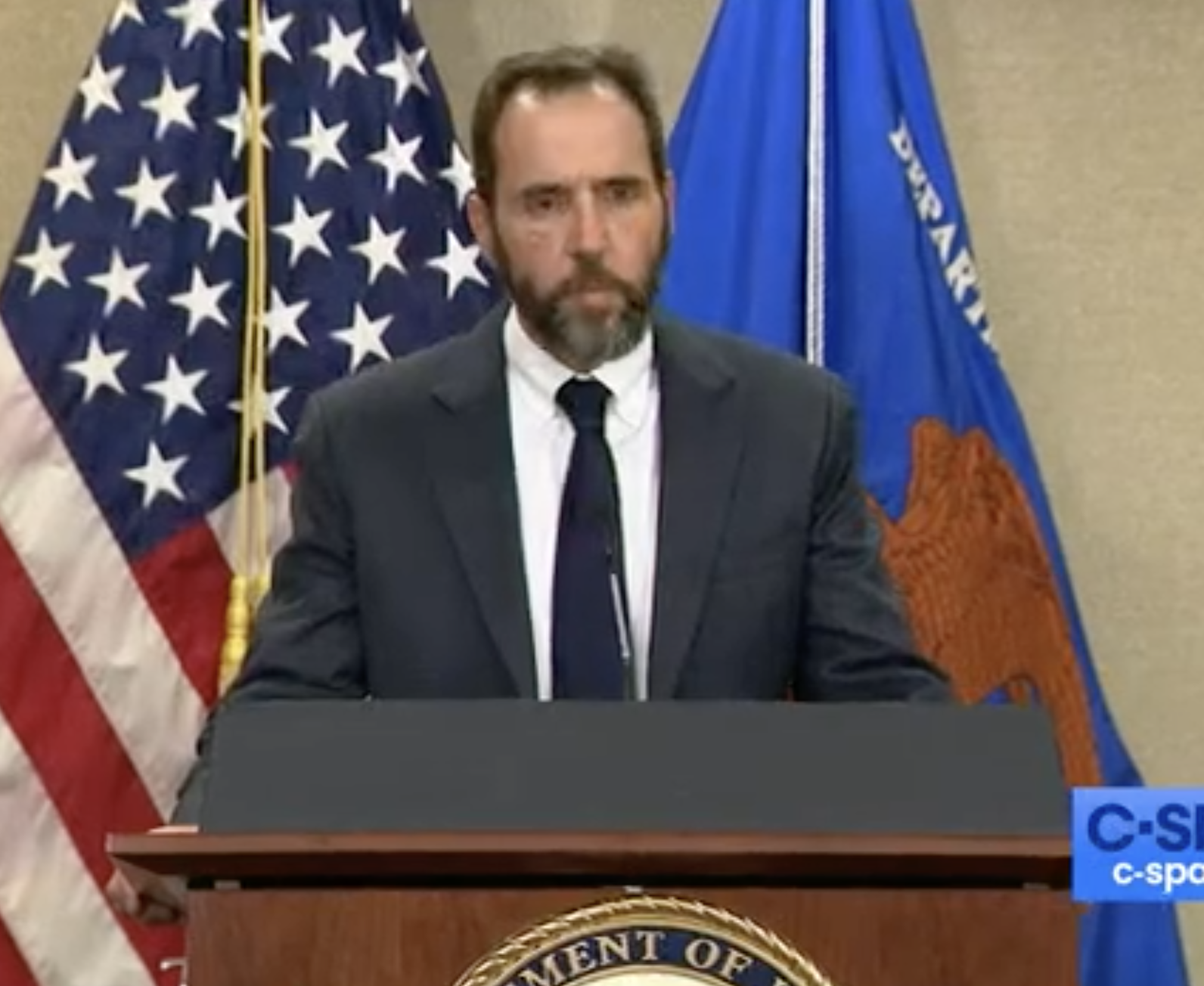
I expect, on top of everything else this week, Trump’s lawyers are going to claim an emergency to try to ban Jack Smith’s book report, currently due Thursday.

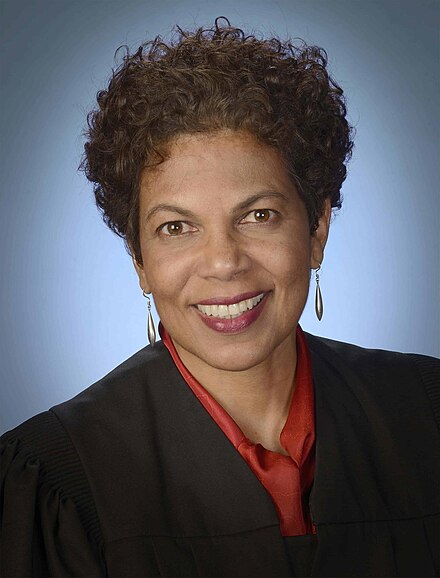
As you’ll recall, after Judge Tanya Chutkan finally got the Trump January 6 case back, she agreed with Jack Smith’s proposed path forward: They would submit a brief explaining how the superseding indictment complies with the Supreme Court’s immunity opinion. Chutkan set a deadline of September 26, Thursday, for that brief.

Trump seems certain that if voters see that brief, he will lose the election.

Last Thursday, Trump’s lawyers submitted what was supposed to be a discovery filing, in which they basically said, “NOOOOOOO!!!!! No briefing before the election.”

Dismissal is required to protect the integrity of the Presidency and the upcoming election, as well as the Constitutional rights of President Trump and the American people.

Judge Chutkan does not have to rule on those issues before determining the immunity question, though, so the filing was better read as, “Help me Sammy Alito!!!! Help me John Roberts!!!! You’re my only hope!!!”

Yesterday, Jack Smith submitted a request to file excess pages, 180 pages instead of 45. In it, he disclosed that Trump objected and wanted a chance to respond, with the deadline set for Tuesday, September 24.

Defense counsel opposes the Government’s motion at this time, and requests that the Court set a deadline of September 24, 2024, 5:00 PM ET for the defense’s response.

Judge Chutkan ordered Trump’s team to file their opposition one day earlier, Monday September 23 (note: Trump’s team filed their last filing after 5PM, after which Judge Chutkan made it clear she’ll permit no more of that).

Defendant shall file any opposition to the Government’s [237] Motion for Leave to File Oversized Motion by September 23, 2024 at 5:00 PM ET.

Trump will oppose not just the excess pages, 180 instead of 45, but the entire filing. Now he’s got one less day to make that argument.

Which is what you need to understand the other things in the Jack Smith request. Trump is going to stage an emergency to get this question elevated to SCOTUS to prevent the filing this week. He will try to take things SCOTUS ordered Chutkan to do out of her hands, to put them back before SCOTUS.

Anticipating that, Smith starts his request by laying out that he is just trying to do what Chutkan ordered, to show that SCOTUS ordered precisely this briefing.

In Trump v. United States, 144 S. Ct. 2312, 2340 (2024), the Supreme Court emphasized the “necessarily factbound” nature of any presidential immunity analysis. See id. at 2339 (“Determining whose characterization may be correct, and with respect to which conduct, requires a close analysis of the indictment’s extensive and interrelated allegations.”); id. at 2340 (“The analysis therefore must be fact specific and may prove to be challenging.”); id. (“Knowing, for instance, what else was said contemporaneous to the excerpted communications, or who was involved in transmitting the electronic communications and in organizing the rally, could be relevant to the classification of each communication.”). The Supreme Court remanded to this Court “to determine in the first instance—with the benefit of briefing we lack—whether [the defendant’s] conduct in this area qualifies as official or unofficial.” Id. at 2339.

A few paragraphs later, he describes that because this review will be what SCOTUS reviews on appeal, the record must be comprehensive. Thus the need for 180 pages.

The Court has been directed to conduct a detailed, factbound, and thorough analysis of the Government’s case to make appropriate immunity determinations. Because the Court will make determinations “in the first instance” that will be subject to exacting appellate review, it is essential that the Court ensure that the record in support of its determinations is complete. The Government believes that a comprehensive brief by the Government will be of great assistance to the Court in creating that robust record, and the Government thus seeks leave to exceed the typical limit for a single motion. See Local Crim. R. 47(e) (limiting opening motions and oppositions to 45 pages and replies to 25 pages).

Smith goes into detail about the breakdown of those 180 pages: half is narrative, thirty pages are footnotes, a bunch are exhibits. Those details will only matter if we ever get to see it.

Remember: Trump is looking for some basis to cause an emergency that will allow him to get back to SCOTUS. So Jack Smith will (and probably would have, in any case) submit the filing under seal, and only afterwards work on unsealing it for the voting public.

For the Court’s awareness, the opening brief and its exhibits contain a substantial amount of Sensitive Material, as defined by the Protective Order. Consistent with the Protective Order, the Government intends to file a motion for leave to file under seal that attaches an unredacted copy of the motion and appendix and proposed redacted versions to be filed later on the public docket at the Court’s direction. See ECF No. 28 ¶¶ 11-12. Because of the extensive and time-consuming logistics involved in finalizing the brief, appendix, and proposed redacted public versions of the same, the Government respectfully requests the Court’s decision on this motion as soon as practicable.

Voila, no emergency.

But without creating such an emergency, then Chutkan will get a look at the argument.

I honestly have no idea how it’ll end up. I’ve been wracking my brain for what procedural reason Trump’s team could use to declare an emergency.

But with this SCOTUS, it doesn’t have to be all that plausible.

Share this entry

Kamala Harris Is Not Goading Journalists to Publish Emails Iran Stole from Roger Stone

As I’ve alluded to a few times, I was sent what I believe to be three of the files Iran puportedly stole from Trump’s team. I received them after I explained why I thought this hack-and-leak was different than the Hillary one in ways that should influence considerations about publishing:

  • Trump doesn’t compartment his campaign from his crimes, meaning Iran could be — could have been trying, could have succeeded in — stealing information about the Iran-related documents Trump took when he left the White House. The report that Susie Wiles was the intended target of the hack confirms that risk. In addition to running Trump’s campaign, Wiles decided who would be provided defense attorneys paid by the campaign. Aside from the classified information Trump shared with her, she should never have had anything implicating classified discovery and the classified discovery itself should never have left the SCIFs in which it was provided to defense attorneys. But she is likely to know some of what — for example — witnesses like Kash Patel said about classified information.
  • In addition to the hack, Iran allegedly was also trying to solicit a hit squad to kill Trump (indeed, the alleged recruiter, Asif Merchant, was just indicted on Wednesday). That makes the possibility of Iran exploiting internal information from Trump’s campaign (such as travel details) far more dangerous.

I had decided it wasn’t worth participating. And then I got sent files I believe to be those vetting files.

In the last few days, Google has slapped a phishing warning on the files I got sent.

Even though I offered that explanation a month ago, I still get questions from people about why I, and why other outlets, haven’t published the documents.

Don’t get me wrong, other outlets are, without a doubt, exercising a double standard in choosing not to publish these documents, or at least reviewing whether the JD Vance vetting document includes some of the really damning videos surfaced since Trump picked him. It’s not just the Hillary emails in 2016. Every single outlet known to have received these files has also chased the Hunter Biden laptop, even though they never succeeded in implicating Joe Biden in anything found in the laptop. The dick pics were enough to sustain many outlets for a year (and longer, in the case of the NYPost).

But there’s one other big, big difference — one that I think explains the entire difference.

As far as I know, no one in the Kamala Harris campaign is goading journalists to post the documents.

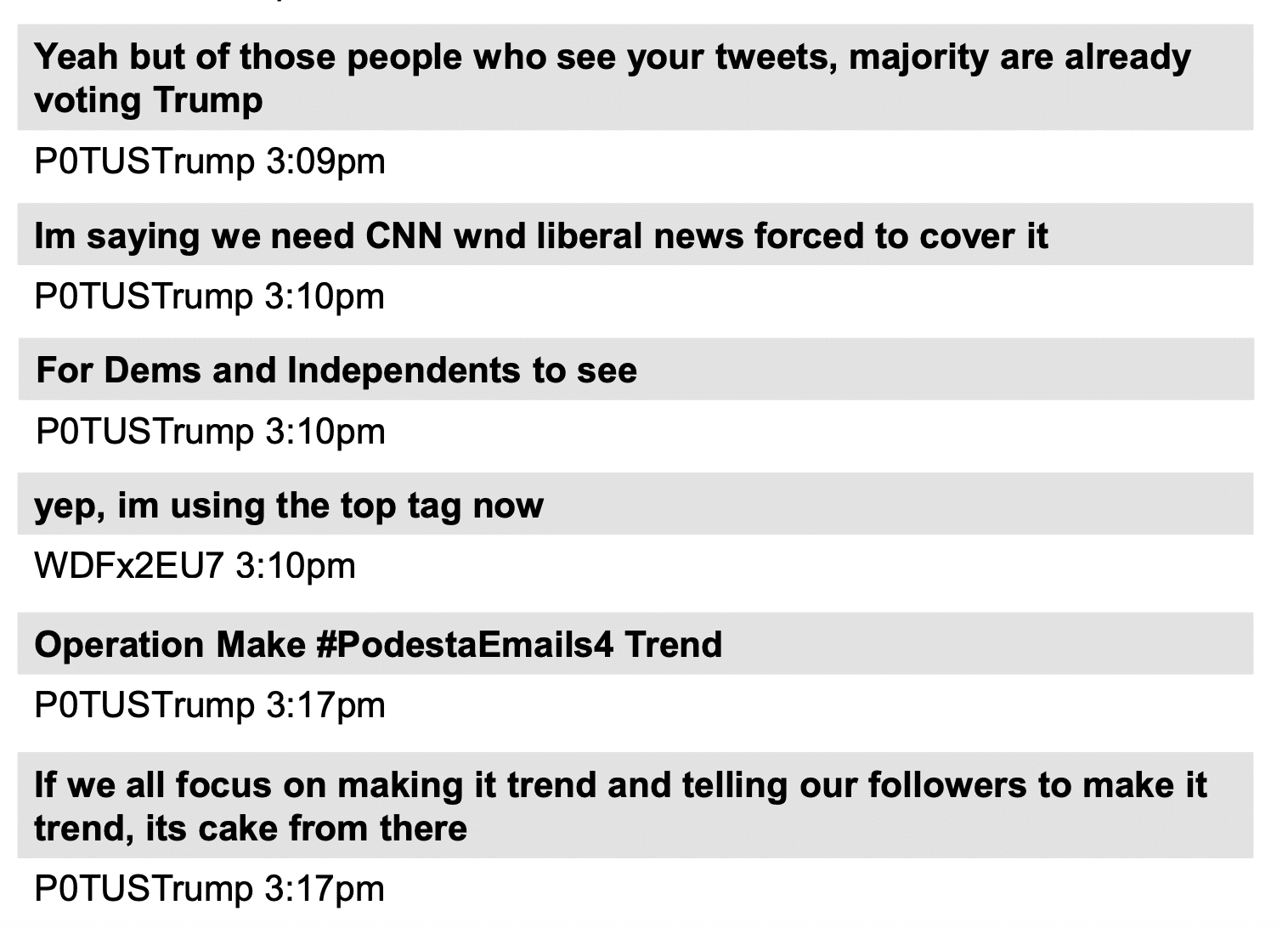
Compare that to 2016, where Trump’s top people were strategizing how to maximize attention on John Podesta’s risotto recipe. Somebody who may be Don Jr was getting all his trolls to push hashtags so “liberal news forced to cover it.” Or 2020, when Trump’s personal lawyer flew around the world, even meeting with known Russian spies, looking for dirt on Joe Biden’s kid. And when a laptop of dick pics dropped in Rudy Giuliani’s lap, like magic, the far right demanded that private social media companies let those dick pics disseminate like wild, because — they claimed — the dissemination of distractions about Hunter Biden was absolutely crucial to Trump’s election strategy.

If I’m right that Kamala Harris has never encouraged journalists to post these documents, there would be a very good reason why not, even beyond the considerable national security risks of encouraging hack-and-leak operations from hostile intelligence services.

Kamala has just 107 days to win an election. And she has a story that she is very very busy telling.

Hack-and-leak operations are about attention, about distraction. If she focused on these stolen documents, she would distract from her own campaign, from the story she is busy telling.

In 2016, Trump used the documents Russia stole to suck up media attention, which served to distract from his own corruption. That’s what he tried in 2020, too. And media outlets have, quite literally, argued that they could avoid accusations of liberal bias by printing error-riddled stories about Hunter Biden, still sucking on that dick pic, three years later.

Hack-and-leak operations help someone like Donald Trump, because too much scrutiny of his own actions might sink his campaign.

But Harris is doing something different than Trump. She’s trying to convince voters that government can improve their lives. She’s trying to convince voters that she cares about their issues and plans to [try to] address them. She needs to sustain their attention long enough to tell that story.

She doesn’t have the time to chase distraction with documents stolen from Trump.

Besides, the press has barely scratched the surface of the corruption or right wing extremism of Trump and his running mate, just sitting in plain sight, such as JD’s claim that we’re still fighting the Civil War and he’s fighting on the side of the south, or Trump rolling out another effort to cash in on his campaign, just weeks before the election.

There’s no shortage of dirt on Donald Trump. Nothing Iran has offered, thus far, at all compares to the stuff sitting out in plain sight.

There is, however, a shortage of time. And wasting time on stolen emails would squander what little time there is.

Share this entry

John Lauro’s Mike Pence Gateway Drug

As I laid out last week, Trump’s lawyers want to make the entire immunity discussion about his January 6 indictment about Mike Pence; they had wanted to do so after the election. They argued in their status report that Jack Smith will be unable to rebut the presumption invented by John Roberts that discussions with Mike Pence are immune from prosecution.

[I]n Trump, the Supreme Court held that President Trump is “at least presumptively immune from prosecution for” all alleged efforts “to pressure the Vice President to take particular acts in connection with his role at the certification proceeding.” Trump v. United States, 144 S. Ct. 2312, 2336 (2024). These same allegations are foundational to the Superseding Indictment and each of its four counts. See Doc. 226 at ¶¶ 5, 9(b), 11(c)-(d), 14, 51(b), 55, 67–90, 99–100. If the Court determines, as it should, that the Special Counsel cannot rebut the presumption that these acts are immune, binding law requires that the entire indictment be dismissed because the grand jury considered immunized evidence. Trump, 144 S. Ct. 2312, 2340 (2024) (“Presidents . . . cannot be indicted based on conduct for which they are immune from prosecution.”).

The Special Counsel’s inability to rebut the presumption as to Pence is dispositive to this case. The special counsel will be unable to do so as a matter of law, thus rendering the remainder of the case moot. Trump, 144 S. Ct. 2312, 2337 (2024) (“We therefore remand to the District Court to assess in the first instance, with appropriate input from the parties, whether a prosecution involving Trump’s alleged attempts to influence the Vice President’s oversight of the certification proceeding in his capacity as President of the Senate would pose any dangers of intrusion on the authority and functions of the Executive Branch.”). [emphasis original]

As it became clear at last Thursday’s hearing that Judge Tanya Chutkan wasn’t going to let Trump delay until after the election, Trump’s attorney, John Lauro, made a number of desperate bids to — first — limit the entire immunity discussion to Mike Pence, and then limit that discussion to legal issues, not evidentiary ones. This seems to be an effort to prevent actual facts, including previously undisclosed ones, from being disclosed before the election.

Here’s how Lauro described it. All sides agree that the immunity decision treated conversations between the President and the Vice President as presumptively immune (though Judge Chutkan stumbled on this once). Lauro asserted that the standard the Supreme Court set on whether prosecutors could rebut this presumptive immunity was whether using conversations between the President and his Vice President would intrude on important presidential functions. If it would, those conversations would have to be immunized and, because the grand jury was exposed to them in the process of superseding the indictment, the entire indictment would have to be thrown out.

MR. LAURO: That’s what I’ve said, that that’s an official act.

So as a matter of — as an initial matter, the issue before the Court is whether or not the Government can overcome the presumption, whether or not they can show that there’s no way, no possible way, that the lack of immunity would result in an intrusion on an important presidential function.

They can’t show that. And if, in fact, the communications with Vice President Pence, which are all over this indictment, if, in fact, those are immune, then that entire indictment is improper and illegitimate. And that’s a gateway issue that your Honor needs to decide right away.

That can be decided without an evidentiary hearing. That could be decided as a matter of law guided by counsel, which is exactly what the Supreme Court suggested.

A bit later in the hearing, Lauro argued that Judge Chutkan could first rule on the legal issues — the ones the Supreme Court already did rule on — and only then turn to the evidence.

MR. LAURO:  [T]he issues here, your Honor, at least initially, can be decided on a legal basis. Obviously, there’s some room for your Honor’s determination as to the timing. But the structure, the sequencing, makes perfect sense in terms of the way we proposed it.

That’s when he raised the election.

MR. LAURO: These important issues, which the Supreme Court has said are of great magnitude to the country, should not be decided by an asymmetrical proffer from the Government without President Trump’s ability under due process, the Fifth Amendment and the Sixth Amendment, to meet these witnesses and cross-examine them. That would be an inherently unfair and inequitable process.

THE COURT: It’s not unfair in the sense that you don’t get an opportunity to address the issues. You’re just doing it in a different sequence. There’s nothing inherently violative of due process by the Government filing an open brief and your getting an advance look at their arguments, have a chance to respond and address them. The Government replies. And if you want to file a sur-reply, you can ask for leave to file a sur-reply. But there’s nothing inherently unfair in that. It’s just a matter of who goes first.

MR. LAURO: Well, it’s incredibly unfair in the sense that they’re able to put in the public record at this very sensitive time in our nation’s history —

THE COURT: Ah.

Judge Chutkan dismissed the notion that any of this should be delayed in light of the election because it — Trump’s past action — is not a dispute about this election.

THE COURT: Let’s just — let’s just discuss what the sensitive time is. I understand there is an election impending, and I’ve said before and I say again that the electoral process and the timing of the election and what needs to happen before or shouldn’t happen before the election is not relevant here. This Court is not concerned with the electoral schedule. Yes, there’s an election coming. But the sensitive time that you’re talking about, if you’re talking about the timing of legal issues and the timing of evidentiary issues in relation to when the election is, that’s not — that’s nothing I’m going to consider.

MR. LAURO: I’m not asking you to consider it. But the courts have routinely said that courts should not be drawn into election disputes. And there is an inherent unfairness in the legal process —

THE COURT: Oh, I am definitely not getting drawn into an election dispute.

MR. LAURO: Right. And what I’m saying is that this process is inherently unfair, particularly during this sensitive time that we’re in.

Then, after Lauro raised issues of discovery and grand jury testimony, he doubled and tripled down on his bid to keep this evidence out of the public view before the election, leading to this crescendo, before Judge Chutkan cut him off.

But for them to selectively decide how they want to portray their case before we move to dismiss is completely contrary to the Rules of Criminal Procedure. It shows fundamental unfairness never before seen in a district court.

And it’s exactly the kind of proceeding that the Supreme Court said should never take place, and it’s the reason that the Supreme Court, I believe, in part ruled as it did, that these issues are very important. They need to be developed with some legal care in a very transparent and careful way.

This is not behind-the-envelope — or back-of-the-envelope jurisprudence. This has to be done in a very, very deliberative way.

What we’re suggesting is your Honor deal with the legal issues first in accordance with the Supreme Court ruling and then turn to the merits of the evidentiary issues that need to be developed. That way, it’s structured. If your Honor decides — and your Honor may very well decide — that the information relating to Vice President Pence is not only presumptively immune, but immune, then that indictment has to be dismissed.

Why do we go through merits arguments on presidential immunity when as an initial matter the Court can dismiss this case right away? And that’s exactly what the Supreme Court said you should look at. Let’s deal with the gateway issues first. And that’s the way the Court structured the opinion.

THE COURT: Well, when the Supreme Court considered this case, Mr. Lauro, they had the original indictment in front of them, which set forth all the communications with the former vice president that are — that you’re talking about.

They could have ruled then that the indictment was so permeated with those kinds of contacts that it should be — that it couldn’t hold up. They didn’t. They sent it back to me to make certain findings, not just with regard to those communications, but with regard to all the allegations in the indictment.

So I’m not sure that I agree with you that as a matter of law I could just dismiss the indictment based on the Supreme Court’s — dismiss the superseding indictment based on the Supreme Court’s decision at all.

MR. LAURO: Of course you can. Because the Supreme Court — and the ruling is clear, crystal clear — has already decided that the communications with Vice President Pence are official acts within the outer perimeter of the presidential responsibility. That is the case law of this case right now.

The only issue with respect to Vice President Pence is whether or not they can overcome the presumption of immunity, which is an incredibly high bar. They have to show that under no circumstances, under no circumstances is there any intrusion with respect to the authority and responsibility of the presidency in light of those communications.

That’s an incredibly high bar. Your Honor can decide that as a legal issue guided by counsel. We can make whatever proffers are necessary.

If your Honor decides that that is immune, then the whole indictment craters. It goes away. Because the Supreme Court decision made very clear you can’t use immunized testimony with respect to an indictment or otherwise at trial.

So this is a logical way for the Court to deal with these issues. What they’re suggesting — and I don’t think your Honor is suggesting it, but asking questions about it — is that we leapfrog over the legal issues. We get —

THE COURT: That’s not what I’m suggesting.

MR. LAURO: No. I’m not suggesting you’re suggesting it. I’m suggesting that’s what they’re suggesting.

THE COURT: I actually don’t think that’s what they’re suggesting.

MR. LAURO: Well, they are in this respect: They’re suggesting they leapfrog into merits-based argument over all the official acts. Right? They’re going to do their big proffer.

All of that is wasted time if your Honor decides initially that the Pence communications are immune and they didn’t overcome the presumption.

We can avoid months and months of briefing by your Honor dealing with the gateway issue first. That’s exactly what the Supreme Court said you should be doing.

THE COURT: All right. I think I’ve — you’ve made your argument on that point.

There’s nothing legal available to Judge Chutkan that wasn’t already available to the Justices. There’s no conceivable way SCOTUS could have imagined Chutkan could carry out this inquiry without looking at the facts. And Lauro is misrepresenting SCOTUS’ concern with a jury seeing such immunized communications and a judge seeing them — after all, judges routinely weigh in on whether things like Speech and Debate communications are immunized, most recently in Scott Perry’s challenge to a warrant for his phone.

Now, Lauro may not be wrong that when SCOTUS reviews this after the election, they’ll agree that the bar is as “incredibly high” as Lauro suggests. We all thought he was batshit when he said the President would have this kind of immunity the first time, but he ended up rightly predicting that the Republican members of SCOTUS were that corrupt.

Here’s what the immunity decision actually said.

Whenever the President and Vice President discuss their official responsibilities, they engage in official conduct. Presiding over the January 6 certification proceeding at which Members of Congress count the electoral votes is a constitutional and statutory duty of the Vice President. Art. II, §1, cl. 3; Amdt. 12; 3 U. S. C. §15. The indictment’s allegations that Trump attempted to pressure the Vice President to take particular acts in connection with his role at the certification proceeding thus involve official conduct, and Trump is at least presumptively immune from prosecution for such conduct.

The question then becomes whether that presumption of immunity is rebutted under the circumstances. When the Vice President presides over the January 6 certification proceeding, he does so in his capacity as President of the Senate. Ibid. Despite the Vice President’s expansive role of advising and assisting the President within the Executive Branch, the Vice President’s Article I responsibility of “presiding over the Senate” is “not an ‘executive branch’ function.” Memorandum from L. Silberman, Deputy Atty. Gen., to R. Burress, Office of the President, Re: Conflict of Interest Problems Arising Out of the President’s Nomination of Nelson A. Rockefeller To Be Vice President Under the Twenty-Fifth Amendment to the Constitution 2 (Aug. 28, 1974). With respect to the certification proceeding in particular, Congress has legislated extensively to define the Vice President’s role in the counting of the electoral votes, see, e.g., 3 U. S. C. §15, and the President plays no direct constitutional or statutory role in that process. So the Government may argue that consideration of the President’s communications with the Vice President concerning the certification proceeding does not pose “dangers of intrusion on the authority and functions of the Executive Branch.” Fitzgerald, 457 U. S., at 754; see supra, at 14.

At the same time, however, the President may frequently rely on the Vice President in his capacity as President of the Senate to advance the President’s agenda in Congress. When the Senate is closely divided, for instance, the Vice President’s tiebreaking vote may be crucial for confirming the President’s nominees and passing laws that align with the President’s policies. Applying a criminal prohibition to the President’s conversations discussing such matters with the Vice President—even though they concern his role as President of the Senate—may well hinder the President’s ability to perform his constitutional functions.

It is ultimately the Government’s burden to rebut the presumption of immunity. We therefore remand to the District Court to assess in the first instance, with appropriate input from the parties, whether a prosecution involving Trump’s alleged attempts to influence the Vice President’s oversight of the certification proceeding in his capacity as President of the Senate would pose any dangers of intrusion on the authority and functions of the Executive Branch.

But there are three underlying tensions here.

First, quite early on, in the first time Lauro presented this argument to Judge Chutkan, she described that she wouldn’t be doing what SCOTUS told her to do if she didn’t conduct a fact-based analysis. She noted, as she would later, that the Supreme Court had everything Lauro claimed she could rely on — the indictment — but they didn’t make the legal decisions he said she could make without reviewing the evidence.

But when she made that argument the first time, she noted that she could be reversed (this would include the DC Circuit) if she didn’t conduct this fact-bound analysis.

Then Judge Chutkan, whose original opinion seemingly stated basic facts inherent to the Constitution was reversed by a decision that dramatically rewrote the Constitution, repeated, again, that she could be reversed no matter what.

MR. LAURO: That can be decided without an evidentiary hearing. That could be decided as a matter of law guided by counsel, which is exactly what the Supreme Court suggested.

THE COURT: I actually don’t think so, Mr. Lauro. The Supreme Court had the indictment before it. They decided — they ruled on these three categories. And certainly conversations with an existing vice president may be subject to the presumptive immunity that you talk about. But one of the things I have to decide is whether, based on facts presented to me by the Government, those conversations, those contacts, are somehow outside of his official duties.

MR. LAURO: I —

THE COURT: And I don’t think I can decide that as a matter of law. I think I would be — I would be risking reversal if I tried to decide that as a matter of law.

MR. LAURO: I would ask your Honor to reconsider —

THE COURT: I’m risking reversal no matter what I do.

Given the Calvinball the Supreme Court is playing with the Constitution, there’s literally no way she can avoid reversal by someone. So Lauro’s procedural complaint rings especially hollow. She’s likely to be reversed by somebody before this is over. I do agree she’s doing what SCOTUS told her, but even if she weren’t, all the normal incentives would be gone.

Plus, my guess is that Jack Smith will start from a different point, one Lauro never considered. The Supreme Court’s opinion assumed everything the President did was in the persona of the President. But the Blassingame decision that they pointedly did not address, at least, imagines that as candidate-for-President, nothing Trump did was an official act. When the President asks the Vice President to cast a tie-breaking vote to confirm a judge, he’s doing so as President. But when a candidate asks his running-mate to throw out 81 million votes, he’s doing so as a candidate, not a President.

And that’s something that Chutkan missed when she reminded Lauro, twice, that. “the original indictment in front of [SCOTUS …] set forth all the communications with the former vice president that are.” Not all the communications with Pence from the original indictment are in there. The superseding indictment took out several references Trump made, in conversations with Pence, to the Justice Department.

On December 29, as reflected in the Vice President’s contemporaneous notes, the Defendant falsely told the Vice President that the “Justice Dept [was] finding major infractions.”

[snip]

76. During the meeting, as reflected in the Vice President’s contemporaneous notes, the
Defendant made knowingly false claims of election fraud, including, “Bottom line-won every state by 100,000s of votes” and “We won every state,” and asked-regarding a claim his senior Justice Department officials previously had told him was false, including as recently as the night before-“What about 205,000 votes more in PA than voters?”

That’s important for two reasons. First, because it provides even further reason for Chutkan to conduct a fact-bound analysis.

But it also raises the question: What happens when Trump tries to reintroduce these references to DOJ? If he tries to use them to prove that Trump was speaking in his role as President, does that amount to a waiver of the immunity that Trump has worked so hard to get?

John Lauro worked hard to insist that everything involving Pence be excluded without closer review. But unless he invents a procedural reason to forestall DOJ’s memo on September 26, DOJ will get one (or two, with the reply) chances to lay out — before the election — how Trump tried to use his incumbency, and Mike Pence’s role as President of the Senate, to steal an election against from Joe Biden and the woman who currently is the President of the Senate.

Share this entry

The September 26 Brief We’ll Get in the Trump January 6 Case

As I laid out in this thread, Judge Tanya Chutkan has set a deadline of September 26 for Jack Smith’s team to write a brief explaining how the superseding indictment against Trump consists exclusively of private conduct. From news coverage (Anna Bower and Roger Parloff did a typically good write-up of the hearing), it wasn’t entirely clear to me what that brief would entail.

Here’s how Thomas Windom described it in Thursday’s hearing:

MR. WINDOM: So what would our brief and what would our approach look like? What we anticipate filing in an opening brief is a comprehensive discussion and description of both pled and unpled facts. What this would do would be to set the stage so that all parties and the Court know the issues that the Court needs to consider in order to make its fact-bound determinations that the Supreme Court has required.

THE COURT: Your proposal mentions the Government’s briefing would include a proffer about unpled categories of evidence. You just mentioned that. Can you be a little more specific — or is that what you’re getting to? — about what that would look like? I mean, are you talking about not just — not the evidence itself, obviously, but the form it would take, proffered by — in written form? What are we talking about?

MR. WINDOM: Sure. So our initial view on it is this. We didn’t want to get ahead of the Court to lay anything specifically out.

But here’s what we are — what we were thinking and what we wanted to discuss with the Court: We were thinking a comprehensive brief where we would set forth the facts. What we would — that part of the brief would include things that are both in and outside the indictment. We anticipate that the brief would have a substantial number of exhibits. Those exhibits would come in the form of either grand jury transcripts, interview transcripts, 302s, documentary exhibits, things of that nature, things that would allow the Court to consider both the circumstances and the content, form and context, all in the words of the Supreme Court, that the Court needs to have in order to make its determinations.

We also in that brief, in addition to the facts, we would set forth for the Court why we believe that the conduct that is in the brief is private in nature and is not subject to immunity; and then with respect to the allegations in the superseding indictment involving the vice president, that the Supreme Court specifically talked about with respect to a presumption of immunity, why we believe that that presumption of immunity is rebutted.

We would — the benefit of us going first, which is what we are asking for, is that we would have everything in one place. The defense would know what the landscape looks like, as would the Court. And then we think that that would create a cleaner docket both for your determinations and also for any appellate court to review your determinations.

THE COURT: All right. So at this point, you wouldn’t anticipate proffering any actual evidence. It would be written submissions. And then, should I feel that I need further evidence, we would discuss that. Is that what you’re talking about?

MR. WINDOM: That’s right, your Honor.

Particularly given Windom’s reference to grand jury transcripts, that raised the question of how much of these “substantial number of exhibits” we’d get to see. The answer, per Windom, is that the existing protective order would govern.

THE COURT: How much of that information do you anticipate is going to be under seal?

MR. WINDOM: So that’s a good question. We don’t know the specific answer to that.

But I do know this: A year ago, we spent a considerable amount of time going through a protective order and making sure it could stand time. Paragraphs 11 and 12 specifically deal with this situation the defense counsel has raised. It is the Court that will decide what is unsealed from the sensitive discovery. It is not the defense or the Government that will do that.

We anticipate, consistent with the protective order, that any filing of sensitive material would occur first with a motion for leave to file under seal. The parties and the Court can determine thereafter what gets released into the public record in redacted form.

Here’s the operative language from the Protective Order.

11. The parties may include designated Sensitive Materials in any public filing or use designated Sensitive Materials during any hearing or the trial of this matter without leave of court if all sensitive information is redacted, and the parties have previously conferred and agreed to the redactions. No party shall disclose unredacted Sensitive Materials in open court or public filings without prior authorization by the court (except if the defendant chooses to include in a public document Sensitive Materials relating solely and directly to the defendant’s personally identifying information). If a party includes unredacted Sensitive Materials in any filing with the court, they shall be submitted under seal.

12. Any filing under seal must be accompanied by a motion for leave to file under seal as required by Local Rule of Criminal Procedure 49(f)(6)(i), as well as a redacted copy of any included Sensitive Materials for the Clerk of the Court to file on the public docket if the court were to grant the motion for leave to file under seal.

Effectively, then, Windom imagines that many of the exhibits would be submitted under seal, and there would be a fight about what gets released publicly, perhaps not unlike the process that has unfolded before Judge Cannon.

But Judge Chutkan would have the final say.

Share this entry

Trump Will Have to Defend His Attempt to Assassinate Mike Pence Before the Election

Judge Chutkan has issued her scheduling order for the next developments in Trump’s January 6 trial.

Rather than scheduling Trump’s frivolous attempt to challenge Jack Smith’s Special Counsel appointment first, Chutkan will instead deal with immunity first, with all briefing due a week before the election.

September 19, 2024: Defendant’s Reply briefs in support of his Motion to Compel, ECF No. 167, and Motion for an Order Regarding Scope of the Prosecution Team, ECF No. 166-1. The Reply briefs shall also identify any specific evidence related to Presidential immunity that Defendant believes the Government has improperly withheld.

September 26, 2024: The Government shall file an Opening Brief on Presidential Immunity.

October 3, 2024: Defendant’s Supplement to his Motion to Dismiss Based on Statutory Grounds, ECF No. 114.

October 17, 2024: Defendant’s Response and Renewed Motion to Dismiss Based on Presidential Immunity.

October 17, 2024: The Government’s Response to Trump’s Motion to Dismiss Based on Statutory Grounds.

October 24, 2024: Defendant’s Request for Leave to File a Motion to Dismiss Based on the Appointments and Appropriations Clauses.

October 29, 2024: The Government’s Reply and Opposition. After briefing, the court will determine whether further proceedings are necessary.

October 31, 2024: The Government’s Opposition to renewed challenge to Special Counsel.

November 7, 2024: Defendant’s Reply on renewed challenge to Special Counsel.

It’s not yet clear how much of the briefing on immunity will be unsealed.

But this defeats Trump’s bid to delay explaining how almost getting his Vice President assassinated was an official act until after the election.

Share this entry

All Trump’s Recidivists

Donald Trump and Stephen “Discount Goebbels” Miller have a plan. As the election draws near, they want to find every instance of an undocumented immigrant who commits a violent crime; that is and will continue to be their routine response when Trump’s misogyny or his own crimes get coverage.

After Berman continued to push Leavitt on whether the posts were demeaning to women, she named girls and women who were killed by illegal immigrants to show the real harm caused by the Biden administration’s open-border policies.

“I think what’s demeaning to women is the fact that Kamala Harris and Joe Biden are allowing an invasion of illegal criminals into our country, many of whom have proven to be rapists and murderers. I think what’s demeaning to women like Laken Riley and Jocelyn Nungara and Rachel Morin is the fact that they are no longer with us because of the policies of this administration, and that is what voters and your viewers care about, John,” Leavitt responded.

This ploy closely parallels (and may herald) the way a transnational network of far right provocateurs blame migrants for violence — first in Dublin and then in the UK — as a way to stoke riots, a point I made to LOLGOP in our latest bonus video for the Ball of Threads Patron subscribers.

But there’s a way to rebut Trump’s focus on undocumented immigrants who commit crime: The growing number of Trump clemency recipients who’ve already committed other crimes.

There have been two stories in recent weeks about recipients of clemency from Trump who have already gone on to commit further crimes.

Two weeks ago, Maggie and Mike got the old Trump obstruction team back together to write, again, about Jonathan Braun.

In their second story on Braun, they described how Braun used ties to the Kushners to get his sentence commuted, which disrupted prosecutors’ efforts to get him to cooperate against others.

In working to secure his release, Mr. Braun’s family used a connection to Charles Kushner, the father of Jared Kushner, Mr. Trump’s son-in-law and senior White House adviser, to try to get the matter before Mr. Trump. Jared Kushner’s White House office drafted the language used in the news release to announce commutations for Mr. Braun and others.

[snip]

The commutation dealt a substantial blow to an ambitious criminal investigation being led by the Justice Department’s U.S. attorney’s office in Manhattan aimed at punishing members of the predatory lending industry who hurt small businesses. Mr. Braun and prosecutors were in negotiations over a cooperation deal in which he would be let out of prison in exchange for flipping on industry insiders and potentially even wearing a wire. But the commutation instantly destroyed the government’s leverage on Mr. Braun.

Since his release, Braun has faced other legal trouble, including for his predatory lending. Then, last month, he was arrested (and released on his own recognizance) on allegations of beating his father-in-law and wife.

On Tuesday, the police on Long Island arrested Mr. Braun after he allegedly punched his 75-year-old father-in-law in the head. Mr. Braun struck his father-in-law twice as he tried to protect his daughter from Mr. Braun, who was chasing after her while the couple had an argument in their home, according to the Nassau County District Attorney’s office.

Mr. Braun’s wife, according to court documents, told police that Mr. Braun had assaulted her twice in the past five weeks. On July 17, the court documents said, Mr. Braun threw his wife off a bed onto the floor, “causing her substantial pain and bruising her legs.”

Last week, on Aug. 12, Mr. Braun threw her to the floor and punched her in the head multiple times “causing her substantial pain, bruising” to her arms, legs and head and causing her to feel dizzy, the documents said.

Today, Judd Legum wrote of another instance of a guy released thanks to key ties to Trump: Jaime Davidson, who was sentenced to life without parole in 1993 for the murder of a cop tied to a drug buy.

Davidson was convicted of the murder of Wallie Howard Jr., who was working undercover as a federal agent. Howard was shot in the back of the head in a Syracuse, New York, grocery store parking lot in 1990. According to authorities, Davidson was a drug kingpin in New York and recruited three men to rob Howard of $42,000 that Howard planned to use to buy four pounds of cocaine.

Robert Lawrence, a teenager at the time, testified at trial that Davidson handed him a .357 revolver hours before he shot Howard. Although Davidson was not present when Howard was killed, prosecutors successfully argued that Howard’s death was a reasonably foreseeable consequence of the robbery planned by Davidson.

On July 2, 1993, Davidson was sentenced to life in prison without parole.

Davidson got a commutation because his attorney is married to an attorney with close ties to Trump Organization, Alan Futerfas (who, among other things, allegedly withheld Russian-related emails from Mueller subpoenas and recently represented one of the guys convicted of insider trading on Truth Social stock).

In the waning days of Trump’s presidency, Davidson eschewed the Office of the Pardon Attorney and sought relief directly from Trump. Davidson’s attorney Betty Schein, had deep connections to the Trump White House. Schein and her husband, Alan Futerfas, represented people associated with the Trump Organization, including Donald Trump Jr.

Like Braun, Davidson was busted — and convicted — for assaulting his wife.

On March 31, 2023, a little more than two years after Davidson was set free by Trump, Davidson was arrested in Orlando, Florida, and charged with battery by strangulation and domestic violence. Davidson was accused of attacking Nayeli Chang, his wife of five months.

Legum cites another Trump recidivist: Eliyahu Weinstein, a fraudster who, DOJ charged, promptly returned to fraud shortly after release.

But he says something a bit surprising: He claims, “Davidson is the first person granted clemency by Trump known to be convicted of another crime.”

That ignores Rand and Ron Paul associate Jesse Benton, who in 2022 was convicted of helping a Russian donate to Trump’s 2016 campaign after having been pardoned for much earlier campaign finance crimes, though he committed the second campaign crime before being pardoned for the first.

DOJ had considered retrying Philip Esformes on medicare fraud charges, but that case ended in a time served plea in February.

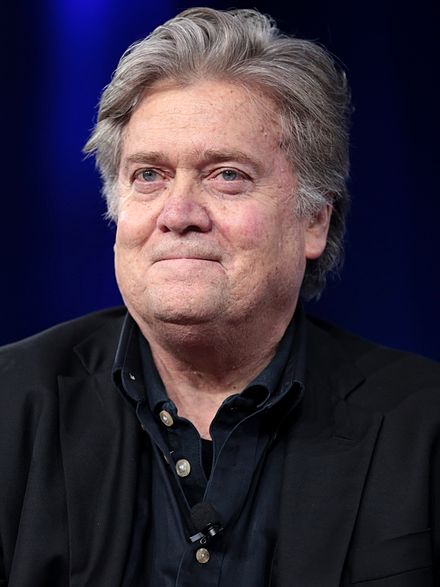
Most importantly, Legum ignores a far more obvious example: Steve Bannon, who was pardoned for his Build the Wall fraud the same day that Davidson, Weinstein, and Braun had their sentences commuted, January 19, 2021. As we speak, Bannon is serving his four month sentence for blowing off the January 6 Committee subpoena, a crime committed in October 2021.

While his trial keeps getting delayed, Bannon is currently scheduled to face trial in New York state for the same fraud charges his three co-conspirators were convicted for on December 9. (Bannon was also treated as a co-conspirator in Guo Wengui’s trial, though was never charged himself.)

And Bannon could yet be bested among Trump’s clemency recipients for how quickly he returned to crime.

After all, four days after receiving his December 24 pardon, Roger Stone discussed January 6 with Trump personally, reportedly discussing Trump’s plan to speak.

Several days later, at a dinner onthe evening of December 27th, Stone thanked President Trump. In a post onParler, Stone wrote that he “thanked President Trump in person tonight forpardoning me” and also recommended to the President that he “appoint a special counsel” to stop “those who are attempting to steal the 2020 election through voter fraud.” Stone also wrote that he wanted “to ensurethat Donald Trump continues as our president.”245 Finally, he added: “#StopTheSteal” and “#rogerstonedidnothingwrong.”246 The Select Committee has learned that Stone discussed the January 6th event with the President, likely at this same dinner on December 27th.247 The President told Stone he “was thinking of speaking.”248

And Stone’s speech at a Florida rally on January 3, 2021, was the basis by which Proud Boys Dan Scott and Chris Worrell were convicted of obstruction.

On January 3, 2021, Daniel Scott, Worrell, and other members of their local Proud Boy chapter attended a “Stop the Steal” rally in Naples, Florida. The headline speaker at this event was Roger Stone. Daniel Scott helped Stone up a ladder that Stone used to talk to the crowd. During this speech, Stone asserted that the 2020 presidential election was rigged due to voting fraud, and urged Florida’s U.S. Senators to vote against the certification of the Electoral College vote. Stone stated: “Rick Scott has a fundamental choice. He will either stand up for the constitution…” At that point, Daniel Scott yelled “Or give him the rope!” At another point in the rally, Daniel Scott chanted “Stop the Steal!” into a megaphone, along with the crowd at the rally.

It may have taken no more than ten days for Trump’s pardon recipients to start criming again. That’s unsurprising: For the people close to Trump (including Bernie Kerik, who played a key role in Rudy Giuliani’s cultivation of the Big Lie), he often pardoned them so that they could put their skills to work for him.

Trump wants to fearmonger about the very small percentage of migrants who turn to crime.

But there’s a far higher percentage of people whom Trump plucked from prisons (or spared from prison entirely) who turned back to crime.

Which is not surprising. These are Trump’s people, after all.

Share this entry

Trump Wants to Hide His Attempt to Assassinate Mike Pence from Voters

In 2016, Donald Trump bragged, “I could stand in the middle of Fifth Avenue and shoot somebody, and I wouldn’t lose any voters, OK?”

This election, Trump wants to hide from voters details of how he almost killed his Vice President, Mike Pence, and his claim that doing so was an official act protected by presidential immunity.

That’s the primary thing you need to know about the joint status report presented to Judge Tanya Chutkan in Trump’s January prosecution last night.

Jack Smith doesn’t propose a schedule (thereby avoiding any claim he’s trying to push pre-election developments), but he’s ready to get this process started right away. He does want Judge Chutkan to make determinations regarding immunity first and foremost. He cites Chutkan’s own order and SCOTUS’ remand order to justify that.

The Court has indicated that it intends to conduct its determinations related to immunity first and foremost. See, e.g., ECF No. 197 (Order denying without prejudice the defendant’s motion to dismiss the previous indictment on statutory grounds and specifying that he “may file a renewed motion once all issues of immunity have been resolved”). The Government agrees with this approach, both because the Supreme Court directed such a process on remand, see Trump v. United States, 144 S. Ct. 2312, 2340 (2024), and because the Supreme Court has “repeatedly . . . stressed the importance of resolving immunity questions at the earliest possible stage in litigation,” Hunter v. Bryant, 502 U.S. 224, 227 (1991) (internal citations omitted).

Trump, by contrast, wants to stall any consideration of immunity until December 13 by first litigating a challenge to Jack Smith’s appointment that Aileen Cannon approved but which conflicts with several binding precedents in the DC Circuit (and which Trump pointedly didn’t try before Chutkan last fall, when he submitted all his other motions to dismiss).

Trump-appointed Judge Mark Scarsi rejected Hunter Biden’s similar attempt to challenge David Weiss’ Special Counsel appointment in the wake of Judge Cannon’s ruling as untimely, and there’s good reason to believe that would be the likely outcome here, even before getting to the binding DC Circuit precedent.

You need look no further than Trump’s description of what he wants to challenge in the superseding indictment to understand why Trump wants to delay this fight until December: As I predicted, he wants to have the Mike Pence allegations thrown out.

In addition, while continuing to strongly maintain that many classes of conduct alleged in the Superseding Indictment are immune—including, but not limited to, Tweets and public statements about the federal 2020 Presidential election, communications with state officials about the federal election, and allegations relating to alternate slates of electors—President Trump may file a motion to dismiss focused specifically on the Special Counsel’s improper use of allegations related to Vice President Pence, along with other potential key threshold motions. Namely, in Trump, the Supreme Court held that President Trump is “at least presumptively immune from prosecution for” all alleged efforts “to pressure the Vice President to take particular acts in connection with his role at the certification proceeding.” Trump v. United States, 144 S. Ct. 2312, 2336 (2024). These same allegations are foundational to the Superseding Indictment and each of its four counts. See Doc. 226 at ¶¶ 5, 9(b), 11(c)-(d), 14, 51(b), 55, 67–90, 99–100. If the Court determines, as it should, that the Special Counsel cannot rebut the presumption that these acts are immune, binding law requires that the entire indictment be dismissed because the grand jury considered immunized evidence. Trump, 144 S. Ct. 2312, 2340 (2024) (“Presidents . . . cannot be indicted based on conduct for which they are immune from prosecution.”).

The Special Counsel’s inability to rebut the presumption as to Pence is dispositive to this case. The special counsel will be unable to do so as a matter of law, thus rendering the remainder of the case moot. Trump, 144 S. Ct. 2312, 2337 (2024) (“We therefore remand to the District Court to assess in the first instance, with appropriate input from the parties, whether a prosecution involving Trump’s alleged attempts to influence the Vice President’s oversight of the certification proceeding in his capacity as President of the Senate would pose any dangers of intrusion on the authority and functions of the Executive Branch.” (emphasis added)).

To be sure, he’s not wrong to challenge the inclusion of the Pence allegations. Nor is he wrong in his view of how central Pence is to this indictment (though he overstates when he claims it would moot all else; the fake electors plot might survive the excision of the Mike Pence allegations).

As I explained, Justice Roberts raised the conversations with Pence specifically. But as I also explained, that is one of the shrewd things Jack Smith did in superseding the indictment: he stripped out all other things that obviously fit under Roberts’ guidelines, leaving only Trump’s efforts to get Pence to throw out the votes of 81 million Biden voters and when Pence refused, Trump’s action — a tweet — that almost got Pence assassinated.

Trump may well succeed in arguing that he can’t be prohibited from asking Pence to overturn the results of the election so the two of them could remain in power because any such prohibition would chill the normal conversations between Presidents and their Vice Presidents. That is simply the absurd logical result of Roberts’ opinion: that a President can order his Vice President to steal an election because any prohibition on doing so would chill the authority of the President.

But if Jack Smith has his way, Trump will have to make that argument — once, probably in a court filing in October — before voters go to the polls in November.

There are a bunch of legal details in this status report. But given the near certainty that if Trump wins, the entire prosecution will go away, the only one that really matters is that, this election, Trump isn’t so sure that he would lose no votes if he shot someone on Fifth Avenue — or if voters learned why and how he almost had his Vice President assassinated in the US Capitol — as he was in 2016.

Trump doesn’t want to tell voters he thinks that as President, he could have Mike Pence shot on the Senate floor — shot as punishment because his Vice President refused an illegal order to steal an election — and be immune from any consequences for doing so.

Share this entry

Michael Shear and Reid Epstein Feign Stupidity about Trump’s Decade-Long Pitch for Authoritarianism

Here’s what the NYT digital front page looks like for me this morning.

It features Kamala Harris’ rather unremarkable interview with CNN (part one, part two, part three) as prominently as CNN itself (other political outlets are more focused on an upcoming Brian Kemp decision on how Georgia’s election will be run, Trump’s attempt to flip-flop on abortion, and yet another attempt from Trump to delay his sentence in his New York case).

Whatever.

After demanding it for a month, I get that some outlets need to claim this interview was more useful than it was.

But the remarkable thing about NYT’s focus on it is they’ve written two stories substantially about the same thing: The NYT’s own month-long campaign to drive Joe Biden from the race.

Yet in adopting that focus, Reid Epstein and Michael Shear ignored the logic that their own outlet adopted for such an unrelenting push to oust Biden, and in the process, covered up the threat Trump poses to democracy.

Of the seven things Epstein took away from the interview, the first was an overstatement of the degree to which Kamala was “hugging” Biden’s legacy versus the degree to which (for example, on fracking) she will make concessions if it achieves an overall policy goal.

Nevertheless, Epstein is right that Harris was better able to explain the success of Biden’s policies, one of two reasons I was pretty sure, from the start, swapping Harris for Biden would be an improvement, justifying the swap.

As it turns out, Ms. Harris is a better salesperson for Mr. Biden’s accomplishments and defender of his record than he ever was. Perhaps that’s little surprise, given the president’s diminished political skills and trouble speaking coherently in recent years.

Having thus maligned Biden, Epstein then claimed that Harris wants to turn the page on both Biden and Trump. He focused on Harris’ depiction of her opponent not by name, but time period — the last decade — and quipped (I’m sure Epstein thinks this is clever!) that Biden has been prominent over the last decade and a half (treating the two years between when Biden reacted strongly to Charlottesville and the time he actually announced as part of his candidacy).

… but wants to turn the page on him as well as Trump.

What Ms. Harris did do was offer herself up as a continuation of Mr. Biden’s leadership even as she distanced herself from him.

Asked by Ms. Bash if she had any regrets about defending Mr. Biden’s fitness for office and ability to serve a second term, Ms. Harris said she did not and praised the president.

Then, in the next breath, she deftly put both him and Mr. Trump in the rearview mirror.

“I am so proud to have served as vice president to Joe Biden,” she said. “I’m so proud to be running with Tim Walz for president of the United States and to bring America what I believe the American people deserve, which is a new way forward, and turn the page on the last decade of what I believe has been contrary to where the spirit of our country really lies.”

Mr. Biden, of course, has been either president, vice president or a leading candidate for president for most of the last 15 years.

Then Epstein returned to it in his commendation for the boring interview, suggesting that Bash didn’t demean Biden as much as Epstein — or rather, “Republican critics” — want.

Republican critics of Ms. Harris may have wished for a harsher grilling — or for more direct questions about how she felt about Mr. Biden’s aptitude and acuity — but Ms. Bash pressed the vice president when necessary.

Shear did something similar.

His entire post focused on how Kamala answered Dana Bash’s question (three minutes into the third part) of whether the Vice President regretted supporting Biden until he dropped out.

Vice President Kamala Harris said on Thursday that she did not regret defending President Biden against claims that he had declined mentally, saying that she believes he has the “intelligence, the commitment and the judgment and disposition” Americans expect from their president.

“No, not at all. Not at all,” the vice president said when asked if she regretted saying Mr. Biden was “extraordinarily strong” in the moments following the disastrous debate in June that led him to abandon his bid for re-election a month later.

Shear did not, as Epstein did, feign confusion about what Harris meant when she adopted that “last decade” moniker. He explained — perhaps for Epstein’s benefit? — that it was a reference to Trump.

Instead, he misrepresented what she was doing with Biden, temporally, claiming that “she talked about Mr. Biden mostly in the past tense[,] with a kind of nostalgia.”

But she talked about Mr. Biden mostly in the past tense — fondly, but with a kind of nostalgia that made it clear that he no longer represents the future of the country that she hopes to be leading in January.

[snip]

“History is going to show,” she said, “not only has Joe Biden led an administration that has achieved those extraordinary successes, but the character of the man is one that he has been in his life and career, including as a president, quite selfless and puts the American people first.”

Her reminiscing about Mr. Biden’s place in history — she said it was “one of the greatest honors of my career” to serve with him — came just after she said she was determined to “turn the page” on a decade of American politics that has not been good for the country.

“Of course, the last three and a half years has been part of your administration,” Ms. Bash reminded the vice president.

Ms. Harris said she was talking about “an era that started about a decade ago,” an apparent reference to the beginning of former President Donald J. Trump’s first campaign for the White House in 2015. She said the era represented a “warped” idea that “the strength of a leader is based on who you beat down.”

That was clearly directed at Mr. Trump, and she suggested that the warped era would continue if he returned to the White House next year. [my emphasis]

Now, in point of fact, both men misrepresented how the Vice President used that “decade” moniker. She actually used it twice. Once, the instance they focused on, in the last third of the interview, which I’ll get to.

But she also used it in response to Bash’s very first question, the dumb “what would you do on Day One” question that TV pundits love.

I think sadly, in the last decade, we have had in the former president someone who has really been pushing an agenda and an environment that is about diminishing the character and strength of who we are as Americans, really, and I think people are ready to turn the page on that. [My emphasis; after this, Bash snapped back, repeating the, “what would you do on Day One” question.]

That is, Harris defined what she meant by “the last decade” in what was probably her fifth sentence in the interview (possibly even fourth — the woman may use longer sentences than me!), after introducing a focus on the middle class and a return to hope. From her very first response, Harris tied the way Trump (whom she never named) has diminished America to some kind of effect it might have on the middle class.

And the questions that followed that one were focused on policy, which Harris always addressed, whether in the present tense or past, in her role as Vice President. “Well first of all, we had to recover, as an economy,” Harris explained why she (and Biden) had not implemented further steps she’d like to take to help the middle class. “That’s good work,” Kamala boasted, after listing a bunch of Biden’s economic accomplishments. “There’s more to do, but that’s good work.”

In fact, Kamala’s answer to the question NYT dedicated much of two columns on, whether she regretted defending President Biden after he bombed the debate, was in the present tense.

Harris: I have served with President Biden for almost four years now and I’ll tell you it’s one of the greatest honors of my career. Truly. He cares so deeply about the American people. He is so smart and loyal to the American people. And I have spent hours and hours with him, be it in the Oval Office or the Situation Room. He has the intelligence, the commitment, and the judgment, and disposition that I think the American people rightly deserve in their President. By contrast, the former President has none of that. And so, one, I am so proud to have served as Vice President to Joe Biden. And two, I am so proud to be running with Tim Walz for President of the United States, and to bring America what I believe the American people deserve, which is a new way forward and turn the page on the last decade of what I believe has been contrary to where the spirit of our country really lies. [my emphasis]

In a question implicitly about how successful she has been thus far, in the race, Kamala defined who Biden is, present tense, and then explicitly contrasted that to Trump. Biden has, present tense, the intelligence, commitment, judgment, and disposition to be President, and Trump has, present tense, none of that. That’s what she used to springboard from her tenure as Vice President into her candidacy with Walz, a way to turn the page on the last decade that has been contrary to the spirit of the country.

Bash, like Epstein, tried to make this a gotcha, which is when Kamala explained for the second time what she was talking about.

Bash: The last decade — of course, the last three and a half years has been part of your Administration.

Harris: I’m talking about an era that started about a decade ago where there is some suggestion — warped, I believe it to be — that, the measure of the strength of a leader is based on who you beat down, instead of where I believe most Americans are, which is to believe that the true measure of the strength of a leader is based on who you lift up. That’s what’s at stake as much as any other detail that we could discuss in this election. [my emphasis]

But then Harris returned to what she said in that very first question: When she says “last decade” as stand-in for the opponent she won’t name, she means that a different vision of leadership is as important as any of the policy questions.

Where things turn to a past tense in which Harris does not presume herself to have participated — the one that Shear quotes to support his claim that “she talked about Mr. Biden mostly in the past tense” — came in response to her telling of how Biden told her he was going to drop out, which led her to think about how history — people in the future — will regard Joe Biden and the decision he was making, placing this past tense as past to some future time when pundits finally get their heads out of their asses.

The VP told the story: she was interrupted while making extra bacon for one of her grand nieces by a call from Joe Biden. Biden told her his decision, and, “I asked him, are you sure. And he said, yes. And that’s how I learned about it.”

The past tense Shear quoted came in response to a follow-up.

Bash had asked, and pressed a second time, whether Biden offered to endorse Harris right away. Harris responded that Biden was very clear he was going to support her (Kamala didn’t actually answer about the endorsement, but then they may have had earlier conversations), but that that wasn’t her first priority.

My first thought was not about me, to be honest with you. My first thought was about him, to be honest.

She then launched on a reflection about what, “I think history is going to show” about Joe Biden’s presidency, describing it as transformative economically, bringing back American alliances. Then she addressed “the character of the man.”

This is a question that goes back to one of two reasons Biden offered in February why he remained in the race: because he was really good at being President. The other (as I reviewed the day after the debate) was that he believed, in February, he had the best shot at beating Trump.

On July 21 — on the day that Biden was still scrambling to make the prisoner exchange with Russia even as NYT pundits were falsely reporting he was totally isolated — Biden was still very good at being President. With the significant exception of Gaza, he may still be. By that point on July 21, though, it had become clear that Harris is better able to beat Trump. As suggested by Epstein’s begrudging admission that when Kamala lays out Biden’s economic accomplishments, they look pretty good, part of that is defending the things the Biden Administration did to recover from the mistakes Trump made.

But part of it is offering a contrast with Trump. Which, because Harris apparently chose not to name her opponent and not to let silly pundits demand a response to Trump’s latest attention-getting provocation, as Bash did with a question about Trump’s presumption to define Harris’ race, the Vice President is referring to as a last decade. She did it in response to the first question, and she did it a second time in response to the question NYT chose to write about twice.

This is actually a pretty subtle way to do this. Obviously, Harris has befuddled two men who imagine themselves experts.

In their confusion about it, though, Epstein and Shear make a similar mistake to the one their colleague Shane Goldmacher did when he described that Kamala was running as a change candidate. They did so, even though Goldmacher himself referred to what Kamala was running against as Trump’s “decade”-long “bulldozing approach” advocating for “urgent upheaval.”

[S]o much of Trump’s lasting influence is about his lasting attack on rule of law. The insistence that this is about incumbency obscures the real threat Trump poses to democracy, whether or not he’s president.

Take this crazy Goldmacher paragraph.

For nearly a decade, Mr. Trump’s bulldozing approach has been premised on the idea that the nation was staring into an abyss and only urgent upheaval could save the country. The question for Ms. Harris is whether she can frame Democrats keeping power in 2024 as a break from that dark and divisive era.

It is true that Trump has been claiming that “only urgent upheaval could save the country.” But that was a fascist trope. It wasn’t true and even if it were, none of the policies Trump pushed would do anything but enrich people like him. Journalism should do more than observe that he made those false claims; it should explain why they’re false.

In the very next sentence, though, Goldmacher asserts that the challenge for Kamala (again adopting the dumb poll-driven assumption that she’ll only win if she is the change candidate) is by offering, “a break from that dark and divisive era.” What “era”? By reference, Goldmacher must mean that the near-decade in which Trump has told fascist lies is the “dark and divisive era” (though Trump’s racist birtherism started long before that). But it’s not an era. It’s a fascist belief, a means of exercising power, a means of dehumanizing your political opponents, one that had huge influence, but one that with the exception of the political violence it fostered, only held sway over a minority of the country (albeit a large one).

All three of these men — Goldmacher with his treatment of Trump’s tropes about America as an era, Epstein with his confusion about Harris’ (second) reference to a decade, and Shear’s invention of past tense usage that doesn’t exist — struggle because they’re viewing this exclusively about policy, even though Harris described that “the true measure of the strength of a leader” is “what’s at stake as much as any other detail that we could discuss in this election.”

As I noted in the earlier post, when people flatten this out into policies and incumbency, they ignore the ongoing threat that Trump poses to democracy and Kamala’s vision of how to defeat it.

Kamala is running on democracy just as much as Biden did in 2020. It just looks different, because she has more successfully wrapped it in a bipartisan flag. Even there, there’s real continuity (don’t forget that one of Biden’s most important speeches about democracy in 2022, one that had a real impact on the election, was at Independence Hall).

Largely enabled by Trump’s ongoing effect — again, especially on Choice — Kamala has just found a way to make democracy matter more personally, more viscerally.

Kamala is not eschewing the incumbency she has Vice President. On the contrary, she is running on a continuation and expansion of Joe Biden’s successful policies (even if journalists are missing that). And she is running, just as Biden did, on defeating both Trump’s electoral bid but also the threat he poses to democracy itself.

This is precisely why the NYT said the stakes on Biden dropping out were so high as it kicked off a relentless campaign to force Biden out: because, first, Donald Trump was a menace, and second, Biden didn’t have what it takes to hold Trump accountable.

Donald Trump has proved himself to be a significant jeopardy to that democracy — an erratic and self-interested figure unworthy of the public trust. He systematically attempted to undermine the integrity of elections. His supporters have described, publicly, a 2025 agenda that would give him the power to carry out the most extreme of his promises and threats. If he is returned to office, he has vowed to be a different kind of president, unrestrained by the checks on power built into the American political system.

[snip]

He struggled to respond to Mr. Trump’s provocations. He struggled to hold Mr. Trump accountable for his lies, his failures and his chilling plans. More than once, he struggled to make it to the end of a sentence.

These self-imagined pros apparently haven’t thought through how this all works. Epstein, at least, is still looking for his pound of flesh, for further humiliation for Joe Biden. The others are ignoring the two tasks: win an election, and reinvigorate an American dream that — because doing so would prove that democracy can deliver for the middle class — proves the value of democracy.

Kamala Harris is, in no way, disavowing Joe Biden. Rather, even as she’s pitching their joint policy success, she’s renewing the effort to package an American exceptionalism that can defeat Trump’s American carnage.

In 2020, Joe Biden, a member of the Silent Generation, offered a defense of democracy as democracy, which was enough for people who remember fascism and actual communism. In an era when many have forgotten that history and lost faith in democracy, GenX Kamala Harris has to do something more: She has to sell democracy, which Trump has been discrediting for a decade, itself.

Share this entry

ABC Treats Kamala’s 21-Year Old Misstatement about Prosecutions as News but Not Trump’s Daily Lies about His Own Crimes

As the mainstream press continues to soil itself like toddlers over Kamala Harris’ interview tonight, I was going to use this CNN piece — suggesting questions about how the VP’s stance on immigration has changed — as an example of the complete collapse of any sense of newsworthiness.

After all, Donald Trump has still never been asked, much less answered, how he plans to fulfill his promise of mass deportations, something that might be impossible without dramatic escalation of police force against both citizens and not. He hasn’t been asked how he’ll pay for it, which would be prohibitively expensive. He hasn’t asked who will do the jobs, such as in agriculture, that keep America’s cost of living relatively low. He hasn’t been asked if he’ll separate families, especially marriages empowered by Obergefell.

Trump hasn’t been asked the most basic questions about one of his only policy promises.

CNN’s Eva McKend has really good questions about immigration policy. In another place and time they’d be totally valid questions!

But given the failure by the entire press corps to ask Trump about a policy promise that would serve as — and assuredly is intended to serve as — a bridge to fascism, it is the height of irresponsibility to waste time on the shifts in Harris’ immigration views, because they don’t matter in the face of Trump’s promises to sic cops on American families in pursuit of brown people.

So that was going to be my exemplar of how completely the press corps has lost any sense of proportionality regarding what counts as news.

Then I read this piece from ABC, which makes a big deal out of the fact that in 2003 — 21 years ago!!! — some Kamala Harris campaign fliers said she prosecuted over a hundred cases, when she should have said she was involved in that many.

But during a debate held in the runup to Election Day 2003 on KGO Radio, Harris’ then-opponent, veteran criminal defense attorney Bill Fazio, accused her of misleading voters about her record as a prosecutor and deputy district attorney in California’s Alameda County.

“How many cases have you tried? Can you tell us how many serious felonies you have tried? Can you tell us one?” Fazio asked Harris, according to audio ABC News obtained of the debate, which also included then-current San Francisco District Attorney Terence Hallinan.

“I’ve tried about 50 cases, Mr. Fazio, and it’s about leadership,” Harris responded.

Fazio then pointed out campaign literature where Harris had been claiming a more extensive prosecutorial record.

“Ms. Harris, why does your information, which is still published, say that you tried hundreds of serious felonies? I think that’s misleading. I think that’s disingenuous. I think that shows that you are incapable of leadership and you’re not to be trusted,” Fazio said. “You continue to put out information which says you have tried hundreds of serious felonies.”

[snip]

Asked this week about Harris’ prosecutorial experience before she became district attorney, a spokesperson for Harris’ presidential campaign used slightly different language to describe her record — saying she was “involved in” hundreds of cases.

This is insane!! Having prosecuted 50 felonies is a lot, for an entire career! To make a stink about this 21-year old misstatement would be unbelievable on its face.

But it is just contemptible, given the amount of lies Donald Trump tells about his own crimes that ABC lets go unmentioned.

Just as one example, check out how ABC covered Donald Trump’s August 8 Mar-a-Lago presser. In that presser, Trump seems to have falsely claimed he did oversee a peaceful transfer of power (the only lie NYT called out in its coverage of this presser). He lied about the four people who were killed that day. He lied about his role in sending his mob to the Capitol. He lied about what those mobsters chanting “Hang Mike Pence” were seeking to do. He lied about how Jan6 defendants are being treated. [All emphasis here and elsewhere my own.]

QUESTION: Mr. President, you were – you just said that it was a peaceful transfer of power last time when you left office. You didn’t (inaudible) …

TRUMP: What – what’s your question?

QUESTION: My question is you can’t (inaudible) the last time it was a peaceful transfer of power when you left office?

The second one (ph) …

TRUMP: No, I think the people that – if you look at January 6th, which a lot of people aren’t talking about very much, I think those people were treated very harshly when you compare them to other things that took place in this country where a lot of people were killed. Nobody was killed on January 6th.

But I think that the people of January 6th were treated very unfairly. And they – where – they were there to complain not through me. They were there to complain about an election. And, you know, it’s very interesting. The biggest crowd I’ve ever spoken to, and I said peacefully and patriotically, which nobody wants to say, but I said peacefully and patriotically.

Trump made a misleading crack meant to suggest that Arthur Engoron undervalued Mar-a-Lago.

TRUMP: It’s a hard room because it’s very big, if you don’t …

(LAUGHTER)

this is worth $18 million.

Trump lied that the prosecutions against him — all of them — are politically motivated. He lied that “they” have weaponized government against him. He lied that the Florida case, in which he was investigated for the same crime as Joe Biden, was weaponized. He falsely claimed that the NY cases are controlled by DOJ.

TRUMP: Because other people have done far bigger things in see a ban [ph] and sure, it’s politically motivated. I think it’s a horrible thing they did. Look, they’ve weaponized government against me. Look at the Florida case. It was a totally weaponized case. All of these cases.

By the way, the New York cases are totally controlled out of the Department of Justice. They sent their top person to the various places. They went to the AG’s office, got that one going. Then he went to the DA’s office, got that one going, ran through it.

No, no, this is all politics, and it’s a disgrace. Never happened in this country. It’s very common that it happens, but not in our country. It happens in banana republics and third-world countries, and that’s what we’re becoming.

Trump claimed he wouldn’t have wanted to put Hillary in jail when, on his orders, DOJ investigated the Clinton Foundation for the entirety of his term and then John Durham tried to trump up conspiracy charges against her (and did bring a frivolous case against her campaign lawyer). Trump also lied about calming, rather than stoking, the “Lock her up” chants at rallies. Trump lied about what files Hillary destroyed after receiving a subpoena (and who destroyed them).

TRUMP: I don’t think it’s appropriate for me to talk about it. I think it’s a tragic story, if you want to know the truth. And I felt that with Hillary Clinton, too. You know, with Hillary Clinton, I could have done things to her that would have made your head spin. I thought it was a very bad thing, take the wife of a President of the United States and put her in jail. And then I see the way they treat me. That’s the way it goes.

But I was very protective of her. Nobody would understand that, but I was. I think my people understand it. They used to say “lock her up, lock her up,” and I’d say “just relax, please.” We won the election. I think it would be very – I think – I think it would have been horrible for our country if I – and we had her between the hammering of all of the files.

And don’t forget, she got a subpoena from the United States Congress, and then after getting the subpoena, she destroyed everything that she was supposed to get. I – I – I could – it – I didn’t think – I thought it was so bad to take her and put her in jail, the wife of a President of the United States. And then when it’s my turn, nobody thinks that way. I thought it was a very terrible thing. And she did a lot of very bad things. I’ll tell you what, she was – she was pretty evil.

But in terms of the country and in terms of unifying the country, bringing it back, to have taken her and to have put her in jail – and I think you know the things as well as I do. They were some pretty bad acts that she did.

Depending on how you count, that’s around twelve lies in one hour-long press conference. They’re proof of Trump’s abuse of the presidency, his refusal to cooperate with an investigation like Joe Biden had, his lifelong habits of fraud, and his assault on democracy.

And these are only the lies about his own (and his eponymous corporation’s) crimes! They don’t include the lies about abortion or gun laws and shootings, other lies about the law he told in that presser.

And yet ABC covered none of those lies, focusing instead on Trump’s false claims about crowd size.

Crowd size.

These aren’t the only lies about justice Trump routinely tells. He routinely lies that he “won” the documents case, that he was declared innocent or that Biden was only not prosecuted because he was too old. They don’t include the lies Trump has told about the Hunter Biden case, the Russian investigation, his actual actions in the Ukraine impeachment. Trump continues to lie about whether he sexually assaulted E Jean Carroll. He lies about his Administration’s jailing of Michael Cohen to shut him up.

Then there are Trump’s renewed false claims, in the last day, about the superseding indictment against him.

Trump lies all the time. He lies about the cases against him, about his own crime. He lies with a goal: to present rule of law as a personal grievance. Those lies go to his core unfitness to be President.

And yet, aside from some good reporting (particularly from Katherine Faulders) on these crimes, ABC never bothers to fact check Donald Trump’s lies about rule of law, not even his own prosecutions.

It is the height of irresponsibility to adopt this double standard — to ignore Trump’s corruption of rule of law while chasing a campaign exaggeration made two decades ago. It was bad enough that the press corps sits there, docilely, as Trump corrupts rule of law every time he opens his mouth. But to then try to make a campaign issue about whether Kamala Harris was involved in or prosecuted 50 cases decades ago?

ABC claims that Kamala Harris made misstatements. But their own failure to report on Trump’s false claims is a far, far greater misrepresentation of the truth, and it’s a misrepresentation of the truth they repeat every day.

Share this entry