Steven Seagal Helps Rohrabacher in Failed Quest to Visit “Chechnyans”
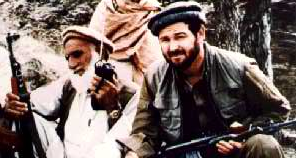
It is a bit surprising Russia would allow a visit from a man who took up arms against the Soviets in Afghanistan.

It is a bit surprising Russia would allow a visit from a man who took up arms against the Soviets in Afghanistan.

Proving once again that he has the reasoning skills of a termite-infested and rotting fence post, Dana Rohrabacher had the bright idea that he and fellow geniuses Michele Bachmann and Steve King should go to Russia to get to the bottom of why Russian and US intelligence agencies did not jointly predict and prevent the Boston Marathon bombing. From the announcement of the trip on Rohrabacher’s website (oh, wait, it looks like Rohrabacher just crossposted the ABC News story transcribed from what Rohrabacher’s office fed them):

A delegation of American lawmakers will travel to Russia next week in part to investigate last month’s Boston Marathon bombings, ABC News has learned.

The group, led by Rep. Dana Rohrabacher, R-Calif., wants to find out why a 2011 Russian request that the United States investigate Tamerlan Tsarnaev, one of the suspected Boston bombers, did not raise more red flags.

The Russians  offered a vague warning that Tsarnaev planned to link up with extremist groups abroad, but an FBI investigation yielded no evidence to support those claims at the time. The lawmakers also want to know why  subsequent U.S. requests for additional information about Tsarnaev went unanswered by the Russians.

“If there was a distrust, or lack of cooperation because of that distrust, between the Russian intelligence and the FBI, then that needs to be fixed and we will be talking about that,”  Rohrabacher, the chairman of the House Committee on Foreign Affairs’ Subcommittee on Europe, Eurasia and Emerging Threats, told ABC News by telephone.

“Our goal is to use Boston as an example, if indeed there was something more, that should’ve been done that wasn’t because of a bad attitude,” Rohrabacher added.

Remarkably, the ABC News transcription goes on to cite Rohrabacher wanting to overcome any “lingering mistrust between the former Cold War rivals”. And yet, neither ABC News nor Rohrabacher seem to give any thought to the fact that back in the heady days when the US was backing Osama bin Laden and other mujahideen fighters against the Soviets in Afghanistan, Rohrabacher himself decided to play dress-up, grab a gun and go to Afghanistan to join the fun in hunting Russkies. Oh well, forgive and forget, I guess.

Unlike when he tried to visit Afghanistan and was denied entry because of his rabble-rousing past and continued meddling, Rohrabacher was allowed entry to Russia. Rohrabacher’s goal wasn’t only to talk to Russians, however. Since the Boston bombers were ethnic Chechens, it appears that the great Congressman decided he had to visit himself some “Chechnyans”. That’s right, in a reprise of Rohrabacher’s infamous Congressional hearing on Balochistan where he mangled the pronunciation of the region, Rohrabacher now has shown his cultural sensitivity once again by mangling another name: Read more

Share this entry

FBI’s Todashev Story Gets Stupider

There are two things that amaze me about this story.

First, that the FBI wants you to believe the latest version of their story about how Ibragim Todashev presented a threat, after the story has changed 2 times already.

FBI sources say Ibragim Todashev, a friend of accused Boston Marathon bomber Tamarlen Tsarnaev, was unarmed when he was shot and killed by an FBI agent during questioning at an Orlando apartment last week.

Sources said Todashev might have been lunging toward a sword, but he was not in possession of it.

[snip]

Sources said a sword was inside the apartment, but the weapon was moved to the corner of the room before questioning began.

And we’re to believe FBI protocol suggests you move the swords to the corner of the room, but no further, while questioning a dangerous witness.

The other thing that amazes me is that reporters still parrot FBI claims that Todashev was confessing to the 2011 Waltham triple murder — was in the process of writing up his confession, in fact! — when he suddenly turned violent and not just refused to keep confessing but lunged for the sword place in the corner of the room.

But really, he really was confessing. He just reached for the sword because it was the Waltham murder weapon and thought it better to sign the “confession” with that weapon.

Or something like that.

Update: I’m guessing this detail comes from Massachusetts cops who are unwilling to be dragged into FBI’s stuff.

An official said that according to one account of the shooting, the other law enforcement officials had just stepped out of the room, leaving the FBI agent alone with Todashev, when the confrontation occurred.

Share this entry

Today’s Pakistan Drone Strike Targeted Khost Blast Key Figure in CIA Revenge Killing

Will the drone pilot get the $5 million reward?

Will the drone pilot get the $5 million reward?

The latest CIA drone strike in North Waziristan is described by Reuters as having killed the number two figure in the Pakistan Taliban group known as the TTP. This strike was a first on many fronts. It was the first since the election of a new government in Pakistan, with new Prime Minister Nawaz Sharif slated to take office next week, the first since President Barack Obama’s drone rules speech and the first strike in Pakistan since the Peshawar High Court ruled that US drone strikes in Pakistan are war crimes.

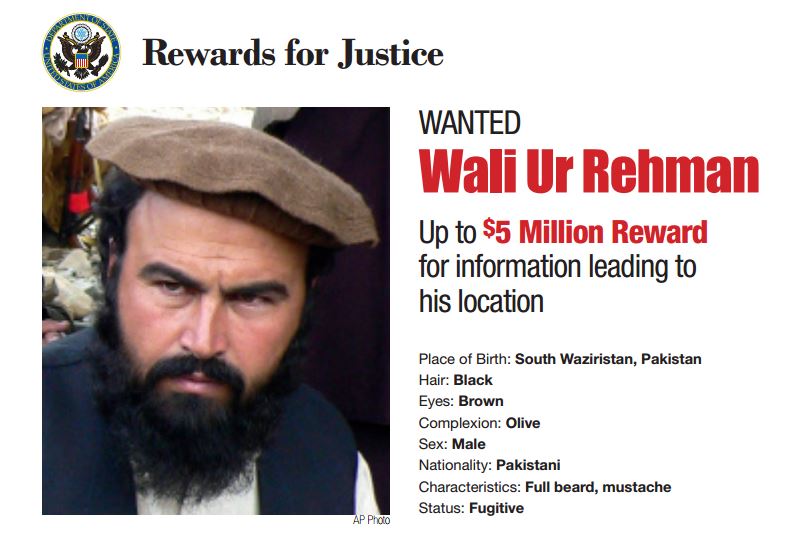
Despite public pronouncements by both the caretaker interim government and the incoming Prime Minister that they oppose CIA drone strikes, this strike is likely to produce less official backlash since the TTP has a long history of attacking both military and civilian targets inside Pakistan. But the CIA had their own reason to target this particular figure. From the State Department’s Rewards for Justice program, we have this description of Wali Ur Rehman (pdf):

Wali Ur Rehman, is second in command and chief military strategist of Tehrik-e-Taliban Pakistan (TTP). He commands TTP members in South Waziristan. He has participated in cross-border attacks in Afghanistan against U.S. and NATO personnel, and is wanted in connection with his involvement in the murder of seven American citizens on December 30, 2009, at Forward Operating Base Chapman in Khost, Afghanistan.

Shortly after the devastating attack in Khost, the CIA vowed revenge:

The CIA yesterday vowed to avenge the deaths of seven of its agents who were killed in a suicide bombing on Wednesday in Afghanistan, as it emerged that the bomber may have been invited on to the base as a potential informant according to two former US officials.

“This attack will be avenged through successful, aggressive counterterrorism operations,” a US intelligence official said on condition of anonymity.

It would appear that the CIA has now exacted that revenge, subject, of course, to the usual caveats that key figures targeted in drone strikes often have a way of popping up later unharmed. Gosh, I wonder if that was Mr. Moral Rectitude himself who gave that anonymous quote about revenge to the Guardian back when he was an “intelligence official” inside the White House instead of his current job running the CIA.

Update: I have been reminded on Twitter and elsewhere that in his speech last week, Obama said “America does not take strikes to punish individuals“. That seems to run in direct opposition to the vow from the CIA to avenge Khost and Ur Rheman’s accused role in that attack resulting in today’s attack.

Share this entry

Torquemada Pursued Suspected Muslims, Not Journalists

In an article flattering Eric Holder’s sense of remorse once he realized how inappropriate it was to claim a journalist engaging in flattery might be a co-conspirator in a leak, Daniel Klaidman quotes a Holder friend explaining that the Attorney General doesn’t see himself as some kind of Torqemada figure pursuing journalists.

But for Attorney General Eric Holder, the gravity of the situation didn’t fully sink in until Monday morning when he read the Post’s front-page story, sitting at his kitchen table. Quoting from the affidavit, the story detailed how agents had tracked Rosen’s movements in and out of the State Department, perused his private emails, and traced the timing of his calls to the State Department security adviser suspected of leaking to him. Then the story, quoting the stark, clinical language of the affidavit, described Rosen as “at the very least … an aider, abettor and/or co-conspirator” in the crime. Holder knew that Justice would be besieged by the twin leak probes; but, according to aides, he was also beginning to feel a creeping sense of personal remorse.

[snip]

As attorney general, a position at the intersection of law, politics, and investigations, Holder has been at the center of partisan controversy almost since taking office. But sources close to the attorney general says he has been particularly stung by the leak controversy, in large part because his department’s—and his own—actions are at odds with his image of himself as a pragmatic lawyer with liberal instincts and a well-honed sense of balance—not unlike the president he serves. “Look, Eric sees himself fundamentally as a progressive, not some Torquemada out to silence the press,” says a friend who asked not to be identified. [my emphasis]

Granted, the Torquemada metaphor was Holder’s friend’s, not his own. And granted, Holder’s DOJ has worked to avoid the kind of Muslim-bashing people like Peter King have called for (though his DOJ has also slow-walked its investigation into NYPD’s profiling of Muslims and allowed FBI to engage in similar behavior).

But the reference to Torquemda highlighted how limited this remorse is — just to investigations involving journalists, not Muslims, for example — and how thin Holder’s apparent understanding of the problem remains.

Read more

Share this entry

Philip Mudd Makes the Case for Signature Strikes against Banksters

Last Friday, former Deputy Director of CIA’s Counterterrorism Center and FBI Philip Mudd defended the use of signature strikes when used against multinational networked organizations that hide in safe havens.

Signature strikes have pulled out these lower-level threads of al Qaeda’s apparatus — and that of its global affiliates — rapidly enough that the deaths of top leaders are now more than matched by the destruction of the complex support structure below them. Western conceptions of how organizations work, with hierarchal structures driven by top-level managers, do not apply to al Qaeda and its affiliates. These groups are instead conglomerations of militants, operating independently, with rough lines of communication and fuzzy networks that cross continents and groups. They are hard to map cleanly, in other words.

[snip]

Part of the reason signature strikes have become so prominent in this global counterterror war is, simply put, geography. Local terrorist groups only become international threats if they have leadership that can execute a broad, globalist vision, and if that leadership has the time and space to plot without daily distractions from armies and security services — as in safe havens like Yemen, Somalia, the Sahel, and the tribal areas of Pakistan. These are exactly the places where the United States cannot apply conventional force and where local governments lack the capability or will to counter the threat. Exactly the places where drones offer an option to eviscerate a growing terror threat that has a dispersed, diffuse hierarchy. [my emphasis]

Of course, Mudd is crazy to suggest that the networked organization of terrorism is not found in the West. Indeed, corporations in the West pioneered the concept, with cell structures that provided them legal opacity. Though the safe havens they hid in were named Jersey and Cayman Islands rather than Yemen or Somalia.

So it seems this defense of signature strikes should be read as one of two things. Either, a case that the best defense against the damage banksters have caused is the fairly indiscriminate killing of their mid-level managers. Or, if that solution seems barbarous at its core, then perhaps this is a good case study in how extreme the idea of signature strikes would seem if it weren’t couched in a sloppy kind of Orientalism advocating it for others but not for our own.

Share this entry

Tamerlan Tsarnaev: Not a Step by Step Investigation

Screen shot 2013-05-24 at 12.19.43 PMIn a piece summarizing investigators’ understanding of Tamerlan Tsarnaev based largely on their investigations in Russia, ABC unironically quotes Dana Rohrabacher — who used to play dress-up mujahadeen when they were fighting Russia in Afghanistan — on intelligence-sharing tensions with Russia.

That communication gap has become a target for a group of American lawmakers who plan to visit Russia next week to investigate the bombing.

“If there was a distrust, or lack of cooperation because of that distrust, between the Russian intelligence and the FBI, then that needs to be fixed and we will be talking about that,” Rep. Dana Rohrabacher (R-Calif.), the chairman of the House Committee on Foreign Affairs’ Subcommittee on Europe, Eurasia and Emerging Threats who is leading the Congressional delegation, told ABC News by telephone.

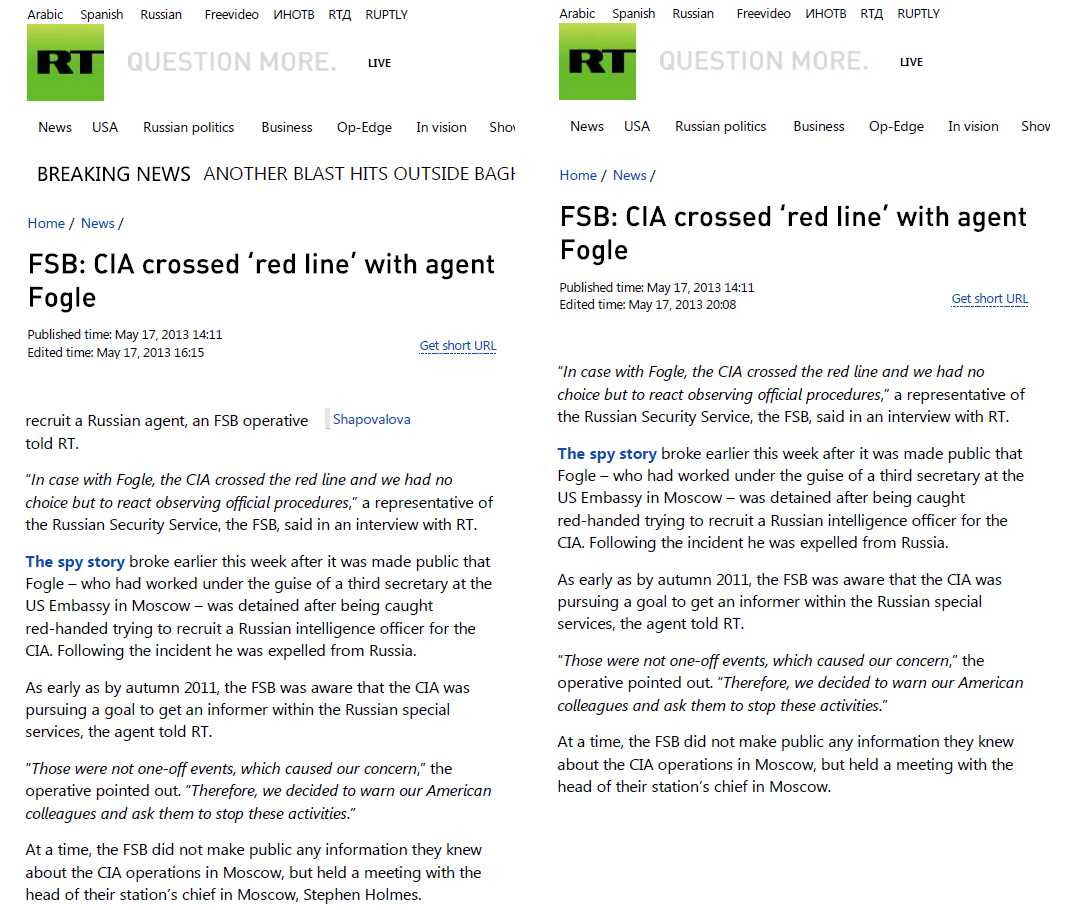
ABC makes no mention of the recent escalation of intelligence tensions, from the failed recruitment in March followed by the refused entry on May 5 of US lawyer Thomas Firestone, the May 14 exposure of Ryan Fogle, who allegedly was attempting to recruit FSB’s expert on Chechen extremists, and the May 17 exposure of someone FSB claimed was CIA’s Station Chief in Moscow.

That is, ABC doesn’t point to the pretty extraordinary ways Russia is trying to drive up tensions even as we’re supposed to be working together to understand the Boston Marathon attack.

Nor does it mention that the FBI “and other law enforcement personnel” killed Russian Ibragim Todashev, just as they were purportedly getting him to sign a confession to involvement, with Tamerlan, in a grisly 2011 triple murder.  The now-dead Todashev will not be able to shed any more light on what kind of relationship he had with Tamerlan, nor what relations with Russian nuts of all types they might have had.

There’s a lot it doesn’t mention.

It does, however, in the 25th and 26th paragraph (the last two), admit this:

While the officials described their cooperation with the Russians as “unprecedented,” they grumbled privately that they have been unable to do a methodical step-by-step investigation like they are used to doing in the U.S., or even in other countries where they have long-standing cooperation. American investigators from the FBI have been unable to travel to Dagestan without permission from the Russian authorities.

Still, they insist they have been able to confirm much of what they have been told by Russian government officials from what one official vaguely described as “other channels.”

I do hope these “other channels” are truly independent. Because it seems Russia is not only limiting the degree to which the FBI can investigate Tsarnaev, but inventing new reasons to add to tensions with the US.

Share this entry

Did Solitary Confinement Make UndieBomber 1.0 Incompetent to Represent Himself?

But, in fact, the FBI do a great job as far as eliciting information after they’re Mirandizing them, and so they can get information as part of that type of negotiation with them, let them know they can in fact languish forever, or we can in fact have a dialogue about it intelligently.

— John Brennan, describing the way the FBI gets suspects to talk after Mirandizing them

Here’s something you may not know: Umar Farouk Abdulmutallab, the first UndieBomber, is appealing his conviction and sentence.

He’s doing so on several grounds, including that his confession made during public safety questioning while on fentanyl should not have been admissible at trial. But the most interesting issue — and the one that takes up the bulk of his appeal — argues Abdulmutallab was not competent to represent himself. (His appeal, as well as the government response and his reply only recently got unsealed by the Circuit Court.)

As the appeal notes, back in August 2011, after he had been in custody almost 20 months, his standby counsel Anthony Chambers submitted a motion requesting a competency hearing, one the judge rejected.

His standby counsel filed a motion requesting a competency hearing, noting that Abdulmutallab suffered “mental lapses,” engaged in “bizarre behaviors,” and sometimes seemed interested in presenting a defense while at other times he seemed indifferent to his defense. Abdulmutallab also demonstrated indifference toward his defense in front of the district court. The district court denied the motion for a competency examination based largely on Abdulmutallab’s own equivocal and rambling profession of competency. The failure to hold the competency examination cannot be cured after the fact and requires a new trial so that a “concurrent determination” of competency can be made. Abdulmutallab’s guilty plea did not waive the competency issue because a person whose competence is in doubt cannot knowingly, voluntarily, and intelligently waive a right or plead guilty.

The appeal cites consistent difficulties Abdulmutallab and attorneys tied to his case had with the Milan Correctional Facility, where he was being held in solitary confinement with communication restrictions. At almost every status hearing (save the one where he fired his court appointed lawyers), Abdulmutallab complained about the communication restrictions placed on him at Milan. (“Milan” is pronounced My-lin.)

At a status conference on April 13, 2010, his attorney’s reported that security restrictions at Federal Correctional Institute Milan (“Milan”) had severely limited their ability to meet with him to review discovery and other matters. He was held in solitary confinement under constant 24-hour manned observation.

Read more

Share this entry

A Not-A-Drone-Strike Near Disney World

The FBI has been tracking a Chechen martial arts practitioner in FL, Ibragim Todashev, since the Boston Marathon attack. The guy knew Tamerlan Tsarnaev from Boston and reportedly had a phone conversation with him “more than a month ago” (which still would put it shortly before the attack). Todashev — who got in a serious fight in a parking lot earlier this month — had recently booked a flight to NY, with plans to travel on to Chechnya.

So, after having interviewed him yesterday, the FBI decided to interview him again around midnight last night.

It didn’t end well.

The FBI said Ibragim Todashev was shot and killed just after midnight at 6022 Peregrine Avenue in the Windhover Apartments near Universal Orlando.

“The agent encountered the suspect while conducting official duties. The suspect is deceased,” FBI Special Agent Dave Couvertier told Local 6.

John Miller, the former FBI assistant director who now works for CBS News, said the FBI was trying to re-question Todashev at his apartment when “something went wrong.”  Miller said the FBI agent fired shots, but details of the incident have not yet been released and it’s not known if Todashev had a gun.

This will bear watching.

Here’s the FBI’s complete statement on the killing.

The FBI is currently reviewing a shooting incident involving an FBI special agent. Based on preliminary information, the incident occurred in Orlando, Florida during the early morning hours of May 22, 2013. The agent, two Massachusetts State Police troopers, and other law enforcement personnel were interviewing an individual in connection with the Boston Marathon bombing investigation when a violent confrontation was initiated by the individual. During the confrontation, the individual was killed and the agent sustained non-life threatening injuries. As this incident is under review, we have no further details at this time. [my emphasis]

You’d think a crack investigative agency like the FBI would know how many and what kind of other law enforcement personnel were present.

Oh, what’s that? You mean they’re not telling us on purpose?

Update: Apparently Todashev confessed to playing a role in the triple murder in Waltham in 2011 authorities suspect Tamerlan was involved in.

Todashev, they say, had spent some time in the Boston area, where he was a mixed martial arts fighter, and knew Tsarnaev there.  Investigators say he confessed to the agent in Florida that he played a role in a triple murder in 2011 in which three men were discovered slain in an apartment in Waltham, Mass.

Their throats had been cut, and their bodies were covered with marijuana. No suspects had been arrested in that case.

Officials say FBI agents were questioning Todashev on Tuesday. He was cooperative at first, they say, but later that night, he attacked the agent with a knife, who shot and killed him. Officials say Todashev became violent as he was about to sign a written statement based on his confession.

Chances are great that the FBI didn’t tape this claimed confession.

Update: As I suspected, at the time of the assault earlier this month, Todashev was being actively followed, presumably by the FBI.

According to discovery in that case, deputies knew immediately that Todashev was either a cage or jui juitsu fighter and knew “how dangerous these men can be,” a report said.

“I told this subject if he tried to fight us I would shoot him,” one deputy wrote in a report.

The report said that Todashev told deputies he believed he was being followed by federal agents.

He told deputies that three vehicles with tinted windows that were behind him when he was stopped were FBI vehicles. All three cars left the scene before deputies could confirm that they the drivers were federal agents, according to the report.

“I noticed one vehicle was driven by a male, had a computer stand and appeared to be talking on a radio,” the deputy said in the report.

Share this entry

Why Would the US Shield Fahd al-Quso in February 2012 But Drone Kill Him in May 2012?

On February 10, 2012, the government went out of its way to hide Fahd al-Quso’s ongoing involvement in terrorist attacks against the US. Three months later, on May 6, 2012 — the day before the AP published its story about CIA thwarting an UndieBomb attack — the government killed Quso in a drone strike.

DOJ’s narrative of UndieBomb 1.0 hides Quso’s role in it

On February 10, 2012, as part of his sentencing, DOJ submitted a narrative telling one version of how Umar Farouk Abdulmutallab attempted to bomb Northwest Flight 253 over Detroit. In it, the government tied Abdulmutallab (who, after all, had pled guilty to a conspiracy to commit terrorism) to three AQAP figures: It claimed Anwar al-Awlaki, among other things, gave Abdulmutallab his final instructions that the attack be directed at a US plane and the bomb be set off over US soil. It explained how AQAP bomb-maker Ibrahim al-Asiri constructed the bomb and personally trained Abdulmutallab on its use. And it noted that while Abdulmutallab was training with AQAP, he met Samir Khan who (the narrative helpfully noted in a footnote) would go on to publish Inspire.

The narrative DOJ submitted on February 10 did not mention Fahd al-Quso by name.

Watering trees with UndieBomber 1.0

That’s odd, because Quso reportedly did play a role in Abdulmutallab’s attack. According to a March 2011 AP story, Quso may have been the last person Abdulmutallab met with before he set off on his attack.

Before Abdulmutallab set off on his mission, he visited the home of al Qaeda manager Fahd al-Quso to discuss the plot and the workings of the bomb.

Al-Quso, 36, is one of the most senior al Qaeda leaders publicly linked to the Christmas plot. His association with al Qaeda stretches back more than a decade to his days in Afghanistan when, prosecutors said, bin Laden implored him to “eliminate the infidels from the Arabian Peninsula.”

From there he rose through the ranks. He was assigned the job in Aden to videotape the 1998 suicide bombing of the USS Cole, which killed 17 sailors and injured 39 others, but fell asleep. Despite the lapse, he is now a mid-level manager in the organization. Al-Quso is from the same tribe as radical U.S.-born cleric Anwar al-Awlaki, who had an operational role in the botched Christmas attack.

In December, al-Quso was designated a global terrorist by the State Department, a possible indication that his role in al Qaeda’s Yemen franchise has grown more dangerous.

Al-Quso was indicted on 50 terrorism counts in New York for his role preparing for the Cole attack and served more than five years in prison in Yemen before he was released in 2007. On the FBI’s list, al-Quso ranks behind only bin Laden and his deputy Ayman al-Zawahiri among the most sought-after al Qaeda terrorists.

After meeting with al-Quso, Abdulmutallab left Yemen in December 2009 and made his way to Ghana, where he paid $2,831 in cash for a round-trip ticket from Nigeria to Amsterdam to Detroit and back. [my emphasis]

Indeed, Abdulmutallab’s tie to Quso is one of the only aspects of Abdulmutallab’s trip in Yemen that has been independently verified.

In his book, Dirty Wars, Jeremy Scahill notes,

A local tribal leader from Shabwah, Mullah Zabara, later told me he had seen the young Nigerian at the farm of Fahd al-Quso, the alleged USS Cole bombing conspirator. “He was watering trees,” Zabara told me. “When I saw [Abdulmutallab], I asked Fahd, ‘Who is he?'” Quso told Zabara the young man was from a different part of Yemen, which Zabara knew was a lie. “When I saw him on TV [after the attack], then Fahd told me the truth.” [first bracket original, second bracket mine]

Later in the book, Scahill reports that Zabara was assassinated this January by unknown killers.

Is Fahd al-Quso Abu Tarak?

The details of Quso’s ties to Abdulmutallab — particularly that the Nigerian was watering trees on Quso’s farm — make me wonder whether Quso isn’t the person Abdulmutallab called Abu Tarak in his initial confession on Christmas Day 2009.

In his opening argument in the abbreviated Abdulmutallab trial, AUSA Jonathan Tukel described what Abulmutallab initially confessed after he was captured. Along with all the things later attributed to Awlaki and Asiri, Tukel said Abdulmutallab described having daily talks with Abu Tarak about jihad.

He told the FBI that he and Abu-Tarak spoke daily about jihad and martyrdom and supported al-Qaeda and Osama bin Laden.

In a narrative on Abdulmutallab’s commitment to jihad also submitted for the sentencing based on his personal reviews of Abdulmutallab’s interrogation reports, DOJ expert Dr. Simon Perry suggested that Abdulmutallab was living with Abu Tarak when in Yemen, though he says that was in Sanaa, not Shabwah.

While residing at Abu Tarak’s residence in Sana, Yemen he was mainly confined to his residence and discouraged from any communication with the outside world (phone, email). During this period, UFAM spoke regularly with Abu Tarak and three other individuals who visited him daily, speaking with them about Jihad and martyrdom.

In any case, regardless of whether or not Quso is Abu Tarak, or whether Abu Tarak is an amalgam of AQAP figures, it seems clear that Quso played some role in Abdulmutallab’s preparation.

And yet DOJ chose not to mention that this guy — who had been trying to attack the US since the October 12, 2000 USS Cole attack — was among the notable AQAP figures who prepared Abdulmutallab to attack the US.

Was DOJ hiding that they knew how to infiltrate AQAP?

Whatever Quso’s role in UndieBomb 1.0, the implication of the timing is clear: he was central to the UndieBomb 2.0 plot. Indeed, it is almost certain that CIA asked AP to delay publishing their story to give time to kill Quso, who had just sent our mole off with another UndieBomb.

In other words, one plausible explanation for why DOJ did not confirm what other reports made clear is that it did not want to tip Quso off to what Abdulmutallab told them about him. That is, if they were already planning the op against him, they wouldn’t want him to know they knew how Abdulmutallab had found him 2.5 years earlier.

That is just one possibility, of course.

But if that’s the case — if DOJ obscured Quso’s role in the government’s most extensive accusations that Anwar al-Awlaki had an operational role in targeting the US — then are the claims about Awlaki true?

Share this entry

Obama’s Headlong Rush to Counterterrorism Transparency

By my count, Thursday will be the 100th day since Obama promised, in his State of the Union Adress delivered February 12, “to engage Congress to ensure not only that our targeting, detention and prosecution of terrorists remains consistent with our laws and system of checks and balances, but that our efforts are even more transparent to the American people and to the world.”

Back then there were, officially at least, just a handful of Gitmo detainees on hunger strike. And it’s possible — if DOJ used the two 45-day gags on subpoenas they permit themselves — a subpoena seizing the phone records for 21 AP phone lines had already been issued.

After Obama promised more transparency on drones and other counterterrorism programs, Members of Congress continued to have to demand minimal transparency. On February 20, Rand Paul sent his third request for that information. On February 27, House Judiciary Chairman Bob Goodlatte repeated that Committee’s request to see OLC’s drone targeting memos; he also expressed anger that the Administration had refused to send a witness to the hearing.

On March 7, Eric Holder hinted that we would “will hear from the President in a relatively short period of time” on drones and transparency and counterterrorism.  On March 8, guards at Gitmo shot non-lethal bullets at detainees. The following day US conducted a drone strike in Pakistan, one of two strikes that month.

On March 11, Progressive Members of Congress sent a letter asking for information on drone targeting.

On April 9, McClatchy reported that most drone strikes had hit low level militants, contrary to public claims; it also revealed the intelligence reports themselves were false.

On April 10, the House Judiciary Committee finally threatened to subpoena the OLC memos authorizing the killing of an American citizen; that was at least the 23rd request for such information from Congress. A week later the Committee would finally get a promise to see just those memos, memos squarely within the Committee’s oversight jurisdiction.

On April 13, the military locked down Gitmo, effectively depriving most detainees of the human company they had enjoyed for years. On that day, 43 men were hunger striking.

On April 14, Samir Haji al Hasan Moqbel described, in a NYT op-ed, “I’ve been on a hunger strike since Feb. 10 and have lost well over 30 pounds. I will not eat until they restore my dignity.” That same day, the US launched one of two drone strikes in Pakistan that month.

On April 15, the Tsarnaev brothers attacked the Boston Marathon, reportedly in retaliation for treatment of Muslims in Afghanistan and Iraq.

April 17, a US drone struck the Yemeni village of a Yemeni, Farea al-Muslimi, already scheduled to testify before the Senate Judiciary Committee about how drones turn Yemenis against the US.

On April 21, the number of hunger strikes at Gitmo reached 84 — over half the men there. Six days later, on April 27, that number reached 100. Three more men have since joined the hunger strike.

As those numbers were growing, on April 25, Dianne Feinstein called on Obama to transfer those detainees who have been cleared. On April 30, Obama renewed his promise to close Gitmo. The next day, the White House made clear that the moratorium preventing almost half the detainees, men who have been cleared for transfer, to return home to Yemen, remained in place.

On May 10, the AP learned that DOJ had seized phone records from 21 phone lines with no notice, potentially exposing the sources of up to 100 journalists.

On May 16, in a hearing querying whether Congress should eliminate or expand the September 18, 2001 Authorization to Use Military Force, Assistant Defense Secretary Michael Sheehan testified the war on terror would last at least 10-20 more years. He also said DOD won’t be taking over CIA’s side of the drone war anytime soon.

Saturday, a drone strike killed at least 4 thus far unidentified men in Yemen.

Which brings us to Thursday when, the WaPo details, Obama will give a speech telling us once again the drone strikes are legal, his desire to close Gitmo is real, and leaks his new CIA Director exacerbated are serious. He will, apparently, also tell us how he plans to make his counterterrorism plan look more like what he promised it would look like 4 years ago.

President Obama will deliver a speech Thursday at the National Defense University in which he will address how he intends to bring his counterterrorism policies, including the drone program and the military prison at Guantanamo Bay, Cuba, in line with the legal framework he promised after taking office.

In the interim between when he promised this transparency and when he’ll start to sort of deliver it (but not, apparently, any actions to close Gitmo), about 7% of his second term will have passed.

Some of the delay, apparently, comes from the need to address the issues that have been festering during the delay.

Obama was prepared to deliver the speech earlier this month, but it was put off amid mounting concerns over a prisoner hunger strike at Guantanamo Bay and more recently the Justice Department leaks investigation — both of which the revised speech may address.

But otherwise, it appears it has taken 100 days to be able to craft a speech good enough to make his paranoia about secrecy and lip service to human rights in counterterrorism look like something else.

Ah well, at least they’ve sharply curtailed drone strikes while they’ve been writing a speech.

Share this entry