Posts

How Do You Want Your Family to Remember You?

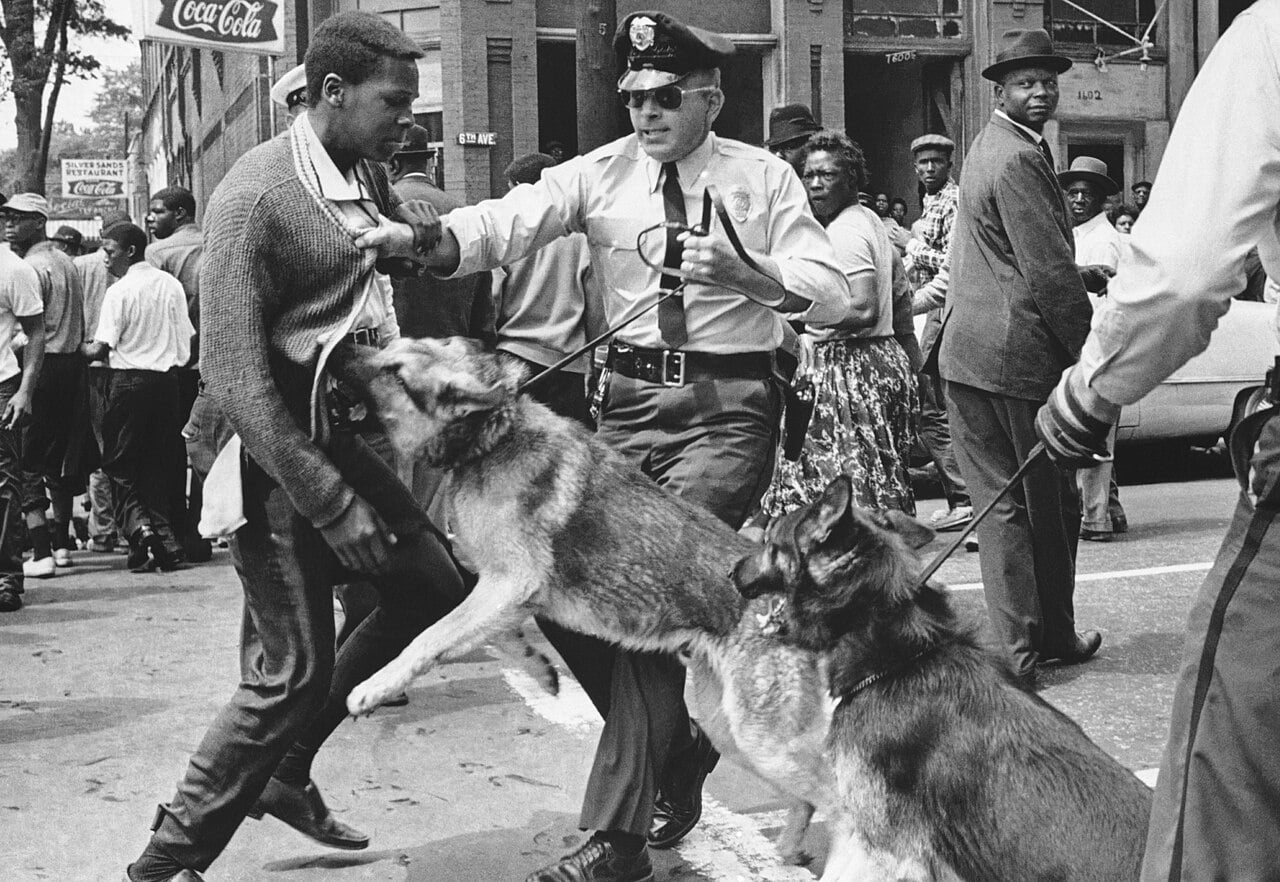
Do you want to he remembered as the guy being attacked by the dog, or as the guy controlling the dog?

Over the last several weeks, I’ve been thinking a lot about ugly government. Comparisons with the Gestapo have been increasingly prevalent, but other parallels have dominated my own thoughts.

When I was in seminary, before the fall of the Berlin Wall, I got to know a West German pastor who was at my US seminary for continuing education. Eberhart also had connections with his East German colleagues, who at that time were leading a growing resistance movement in Berlin, and their chief opponents were the East German Stasi. The Stasi, the secret police, were legendary for their data files. Their work was based on instilling fear, and they induced stunningly amazing numbers of East Germans into informing on their neighbors. Something along the lines of 1 in 6 East Germans were informants, whether out of fear or out of approval of what the East German government was doing.

When I read Marcy’s post about Hannah Natanson, I could not help but think of the Stasi.

In the course of my ministry, before South Africa abandoned apartheid, I came to know a South African Lutheran pastor named T. Simon Farishani. Farisani ran afoul of the legendarily violent South African Police, and was not simply arrested for making statements about equality but imprisoned and subjected to torture not once or twice, but four times. US Lutheran leaders who knew of his plight raises a huge international stink, which ultimately led the South African regime to release him and expel him from the country, allowing him to be treated at the Center for Victims of Torture in Minneapolis-St. Paul. The night before he was released, he told me that he prayed to die, so that he would be spared more torture the next day.

When I heard the news today of yet another killing by ICE in Minneapolis, I could not help but think of Farisani.

As I’ve watched the news from Minnesota, where I have more than a few clergy friends, I could not help but fear for them. More and more clergy are stepping away from benign statements of peace and love, and taking a pro-active stance against what is happening in their midst. I thought of them, and at the same time though about Archbishop Oscar Romero. Romero was appointed archbishop by Pope John Paul II based on his relatively conservative views, but as he watched what the Salvadoran government was doing to the poor and needy, he became increasingly vocal in challenging the regime. His sermons were broadcast on nationwide radio, and when he preached that the members of the Salvadoran military should refuse to do the dirty work of the government, the government decided that Romero had to be stopped. The next day, as Romero was holding the chalice at the celebration of Holy Communion, a government death squad burst into the sanctuary and shot him as he stood at the altar.

When I heard about the arrests of dozens of clergy in Minnesota, I could not help but think of Romero.

In the course of my ministry, I became friends with Bob and Jeannie Graetz. Bob was a white Lutheran pastor who took a call in Montgomery, Alabama, shortly after another young pastor came to town. Maybe you’ve heard of him: Martin Luther King Jr. Graetz had a choice between joining the white ministerial alliance as befitting his race, or the black ministerial alliance as befitting his congregation. He chose the black alliance.

Rosa Parks was a neighbor and a friend, and Bob and Jeannie were staunch supporters of the Montgomery Bus boycott that followed her refusal to give up her seat on a Mongomery bus. Bob and Jeannie joined their black neighbors in their protest work. They offered rides to people who were boycotting the buses.  When the Montgomery City Council passed an ordinance against this, calling it an illegal taxi service, Bob continued offering rides, using the language of the ordinance that allowed giving rides to “friends.” Because to Bob and Jeannie, every black person in Montgomery had become one of their friends.

At one point, the black community decided to invite more arrests as a strategic move, so that the white community would look even worse in the eyes of the rest of the world. Bob volunteered to join his black clergy colleagues in this action, but they adamantly refused to let him. “Bob, if *we* get arrested,” meaning the black pastors, “they will throw us in cells on the black side of the jail. To our cellmates, we will be heroes. But if *you* get arrested, they will throw you in the cells on the white side of the jail. To your cellmates, you will be a traitor, and you know what happens to traitors. You don’t have to prove anything to us, so leave this kind of protest to us, and you keep up the work outside the jail.”

Bob and Jeannie Graetz paid a price for their support of the black community. They dealt with ostracism from the white community in Montgomery, and they had their home bombed not once but twice. And yet, they persisted.

I see the white community of Minneapolis, standing up to support their neighbors of color against the abuses of ICE, and I remember Bob and Jeannie Graetz.

My dad grew up in a bilingual German/English household, and when the family moved from Nebraska to central Missouri in 1943, his mom warned the kids not to speak German in their new town. “You can speak it at home, but not at school, not with your friends, and not around town.” And they didn’t. My dad, his older sister and his younger siblings, all kept their German to themselves.

When I hear about families in Minnesota not sending their kids to school, or sending them with proof of citizenship in their little pockets, or sending them with documents allowing their teachers to take custody of them if the parents were suddenly seized by ICE, I think about my dad.

As a teenager, I was an exchange student in West Germany. The dad in my host family was a kid during WWII and had been a member in the Hitler Youth as a kid, in the same way that thousands of US kids were Cub Scouts. It’s what you did at that age. He wasn’t old enough to have been pushed into military service during the war, but every one of his older relatives – dad, uncles, cousins, etc. – were. He and I talked not so much about the war as about the post-war occupation. He had some hilarious stories about clueless American soldiers (mostly 2nd lieutenants who were too filled with their own self-importance), as well as powerful stories that expressed his delight that his town was occupied by the US rather than the Soviet Union.

I remember all these folks, and am struck by how these memories are not about past events, past struggles, and past oppression. I remember all these folks, and how their stories about then are the stories we are living through right now.

I think of the Stasi then, and think of databases at the DOJ, databases built by Elon Musk and Mark Zuckerberg, and databases no doubt built by Peter Thiel and Palantir.

I think of the unaccountable South African Police then, and think of the unaccountable ICE and CPB today. If an ICE officer utters the magic words “I feared for my life,” they seem to be as free as bloodthirsty and vengeful and unaccountable old South African Police. Lock up those alleged terrorists, beat them and torture them, mock them and abuse them, and no one can stop you.

As I go about my work as a pastor, and see my colleagues doing the same — speaking up more and more loudly about the abuse being dished out by ICE and CPB — I wonder when the Archbishop Romero moment will come. Not if, but when. The shooting of a suburban mom a couple of weeks ago has escalated to the shooting today of an ICU nurse from a VA facility, and I cannot help but wonder when a shooting akin to Archbishop Romero will happen. Not if, but when.

No one who has heard me preach would ever accuse me of ignoring what is happening in the news. My parishioners might not agree with my politically, even as I challenged their own political views, but they have accepted my willingness to be the pastor of *everyone* in my congregation, not just those who shared my political stances. One member once put it like this, in the midst of a huge churchwide debate about gays and lesbians in the Evangelical Lutheran Church in America: “Pastor, I’m probably as far on the conservative end of the spectrum as you are on the liberal end, but I am honored to have you as my pastor.”

No comment about my pastoral work since then has ever warmed my heart more.

The stories of the Stasi are not simply remembrances of the past.
The stories of apartheid-era South African Police are not simply remembrances of the past.
The stories of Bob and Jeannie Graetz are not simply the remembrances of the past.
The stores of Archbishop Romero are not simply remembrances of the past.

These stories are playing out again today, in our midst, on the streets of the United States of America in 2026.

I remember these stories. I see Stephen Miller, and remember harangues of Hermann Goering and the departure of trains to concentration camps. I see Kash Patel and Greg Bovino, and remember Petrus Coetzee and brutality of the South African Police. I see ICE assailing the protesters of Minneapolis, and remember Bob and Jeannie Graetz. I see Kristi Noem, and remember my dad and his German-speaking siblings in central Missouri.

Surveillance-induced fear. Brutality-induced fear. The potential for governmental death squad-induced fear. This is our world today, and anyone who says otherwise is living with their head in the sand.

Between now and January 31st, Congress will be considering the appropriation bill for the Department of Homeland Security, including ICE and CBP, and the main battle will be fought in the Senate. My senators are Josh Hawley and Eric Schmitt — two of the most knee-jerk Trump supporters around — but I am not about to let them off the hook.

Do you want to be remembered like the Stasi? Then keep doing what you are doing.

Do you want to be remembered like the apartheid-era South African Police? Then keep doing what you are doing.

As things continue to escalate, do you want to be remembered like the killers of Archbishop Romero? Then keep doing what you are doing.

Ordinary Germans had a choice in how they reacted to the Stasi. Ordinary South Africans had a choice in how they reacted to the South African Police. Ordinary Americans had a choice in how they reacted to Bob and Jeannie Graetz and how they reacted to my bilingual dad, his parents, and his siblings.

Forget about how history will remember Stephen Miller, Kristi Noem, and Donald Trump, I will tell my senators. How do you want history – your neighbors, your kids, and your descendants — to remember you?
 

A New King Arose Who Did Not Know Moses

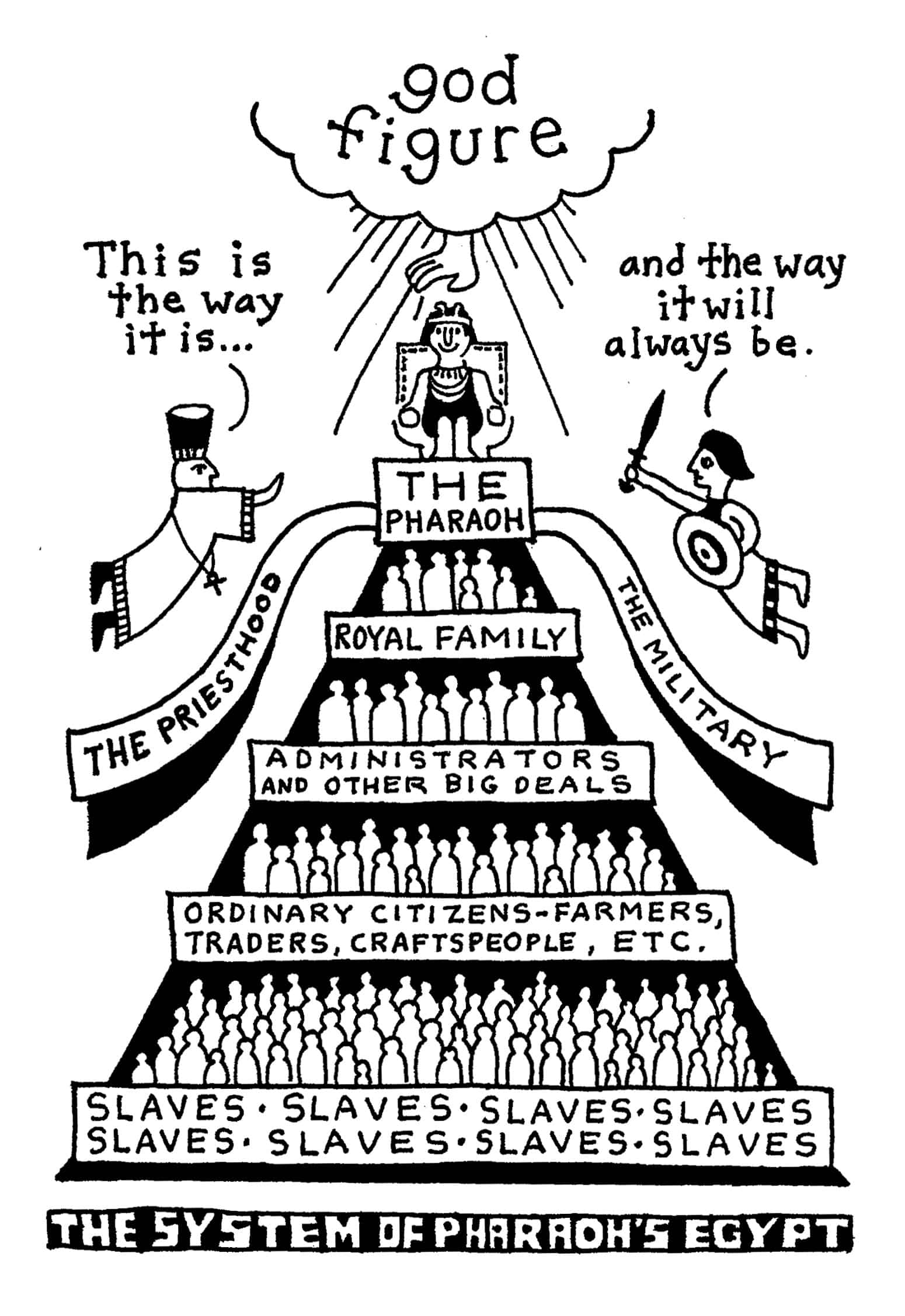
Organizational Chart of Pharaoh’s Egypt in the days of Moses

It’s hard to understand what’s going on in Israel, Gaza, and throughout the Holy Land without a grasp on the religious background. My knowledge of Islam is scant, but my knowledge of Judaism is better because the Hebrew scriptures lead into my own Christian tradition. And what I know of the Hebrew scriptures brings me great grief as I look at what is going on in Gaza, the West Bank, and throughout Israel.

The first two books of the Torah — Genesis and Exodus, in more common parlance — tell two grand stories central to the Jewish people, and by extension, to my own Christian brothers and sisters as well. Over the last several years, and especially since the Hamas attack in early October, these two stories have been echoing through my head, especially with respect to Benjamin Netanyahu, his far-right cabinet, their supporters in Israel, and the dangerous political path they all are following.

The book of Genesis tells the stories of origins – the origin of the world, and the origin of the people of Israel as God’s chosen ones. Genesis ends with the story of Joseph and his brothers, ten older and one younger. The short version of the story is that Joseph was his father’s favorite, so much so that his older brothers were filled with anger, jealousy, and envy. One day, while the brothers were away from home, they beat Joseph and sold him into slavery in Egypt, then told their father that a wild animal had attacked and killed him. While in Egypt, Joseph came to the attention of the pharaoh, and interpreted a dream of pharaoh’s that foretold seven years of great harvests, followed by seven years of severe drought. Pharaoh listened, and stored up grain in the good years, and he named Joseph as the administrator of the grain program. When the drought arrived, Joseph’s brothers back home were caught in it, and came to Egypt to find grain. Joseph recognized them, but they did not recognize him. When Joseph finally revealed himself to them, they feared he would take revenge. Instead, Joseph offered forgiveness. “What you intended for evil, God intended for good.” Joseph told his brothers that while they let their anger rule, God was using Joseph to prepare for the great famine, and thus save his whole family. Because of Joseph’s great service to the pharaoh and all of Egypt, Joseph and his brothers were invited to stay in Egypt, and they did. Genesis ends with reconciliation between the brothers, the forebears of the twelve tribes of Israel.

Where Genesis was about the Lord and the relationships between the insiders, the brothers (and later, the tribes), Exodus is about the Lord and the relationships between the Israelites and the aliens, the non-Israelites. Exodus takes up the Genesis story generations later, when the Israelites had grown numerous in Egypt and “a new king arose who did not know Joseph.” Instead of continuing to respect what Joseph had done long before, the new king feared all these foreigners and ordered them enslaved. The Lord chose Moses to lead them out of slavery, and after a grand struggle (the ten plagues sent to torment Pharaoh), they left Egypt and entered the wilderness, moving toward the Promised Land. God gave Moses the ten commandments, and Moses spent the wilderness years teaching the newly-liberated children of Israel what it means to live as God’s people.

As the Lord spoke with Moses throughout these wilderness years, the Lord had a refrain for Moses and the children of Israel: “Remember that you were a slave in Egypt.” God was not simply reminding them that things were rough in the past. Instead, God was telling the children of Israel how they are to live in the the present and the future, saying in essence: “You used to be slaves, and I didn’t bring you out of slavery so you can become slave owners yourselves.” For example, consider the Lord’s words from Deuteronomy 24 (New Revised Standard Version, with emphasis added):

17 You shall not deprive a resident alien or an orphan of justice; you shall not take a widow’s garment in pledge. 18 Remember that you were a slave in Egypt and the LORD your God redeemed you from there; therefore I command you to do this. 19 When you reap your harvest in your field and forget a sheaf in the field, you shall not go back to get it; it shall be left for the alien, the orphan, and the widow, so that the LORD your God may bless you in all your undertakings. 20 When you beat your olive trees, do not strip what is left; it shall be for the alien, the orphan, and the widow. 21 When you gather the grapes of your vineyard, do not glean what is left; it shall be for the alien, the orphan, and the widow. 22 Remember that you were a slave in the land of Egypt; therefore I am commanding you to do this.

You are not to be oppressors, said the Lord to Moses and the people, but you are to treat others as you were *not* treated when you were slaves in Egypt. Remember your heritage, said the Lord, and therefore care for the poor, the widow, the orphan, and the alien.

Can you see why passages like these have been echoing in my head in these last few months?

There is a difference between protecting yourself and taking vengeance, and Netanayhu and his allies have been confusing the former for the latter. Around 1200 were killed by Hamas last October and another 200 or so were taken hostage. In return, Israel has killed tens of thousands, leveled entire neighborhoods, forced hundreds of thousands to leave the rubble and seek new homes, and plunged the entire Gaza strip into hunger. Throughout the West Bank and often with explicit support of political leaders in Jerusalem, Israeli settlers have become more brazen in attacking their non-Jewish neighbors, taking their homes and land in violation of Israel’s own laws and international treaties to which Israel is a party.

There is a non-trivial segment of the Israeli political world that does not remember that they were slaves in the land of Egypt, and that the Lord does not want them to be slave-owners. The far-right in Israel, who claim that Israel should possess everything from the Jordan to the Mediterranean Sea, is particularly firm in demanding that non-Jews of all stripes have no rights and no place in this land, because this is the land God promised only to them. Slowly but surely, the rights of non-Jews in Israel have been circumscribed, limited, and even taken away, such that the South African-born Israeli journalist Benjamin Pogrund, a Jew, has begun describing Israel using a word he long opposed using: apartheid. As he wrote last August — before the Hamas attack:

Israel 2023, South Africa 1948. I’ve lived through it before: power grabbing, fascism and racism – the destruction of democracy. Israel is going where South Africa was 75 years ago. It’s like watching the replay of a horror movie.

In 1948, as a teenager in Cape Town, I followed the results of the 26 May election on a giant board on a newspaper building. The winner-takes-all electoral system produced distorted results: the Afrikaner Nationalist party, with its smaller partner, won 79 parliamentary seats against 74 for the United party and its smaller partner.

But the Nats, as they were called, in fact won only 37.7% of the vote against the opposition’s 49.2%. Although the opposition received more votes, the Nats said they had a majority and could do what they wanted.

In the Israel of 2023, I’m reliving some of these same experiences.

[snip]

We deny Palestinians any hope of freedom or normal lives. We believe our own propaganda that a few million people will meekly accept perpetual inferiority and oppression. The government is driving Israel deeper and deeper into inhuman, cruel behaviour beyond any defence. I don’t have to be religious to know that this is a shameful betrayal of Jewish morality and history.

What was it that the Lord said to Moses and the children of Israel? Oh, yes: “Remember that you were a slave in Egypt . . .”

Pogrund remembers, and his whole piece is worth reading. Sadly, the events of the last five months have made it even more true than the day it was written. I read his piece when it first appeared last August, but these words from near the end continue to echo in my head even today:

We are at the mercy of fascists and racists (both carefully chosen words) who cannot, and will not, stop.

I write about South Africa and Israel because I know both of them, 53 years in one and nearly 26 years in the other. Neither is unique. The same pattern of rightwing repression has happened in our time in Hungary and Poland, in Asia, Africa and Latin America, and earlier in Europe in the 1920s and 1930s.

I did not want to write this article. It was torn out of me, addressed to Israelis because the rightwing government is taking the country into institutionalised discrimination and racism. This is apartheid. South Africa under apartheid was straightforward: white v black. Israel is complex. The 21% Arab minority has the vote. Everyone pays the same national insurance and enjoys the same benefits – medical and social welfare. In hospital, I, a Jew, share a room with Arabs and we are cared for by the same Jewish and Arab doctors and nurses. Everything is open: beaches, park benches, movies, theatres, restaurants. The apartheid label is correct, but caution and thought are needed about comparisons.

In Israel, I am now witnessing the apartheid with which I grew up. Israel is giving a gift to its enemies in the Boycott, Divestment and Sanctions (BDS) movement and its allies, especially in South Africa, where denial of Israel’s existence is intense among many black people, in trade unions and communist and Muslim circles. BDS activists will continue to make their claims, out of ignorance and/or malevolence, spreading lies about Israel. They have long distorted what is already bad into grotesqueness, but will now claim vindication. Israel is giving them truth.

I didn’t want to write this post, either. But I look at and listen to the Jews who are protesting the actions of the Netanyahu government and their supporters, who sound more and more like the biblical prophets of old, calling the leaders of Israel to account. I look and I listen, and I could no longer remain silent. The complexity of Israel that Pogrund wrote about last summer is disappearing, faster and faster each day.

Because Bibi Netanyahu is the new king who did not know Moses.

______

Image h/t to Pastor Daniel Erlander, from his excellent book Manna and Mercy: A Brief History of God’s Unfolding Promise to Mend the Entire Universe.


Monday Morning: Tarantela [UPDATE]

I could listen to this piece on a loop. It’s Santiago de Murcia’s “Tarantela,” performed by noted lutist Rolf Lislevand. The instrument he is playing is as important as the music and his artistry; it’s an extremely rare Stradivarius guitar called the Sabionari. While tarantellas more commonly feature additional instruments and percussion like tambourines, this instrument is stunning by itself.

You can learn more about the Sabionari at Open Culture, a site I highly recommend for all manner of educational and exploratory content.

And now to dance the tarantella we call Monday.

Wheels

  • What’s the German word for ‘omertà’? Because Volkswagen has it (Forbes) — Besides the use of obfuscation by translation, VW’s culture obstructs the investigation into Dieselgate by way of a “code of silence.” And money. Hush money helps.
  • Growing percentage of VW investors want an independent investigation (WSJ) — An association 25,000 investors now demands an investigation; the problem continues to be Lower Saxony, the Qatar sovereign-wealth fund and the Porsche family, which combined own 92% of voting stock.
  • VW production workers get a 5% pay raise (IBT) — Is this “hush money,” too, for the employees who can’t afford to be retired like VW’s executives? The rationale for the increase seems sketchy since inflation is negligible and VW group subsidiary workers at Audi and Porsche won’t receive a similar raise.
  • Insanity? VW Group a buy opportunity next month (The Street) — Caveat: I am not a stockbroker. This information is not provided for investment purposes. Your mileage may vary. But I think this is absolute insanity, suggesting VW group stock may offer a buy opportunity next month when VW publishes a strategy for the next decade. If this strategy includes the same utterly opaque organization committing fraud to sell vehicles, is it smart to buy even at today’s depressed prices? The parallel made with Apple stock is bizarre, literally comparing oranges to Apples. Just, no.

Bad News (Media)

Cybersec

  • Organized criminals steal $13M in minutes from Japanese ATMs (The Guardian) — And then they fled the country. What?! The mass thefts were facilitated by bank account information acquired from an unnamed South African bank. Both Japan and SA use chip-and-pin cards — so much for additional security. Good thing this organized criminal entity seeks money versus terror. Interesting that the South African bank has yet to be named.(*)
  • Slovenian student receives 15-month suspended sentence for disclosing state-created security problems (Softpedia) — The student at Slovenia’s Faculty of Criminal Justice and Security in Maribor, Slovenia had been investigating Slovenia’s TETRA encrypted communications protocol over the last four years as part of a school project. He used responsible disclosure practices, but authorities did not respond; he then revealed the encrypted comms’ failure publicly to force action. And law enforcement went after him for exposing their lazy culpability hacking them.
  • Related? Slovenian bank intended target for Vietnamese bank’s SWIFT attempted hack funds (Reuters) — Huh. Imagine that. Same country with highly flawed state-owned encrypted communications protocol was the target for monies hackers attempted to steal via SWIFT from Vietnamese TPBank. Surely just a coincidence, right?

Just for the heck of it, consider a lunch read/watch on a recent theory: World War 0. Sounds plausible to me, but this theory seems pretty fluid.

Catch you here tomorrow morning!

* UPDATE — 1:20 P.M. EDT —
Standard Bank reported it had lost 300 million rand, or USD $19.1 million to the attack on Japanese ATMs. First reports in South African media and Reuters were roughly 11 hours ago or 9:00 a.m. Johannesburg local time. It’s odd the name of the affected bank did not get wider coverage in western media, but then South Africa has a problem with disclosing bank breaches. There were five breaches alleged last year, but little public information about them; they do not appear on Hackmageddon’s list of breaches. This offers a false sense of security to South African banking customers and to banks’ investors alike.

Japan Times report attribute the thefts to a Malaysian crime gang. Neither Japan Times nor Manichi mention Standard Bank’s name as the affected South African bank. Both report the thefts actually took place more than a week ago on May 15th — another odd feature about reporting on this rash of well-organized thefts.

Friday Morning: Thank a Goddess

[image: Frigg Spinning Clouds, c. 1900, by John Charles Dollman via Wikimedia.org]

[image: Frigg Spinning Clouds, c. 1900, by John Charles Dollman via Wikimedia.org]

Yeah, you can thank Frīġe for her dæġ — Friday is her day. Frigg, Frea, or Freyja, has been lumped into sky-and-weather-goddesses category though I don’t recall running across a folktale about her actually doing weather-y stuff.

Hope you were prepared for snow if you live in eastern U.S.; Frigg won’t be as much help to you as a decent snow shovel. Same with keeping the kids busy on a snow day. Maybe you could coax them into writing a story about Frigg calling up a snow storm, replete with drawings?

Speaking of weather…and climate…
These news stories suggest snowpocalyptic events here in the U.S. aren’t the only unusual conditions affecting the way we do business today.

  • South African’s wine production will be affected by recent wildfires. Wonder if Australia’s will be, too? Oh definitely, by too much rain as well as drought and bushfires.
  • Milder than usual weather hurt retail spending in UK. Lucky for our former British overlords we’ve exported our Black Friday to give them a temporary boost in sales.
  • The worst drought in two decades spurs Zimbabwe to seed clouds. Ugh. Not good. If they’re seeding there, what happens to rainfall in Mozambique, Malawi, and Madagascar?

Note: My spell check app offers “snowpocalypse” and “snowpocalypses” after I wrote “snowpocalyptic” — even spell check insists mega-sized snowstorms are now a regular occurrence.

Dutch tech firm Philips’ sale of Lumileds division halted
No specific details were shared, but the Senate Committee on Foreign Investment in the United States (CFIUS) blocked the sale of Philips’ California-based lighting component manufacturing subsidiary. Note the article refers to “Asian buyers,” and mentions further down the story that Chinese firms were involved in the buyers’ consortium.

Seems odd this sale was blocked by CFIUS, but not that of chipmaker OmniVision Technologies last May, or Freescale Semiconductor in March (though perhaps the previous owners of Freescale may have been a factor).

Military vendor for AV and building systems sold devices with backdoor
Not only a hidden backdoor, but packet sniffing capabilities found in the AMX brand NX-1200 model building controls device.

But backdoors are a good thing, right? No?

That’s a wrap on this week. Hope those of you along the east coast expecting heavy snow are prepared with ample alcoholic beverages for what appears to be a long weekend. Make an offering to Frigg and see if it helps. Offer another to the person who shoveled your snow.

Bibi Lied to UN in 2012, Likely to Lie to US Next Week

Look carefully. Are his lips moving?

Look carefully. Are his lips moving?

Benjamin Netanyahu overstated Iran’s nuclear technology in 2012 when he used his bomb cartoon in an address to the United Nations. The Guardian and Al Jazeera have released a trove of documents relating to Iran’s nuclear program and one of the key documents was prepared by Mossad to brief South Africa just a few short weeks after the famous speech. From The Guardian:

Binyamin Netanyahu’s dramatic declaration to world leaders in 2012 that Iran was about a year away from making a nuclear bomb was contradicted by his own secret service, according to a top-secret Mossad document.

/snip/

Brandishing a cartoon of a bomb with a red line to illustrate his point, the Israeli prime minister warned the UN in New York that Iran would be able to build nuclear weapons the following year and called for action to halt the process.

But in a secret report shared with South Africa a few weeks later, Israel’s intelligence agency concluded that Iran was “not performing the activity necessary to produce weapons”. The report highlights the gulf between the public claims and rhetoric of top Israeli politicians and the assessments of Israel’s military and intelligence establishment.

As The Guardian notes, although Bibi’s darling little cartoon makes little to no distinction between the steps of enriching uranium to 20% and enriching it to the 90%+ needed for a bomb, the Mossad document (pdf) states that Iran “is not ready” to enrich to the higher levels needed for a bomb:

enrichment

Despite that clear information that Mossad surely already had at the time of the UN speech (h/t Andrew Fishman for the link), Netanyahu chose to portray Iran as ready to zip through the final stage of enrichment:

Now they’re well into the second stage. And by next spring, at most by next summer, at current enrichment rates, they will have finished the medium enrichment and move on to the final stage. From there, it’s only a few months, possibly a few weeks, before they get enough enriched uranium for the first bomb.

So Netanyahu described a step that the Mossad described Iran as not even ready to start and turned it into something Iran was eager to accomplish in a few weeks. Simply put, that is a lie.

Of further note in the document is information relating to the heavy water reactor under construction at Arak. Although it doesn’t appear that Netanyahu mentioned it in the UN speech, it often is portrayed as another rapid route to a nuclear weapon for Iran, because, when finally functioning, it could produce plutonium that could be used in a bomb. Mossad found, however, that Iran was still a couple of years away from having the reactor functioning. Further, Mossad realized that Iran needs a fuel reprocessing facility (that it does not have) in order to use the plutonium in a bomb:

Arak

It should also be noted that those two years have elapsed and the reactor still has not been powered up. Further, there are proposals that the reactor can be modified to make it produce a dramatically lower amount of plutonium.

These documents have been released with very important timing. As I noted last week, Netanyahu aims to destroy the P5+1 negotiations with Iran. By pointing out his lies two years ago, we should be in a better position to see through whatever obfuscation he delivers next week. But with a new air of bipartisany-ness, to his visit, don’t look for Washington politicians to be the ones to point out his next round of lies.

Postscript: I am significantly behind on my homework. I owe Marcy a careful reading of the technical documents from the Sterling trial and need to follow up more fully on the suggestions that false documents (including the Laptop of Death?) were planted with Iran for the IAEA to discover. Now with this new trove of documents and the looming date of Netanyahu’s visit, I need to get busy (on something other than planting blueberries)!