Posts

Pam Bondi’s Slop

I’ve been struggling all morning (in truth, for the last several days) to describe the kaleidoscope of ways Trump is destroying rule of law.

It perhaps is best conveyed by a contrast between all the shit going on in Minnesota and what happened in Chicago yesterday.

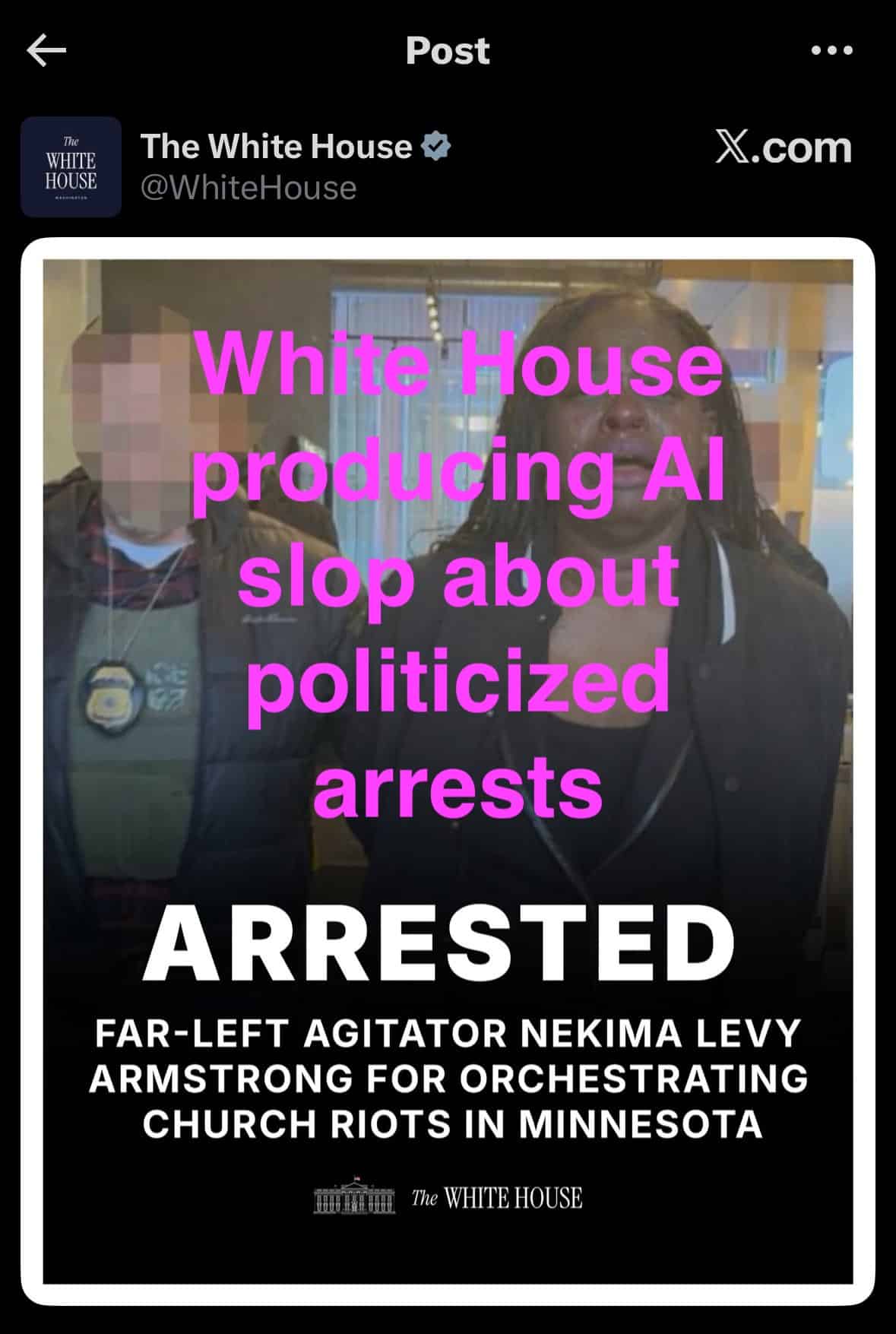
Pam Bondi personally went to Minnesota to secure arrests of people who protested the Southern Baptist Church whose minister, David Easterwood, also runs the local ICE department. When the FBI went to arrest one of them, Nekima Levy Armstrong, they arrested the wrong Black woman at first. Then the White House posted a meme of her, slopped up to make it look like she was crying, and falsely accusing her of rioting.

The AI slop will make it far easier for Levy to argue this is vindictive.

DOJ had tried to charge Don Lemon, but a Magistrate Judge refused to charge someone who was legitimately covering a protest. And now Lemon, who is represented by the omnipresent Abbe Lowell, is taunting Bondi.

The Magistrate also refused to approve FACE charges against those already arrested.

The arrest of the wrong Black woman was not the only case of mistaken identity in Trump’s invasion of Minnesota this week. It turns out that the out-of-state ICE goon who shot Venezuelan Julio Cesar Sosa-Celis thought he was chasing one guy, Joffre Barrera, who is 5’2″ and 128 pounds, but was instead chasing Alfredo Alejandro Aljorna, who is 5’7″ and 172 pounds.

Both have short brown hair.

Sosa-Celis and Aljorna might have a decent argument that they had no way of being sure the ICE goon they’re accused of assaulting was actually ICE. According to the arrest affidavit, the ICE goon who shot Sosa-Celis was not wearing anything that identified him as Police — his badge and gun were on a tactical belt. His buddy, who was wearing a tactical vest identifying him as police, was not yet present when the assault and shooting happened. And they were driving an unmarked vehicle. Except both defendants talked to the cops without an attorney and confessed to knowing the goons were ICE.

Meanwhile, the backlash surrounding the snatching and use as bait of five year old Liam Conejo Ramos has gotten so bad that Stephen Miller is openly defensive.

The problem for Miller is that, at least according to the attorney for Ramos’ family, they are in the US legally, seeking asylum.

Marc Prokosch, the family’s attorney, said they came to the U.S. in 2024 from Ecuador, had an active asylum case and the preschooler should never have been detained. He said the family was properly following immigration rules and [his father, Adrian] Conejo Arias had no criminal history.

The Ramoses are not the only ones. The local Fox affiliate describes that there have been more habeas petitions filed this year than the entirety of last year.

Immigration attorneys say they are filing habeas corpus petitions to secure the release of detainees at a “dizzying pace.”

The petitions are constitutionally protected challenges to the government’s arrest of an individual. However, the Trump Administration previously suggested suspending those rights.

In the context of immigration enforcement operations, the petitions ask federal judges to either release individuals from custody or grant them a bond hearing in immigration court.

By the numbers: According to case data reviewed by the FOX 9 Investigators, 312 immigrant detainees had sought habeas relief through Jan. 21.

The number of petitions filed in the district court of Minnesota in the first three weeks of the year has already surpassed the 260 filed in the entirety of 2025.

Meanwhile, Minnesota Public Radio tracked down the people on one of DHS’ “worst of the worst” lists — the people DHS falsely claimed to have snatched during this invasion. Most had been released into ICE custody before the recent invasion.

[M]ost of the people on the list had been immediately transferred to ICE custody at the end of time served in Minnesota prisons.

All of those transfers happened before ICE began its surge of operations in Minnesota on Dec. 1, 2025, with some even happening years before.

[snip]

[F]ive of those individuals were transferred from prison custody to ICE custody between August and late November. Three others were handed over to ICE custody by DOC during previous presidential administrations.

And one person was offered to be released to ICE custody more than a decade ago and ICE declined, according to the DOC.

[snip]

[O]ne was put on probation for 30 years and was never in DOC custody, and two were only ever in the custody of county jails and never in DOC custody.

One person on the list was convicted of crimes in Ohio, where it is unclear if they had an ICE detainer, which is a request to hold a prisoner for another agency. The Ohio Department of Rehabilitation and Correction did not respond for a request for information on the matter.

Click through for the list, including the guy released to ICE in 2012 — and share this widely.

Relatedly, Bulwark and a local ABC affiliate reports that the guy DHS claimed they were looking for when they snatched a senior Hmong-American in his underwear was already in prison.

Sometimes, the “worst of the worst” — the U.S. Department of Homeland Security’s catchphrase for undocumented immigrants with violent criminal records — are exactly where one would expect: prison.

That was the case for Lue Moua, a 52-year-old Laotian man who DHS officials say they were looking for when they instead arrested an elderly U.S. citizen last weekend.

The images of ChongLy Thao’s arrest by U.S. Immigration and Customs Enforcement in St. Paul sparked outrage in Minnesota and across the internet.

Several videos show Thao, a U.S. citizen, led out of his home in freezing weather, wearing nothing but his boxers, sandals and a blanket draped around him. Thao’s family alleges the agents did not present a warrant, nor did they ask Thao for identification. He was released shortly afterward.

In a statement explaining Thao’s detention, ICE officials say they were looking for two undocumented Laotian men with criminal records, Moua and Kongmeng Vang, who they say lived with Thao. They also said Thao matched the description of those men.

Family members said they had no knowledge of either and that Thao lived with his son, daughter-in-law and his young grandson.

So where are these men?

Moua, who has felony convictions dating back to 1992 of fifth-degree criminal sexual conduct, kidnapping, and violating a parental custody order, has been incarcerated at Minnesota Corrections Facility-Faribault since Sept. 4, 2024. His expected release date is Jan. 7, 2027.

It’s all bullshit, all the way down.

Contrast that effort to criminalize dissent in Minnesota and claim five year old boys are scary criminals with the most spectacular faceplant yet in Trump’s attempt to gin up criminal cases to justify Stephen Miller’s dragnet, the acquittal of Juan Espinoza Martinez, who was accused of attempting to pay for a hit on Greg Bovino. Jon Seidel describes how the case collapsed after DOJ conceded they could not prove that Martinez had ties to the Latin Kings.

The original criminal complaint cited a “source of information,” now known to be 44-year-old Adrian Jimenez, who called Espinoza Martinez a “ranking member of the Latin Kings.” A Homeland Security press release also called Espinoza Martinez a “Latin Kings gang member.”

But earlier this month, First Assistant U.S. Attorney Jason Yonan and Assistant U.S. Attorney Minje Shin acknowledged they would not try to prove Espinoza Martinez’s gang membership at trial.

That prompted Lefkow to bar gang evidence from the case. She wrote in an order that, “without evidence showing that [Espinoza Martinez] is a member of the Latin Kings or that the Latin Kings instructed [Espinoza Martinez] to send the alleged murder-for-hire information, the prejudicial nature of such testimony outweighs any probative value.”

In an emergency hearing hours after that ruling last week, Yonan told [Judge Joan] Lefkow that “nearly every piece of evidence in this case touches, in some fashion, on the Latin Kings.”

But the trial still kicked off. The feds called only three witnesses Wednesday, who testified over the course of nearly three hours, combined. Then, in closing arguments Thursday, Yonan told jurors that Espinoza Martinez was “angry” about immigration enforcement last fall in Little Village, where he lived.

“He was fixated, and obsessed, with Gregory Bovino,” Yonan told the jury.

Prosecutors told jurors about a message Espinoza Martinez sent over Snapchat to Jimenez in early October. It followed a picture of Bovino and read, “2k on info cuando lo agarren,” “10k if u take him down,” and “LK … on him.”

Jimenez testified that he understood that to mean “$2,000 when they grab him … $10,000 if you kill him … Latin Kings are on him.”

Martinez’ brother explained one piece of evidence DOJ attempted to use against him: a gun that the brother (who has a concealed carry permit) was seeking for himself. And his attorneys emphasized that there was no evidence of an actual hit.

[Dena] Singer told the jury, “the government has failed to prove their case. You know it.”

No money exchanged hands, she said. No weapons were purchased. Social media, she said, “is riddled with things that aren’t true. … with people sending and sharing things.” There was no evidence that Espinoza Martinez intended for the murder to happen, or that he took a “substantial step,” she said.

Ultimately, live coverage of the trial made it sound like Martinez was passing on the chatter from his neighborhood, not plotting a hit himself (and it probably helped frame the case that the informant was seeking immigration protection himself).

As Seidel notes, this marks the 15th case, of 31, that have collapsed in Chicago since the invasion (I tracked the collapse of all the cases from just one day, September 27, here).

Espinoza Martinez is one of 31 known defendants charged in Chicago’s federal court with non-immigration crimes tied to the Trump administration’s aggressive deportation campaign last fall. With Thursday’s acquittal of Espinoza Martinez, 15 of them have now been cleared.

DOJ has pointed to this case, over and over, to claim there’s a real threat against Stephen Miller’s goons, including in their failed bid to get SCOTUS to bless Miller’s deployment of the National Guard to invade Chicago.

An alleged leader of the Latin Kings gang in Chicago is being prosecuted for placing a bounty of $10,000 on the murder of a Border Patrol Chief. Hott Decl. ¶¶ 24; Parra Decl. ¶ 17. These activities substantially interfere with DHS’s ability to enforce federal immigration laws in the Chicago area. See, e.g., Hott Decl. ¶¶ 43-47, 63. And it was clearly erroneous for the district court to discredit or minimize the unrebutted sworn testimony that those acts of violence and threats of violence in fact occurred.

There may well be; the actual Latin Kings may well be seeking to target Bovino (one of the people arrested for ransacking an FBI vehicle in Minnesota is more credibly claimed to be a Latin King). But if they are, then FBI wouldn’t learn of it because they are doing showboat arrests, not investigations.

Which is one of the many points in this compilation of quotes about how Kash Patel is destroying the FBI. Many of these anecdotes have been told anonymously in past reporting, but they are more powerful laid out like this; set aside some time to read this in full. FBI is not chasing complex crime anymore; they’re creating photo ops that please Donald Trump.

Patel directed the F.B.I., which has no immigration-enforcement authority, to support Immigration and Customs Enforcement in conducting raids and making arrests. Field offices began assigning F.B.I. agents and analysts to work immigration shifts, pulling them away from other priorities like counterterrorism, public corruption and white-collar crime.

John Sullivan, former section chief in the intelligence division: We’d been told that when Trump watched footage or saw a picture of a raid, he got mad that he didn’t see F.B.I. raid jackets.

ICE was saying they wanted their teams to commingle with our teams. Tactically, you don’t commingle units that haven’t trained together. My bosses said, If we work on immigration, we use our teams and our case info. They put together a list of people already in F.B.I. files we had concerns about, so we’re not just targeting people over their citizenship status.

They also had to juggle Kristi Noem, the secretary of the Department of Homeland Security, who wanted to ride in our tactical vehicle to do her TV stuff. That makes all the operators uneasy, and it makes them less safe.

And that makes it harder for FBI to do the complex investigations only they can do.

Midwest case agent: I was a grunt agent. I enjoyed trying to take apart large criminal organizations piece by piece.

They relabeled task forces from drugs to immigration and pushed us toward focusing on deportation versus convictions for actual drug offenses.

Unfortunately, what used to be our focus, long-term investigations, are now short-term hits. You hit the guy carrying the bag, not the guy who made the call, because that’s how you drive up the arrest and prosecution numbers. But the guy carrying the bag, you can’t flip anymore, because he’s getting deported.

Because F.B.I. agents are posting up with Homeland Security, citizens think we’re part of ICE, which disrupts other investigations. It used to be that you could sit in front of a house, watching another house, and a lot of the time, people were OK with that. They might help you. Now they’re scared.

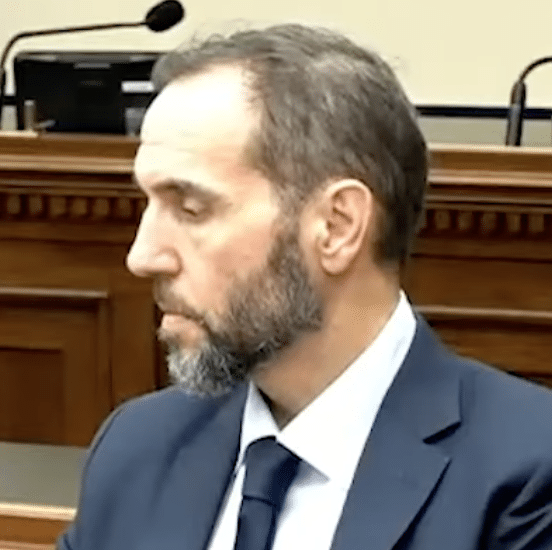
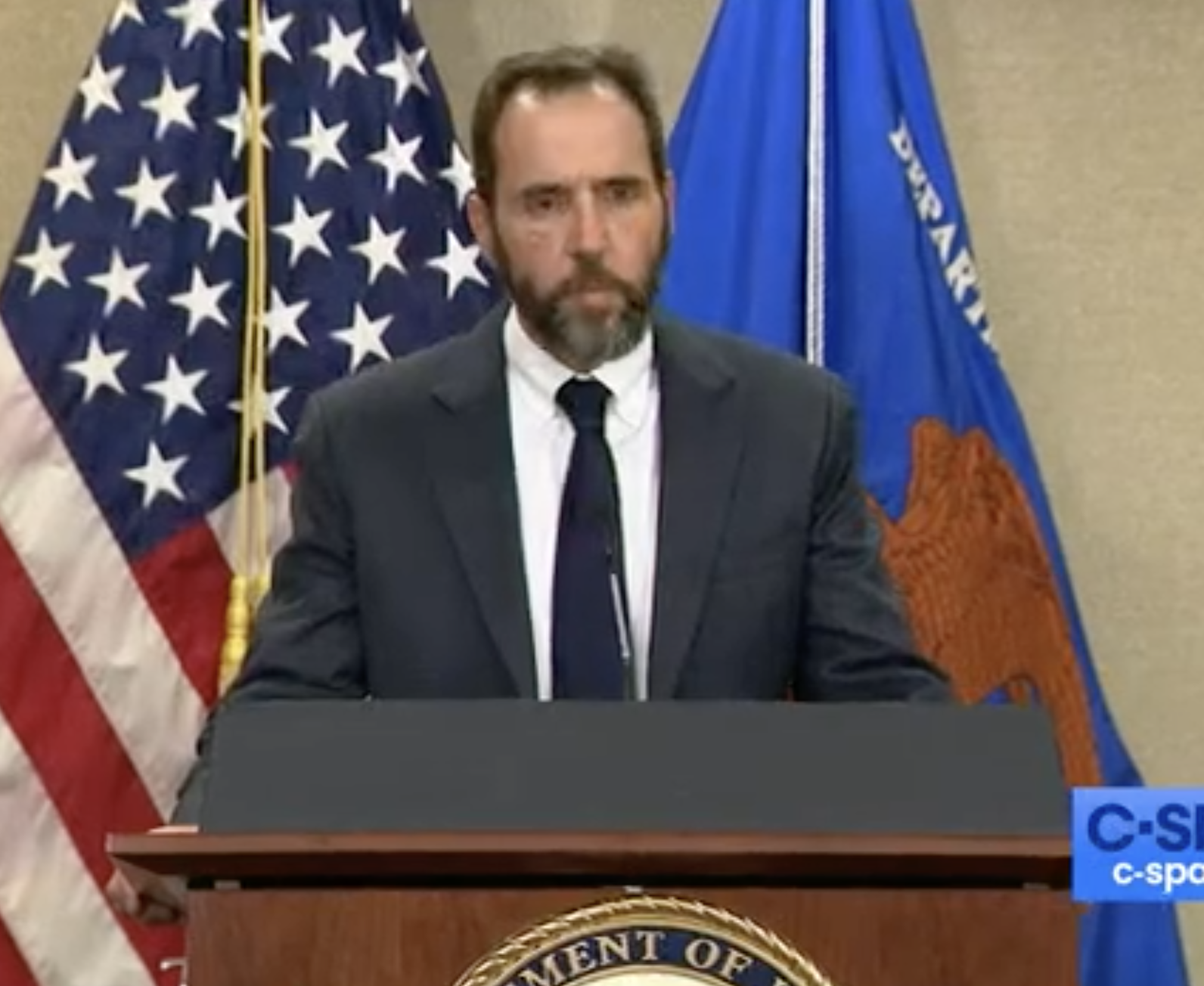
All this was unrolling against the background of Jack Smith’s testimony. While there were moments of interest — Smith forcefully explained why Stan Woodward’s attack on Jay Bratt was bullshit, for example — mostly I feel the same way Phil Bump does. Everyone was just performing for the cameras.

There wasn’t much use to the hearing. There’s no actual question to adjudicate. No serious and unbiased observer questions Smith’s objectivity or credibility and no serious observer questions that Trump tried to overturn the 2020 election, triggering the riot that overwhelmed the building on Jan. 6, 2021. In effect, then, the existence of the hearing necessarily served to reinforce the falsehood that there was a debate in the first place.

Smith summarized the importance of recognizing reality in his opening remarks.

“The rule of law is not self-executing,” he said. That is, the bounds of the law are real only to the extent that they are respected. Smith, better than most, understands what it looks like when that respect evaporates.

The product of the hearing wasn’t a studious consideration of the validity of his work since, as stipulated above, there was nothing serious to mull over. Instead, the primary output of the hearing was probably a tidy stream of social-media-friendly video snippets. Members of the House (nearly all of whom will soon face primaries or reelection) saw an opportunity to make news and most of them tried.

What this means, in effect, is that the hearing not only didn’t resolve any tension between reality and surreality, it simply dug each side in a little deeper.

Perhaps the most effective moment in the hearing was Jared Moskowitz’ soliloquy, which combined a reminder of all the times the very same Republicans who performed Donald Trump’s assault on Smith’s investigation expressed terror during January 6 itself.

The AI slop the White House released yesterday really embodies what Pam Bondi’s DOJ has become.

Bullshit all the way down.
January 6 Was a Violent Insurrection; It Was Also a Fraud Against the GOP Faithful

The word “subpoena” appears 84 times in the Jack Smith deposition (see my more general post describing how Jim Jordan tried to bury his own cowardice disclosed in Smith’s deposition here):

  • Subpoenas to Jack Smith (by any party): 7
  • Subpoenas for GOP toll records (questions by GOPers): 55
  • Subpoenas for GOP toll records (questions by Dems): 2
  • Other subpoenas for GOP witnesses (questions by GOPers): 1
  • Subpoenas from the stolen documents investigation (asked by Dems): 19

As that tally makes clear, the vast majority of those references came during the GOP time, focused on the subpoenas for 10 members of Congress, one of two fake scandals that Chuck Grassley created in advance of Smith’s testimony.

There were no questions — zero — about the other scandal Chuck Grassley created, that Jack Smith had subpoenaed (Grassley falsely claimed) records, mostly financial, for 430 “targets”. Even Chuck Grassley, in a December 8 post laying out the “oversight” he plans to do in 2026, barely mentioned those subpoenas.

The closest the House GOP came in last month’s Smith deposition was this question about claims that right wingers were debanked (as if being an insurrectionist were not reason enough for a bank to cut ties with someone):

Q Where they’re basically told by their bank that they need to go find a different bank. And there is a long list of, you know, Trump allied, you know, officials that were subpoenaed for the grand jury, that were, you know, brought into your investigation that claim they had been debanked and that Capital One told them to go find a different bank and numerous other banks.

Do you know anything about that?

A No, I do not.

Q Okay. So your office didn’t have any communications with banks urging a bank to separate from any of their customers?

A I have no knowledge of that.

Q Are you aware of that allegations, or is this the first you’re hearing of it?

A I’m trying to think. I didn’t know what the term meant when you first said it, so, I mean, in the scheme of the world, have I heard of the word debanking? Maybe. But if you’d asked me to define it when you first said it, I don’t think I could have.

Q Okay. But have you — so you haven’t heard that allegation that some of the folks in President Trump’s inner circle have complained that they, you know, were kicked out of their bank?

As a result, the GOP did not invite (and Democrats did not think to invite) Jack Smith to explain a slew of subpoenas he sent out, subpoenas that constituted new prongs of the investigation and expanded prongs of work done in 2021 about finances.

As I laid out here, those subpoenas clearly addressed known prongs of the investigation into how Trump raised tons of money based on false claims and later funneled the money to people who had remained loyal through the attack on democracy.

Five pages — which appear to match the title of the document, Arctic Frost Bank Record Subpoenas — show subpoena returns with dates long after the date of the summary, going through a subpoena pertaining to Jeffrey Clark and John Eastman to Fidelity completed on July 6, 2023. [Note: The release of this document exposes the banks of dozens of Trump associates, a fairly alarming privacy violation.]

The five pages of subpoenas focus on several topics, largely the following:

  • J6 $
  • Wire fraud
  • Misappropriation
  • Payments to lawyers
  • Bogus investigations
  • Obstruction
  • Credit reports

Most of this traces several prongs of investigation that were publicly reported at the time — largely picking up efforts of the January 6 Committee — showing that Trump raised money in the guise of election integrity, but then paid it to people like Brad Parscale or Dan Scavino.

Based on dates, this appears to be a key focus of Jack Smith once he was appointed

After squawking loudly (and to a significant extent, inaccurately) about the subpoenas, after doxing great swaths of the Republican Party, congressional Republicans decided they didn’t want to talk about the lucrative grift Trump took them for, in which Republican faithful paid Trump to lie.

As a result, the closest the full day deposition came to explaining how Trump abused the faith of his supporters was this exchange.

Q So did you develop evidence that President Trump, you know, was responsible for the violence at the Capitol on January 6th?

A So our view of the evidence was that he caused it and that he exploited it and 8 that it was foreseeable to him.

Q But you don’t have any evidence that he instructed people to crash the Capitol,  do you?

A As I said, our evidence is that he in the weeks leading up to January 6th created  a level of distrust. He used that level of distrust to get people to believe fraud claims that weren’t true. He made false statements to State legislatures, to his supporters in all sorts of contexts and was aware in the days leading up to January 6th that his supporters were angry when he invited them and then he directed them to the Capitol. Now, once they were at the Capitol and once the attack on the Capitol happened, he refused to stop it. He instead issued a tweet that without question in my mind endangered the life of his own Vice President. And when the violence was going on, he had to be pushed repeatedly by his staff members to do anything to quell it.

And then even afterwards he directed co-conspirators to make calls to Members of Congress, people who had were his political allies, to further delay the proceedings.

Trump deliberately stoked distrust to get his supporters to attack democracy.

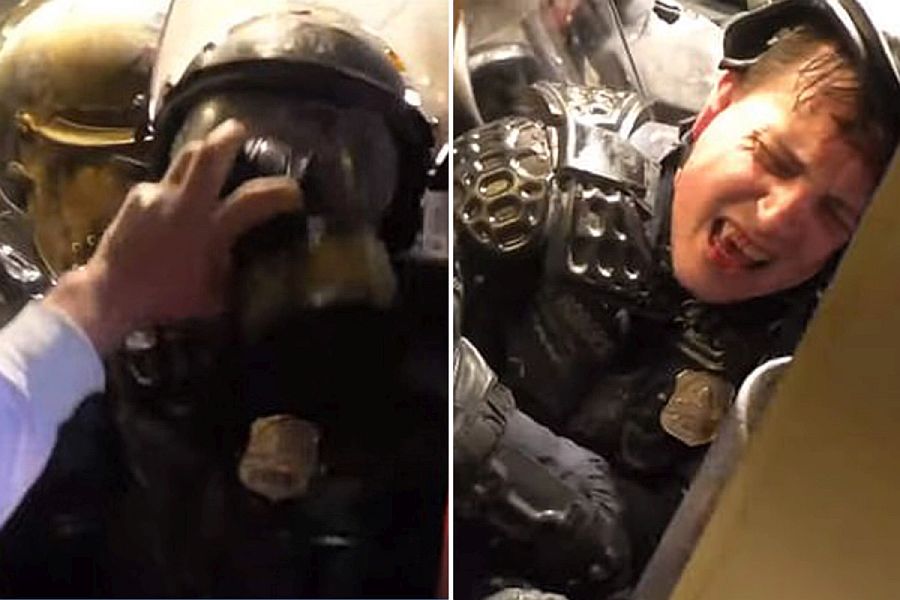
January 6 was a violent insurrection. Never forget that.

But it was also an enormous fraud on the Republican Party.

Fridays with Nicole Sandler

Listen on Spotify (transcripts available)

Listen on Apple (transcripts available)


Jim Jordan Buries His Own Cowardice in a Cowardly Document Dump

Jim Jordan tried to bury the Jack Smith deposition in a News Years Eve document (and video) dump.

Perhaps that’s because the funniest answer Smith gave (after already explaining why he had obtained subpoenas for the phone records of members of Congress, which was, in part, because Boris Ephsteyn and Rudy Giuliani were using two phones that day) was that Jim Jordan’s toll records were important because Jordan called the White House on January 6 because he was scared.

Q The toll record subpoena for the chairman of the committee.

A Well, I can tell you that, for example, there were — there was contact on, for example, January 6. But, again, another example for you is Mark Meadows, when he interviewed, when we interviewed him, he referenced the fact that that afternoon Chairman Jordan had been in contact with the White House. And, like Congressman McCarthy’s contact with the White House, it was relevant because, again, Meadows stated this, that these were supporters. These were credible people that the President relied on.

And what I recall was Meadows stating that “I’ve never seen Jim Jordan scared of anything,” and the fact that we were in this different situation now where people were scared really made it clear that what was going on at the Capitol could not be mistaken for anything other than what it was.

And it goes back to that sort of information from someone who is a credible source to the President, proving that that actually happened and that there’s actually a record of that call and exactly when it happened and what actions happened after that or didn’t happen after that, extremely probative to our case.

Meanwhile, after Republicans complained about Smith’s gag order on Trump,

Q Did you- — you sought gag orders in both the Florida case and the D.C. case.

Is that correct?

A We sought an order in the D.C. case under a rule — I think it’s 57.2 — and we did that because Donald Trump was making statements that were endangering witnesses, intimidating witnesses, endangering members of my staff, endangering court staff.

As you might remember, in the — right around when the indictment was released, he issued a tweet saying: “If you come after me, I’ll come after you.” He called — in a tweet he called General Mark Milley a traitor and mentioned that what he’d done in olden times people would be put to death. As a result of the things he was saying, the judge in this case was put — received vile death threats.

And with respect to D.C., both the district court and the court of appeals, a panel of judges, found that his actions were, in fact, causing what we said they caused. They were causing witnesses to be intimidated and endangering people.

And I believe it was the court of appeals also found that in addition to intimidating or chilling witnesses who existed, it would chill witnesses who had not yet come forward because they were afraid that they would be next.

So, yes, we did file that and I make no apologies for that.

Q Which witnesses do you think he would have intimidated? I mean, are there any specific witnesses that you could identify for the court?

A We did a filing. I don’t recall the specifics in that filing right now. But as I said, one of the issues from my perspective was not only the witnesses who he had specifically called out and caused threats to be issued, this phenomena that was found by both courts, it was the result of that is that a rational witness who maybe had not come forward would be completely afraid to because they would see that they would be next.

And I think the courts — both courts agreed with that.

Here’s how Smith answered Jasmine Crockett’s question about threats to Smith specifically.

Ms. Crockett. And, just to kind of finish up on this point, you, yourself — I’m not sure if this was discussed by the majority, but have you, yourself, been intimidated as a result of the actions that you took in this case.

The Witness. I’m not going to be intimidated.

Ms. Crockett. Have you been threatened.

The Witness. Yes.

Much later, Smith declined to get into the threats against him because they would endanger his (and he did not specify, but implied, his family’s) safety.

Q Do you feel like you have a target on your back?

A I believe that President Trump wants to seek retribution against me because of  my role as special counsel.

Q Would you be surprised if President Trump directs the DOJ to indict you?

A No.

Q Are you concerned about the safety of people who associate with you, like your former colleagues and your attorneys here today?

A I would prefer, if it’s all right, not to talk about my safety, because I think doing so could, in fact, endanger my safety and those of people around me.

Q Understood.

Though Smith did later confirm that Trump tried to retaliate against Covington & Burling because they represented him.

Regarding Smith’s investigation, one of the more interesting insights was his explanation of why he did not try to interview Steve Bannon, Peter Navarro, or Roger Stone.

Ms. Lofgren. Can I ask — we attempted in the January 6th Committee to question Peter Navarro as well as Steve Bannon, and they were both prosecuted and spent time in jail. Roger Stone appeared but took the Fifth.

Were you able to provide — to get information from any of those three individuals and in the case of Mr. Stone provide use immunity so that he would have to testify?

The Witness. We did not.

Ms. Lofgren. Why not?

The Witness. We pursued the investigative routes that we thought were the most fruitful. We pursued those that we thought were necessary to get a complete understanding of the scope of the conspiracy. And given the highly uncooperative nature of the individuals you talked about, I didn’t think it would be fruitful to try to question them.

And the sort of information that they could provide us, in my view, wasn’t worth immunizing them for their possible conduct.

In addition to Ephsteyn, he also interviewed Rudy. Smith repeatedly said that prosecutors would have welcomed if Trump called any of his co-conspirators as witnesses.

Q Were you planning on calling John Eastman as a witness?

A I do not believe we would have, but we would have welcomed if the defense called him.

Q Okay. It gets tricky, though, for the defense to call him because the people like Eastman and Clark and, you know, Rudy Giuliani and Sidney Powell, I mean, you know, they were shrouded by the special counsel as, you know, co-conspirators one through six.

And so they all feared that they were going to be prosecuted if they said anything. Isn’t that fair?

A Well, they were co-conspirators. I can’t get into what was in their mind or not. can tell you some of the co-conspirators met with us in proffers and did interviews with us.

And so the idea that someone like Rudy Giuliani, who sat with a proffer with us, he was available as a witness, and we would have welcomed President Trump calling him as a witness.

Boris Epshteyn sat for an interview with us. We would have welcomed calling him as a witness.

Kenneth Chesebro. We would have welcomed it.

They probably had material lies all had made to either prosecutors or courts.

That comment led immediately to Republicans (who surely were trying to obtain evidence to support criminal charges against Smith) to ask why he hadn’t worked his way up through co-conspirators.

Q Why didn’t you charge any of those?

A I’m sorry?

Q Why didn’t you charge any of those, those co-conspirators?

A As we stated in the final report, we analyzed the evidence against different co-conspirators. We — my staff determined that we did have evidence to charge people at a certain point in time. I had not made final determinations about that at the time that President Trump won reelection, meaning that our office was going to be closed down.

Q Right. You’re a — you’ve had a 30-year career as a prosecutor. You prosecuted gang members, right?

A Yes.

Q You prosecuted organized crime members, right?

A Not as much.

Q But surely one of the fundamental principles of prosecutorial work is you work from the bottom up and you try to get as many fact witnesses to work with you. And a lot of times those fact witnesses have criminal liability.

And a lot of times those lower fact witnesses, the smaller fish, almost always they’re — they’re either prosecuted or they are given an immunity because they fear they’re going to be prosecuted. But here you didn’t — you know, you kept laser focused only on President Trump.

A Two points.

One, as I said, we were considering prosecutions of these people, and I think — I don’t want to say what the ultimate conclusion of that would have been, but that was something that was being considered.

The second thing I think to understand contextually is this was a case where the issue was how to present it in a concise way.

We had so many witnesses, again, so many witnesses who were allies of President Trump available to us to testify. This was not a case where we needed more witnesses, it was a case where we needed to be able to present the case in a streamlined way because there was so much evidence.

That led to Smith explaining why he focused on Trump: because none of the crime would have happened without him. It was all done for his benefit.

A All of that is false, and I’ll say a few things.

The first is the evidence here made clear that President Trump was by a large measure the most culpable and most responsible person in this conspiracy. These crimes were committed for his benefit.

The attack that happened at the Capitol, part of this case, does not happen without  him. The other co-conspirators were doing this for his benefit.

So in terms of why we would pursue a case against him, I entirely disagree with any  characterization that our work was in any way meant to hamper him in the Presidential election.

Aside from the two phones revelation or a detail about texts between Bannon and Ephsteyn in which Bannon told Ephsteyn that Trump was “still on fire,” there were almost no new disclosures.

Indeed, staffers from both parties were painfully unaware of all the public filings that could have supported some questioning there, including about Kash Patel’s testimony.

Meanwhile, staffers of both parties wanted to know why Trump stole the classified documents, which Smith declined to answer this way when responding to Democrats,

Q Okay. Can you draw any conclusions about his motive for refusing to return these documents?

A Unless you can point me to a filing, a public filing on that issue, I don’t want to run any risk of running afoul of the injunction. And so without a public filing on that issue, I don’t think I can answer that.

Q Just one last question. Did you come across in the course of your investigation any evidence about why President Trump took those documents in the first place?

A Again, I don’t think that’s in the indictment here, and unless you have a public filing, that given the current state of the injunction, I don’t think that’s a question I can answer.

And he responded this way when Republicans tried to offer up a stupid excuse for Trump.

Q Uh-huh. Do you know if he was intending to save those materials for his 12 Presidential library?

A You mean the classified documents?

Q The items in the boxes, all of them.

A Well, if he — if his defense were that he was intending to take classified documents that he had no authority to take and he did it intentionally because he wanted to start a Presidential library and keep these documents in the locations that we talked about today, that’s a crime.

Q No, but my question was, all the items in the boxes, the shirts and the, you know, mementos, were they being saved for a Presidential library, to the extent you were able to develop that in the course of your investigation?

A You know, I mean, there were newspaper clippings in there, there were, I think, you know, different sorts of things that I wouldn’t — wouldn’t, to me, seem like the sort of things that would be in a Presidential library. I — to be honest, I’ve never been to a Presidential library, so — but if I were starting one, I don’t think that’s the sort of things I would put in it.

Q Okay. But you didn’t develop any evidence during the course of your investigation that the materials were intended to be saved for a Presidential library?

A I don’t recall that.

Notably, Smith was uncertain whether the report discloses whether they got all the stolen documents back.

Q Do you think that the FBI was able to retrieve all the classified documents that 20 President Trump improperly retained after he lost the 2020 election?

A I’m struggling because I can’t recall if that is in the final report. And because I’m not sure of whether it’s in there, I don’t think I should answer that question.

In any case, Aileen Cannon is officially withholding information that both Democrats and Republicans want to know; perhaps that can be used to force her to release the report.

In Dismissing Georgia RICO Case, Peter Skandalakis Fabricates Jack Smith Conclusion

I am not surprised that Peter Skandalakis asked to dismiss the Georgia prosecution against Donald Trump. The fault for its dismissal lies primarily with Fani Willis for giving him the opportunity to dismiss it.

But Skandalakis’ dismissal is dishonest in many places and outright false in one case: notably, in his claim that Jack Smith concluded that he could not prosecute the case after SCOTUS interfered.

The strongest and most prosecutable case against those seeking to overturn the 2020 Presidential election results and prevent the certification of those votes was the one investigated and indicted by Special Counsel Jack Smith. Although Special Counsel JackSmith’s federal case encompassed evidence from multiple states, he ultimately concluded the federal case could not be prosecuted because of the U. S. Supreme Court’s decision in Trump v. United States and the re-election of President Donald J. Trump.

Special Counsel Jack Smith wrote in his report, “Conversely, a select few of Mr. Trump’s agents and elector nominees had insight into the ultimate plan to use the fraudulent elector certificates to disrupt the congressional certification on January 6 and willingly assisted…. In each of the targeted states, Mr. Trump and his co-conspirators successfully organized enough elector nominees and substitutes to gather on December 14, cast fraudulent electoral votes on his behalf, and send them to Washington, D.C., for the congressional certification.”28

The criminal conduct alleged in the Atlanta Judicial Circuit’s prosecution was conceived in Washington, D.C., not the State of Georgia. The federal government is the appropriate venue for this prosecution, not the State of Georgia. Indeed, if Special Counsel Jack Smith, with all the resources of the federal government at his disposal, after reviewing the evidence in this case and considering the U.S. Supreme Court’s decision in Trump v.United States, along with the years of litigation such a case would inevitably entail, concluded that prosecution would be fruitless, then I too find that, despite the available evidence, pursuing the prosecution of all those involved in State of Georgia v. DonaldTrump, et al. on essentially federal grounds would be equally unproductive.

The evidence had nothing to do with Smith’s decision to drop the case when Trump was reelected. Indeed, before the election he had laid out how he still planned to do so, as he laid out in his immunity brief.

This motion provides a comprehensive account of the defendant’s private criminal conduct; sets forth the legal framework created by Trump for resolving immunity claims; applies that framework to establishthat none of the defendant’s charged conduct is immunized because it either was unofficial or anypresumptive immunity is rebutted; and requests the relief the Government seeks, which is, at bottom, this: that the Court determine that the defendant must stand trial for his private crimes as would any other citizen.

This was a cowardly and partisan dodge by Skandalakis, one that sacrifices the integrity of Georgia’s democracy.

Kash’s “lockbox in a vault…in a cyber place where no one can see or search these files”

There were two competing letters published yesterday designed to frame Kash Patel’s efforts to frame Democrats with being mean to Donald Trump, for which (the NYT reports) Trump wants to be paid $230 million. They are:

I’m a well-established critic of Lanny Breuer, but the letter is substantive and direct. After mocking Josh Hawley’s claim that he was “tapped,” the letter shows how toll records have been used in various other investigations:

  • The Robert Hur investigation of Joe Biden.
  • Charging documents in five different investigations charged since Kash has become FBI Director.
  • In leak investigations, targeting Adam Schiff, Eric Swalwell, and staffers (including Kash Patel).
  • The Robert Menendez investigation.

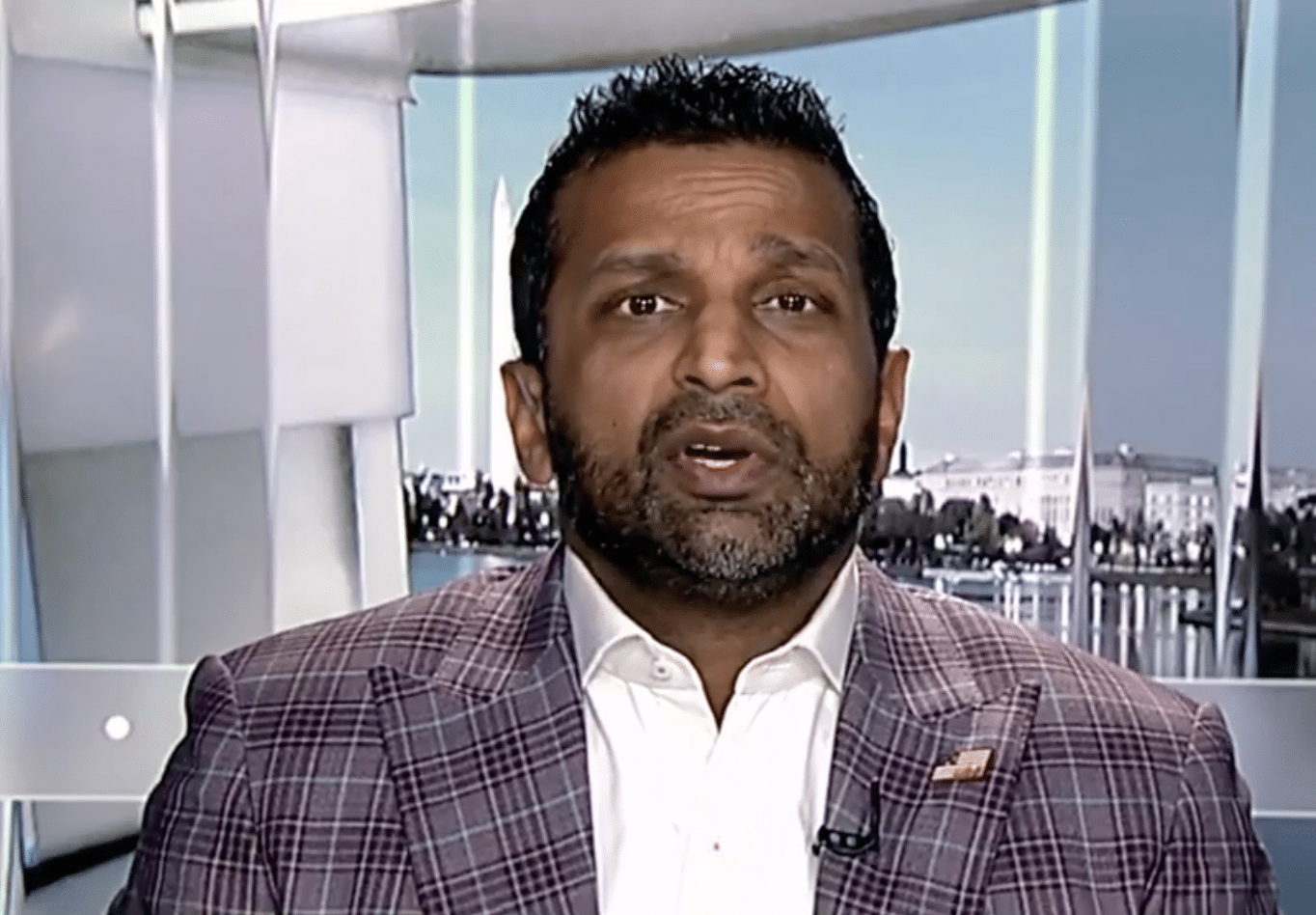
But all that’s just set up for this passage, mocking Kash for his claim, made on Sean Hannity’s show while he was wearing a ridiculous jacket, that Jack Smith was trying to hide his use of toll records in a “lockbox in a vault, and then put that vault in a cyber place where no one can see or search these files.”

[T]here is simply no support for FBI Director Patel’s recent assertion that Mr. Smith hid the toll records information so that “no one would find it,” or that Mr. Smith put the toll records in a “lockbox in a vault, and then put that vault in a cyber place where no one can see or search these files.”9 It is not clear what cyber place in a vault in a lockbox Director Patel is describing, but Mr. Smith’s use of these records is inconsistent with someone who was trying to conceal them. Paragraph 119 of the August 1, 2023 indictment describes some of the calls that were made to U.S. Senators on January 6, 2021, and footnote 132 of Volume 1 of the Special Counsel Report refers to the use of toll records in the investigation. Moreover, the precise records at issue were produced in discovery to President Trump’s personal lawyers, some of whom now serve in senior positions within the Department of Justice.

9 HANNITY: Patel: “We’re Just Warming Up” in Investigation of Alleged Tracking of GOP Senators, Fox News (Oct. 7, 2025), https://www.foxnews.com/video/6382234662112.

Even without this letter, sentient beings were able to point to the place in the indictment and the Jack Smith report where these toll records were described. And, as the letter notes, Trump’s attorneys — including Todd Blanche — got discovery on those toll records years ago, but did not challenge their use in a criminal case.

All this was quite clear to sentient beings. But not the staffers exploiting Chuck Grassley’s diminished capacities to make a stink about something very ordinary.

By comparison, the Jordan letter is shoddy even by his standards.

The ostensible purpose is to refer John Brennan to DOJ (but, significantly, not FBI) for testimony Brennan gave — in a hearing about the letter truthfully saying a bunch of spooks thought the Hunter Biden laptop had the hallmarks of a Russian information op — that mentioned the Steele dossier in passing. This may be an effort to predicate a case in DC after the case in Philly has stalled, but anyone aware of the law would question how comments about the Steele dossier were material to a hearing about the Hunter Biden letter, a point that Brennan even made at the time: “I don’t see any relevance to the Hunter Biden laptop issue now,” as quoted in Jordan’s letter.

More importantly, the letter appears to be an effort to launder debunked propaganda Kash Patel did years ago through Congress back into an investigation led by Kash Patel, something I’ve addressed in the past.

The key paragraph makes a number of claims, some of which are fabrications (and therefore commit the crime that Jim Jordan is referring), others of which are misrepresentations of prior reports that were themselves propaganda.

On January 6, 2017, the CIA, Federal Bureau of Investigation (FBI), and National Security Agency published a declassified version of an Intelligence Community Assessment (ICA) titled Assessing Russian Activities and Intentions in Recent US Elections. 3 The ICA stated, among other things, that Russia “developed a clear preference” for President Trump and “aspired to help” him win the election.4 This conclusion—now known to be false—was based in part on the Steele dossier, which “was referenced in the ICA main body text, and further detailed in a two-page ICA annex.”5 The Steele dossier was a series of reports containing baseless accusations concerning President Trump’s ties to Russia compiled and delivered to the FBI in 2016 by former British intelligence agent Christopher Steele.6 Subsequent investigations confirmed that the Clinton campaign and the DNC paid Steele via the law firm Perkins Coie and opposition research firm Fusion GPS to provide derogatory information about Trump’s purported ties to Russia, which resulted in the discredited dossier.7 In July 2025, the Trump Administration declassified numerous documents showing that the ICA’s main findings were false and that the Obama Administration knowingly fabricated the findings for the purpose of undermining the Trump Administration.8

3 OFF. OF THE DIR. OF NAT’L INTEL., ASSESSING RUSSIAN ACTIVITIES AND INTENTIONS IN RECENT US ELECTIONS (Jan. 6, 2017) [hereinafter “Russian Interference ICA”].

4 Id. at 1.

5 MAJORITY STAFF REPORT, H. PERM. SELECT COMM. ON INTEL., 116TH CONG., OVERSIGHT INVESTIGATION & REFERRAL: THE INTELLIGENCE COMMUNITY ASSESSMENT (ICA) “RUSSIA’S INFLUENCE CAMPAIGN TARGETING THE 2016 US PRESIDENTIAL ELECTION,” at 23 (2020) [hereinafter “HPSCI Report”].

6 See JOHN H. DURHAM, U.S. DEP’T OF JUST., OFF. OF SPECIAL COUNS., REPORT ON MATTERS RELATED TO INTELLIGENCE ACTIVITIES AND INVESTIGATIONS ARISING OUT OF THE 2016 PRESIDENTIAL CAMPAIGNS, at 11-12, 109-117 (2023) [hereinafter “Durham Report”].

7 See id. at 109-117; HPSCI Report, supra note 5, at 22-32; U.S. DEP’T OF JUST., OFF. OF THE INSPECTOR GEN., REVIEW OF FOUR FISA APPLICATIONS AND OTHER ASPECTS OF THE FBI’S CROSSFIRE HURRICANE INVESTIGATION, at v-xii (2019); Memorandum from HPSCI Majority Staff to HPSCI Majority Members, Re: Foreign Intelligence Surveillance Act Abuses at the Department of Justice and the Federal Bureau of Investigation (Jan. 18, 2018).

8 Sarah Bedford & Kaelan Deese, Russiagate definitive timeline: How new intelligence documents fit in, WASH. EXAM’R (July 26, 2025). [my emphasis]

The key claim in here — that what Jordan falsely says is the key claim of 2017 Intelligence Community Assessment, which he describes as, “that Russia ‘developed a clear preference’ for President Trump and ‘aspired to help’ him win the election,” is based on the Steele dossier — is based off two reports Kash substantially wrote (marked in blue). Never mind that it is only the key claim of the Intelligence Community Assessment if you have the thin skin of a Narcissist, never mind that any dispute is about how much evidence there was before discovering the June 9 meetings or Paul Manafort’s sharing of campaign information with Russian spies. That key claim had nothing to do with the subsequent investigation of Trump, which investigation had already been set into motion by Mike Flynn’s shitty OpSec.

But as I wrote extensively,  the one dated 2020, showing that Congressional Republicans packaged up older claims and Russian spycraft after the Mueller Report definitively showed the Russia did prefer Trump and Trump did welcome that help, is an attempt to create a time machine to go back to the halcyon time before we knew all that.

Jordan, perhaps wisely, doesn’t try to lay out how all this fits together. He outsources it to a right wing propaganda outlet, outsourcing to them their credulity about the time machine effect going on.

Jim Jordan lied, shamelessly, when he alleged that that claim was shown to be false. And he lied, shamelessly, when he said that a report that affirmatively did not incorporate intelligence from the Steele dossier, choosing instead to only link it and specifically say it was not incorporated into analytical work (which backs Brennan, not Jordan), instead relied on the dossier.

This conclusion—now known to be false—was based in part on the Steele dossier, which “was referenced in the ICA main body text, and further detailed in a two-page ICA annex.”

If the intimation that Kash Patel’s hand-picked investigators breached Jim Comey’s attorney-client privilege in service of this conspiracy bears out, it only adds to the list of corrupt and possibly illegal things Kash has done in pursuit of this witch hunt. And that’s before you consider all the cops and prosecutors that get fired along the way.

Kash Patel may well be in a race against time. He needs to package up things before Comey gets them all thrown out before Andrew Bailey becomes eligible to act as FBI Director bypassing confirmation, in mid-December.

Links

A Dossier Steal: HPSCI Expertly Discloses Their Own Shoddy Cover-Up

Think of the HPSCI Report as a Time Machine to Launder Donald Trump’s Russia Russia Russia Claims

Tulsi Gabbard and John Ratcliffe Reveal Putin “Was Counting on” a Trump Win

Tulsi Gabbard Teams Up with Russian Spies to Wiretap and Unmask Hillary Clinton

The Secrets about Russia’s Influence Operation that Tulsi Gabbard Is Still Keeping from Us

Tulsi Gabbard Accuses Kash Patel of Covering Up for the Obama Deep State


Aileen Cannon Locks Up the Jack Smith Report For at Least 30 More Days

Aileen Cannon issued her ruling withholding any sharing of Jack Smith’s Volume Two — which she extended to thirty days after all appellate proceedings.

2. Attorney General Garland or his successor(s), the Department of Justice, its officers, agents, officials, and employees, and all persons acting in active concert or participation with such individuals, are enjoined from (a) releasing, sharing, or transmitting Volume II of the Final Report or any drafts of Volume II outside the Department of Justice, or (b) otherwise releasing, distributing, conveying, or sharing with anyone outside the Department of Justice any information or conclusions in Volume II or in drafts thereof

3. This Order remains in effect pending further Court order, limited as follows. No later than thirty days after full conclusion of all appellate proceedings in this action and/or any continued proceedings in this Court, whichever comes later, the parties shall submit a joint status report advising of their position on this Order, consistent with any remaining Rule 6(e) challenges or other claims or rights concerning Volume II, as permitted by law. Any disagreements between the parties can be denoted separately.

She claims the report — which would only be released in redacted form — includes non-public information (and also revealed that Trump was claiming attorney-client privilege over some of the material).

Volume II includes detailed and voluminous discovery information protected by the Rule 16(d)(1) Protective Order entered in this case [ECF No. 27]. Much of this information has not been made public in Court filings. It includes myriad references to bates-stamped information provided by the Special Counsel in discovery and subject to the protective order, including interview transcripts, search warrant materials, business records, toll records, video footage, various other records obtained pursuant to grand jury subpoena, information as to which President-Elect Trump has asserted the attorney-client privilege in motions in this proceeding [ECF No. 571 (sealed); ECF Nos. 641, 656], potential Rule 404(b) evidence, and other non-public information.

Along the way, she notes that no one from Congress has asked for the report, but that the Democratic members of HJC called for its public release.

12. With respect to the Department’s assertion of congressional interest in Volume II, there has been no subpoena by Congress for review or release of Volume II. There is no record of an official request by members of Congress for in camera review of Volume II as proposed by the Department in this case. There is, however, a recent letter by some of those same members urging Attorney General Garland to release Volume II to the public immediately, even if doing so requires dismissal of the charges as to Defendants Nauta and De Oliveira.10 Finally, although the Department refers generally to “legislative interest” concerning special counsels as a basis to deny Defendants’ Emergency Motion as to Volume II [ECF No. 703 p. 3 n.2], the Department has identified no pending legislation on the subject or any legislative activity that could be aided, even indirectly, by dissemination of Volume II to the four specified members whom the Department believes should review Volume II now.

Note that she ignores Kash Patel’s pending confirmation proceedings.

Cannon also makes a patently false claim — that DOJ has never released Special Counsel information prior to the conclusion of criminal proceedings.

Never before has the Department of Justice, prior to the conclusion of criminal proceedings against a defendant—and absent a litigation-specific reason as appropriate in the case itself— sought to disclose outside the Department a report prepared by a Special Counsel containing substantive and voluminous case information. Until now.

The Mueller Report did that: It included (but redacted) information on both the Prigozhin troll case and the Roger Stone one.

Ah well. I did say that Jamie Raskin would have been better off attempting to intervene personally.

Cannon, having released the order after folks at SDFL quit, now makes much of the fact that no one from SDFL is noticed on this matter.

Update: As a reminder, I posted on some of the stuff that would appear in the report here. It sounds like the report itself has a lot more description of surveillance footage.

Found! Dozens of Damning Documents about Trump’s Hoarding of Classified Documents!

In an interview with Marc Elias the other day, Dan Goldman made a number of alarming claims. He said that before the release of Jack Smith’s January 6 report, “we didn’t really know about … the extensive litigation that the Special Counsel had to go through just to get this evidence.” That is, Goldman admitted that he missed the unsealing, in October, of the very documents Jack Smith cited to describe that process (which I wrote about at the time). Goldman missed the opportunity to make a stink about this before the election.

Goldman also wondered “if Elon Musk and X, while he has owned it, has ever not cooperated in the same way [as they did in response to a warrant for Trump’s Twitter account] in a different case.” We know the answer to that: according to an opinion Chief Judge Boasberg unsealed (and first spotted by Kyle Cheney, who played a key role in liberating the Executive Privilege dispute), from January to March of last year, Xitter refused to turn over mere subscriber records in what sounds like a leak investigation.

Much later in the interview (after 19:00), Goldman said,

Volume Two of the report is going to provide a lot more information that we don’t know. The litigation in the January 6 case, including the memo outlining all of the evidence, has been so extensive that, as we see from Volume One, there really isn’t that much that we didn’t know. There was also an entire Congressional Committee that did this investigation. This has been exhaustively investigated. And yes they did get more evidence because they had grand jury power. They got more witnesses to speak than the January 6 Committee did. But we’ve known about that.

We know very little about what the back-and-forth was with the National Archives, the FBI, Donald Trump and his team, others. And one of the things that has jumped out at me in that case is that in one of the filings, the Department of Justice, Special Counsel, said, that there evidence includes why Donald Trump retained the information illegally, and what he was planning to do with it. [my emphasis]

From there, Goldman went on to call for Merrick Garland to dismiss the case, which I’m not sure Garland can do without some judge going along (which was the hold up in the Mike Flynn case).

Now, as I have laid out, Jack Smith eschewed the opportunity to make new information available in Volume One of the report. For example, he didn’t explain why an investigation into Trump’s fundraising and spending ended without charges. Based on what we’ve seen in Volume One, I doubt we’d get the kinds of details Robert Hur provided in his 388-page report, describing every document that wasn’t charged and why not. I doubt we’d learn why the FBI believed there was a tie between a grant of clemency for Roger Stone and a document, classified Secret, about Emmanuel Macron, both found in Donald Trump’s own desk drawer. I doubt we’d learn why Trump compiled low-level classified information into a document with messages from a book author, a religious leader, and a pollster.

And I doubt we’d learn what Trump was planning to do with those classified documents.

I want to see the report. But I doubt it’ll include what Goldman hopes it will.

But it is also the case that we have already gotten a great deal of additional information about the investigation.

It’s not the case, for example, that “we know very little about what the back-and-forth was with the National Archives, the FBI, Donald Trump and his team, others.” This filing describes that process at length, relying on both dozens of documents that Trump himself liberated and 302s from those involved, including a key White House Office of Records Management official and Mark Meadows. This section describes Meadows’ involvement, which (along with actions taken by a former Trump White House Counsel, probably Pat Philbin) led to the involvement of Biden White House Counsel Jonathan Su, the basis of Trump’s bogus claim that Biden’s White House pushed the investigation into Trump.

A succession of Trump PRA representatives corresponded with NARA without ever resolving any of NARA’s concerns about the boxes of Presidential records that had been identified as missing in January 2021. By the end of June 2021, NARA had still received no update on the boxes, despite repeated inquiries, and it informed the PRA representatives that the Archivist had directed NARA personnel to seek assistance from the Department of Justice (“DOJ”), “which is the necessary recourse when we are unable to obtain the return of improperly removed government records that belong in our custody.” Exhibit B at USA-00383980; see 44 U.S.C. § 2905(a) (providing for the Archivist to request the Attorney General to institute an action for the recovery of records). That message precipitated the involvement of Trump’s former White House Chief of Staff, who engaged the Archivist directly at the end of July. See Exhibit 4 Additional weeks passed with no results, and by the end of August 2021, NARA still had received nothing from Trump or his PRA representatives. Id. Independently, the House of Representatives had requested Presidential records from NARA, further heightening the urgency of NARA obtaining access to the missing boxes. Id. On August 30, the Archivist notified Trump’s former Chief of Staff that he would assume the boxes had been destroyed and would be obligated to report that fact to Congress, DOJ, and the White House. Id. The former Chief of Staff promptly requested a phone call with the Archivist. Id.

[snip]

Fall passes with little progress in retrieving the missing records. In September 2021, one of Trump’s PRA representatives expressed puzzlement over the suggestion that there were 24 boxes missing, asserting that only 12 boxes had been found in Florida. Exhibit 7 at USA00383682, USA-00383684. In an effort to resolve “the dispute over whether there are 12 or 24 boxes,” NARA officials discussed with Su the possibility of convening a meeting with two of Trump’s PRA representatives—the former Chief of Staff and the former Deputy White House Counsel—and “possibly” Trump’s former White House Staff Secretary. Id. at USA-00383682. On October 19, 2021, a call took place among WHORM Official 1, another WHORM employee, Trump’s former Chief of Staff, the former Deputy White House Counsel, and Su about the continued failure to produce Presidential records, but the call did not lead to a resolution. See Exhibit A at USA-00815672. Again, there was no complaint from either of Trump’s PRA representatives about Su’s participation in the call. Later in October, the former Chief of Staff traveled to the Mar-a-Lago Club to meet with Trump for another reason, but while there brought up the missing records to Trump and offered to help look for or review any that were thereExhibit C at USA-00820510. Trump, however, was not interested in any assistance. Id. On November 21, 2021, another former member of Trump’s Administration traveled to Mar-a-Lago to speak with him about the boxes. Exhibit D at USA-00818227–USA-00818228. That individual warned Trump that he faced possible criminal exposure if he failed to return his records to NARA. Id

[my emphasis, links added]

Exhibit D, cited to support a description of a former Trump official who warned that Trump faced criminal exposure, links to this complete 302, from someone whose potty mouth resembles Eric Herschmann. It describes a bunch of things:

  • How on November 21, 2021, he warned Trump to give the documents back: “Don’t give them a noble reason to indict you, because they will.”
  • How a “total moron” who resembles Boris Epshteyn insinuated himself with Trump with claims of voter fraud and subsequently tried to use something, perhaps claims fed to credulous reporters that he was serving a legal function, to cover for his past activities ( a document Trump himself liberated shows call records between this person resembling Epshteyn and a person resembling Chief of Staff designate Susie Wiles).
  • A February 2022 call in which someone resembling Tom Fitton told Trump he didn’t have to send documents back because of Fitton’s “Clinton Socks” ruling,
  • A prediction that Walt Nauta would be pardoned if he were charged with lying to the FBI.

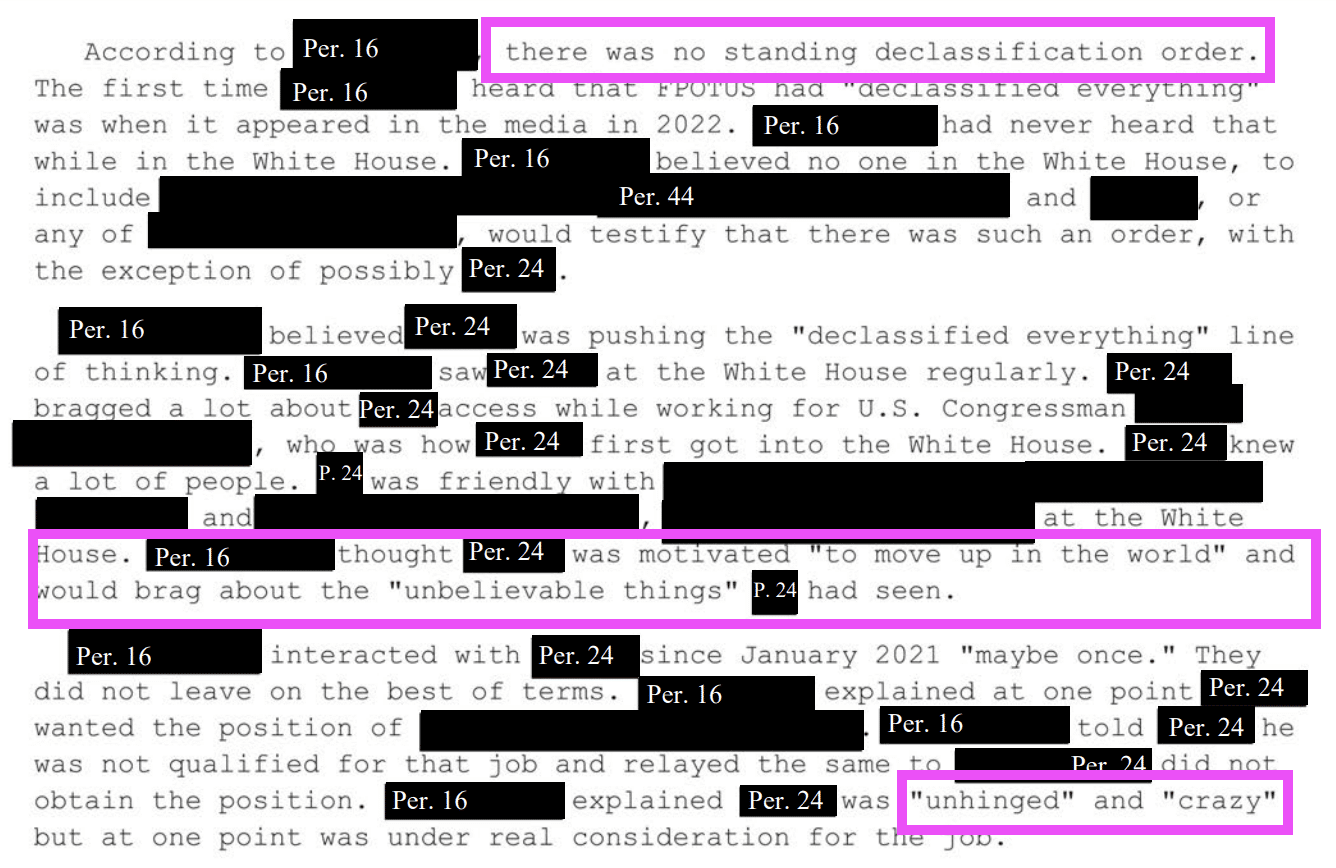
But it also describes an extended description of someone “unhinged” and “crazy” who first got access to the White House through the Member of Congress he worked for, who started the “declassified everything” claim when it first started appearing in the media, which is when Kash Patel made the claim.

Another dispute — about whether Jay Bratt threatened to retaliate against Stanley Woodward if he didn’t get Walt Nauta to cooperate — includes a long discussion about Kash’s testimony. It revealed how Kash tried to delay compliance with a grand jury subpoena indefinitely by hiring a lawyer already busy defending a January 6 seditionist, and when Kash did first testify, the aspiring FBI Director pled the Fifth repeatedly.

On Monday, September 19, 2022, the FBI personally served witness Kashyap “Kash” Patel with a grand jury subpoena, commanding him to appear on September 29, 2022. Prior to engaging with counsel, Patel contacted government counsel on Friday, September 23, 2022, to request a two-week extension. The government agreed to that extension and set his appearance for October 13, 2022. Thereafter, [Stan] Woodward contacted government counsel on September 27, 2022, explaining that he had just begun a lengthy jury trial–United States v. Rhodes et a., No. 22-cr-15 (D.D.C.)–but that Patel had retained him. On September 30, 2022, Woodward request an addition indefinite extension of Patel’s grand jury appearance until some point after the Rhodes trial concluded. (Ultimately, the verdict in the trial was not returned until November 29, 2022, approximately six weeks after Patel’s already-postponed appearance date of October 13, 2022.) The government was unwilling to consent to the indefinite extension that Woodward sought. Woodward, for his part, declined various alternatives offered by the government, including scheduling Patel’s grand jury appearance for Friday afternoons, when the Rhodes trial was not sitting, and a voluntary interview by prosecutors and agents over a weekend.

On October 7, 2022, Patel (through Woodward) filed a motion to quash his grand jury appearance, arguing that requiring Patel to appeal pursuant to the grand jury’s subpoena would violate his constitutional rights by depriving him of his counsel of choice, i.e., Woodward, who was occupied with a jury trial elsewhere in the courthouse. The Court denied the motion to quash on October 11, 2022, see In re Grand Jury No. 22-03 Subpoena 63-13, No. 22-gj-41, Minute Order (Oct. 11, 2022), and required Patel to appear as scheduled on October 13. See id. (“Mr Patel requests a delay of some unspecified time period in his testimony because his counsel, Stanley Woodward, will be engaged in the United States v. Rhodes trial, Case No. 22-cr-15, scheduled to last several weeks, with no promises as to when his counsel will still have time available. Mr. Patel retained Mr. Woodward on the attorney’s first day of jury selection in Rhodes when such circumstance made fully apparent that counsel would be unavailable during Mr. Patel’s scheduled grand jury testimony. In addition, the government has already demonstrated flexibility in meeting Patel’s scheduling needs . . . . Testifying before a grand jury is not a game of find-or-seek-a-better-time or catch-me-if-you-can, and a witness cannot indefinitely delay a proceeding based on his counsel’s convenience. . . .”).

Patel appeared before the grand jury on October 13, 2022, where he repeatedly declined to answer questions on the basis of the rights afforded to him by the Fifth Amendment. Thereafter, the government moved to compel Patel’s testimony. The Court granted the government’s motion to compel, contingent on the government offering statutory immunity. [my emphasis]

This is the same kind of extended discussion of the delays that Trump and his flunkies created that Goldman claimed, incorrectly, first became available in Volume One of Smith’s report.  And it (plus details of Tim Parlatore’s efforts to stall ongoing searches) has been public since April.

Other disputes provided a bunch more information, including pictures, of where and how Trump stored the documents he withheld, including one of this box, in which Trump was storing a document classified Formerly Restricted (that is, a document pertaining to nuclear weapons), along with nine other documents, underneath a Christmas pillow and some bubble wrap (I annotated the photo to show that the documents charged in Counts 12 through 21 were found in it).

Here are discussions of what was hidden under the bubble wrap.

I tried to put these pictures in context in this post and this post.

A passage in the 193-page 302 transcript from Chamberlain Harris (focusing on how she scanned documents including sensitive White House schedules) describes that the door to the storage closet had only the kind of lock you’d find in a residential bathroom — a pinhole they’d open with a tiny flat screwdriver.

Person 10 [Harris]: They used to unlock it for me, because you could lock it from the inside.

Mr. Thakur: Okay. This is obviously after a lock was placed there, they would unlock it for you?

Person 10: No, this was before.

Mr. Thakur: Okay. So are you talking about a lock to another door, or?

Person 10: It’s a door with a pinhole in it.

Mr. Thakur: A door with a pinhole?

Person 10: Like, I don’t know, a circle doorknob?

SA 41: Kind of like what you would find on residential door inside of a home? So it might have a lock like that one on one side of it then other side, rather than an actual place for a key, it’s sort of like a —

Person 10: Yeah.

SA 41: — very tiny screwdriver?

Person 10: Um-hmm.

SA 51: I see. But that was only on the inside of the door. So you — reasonably couldn’t lock it from the outside unless they used that little pin to reengage the lock from the outside?

Person 10: You would just lock it when you left.

Finally, also in April, we got both the interview transcript and grand jury transcript from Walt Nauta.

In other words, there’s far, far more that got released as part of litigation in the documents case than the January 6 case.

And Dan Goldman, whose job it is to oversee such investigations, seemingly knows about none of that: Not the description of how the aspiring FBI Director stalled the investigation. Not the document claiming that the “declassify everything” claim Kash first made was a lie. And not the description of the back-and-forth with NARA that Goldman says he wants.

It’s all there in the docket. And has been (for the most part) since April.

If you want to know how Democrats failed to make more of a political case against Trump during the election, you can start with the fact that Dan Goldman — one of the Democrats’ most forceful voices on rule of law, a former TV personality, and a member of the House Judiciary Committee — knows almost nothing about what was made public in either of the federal cases against Donald Trump and as a result did little to make a big deal of that before the election.

Fridays with Nicole Sandler

Listen on Spotify (transcripts available)

Listen on Apple (transcripts available)

On the Misguided Tactical Conversations about Volume Two of the Jack Smith Report

Like everyone else, I badly want to see Volume Two of the Jack Smith report. If it were a fulsome report, it might give us explanations for the kinds of documents Trump hid in his bathroom, it might explain why there was a grant of clemency to Roger Stone with some tie to a Secret document about Emmanuel Macron in Donald Trump’s desk drawer, and it might reveal more about Kash Patel’s efforts to help Trump lie about the documents. It might even describe what investigators might have learned if Walt Nauta had cooperated.

Given the ways that Jack Smith pulled his punches in Volume One, however, I’m far less optimistic the report is as expansive as it could have been if it had adopted Robert Hur’s approach to declination decisions. It’s more likely the report would offer explanations for why Smith charged the case in SDFL and why he didn’t charge 18 USC 2071 — both of which would be useful for those who don’t understand those issues, but still wildly unfulfilling.

If Volume One is any indication, Smith did not use his report to get out previously unknown details.

Plus, I’m not sure what good it would do anyway. The most interesting response to Volume One, in my opinion, was seeing a lot of the same pundits who had complained that Jack Smith hadn’t released more information publicly making it clear they didn’t realize that most of the factual discussion was cited directly to the immunity brief Smith fought to release before the election, in October. Thanks for proving my point that you weren’t paying attention to the stuff that was getting released! Not to mention the Garland whingers who, in their misreading of the Jack Smith report, confessed they had never been reading the public documentation about how the investigation proceeded and weren’t going to before using it to attack Garland. You all failed to make something of this investigation when it could have mattered. It’s not clear how you’ll do better with Volume Two.

I think the House Judiciary Committee letter calling on Merrick Garland to release the report — something I want too! — by dismissing the case against Nauta and Carlos De Oliveira is the same kind of misguided intervention. Particularly given DOJ’s emphasis in court filings that Jamie Raskin has a constitutional entitlement to review the document in his function as Ranking Member of HJC, just like Dick Durbin has a heightened interest given his duty to advise and consent to the Kash Patel confirmation.

I’m no genius on criminal procedure, but I simply don’t understand how this would work. DOJ can’t just dismiss the case. They have to have to dismiss it somewhere in court, just like Bill Barr tried with Mike Flynn. I’m not even sure where you would do that, because there’s not currently a pending case. There’s an appeal of the complete dismissal of the case in the 11th Circuit, where you could dismiss the appeal. And there’s Aileen Cannon’s courtroom, where the legal status of the case is that everything that happened after November 18, 2022, after Jack Smith was appointed, is unconstitutional. If Cannon’s ruling holds, then arguably even writing the report was unconstitutional (which is why it was dumb, in my opinion, not to have written a two-part Volume Two, breaking out the stuff (to include the Kash Patel interview) that happened before Smith was appointed. Aileen Cannon is not going to let you dismiss the case, I promise you.

There’s something being missed in this discussion that’s worth pondering. It’s not Merrick Garland who made the decision to withhold Volume Two until Trump destroys the remaining case against Nauta and De Oliveira. It was Jack Smith who recommended that course of action.

Because Volume Two discusses the conduct of Mr. Trump’s alleged co-conspirators in the Classified Documents Case, Waltine Nauta and Carlos De Oliveira, consistent with Department policy, Volume Two should not be publicly released while their case remains pending.

Which Garland adopted.

I have determined, at the recommendation of the Special Counsel, that Volume Two should not be made public so long as those defendants’ criminal proceedings are ongoing.

Given what we saw in Volume One, there are multiple possible reasons he may have made that recommendation. Possibly, as he did in Volume One, Smith is just trying to adhere to normal procedure as much as possible, to prove that he and any lawyers who attempt to remain at DOJ after next week never tried to pull a fast one on Trump. Possibly, Smith simply believes the legal posture of the case, in which ceding Aileen Cannon’s view that everything that happened after November 18, 2022 is unconstitutional would concede the report is too, makes releasing it impossible at the moment.

Possibly someone involved with all this believes there’s a different way to get the volume released.

Again, given what we see in Volume One, I assume it’s one of the first reasons: It really is department policy not to harm the trial rights of defendants (Mueller succeeded in releasing his report even though both Roger Stone and Yevgeniy Prigozhin’s trolls still had to stand trial, which led to many squabbles about redactions). For whatever well- or ill-considered or naive opinions, Smith really is trying to reassure everyone that everything is normal.

That said, there are some reasons to believe the report won’t get destroyed right away. One is that several people have already FOIAed it, creating legal problems (that Trump and possibly even Pam Bondi don’t care about) if it disappears. A far stronger one is that to investigate anyone from Jack Smith’s team, you need to preserve Jack Smith’s records.

I can think of several ways this report might still be liberated via other means.

But it’s worth noting that when it comes time to make Nauta’s appeal go away, every single person Trump wants at DOJ has a conflict: aspiring Deputy Attorney General Todd Blanche was Trump’s attorney on this, aspiring Solicitor General John Sauer his appeals attorney. Emil Bove, who will serve in the unconfirmed position of PADAG and will run the department starting Monday until others are confirmed, was also on Trump’s Florida team. And Pam Bondi joined an amicus before the 11th.

When Bondi, at least, was asked about her many conflicts in her confirmation hearing, she gave the standard rote answer: that she would consult with the career ethics officials at DOJ. That amounted to a tacit, non-binding commitment that she (and Bove, who’ll get there before her) won’t eliminate those key career officials. If that were to include Brad Weinsheimer, who supervised all of the Special Counsels Garland approved (and may have influenced the unsatisfying scope of Smith’s final report), that would put him the middle of these decisions.

As noted, even while DOJ seems to be pursuing a least-damage approach with Volume Two, they are establishing the prerogatives of Congress to access this report — and not just the report, but even underlying 302s from the investigation.

The Department has historically made materials available for in camera review by members of Congress as part of the process to accommodate the Executive Branch’s interests in protecting the confidentiality of sensitive information while ensuring that Congress can fulfil its own constitutional oversight functions.2 For example, when a congressional committee sought FBI Form 302 interview reports referenced in the Final Report of Special Counsel Robert Mueller, the Department reached an agreement with the Committee to make those reports available in camera, at the Department, pursuant to specified terms, with redactions to protect privileged and grand jury information. See Supplemental Submission Regarding Accommodation Process ¶¶ 1-2, In re: Application of the Committee on the Judiciary, U.S. House of Representatives, No. 1:19-gj-00048- BAH, ECF No. 37 (D.D.C. October 8, 2019).

2 Congress has recently, on multiple occasions, taken the position that it has a particularized legislative interest in information about Special Counsel investigations, in order to consider possible legislative reforms regarding the use of special counsels. See., e.g., Plaintiffs’ Motion for Preliminary Injunction or, in the Alternative, for Expedited Summary Judgment at 43, Committee on the Judiciary, U.S. House of Representatives v. Garland, No. 1:24-cv01911, ECF No. 11 (D.D.C. Aug. 16, 2024); Plaintiffs’ Motion for Preliminary Injunction or, in the Alternative, for Expedited Summary Judgment at 4, Committee on the Judiciary, U.S. House of Representatives v. Garland, No. 1:24-cv-01911, ECF No. 11 (D.D.C. Aug. 16, 2024); Plaintiffs’ Motion for Preliminary Injunction or, in the Alternative, for Expedited Summary Judgment at 10, Committee on the Judiciary, U.S. House of Representatives v. Garland, No. 1:24-cv-01911, ECF No. 11 (D.D.C. Aug. 16, 2024).

Wouldn’t it be better for Raskin to at least assert his own constitutional prerogative here, rather than a letter that doesn’t address the procedural means via which Garland could dismiss the case? Particularly given that, in the vacuum created by his silence, Trump is making Raskin’s partisanship cause to keep the document sealed?

The government does this despite knowing that these political actors will have every ability and incentive to use such information to undermine President Trump’s transition and his ability to govern our Nation moving forward.2 Nor is there any material doubt the ranking members will do so, given their immediate politicking on Volume I of Smith’s report, including extensive and hyperbolic commentary on the contents of that Volume. See Raskin, Ranking Member Raskin’s Statement on Special Counsel Jack Smith’s Report on President-Elect Donald Trump’s Election Subversion and Incitement of Insurrectionary Violence (Jan. 15, 2025); Durbin, Durbin Statement On Former Special Counsel Jack Smith’s Report On Trump’s Interference In The 2020 Election (Jan 14, 2025).

Thus, the government is not seeking, as it claims, to aid Congress in exercising its “oversight functions.” Doc. 703 at 3. Instead, by delivering Volume II to unashamed partisans, the government strategically aims to ensure the Volume’s public release. Although the government claims that a purported “agree[ment] to specified conditions of confidentiality,” id. at 4, would alleviate these concerns, it would do nothing of the sort. As the government well knows, the Constitution prohibits any enforceable restrictions on the ranking members’ use or disclosure of information in furtherance of their official duties. The ranking members could, for example, stand on the floor of the House or Senate and disclose the entire contents of Volume II, without fear of any legal consequence. U.S. CONST. art. I, § 6, cl. 1 (providing for Speech or Debate Immunity); Hutchinson v. Proxmire, 443 U.S. 111, 130 (1979) (“A speech by [a Senator] in the Senate would be wholly immune and would be available to other Members of Congress and the public in the Congressional Record.”). Thus, whatever “confidentiality agreement” the government purports to adopt (the terms of which the government has pointedly not provided the Court), it is entirely illusory, because no such agreement is enforceable. Disclosure to the ranking members is functionally equivalent to public disclosure. This, in turn, poses an extraordinary danger to President Trump’s ability and right to prepare for the Presidency free of such unconstitutional attacks by the incumbent administration.

If this report doesn’t come out, it can be made into an anvil to hang over the entire leadership of DOJ. To make it one, though, you need to establish clearly that Congress has equities in this document, too, and any abridgment of those equities will provide opportunity for Congress to intervene with DOJ.

Thus far, Congressional Democrats have chosen a far less effective route.