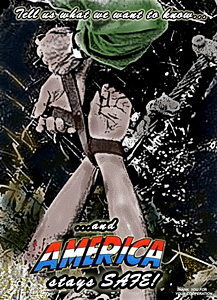
Cluster Bombs on the Head of a Saudi Pinpoint

Congratulations to the NYT, which offers the superlative version of a story everyone seems to be writing today. It describes a whole host of reasons why we should not trust the Saudis.

That collaboration appears to have intensified over the past two years, despite a long history of mistrust rooted in the role of Saudi hijackers in the attacks of Sept. 11, 2001. The relationship was tested again last year when Saudi leaders responded furiously to American endorsement of the revolt that ousted a Saudi ally, President Hosni Mubarak of Egypt. American diplomats were surprised and angered in turn soon afterward when Saudi Arabia sent troops to help put down unrest in neighboring Bahrain.

[snip]

The counterterrorism cooperation has not been without bumps, officials from both countries acknowledge.

In 2007, the Federal Bureau of Investigation quietly sent a handful of agents to Saudi Arabia to work with officials there on a classified counterterrorism strategy, according to a senior American official who was briefed on the program. After several months, however, the two sides disagreed on a common strategy, and the F.B.I. agents went home.

Internal State Department cables obtained by WikiLeaks and made available to several news organizations revealed American frustration with Saudi Arabia in curtailing financial supporters of many extremist activities.

“It has been an ongoing challenge to persuade Saudi officials to treat terrorist financing emanating from Saudi Arabia as a strategic priority,” said a classified cable sent by Secretary of State Hillary Rodham Clinton in December 2009, concluding that “donors in Saudi Arabia constitute the most significant source of funding to Sunni terrorist groups worldwide.”

But ultimately concludes that in spite of all this evidence, our partnership with the Saudis is working just great.

But when it comes to counterterrorism, the Saudis have been crucial partners, not only for the United States but also for an array of other Western powers.

[snip]

Under pressure from the United States, American officials now say, Saudi Arabia is taking the threat more seriously, holding financiers accountable through prosecutions and making terrorist financing a higher priority.

Like many of these stories, the NYT quotes Mustafa Alani, a counterterrorism analyst at the Gulf Research Center with close ties to the Saudi intelligence establishment, describing the division of labor on counterterrorism: the US conducts electronic surveillance, the Saudis provide HUMINT. And while the NYT gets the prize for the most self-contradictory celebration of US-Saudi counterrorism “cooperation,” my favorite quote from Alani is this one, in the WaPo’s version of the story.

“Even with the drone strikes, the air raids, the Americans need someone on the ground,” Alani said. “The Saudis are the ones who can pinpoint targets for the Americans.”

The Saudis, Alani brags, are responsible for our pinpointed targeting in Yemen. You know? The kind that manages to kill an American teenager but fails to hit its intended target. Or the kind that will become even less pinpointed now that the Saudis have delivered up a bomb plot to convince the President that AQAP is still targeting the US (this CNN story confirms that the bomb plot was delivered up before Obama’s signature strike okay was reported) and therefore needs to be targeted with signature strikes.

But since we’re discussing Saudi pinpointed targeting, let’s look more closely at two other Saudi pinpoints. First, there’s the Saudi strike on a Houthi medical clinic in 2009-2010, which they used to ask for Predator drones. Almost the whole cable is worth reading to see the multiple ways in which Saudi Prince Khaled bin Sultan manipulated us.

USG CONCERNS ABOUT POSSIBLE STRIKES ON CIVILIAN TARGETS

——————————————————-

¶2. (S/NF) Ambassador Smith delivered points in reftel to Prince Khaled on February 6, 2010. The Ambassador highlighted USG concerns about providing Saudi Arabia with satellite imagery of the Yemen border area absent greater certainty that Saudi Arabia was and would remain fully in compliance with the laws of armed conflict during the conduct of military operations, particularly regarding attacks on civilian targets. The Ambassador noted the USG’s specific concern about an apparent Saudi air strike on a building that the U.S. believed to be a Yemeni medical clinic. The Ambassador showed Prince Khaled a satellite image of the bomb-damaged building in question.


IF WE HAD THE PREDATOR, THIS MIGHT NOT HAVE HAPPENED

—————————————————-

¶3. (S/NF) Upon seeing the photograph, Prince Khalid remarked, “This looks familiar,” and added, “if we had the Predator, maybe we would not have this problem.” Read more

Share this entry

Peter King Makes It More Clear He’s Targeting the AP, Not Leakers

A real member of Congress might worry that the government is using double agents to expand wars in other countries without briefing the Gang of Eight, as required by law.

Not Peter King. He wants to investigate the AP’s sources–but not, apparently, ABC’s–to find out how the press learned something that had not been briefed properly.

Also: Peter King doesn’t believe in scaring the American people. Just ginning up fear about one religion or ethnic group.

Share this entry

Did the Saudis or the Yemenis Expose the Involvement of a Double Agent?


There’s a remarkable moment in this CNN story reporting on the concern within the US that someone leaked the fact that a double agent was involved in foiling the UndieBomb plot. After quoting Peter King saying “a major investigation” would be launched to find the source, the CNN cites what must be a Saudi source confirming the double agent story.

The mole, who volunteered as a suicide bomber for the terrorist group, was actually working as an intelligence agent for Saudi Arabia, a source in the region familiar with the operation told CNN.

The man left Yemen, traveled through the United Arab Emirates and gave the bomb and information about al Qaeda in the Arabian Peninsula to the CIA, Saudi intelligence and other foreign intelligence agencies, the source said.

The agent works for Saudi intelligence, which has cooperated with the CIA for years, the source said.

“Indeed, we always were the ones managing him,” the source told CNN. [my emphasis]

After all, a “source in the region familiar with the operation” who asserts “we always were the ones managing him” would seem to have to be Saudi, given that the Saudis were running him.

Now there seem to be two things going on. If I’m not mistaken, King was calling for an investigation into the source who leaked the news of the foiled plot more generally. That’s suspect because of who had that story first: the AP. In other words, Peter King, a good buddy of Ray Kelly and a big booster of the NYPD’s efforts to profile Muslims wants to know who Adam Goldman and Matt Apuzzo’s sources are.

Right.

Note, too, that whereas the AP reported that the Administration planned to announce the foiled plot,

The AP learned about the thwarted plot last week but agreed to White House and CIA requests not to publish it immediately because the sensitive intelligence operation was still under way. Once officials said those concerns were allayed, the AP decided to disclose the plot Monday despite requests from the Obama administration to wait for an official announcement Tuesday.

The LAT quotes US intelligence officials suggesting they weren’t going to make it public.

U.S. intelligence officials had planned to keep the bomb sting secret, a senior official said, but the Associated Press learned of the operation last week. The AP delayed posting the story at the request of the Obama administration, but then broke the news Monday.

“When the AP got it and started talking about it, it caused all kinds of problems with the operation,” said a U.S. official who would not be quoted by name discussing the classified operation. “The investigation never went to its full conclusion.”

AP spokesman Paul Colford said the news agency held off publishing until U.S. officials told the AP that security concerns were allayed.

“We were told on Monday that the operation was complete and that the White House was planning to announce it Tuesday,” he said.

Which suggests that the focus on the source of the leak may have elicited a revisionist story from the Administration.

Now the focus has shifted to the source who exposed the role of the double agent–a potentially far bigger secret. A lot of people have treated the LAT as the first story for the double agent story. But that’s not true–that article credits ABC with breaking the story.

The disclosure that a double agent had infiltrated an Al Qaeda bomb cell in Yemen, which was first reported by ABC News, could endanger future counter-terrorism operations, U.S. officials said.

While the ABC story cites US officials, among others, it also cites an “international intelligence official” as well as “officials” and “authorities” named generically (as well as John Brennan on the record, rather uncharacteristically trying to protect “the equities that are involved with it”).

In a stunning intelligence coup, a dangerous al Qaeda bomb cell in Yemen was successfully infiltrated by an inside source who secretly worked for the CIA and several other intelligence agencies, authorities revealed to ABC News.

The inside source is now “safely out of Yemen,” according to one international intelligence official, and was able to bring with him to Saudi Arabia the bomb al Qaeda thought was going to be detonated on a U.S.-bound aircraft.

[snip]

And what Brennan knows and did not say, according to officials, is that several other elements of the plot were under investigation, including possible additional bombers and other kinds of bombs.

In other words, in spite of the fact that there appears to be a hunt for the US based sources that leaked this information, it is possible if not likely that ABC got it from foreign sources first, and only after that got US officials (which could include members of Congress and others outside of the Executive Branch) to comment. Read more

Share this entry

The UndieBomber’s Signature Timing

As I suggested yesterday, I think the the Administration’s decision to use signature strikes in Yemen may be tied more closely to the double agent UndieBomb attack revealed in the last two days.

After all, the plot didn’t just happen yesterday. As the NYT reports, the CIA has known about it for weeks.

The bombing plot was kept secret for weeks by the C.I.A. and other agencies because they feared retaliation against the agent and his family — not, as some commentators have suggested, because the Obama administration wanted to schedule an announcement of the foiled plot, American officials said.

If the CIA has known about the plot for two weeks, they would have learned about it on or before April 24. That just happens to be the day FBI Director Robert Mueller made an unannounced visit to Yemen. Reports of the meeting have him discussing things that wouldn’t fall in FBI’s mandate, even broadly defined. But the NYT description makes it sound like the double agent “handed over” the UndieBomb to the FBI directly.

He also handed over the bomb, designed by the group’s top explosives expert to be undetectable at airport security checks, to the F.B.I., which is analyzing its properties at its laboratory at Quantico, Va.

And the AP–which first broke news of the plot–found out about it last week, though held the story to allow “sensitive intelligence operations”–presumably the killing of Fahd al-Quso on Sunday–to play out.

The AP learned about the thwarted plot last week but agreed to White House and CIA requests not to publish it immediately because the sensitive intelligence operation was still under way. Once officials said those concerns were allayed, the AP decided to disclose the plot Monday despite requests from the Obama administration to wait for an official announcement Tuesday.

So if the Saudis and CIA learned about the plot at least early enough to get Robert Mueller on a plane to act as a courier for the bomb (it’s not clear that’s what he was doing, of course), it might well coincide with the timing of the decision to use signature strikes.

Greg Miller first reported on the possibility on April 18. He stated that the idea had been presented to the National Security Council, but no decision had been reached. Though the White House and CIA were a bit more coy about matters.

U.S. officials said that the CIA proposal has been presented to the National Security Council and that no decision has been reached. Officials from the White House and the CIA declined to comment.

Also remember that Miller–as distinct from later reporting on the signature strikes–portrays the decision as being pushed by CIA alone, not CIA and JSOC.

Here’s what Miller had to say about the kinds of intelligence that went into signature strikes in Pakistan.

The CIA began flying armed drones over Yemen last year after opening a secret base on the Arabian Peninsula. The agency also has worked with the Saudi and Yemeni intelligence services to build networks of informants — much the way it did in Pakistan before ramping up drone strikes there.

[snip]

A former senior U.S. intelligence official said the CIA became so adept at this that it could tell what was happening inside an al-Qaeda compound — whether a leader was visiting or explosives were being assembled, for example — based on the location and number of security operatives surrounding the site.

When the WSJ announced that the Administration had decided to use signature strikes on April 25, it mentioned “several direct threats to the US”–though it also cited an April 22 strike that sounded like it could have been a signature strike (though when asked to comment on it, US sources said the target had been in their cross hairs).

U.S. counterterrorism officials said they are currently tracking several direct threats to the U.S. connected to AQAP. The officials wouldn’t provide further details because that information is classified.

“This was an interagency decision made based on deliberations about the growing threat from AQAP and concerns about the safe haven,” a senior Obama administration official said. The White House is “broadening the aperture” for CIA and JSOC strikes, the official added.

The frequency of U.S. strikes in Yemen is expected to increase with the changes. On Sunday, a CIA-piloted drone hit a vehicle believed to be carrying AQAP militants. Intelligence analysts are working to identify those killed.

And note most of the reporting on the signature strikes talk about better intelligence we’ve developed, with frequent mention of informants.

Now, the chronology shows only estimated dates. But it sure seems possible that the “direct threats to the US” cited when justifying the signature strikes may well be the UndieBomb plot we’re only now just learning about.

Update: This, from the LAT, appears to confirm Obama learned of the bomb before approving signature strikes.

U.S. officials said President Obama was informed of the bomb in early April and was assured that it did not pose a threat to the public.

Read more

Share this entry

Confessions of an Orwellian Oppenheimer

Drunken Predator has one of the smartest descriptions of what I agree are two of the biggest reasons to oppose drones. On one side, he describes “Oppenheimers” who oppose some international uses of drones out of concern for the way they expand the Imperial Presidency.

I’ll call the first group “Oppenheimers,” after a guy who got a good look at a new kind of warfare and spent the rest of his life championing international institutions to make sure it never took place. They feel that remotely-piloted aircraft represent a qualitative shift in the ability of a nation, and a chief executive, to use force. And not a shift for the better.

Oppenheimers think drones will usher in an Imperial presidency. The capitalization there is important, because we’re talking Imperial as in Palpatine at the helm of the Galactic Empire. They fear that through technical means, drones are reducing or eliminating the political impediments to war, and blurring the line about what kind of conflict constitutes war in the first place. (Nobody puts a flag over drone wreckage, let alone puts it on the nightly news.) Oppenheimers also deplore the role that drones play in the larger framework of the Authorization for Use of Military Force, or AUMF, which the Obama administration interprets as giving them clearance to use force (whether under Titles 10 or 50) against al-Qaeda or its affiliates anywhere on the planet.

The first part of his description–the way drones used outside of war zones change the way we wage war–gets at part of what I was trying to describe in my two posts on drones and sovereignty and the nation-state. Drones not only degrade the sovereignty of and therefore the ability to govern in states like Pakistan in dangerous ways, but they shift the relationship between us and our own government, allowing it to wage war relatively free of political limits, which in turn appears to be accompanying and related to fundamental changes in the social compact between the government and the governed.

I’d add two things to DP’s description, though. First, drones are not changing warfare alone. So are our expanded use of special forces (which, so long as they don’t fight in uniforms and fight in countries we’re not at war with, resemble the unprivileged enemy combatants and tactics this war started by targeting) and mercenaries. Those developments all work together to support the same changes in warfare; drones just happen to be the most visible evidence of those developments.

Also, this is not just about the AUMF. As I noted on Twitter, there are reasons to believe some of our drone strikes (and some of our paramilitary activities) are operating at least partially under the September 17, 2001 “Gloves Come Off” Memorandum of Notification, not the AUMF (or, as Stephen Preston suggested recently, an AUMF would be separate and independent from authorities that derived from Article II authority covered in a Finding). At this point, the distinction between Title 10 (military) and Title 50 (intelligence) authorities appears to have become a shell game, giving Presidents two different ways to authorize and approve various activities based on the buy-in from Congress, international sensitivities, the actual targets, and skill sets available. This–plus an urge toward “flexibility” in law enforcement and data sharing in intelligence generally–has made it easy to use tools justified for one target (like al Qaeda) to fight another target (like non-AQ terrorists or drug cartels or leakers).

The blurring between Title 10 and 50 and domestic intelligence and law enforcement is important when we get to DP’s second group, “Orwells,” who oppose drones because of concern about drones used in domestic surveillance.

Their primary concern about drones is domestic. They see the technological potential for drone surveillance, the interest from law enforcement and government agencies, and the massive aerospace industry primed to meet the demand. While there are often noises made about UAV safety, the primary gripe of Orwells- who can point to an actual passage in 1984 which describes small unmanned aircraft peering through people’s windows- is that drones are vanguards of a pervasive surveillance culture. The police watch you outside with robots, corporations like Facebook and Google parse your user data to better bombard you with ads, and the NSA hoovers up your phone and email communications to feed through a secret counter-terrorism algorithm.

Before I look at two characteristics of DP’s discussion of domestic drones, here’s where he goes with this discussion: he suggests, first of all, that drone opponents use the same stock photos because they most effectively–but inaccurately–generate support for both arguments.

It’s a lot easier to make people uneasy over privacy concerns when you pair the article with pictures of a targeted-killing machine. Same way it’s easier to make people care about collateral damage in Yemen or the Phillipines by being able to say with a straight face, “You may be next.” This line-blurring is inaccurate, widespread, and actively harmful to an informed debate.

Read more

Share this entry

It Takes an Attempted Terrorist Attack to Actually Test Backscatter Machines

Long after rolling out backscatter machines without proving their efficacy and safety, it looks like the machines will finally be tested. As the AP reports, the government is now testing the underwear bomb Al Qaeda in the Arabian Peninsula planned to use to conduct an Osama bin Laden death anniversary attack to see whether it would have gotten by airport security.

The FBI is examining the latest bomb to see whether it could have passed through airport security and brought down an airplane, officials said. They said the device did not contain metal, meaning it probably could have passed through an airport metal detector. But it was not clear whether new body scanners used in many airports would have detected it.

If the machines wouldn’t have stopped the attack (note, the terrorist had not yet bought a ticket, so it’s not even clear which airports they’d be testing), then we can just take solace in the fact that Michael Chertoff will have a nice comfy retirement. If they would have, then the TSA will feel justified in all the gate grope they’ve been engaging in for years.

Of course, the real lesson is that we’d be better off relying on good intelligence to stop an attack–as it stopped this one–long before a terrorist gets caught at the gate.

Share this entry

The Secret Service Tamps Down at Home, Too

Remember US efforts to silence any potential sources about the Secret Service scandal in Cartagena? Well, they’ve finally decided they ought to do the same here in the states, too.

Retired agents have been instructed to stop talking to reporters. Secret Service agents are dismantling Facebook accounts, hanging up on reporters and notifying headquarters — even calling police — when journalists knock on their doors at home for interviews about the investigation.

[snip]

More than a dozen Secret Service agents contacted by The Associated Press have abruptly hung up or declined to return multiple messages to discuss their agency and former coworkers. One reported it to headquarters when an AP reporter visited his home in the evening; some retired officials who were interviewed quickly notified headquarters about what questions reporters were asking.

A police officer came to the Annapolis, Md., home of Greg Stokes — one of the employees who already has lost his job in the scandal — and directed an AP reporter to leave his property. At the home in Virginia of another employee who also lost his job, David Chaney, the Loudoun County Sheriff’s Office parked a patrol car — sometimes two of them. A deputy reprimanded reporters who came to the front door.

I wouldn’t much care one way or another if it weren’t for a detail in the new Secret Service Guidelines–designed to prevent future such scandals–that has gone little noticed.

In addition to prohibiting Secret Service agents from bringing foreigners to their hotel rooms or drinking within 10 hours of duty, the new guidelines require agents to adhere to US law. Maybe that’s an effort to prohibit the use of sex workers, except prostitution is not illegal in all of the US. So I’ve been wondering whether there was something more about the scandal. There were allegations, for example, that cocaine was being used.

There are a lot of very good reasons for the Agency to try to keep details of their work and this scandal secret. But I wonder if one of them relates to further details that have not yet been reported.

Share this entry

Why Jose Rodriquez Should Be In Prison, Not On A Book Tour

As Marcy noted, Adam Goldman and Matt Apuzzo of the AP have gotten their hands on an early copy of Jose Rodriquez’s new screed book, “Hard Measures”. The one substantive point of interest in their report involves the destruction of the infamous “torture tapes”. What they relate Rodriquez saying in his book is not earth shattering nor particularly new in light of all the reporting of the subject over the years, but it is still pretty pretty arrogant and ugly to the rule of law:

The tapes, filmed in a secret CIA prison in Thailand, showed the waterboarding of terrorists Abu Zubaydah and Abd al-Nashiri.

Especially after the Abu Ghraib prison abuse scandal, Rodriguez writes, if the CIA’s videos were to leak out, officers worldwide would be in danger.

“I wasn’t going to sit around another three years waiting for people to get up the courage,” to do what CIA lawyers said he had the authority to do himself, Rodriguez writes. He describes sending the order in November 2005 as “just getting rid of some ugly visuals.”

As you may recall, specially assigned DOJ prosecutor John Durham let the statute of limitations run out on prosecuting Jose Rodriquez, and others directly involved, including four Bush/Cheney White House attorneys (David Addington, Alberto Gonzales, John Bellinger and Harriet Miers) involved in the torture tapes destruction, as well as two CIA junior attorneys, on or about November 9, 2010. There was really never any doubt about what Rodriquez’s motivation was in light of the fact he destroyed the tapes of Abu Zubaydah and al-Nashiri within a week of Dana Priest’s blockbuster article in the Washington Post on the US “black site” secret prisons.

But, just as there was no doubt, then or now, as to the motivation of Rodriquez and/or the others, there was similarly never any doubt about the legitimate basis for criminal prosecution. The basic government excuse was they could not find any proceeding in which the torture tapes were material to so as to be required to have been preserved. For one thing, Judge Alvin Hellerstein determined the tapes were indeed material to the ACLU FOIA suit and within the purview of their evidentiary hold (even though he refused to hold CIA officials in contempt under the dubious theory they may not have had notice).

More important, however, was the immutable and unmistakable fact that the torture tapes were of specific individuals, al-Qaeda members Abu Zubaydah and Abd al-Rahim al-Nashiri, who, at the time of destruction of the tapes, were in detention awaiting trial, whether it be in an Article III Read more

Share this entry

Defying the Rules of Gravity, Obama Directs Sanctions Solely against Israel’s Enemies

In conjunction with his speech at the Holocaust Museum yesterday and announcement of the Atrocities Prevention Board, President Obama also rolled out sanctions against those who use IT to repress human rights. The Treasury Department named the sanctions GRAHVITY (I think they get it from “GRAve Human rights abuses Via Information TechnologY” or some such Orwellian acronym).

There’s a problem with that. We are all subject to gravity.

But only Israel’s enemies–Iran and Syria–are subject to GRAHVITY.

This exclusive application was set up in yesterday’s speech when Elie Wiesel suggested the point of remembering the Holocaust was to guarantee the strength of Israel and ensure its enemies–in this case, Syria and Iran–are removed from office (and deprived of the same weapons Israel stockpiles against them).

Have you learned anything from it? If so, how is it that Assad is still in power? How is it that the Holocaust Number 1 denier, Ahmadinejad, is still a President, he who threatens to use nuclear weapons–to use nuclear weapons–to destroy the Jewish state?

[snip]

Now, I hope you understand, in this place [the Museum], why Israel is so important, not only to the Jew that I am and the Jewish people, but to the world. Israel cannot not remember. And because it remembers, it must be strong, just to defend its own survival and its own destiny.

Obama’s focus was broader. In his speech, he listed Cambodia, Rwanda, Bosnia, Darfur, Côte d’Ivoire, Libya (with no mention of the civilian casualties NATO caused), the Lords Resistance Army.

But Obama, too, focuses primarily on Syria.

In this speech, the sole reason to ensure internet freedom, according to Obama, is to bring about regime change in Syria.

And when innocents suffer, it tears at our conscience. Elie alluded to what we feel as we see the Syrian people subjected to unspeakable violence, simply for demanding their universal rights. And we have to do everything we can. And as we do, we have to remember that despite all the tanks and all the snipers, all the torture and brutality unleashed against them, the Syrian people still brave the streets. They still demand to be heard. They still seek their dignity. The Syrian people have not given up, which is why we cannot give up.

Read more

Share this entry

Why Is Tarek Mehanna Held to a Different Standard than the Hutaree Militia?

Over the last week, there were two must-read pieces arguing that the sentencing of Tarek Mehanna to 17.5 years in prison for conspiring to materially support terrorism threatens free speech.

David Cole–who argued the Humanitarian Law Project v. Holder case in which SCOTUS first permitted speech to be criminalized as material support for terrorism–noted that Mehanna’s actions didn’t even rise to that troubling standard.

But in Mehanna’s case, the government never tried to satisfy that standard. It didn’t show that any violent act was caused by the document or its translation, much less that Mehanna intended to incite imminent criminal conduct and was likely, through the translation, to do so. In fact, it accused Mehanna of no violent act of any kind. Instead, the prosecutor successfully argued that Mehanna’s translation was intended to aid al-Qaeda, by inspiring readers to pursue jihad themselves, and therefore constituted “material support” to a “terrorist organization.”

The prosecutor relied on a 2010 Supreme Court decision in a case I argued, Holder v. Humanitarian Law Project. In Humanitarian Law Project, a divided Court upheld the “material support” statute as applied to advocacy of peace and human rights, when done in coordination with and to aid a designated “terrorist organization.” (The plaintiffs in the case sought to encourage the Kurdistan Workers Party in Turkey to resolve their disputes with the Turkish government through lawful means, by training them in bringing human rights complaints before the United Nations and helping them in peace overtures to the Turkish government.) The Court ruled that the government could criminalize such advocacy of peaceful nonviolent activity without transgressing the First Amendment, because, it reasoned, any aid to a foreign terrorist organization might ultimately support illegal ends.

The Humanitarian Law Project decision is troubling enough, as I have previously explained. But Mehanna’s case goes still further. The government provided no evidence that Mehanna ever met or communicated with anyone from al-Qaeda. Nor did it demonstrate that the translation was sent to al-Qaeda. (It was posted by an online publisher, Al-Tibyan Publications, that has not been designated as a part of or a front for al-Qaeda.) It did not even claim that the “39 Ways” was written by al-Qaeda. The prosecution offered plenty of evidence that in Internet chat rooms Mehanna expressed admiration for the group’s ideology, and for Osama bin Laden in particular. But can one provide “material support” to a group with which one has never communicated?

(See also Ben Wittes’ curation of Cole’s ongoing spat about the evidence in this case with Peter Margulies.)

And Andrew March, who testified at the trial, distinguished Mehanna’s advocacy from the ideology al Qaeda pushes.

The prosecution’s strategy, a far cry from Justice Roberts’s statement that “independent advocacy” of a terror group’s ideology, aims or methods is not a crime, produced many ominous ideas. For example, in his opening statement to the jury one prosecutor suggested that “it’s not illegal to watch something on the television. It is illegal, however, to watch something in order to cultivate your desire, your ideology.” In other words, viewing perfectly legal material can become a crime with nothing other than a change of heart. When it comes to prosecuting speech as support for terrorism, it’s the thought that counts.

That is all troubling enough, but it gets worse. Not only has the government prosecuted a citizen for “independent advocacy” of a terror group, but it has prosecuted a citizen who actively argued against much of what most Americans mean when they talk about terrorism.

On a Web site that the government made central to the conspiracy charge, Mr. Mehanna angrily contested the common jihadi argument that American civilians are legitimate targets because they democratically endorse their government’s wars and pay taxes that support these wars.

As I read these pieces (and a lot of the other commentary on Mehanna’s sentence, I kept coming back to the recent ruling that threw out all the conspiracy charges against the Hutaree militia on free speech grounds.

Read more

Share this entry