Flashbacks to the 2015 Campaign

Katy Tur at SXSW
[h/t nrkbeta Attribution-ShareAlike 2.0 Generic (CC BY-SA 2.0) ]

Several years ago, I got Mrs Dr Peterr Katy Tur’s book Unbelievable: My Front-Row Seat to the Craziest Campaign in American History. Tur had been the NBC reporter assigned to the Trump campaign in 2015 and 2016, and listening to the impeachment coverage yesterday and the coverage this morning, one episode she recounted in the book came flashing back . . .

In Dec 2015, three days before Trump announced his pledge to institute a Muslim travel ban, Trump got rattled at a rally in Raleigh NC where protesters coordinated their efforts and threw him off his game, interrupting his speech every couple of minutes from different parts of the arena. Disgusted, Trump abruptly left the podium and started shaking hands offstage, and Tur sent out a simple tweet describing what had happened.

Right before lunch the next day, Hope Hicks wrote her to say “Katy, Mr. Trump thought your tweets from last night were disgraceful. Not nice! Best, Hope.” Shortly thereafter, the media gets the word about the travel ban Trump intended to announce that night, and that becomes the big story of the day with Katy doing liveshots all afternoon. That evening, before a rally inside the USS Yorktown (an aircraft carrier-turned-museum in Charleston harbor), Trump blasted her with four attack tweets in the span of four minutes.

Tur says the rally’s specific location was a surprise, in that it wasn’t held on the carrier deck but inside the belly of the ship, with the media crowded into a pen.

Yes, we are in a pen: a makeshift enclosure made of bicycle racks and jammed full of desks, reporters, and camera equipment. We’re in the middle of the carrier, slammed against the right side wall. As usual, almost all of Trump’s supporters are white and a lot of them are looking at us, not exactly kindly. The campaign and Secret Service force us to stay inside the pen while Trump is onstage. They even discourage bathroom breaks. None of them have a good explanation for why we’re kept separate from the supporters. Are we the threat or are they?

Trump starts his rambling speech, and the crowd eats it up. Then Trump opens up on the media.

“The mainstream media,” Trump says. “These people back here, they’re the worst. They are so dishonest.”

Hoots and hollers.

And then I hear my name.

“She’s back there, little Katy. She’s back there.”

Trump then calls her a liar several times, and a third rate reporter several times as well, before pivoting to a more general attack on the media. Finally, once he’s got the crowd sufficiently whipped up, he formally announces the Muslim ban, and the crowd which she described earlier as looking at her like “a large animal, angry and unchained” went nuts.

She goes live with Chris Matthews as Trump leaves the stage, and when she’s done with that, Chris Hayes takes over and wants to keep her on the air for the lead story on his show that followed Matthews’.

[Trump] supporters are taking their time to leave. They’re still whipped up. I know someone is going to start yelling at me as soon as I start talking. So I do what I always do. I find the pinhole deep in the back of the lens and I tune everything else out.

A couple of minutes later, I’m done. The crowd that had gathered behind my live shot is gone except for a few stragglers, yelling at me. They’re five feet away, held back by those lousy bicycle racks. A Trump staffer shoos them away. MSNBC has cleared me and my bosses want [her cameraman/sound tech] Anthony and me to get out of there as quickly as we can. I don’t quite understand why until we pack up and start to head out. A Trump staffer stops me and says “These guys are going to walk you out.”

I look over and see two Secret Service agents. Thank goodness. They walk Anthony and me along the gangway back to our car. It’s pitch black and I’m nervous. We’re parked with the crowd.

Once we’re moving, I take a look at my phone. My mom has called. And called. And called. I dial her back. “Are you okay? Where are you staying? Can someone stay with you? You need security!? She is crying. And it hits me.

I’m a target.

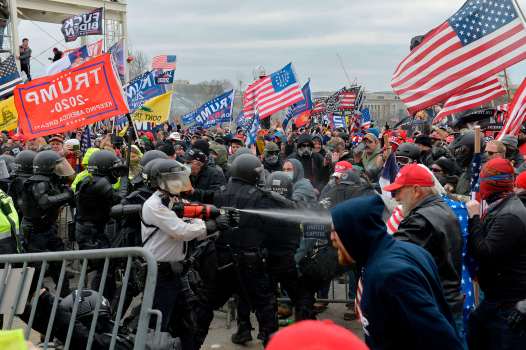
On that day in December 2015, the security professionals of the US Secret Service recognized that Trump was dangerously inciting a mob, and stepped in to protect the target he had singled out.

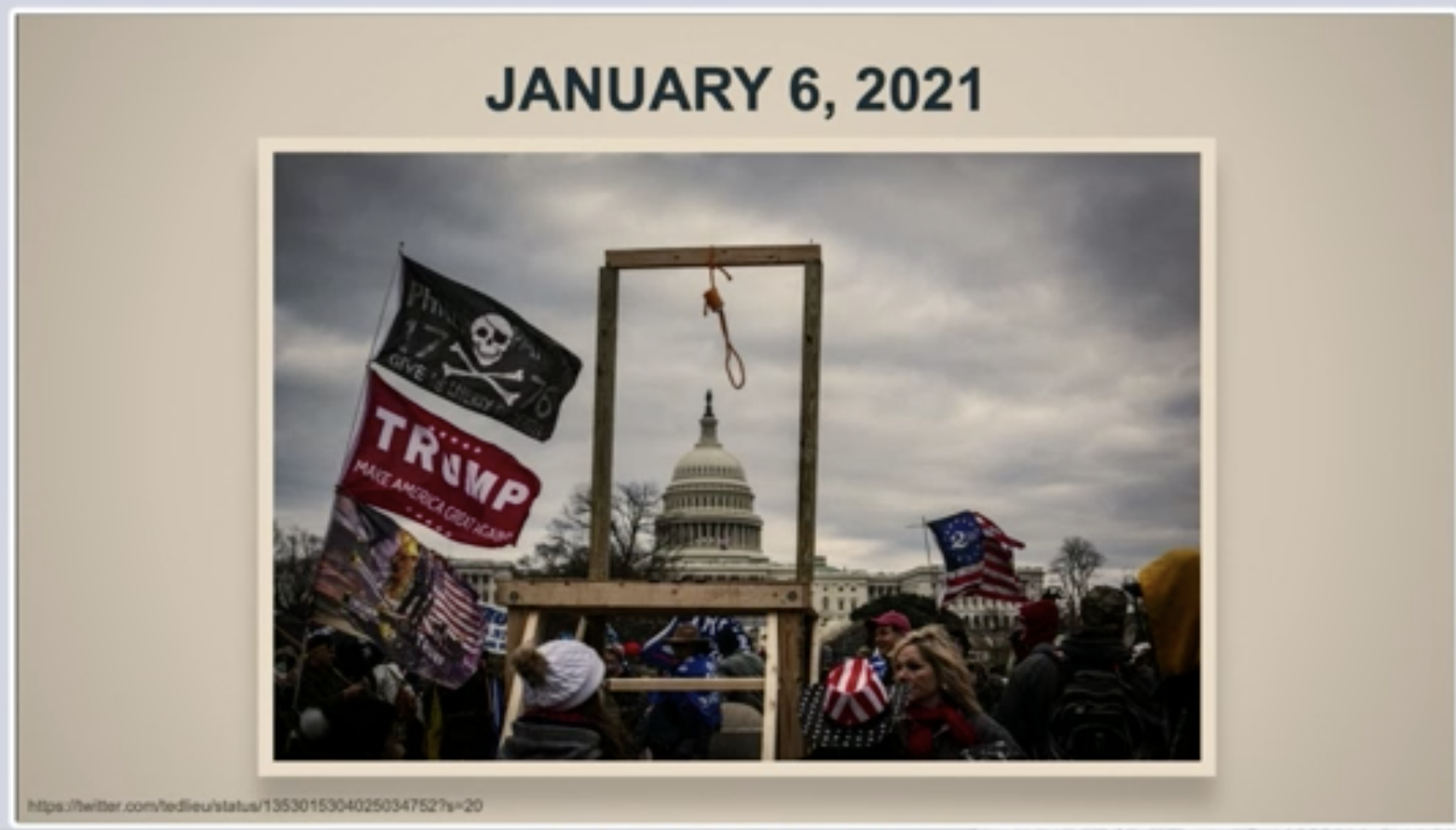
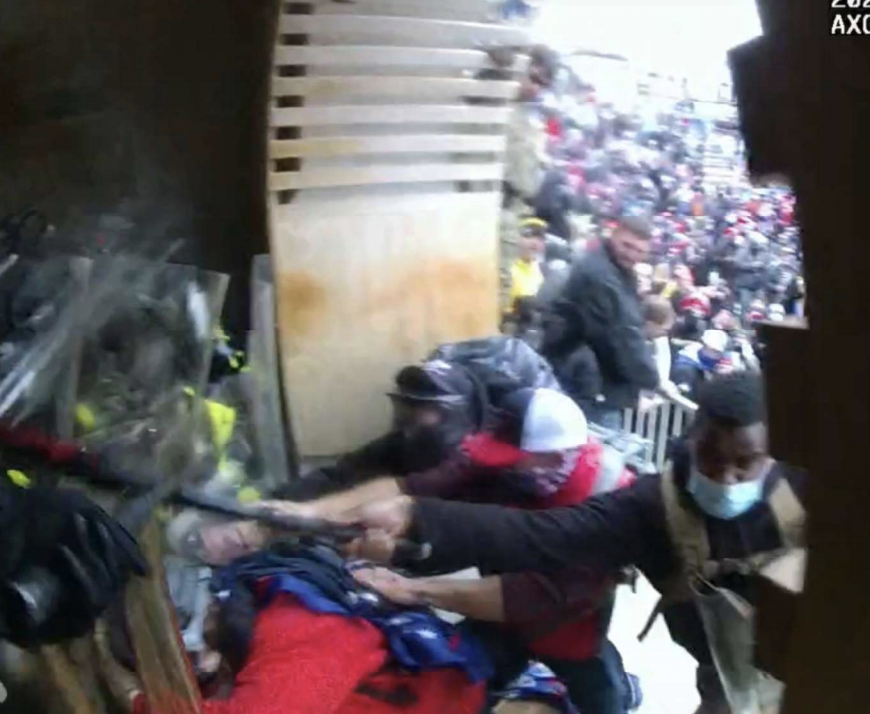
On January 6, 2021, Trump again incited a mob, and this time there was no one to stop them.
Share this entry

Failing At Democracy

Posts in this series.

One of the reasons I read old books is that they help me understand the chaotic events of our current times. In The Public And Its Problems, John Dewey lays out a theory of the democratic state, and as we shall see, we are doing badly at it.

Recall that the public is a group of people who have common interests that need to be addressed, usually arising from the actions of other people. The public empowers certain of its members with the task of representing and protecting those interests. We call the aggregate of those people the state. [1]

The origins of the state.

This description implicitly separates “the state” from specific forms of government. Any reasonably large group of people has some form of government, and the bigger the group the more complex the government. In order for there to be a state, there must be a public.

It may be said that not until recently have publics been conscious that they were publics, so that it is absurd to speak of their organizing themselves to protect and secure their interests. Hence states are a recent development. Chapter 3, The Democratic State, p. 116.

One way to think about this is that the modern self-aware public evolved from prior traditional societies. The serfs in a feudal society generally do not see themselves as participants in government, but as fulfilling pre-ordained social roles.

What is a Democratic State?

Dewey likes this definition:

Democracy is a word of many meanings. … But one of the meanings is distinctly political, for it denotes a mode of government, a specified practice in selecting officials and regulating their conduct as officials. P. 121.

It’s not a soaring aspiration. It’s a functional description of what has to be done. The democratic state needs two things: 1) a system for the public to select its officials; and 2) a system for regulating the conduct of officials.

Selection of officials.

In the US, we elect a small group of officials, and they in turn select others for subsidiary roles. The public, all of us, are responsible for selecting officials who will represent our interests in conflicts with individuals or groups of people, as corporations and militias. The public may fail at its task by selecting people who use their position to enrich themselves and their cronies at the expense of the public or otherwise. Dewey says the crucial step is the selection of the right people. [2]

Regulating the Conduct of Officials.

The US Constitution provides two methods for regulating officials. These are impeachment, in the case of the executive and judicial branches, and expulsion, for the legislative branch. These are supplemented by rules that allow for sanctions short of removal, such as censure, and formal means for investigation through committees. There are statutes and formal regulations that constrain conduct of other officials, and many informal rules, now called norms. These laws and rules provide for sanctions.

The evolution of political democracy.

Political democratic states in Western Europe and North America evolved from older forms of government as the result of many small non-political developments. Dewey emphatically denies that these changes were driven by some overarching cause, such as an innate desire for democracy, or by dramatic changes in philosophical theories.

But theories of the nature of the individual and his rights, of freedom and authority, progress and order, liberty and law, of the common good and a general will, of democracy itself, did not produce the movement. They reflected it in thought; after they emerged, they entered into subsequent strivings and had practical effect. P. 123.

As an example, the ideas of John Locke were one of the theoretical sources for the Founding Fathers. His ideas are grounded in the rising economics of mercantilism, the attenuation of religious hegemony, and rising scientific understanding. He seems to be arguing against earlier thinkers grounded in earlier social, cultural, and intellectual structures. [3] Democracy was not the driving force of any of these changes. It emerged as a solution to the societal problems these non-political changes created.

Dewey doesn’t try to explain the entire evolution. He points to just two factors. First, the changes that led to democracy were driven by a fear of government and a desire to keep it to a minimum. This seems like a plausible reaction to an all-powerful monarchy, as existed in England and France, for example. Earlier governments were tied into other institutions, like the Church, and these too were feared or loathed. These institutions came to be seen as oppressive, not to groups of people but to individuals. There was already a growing tendency to think of the individual as the atomic unit. [4[ For Dewey, individualism was the result. [5]

The second important factor is the rise of science and technology. Over time it created changes in the nature of productive work and increased the range of consumer goods. People of all classes wanted more. The old rules became obstacles, and people began to question these rules and the system that produced them.

The old conception of Natural Law as the source of morality merged with the new idea that laissez-faire economics was a natural law in a synthesis that opposed artificial political laws. This led to the conclusion that government interference in property was bad, if not a moral evil, and the role of government should be little more than to protect property rights and personal integrity.

This is an overly simplified history, even more simplified by me, but it gives an idea of the genesis democracy as Dewey defines it. It leads to the conclusion that government officials are likely to be bad, so we should have short terms and serious control.

Problems arising from large organizations.

In earlier times, people’s primary relationships were face-to-face, family, friends, co-workers, church members, local people. The government was hardly relevant in day-to-day life. Its primary impact was taxes, the occasional war, and a few laws. By the time Dewey is writing, the primary relationships were impersonal, the individual was facing large corporate organizations in many aspects of life, including productive work. The state acted directly acted on individuals, touching their lives in many ways.

Group, or conjoint, action through business entities rivals the government in impact on individuals. Businesses “reach out to grasp the agencies of government;” not out of evil intent necessarily, but because they are the best organized groups of people. Even so, the power of these organizations has been controlled and directed by the state to some extent, and more is possible.

Discussion.

The second impeachment of Trump shows us that as a nation we have done badly at democracy. We elected unfit officials, people who are stupid, venal, conspiracy-ridden, power-maddened or a combination. Unfit legislators have for decades let the executive branch do monstrous things and refused to hold any of them accountable. The unfit people who staff our courts at all levels, but especially the unconstrained ideologues of SCOTUS have stymied legislative power, and have limited accountability of government and business elites with their pronouncements. Prosecutors are at fault as well, because they refuse even to investigate powerful private entities and their executives.

We fail democracy if we do not carry out our responsibility to regulate the conduct of our officials, and continue to select unfit people as our officials.

======
[1] I discuss these matter in detail in earlier posts, especially … and ….

[2] Dewey discusses different ways in which leaders were selected in earlier times, which I skip. It’s worth noting that we still elect people who met those irrelevant criteria: military and religious leaders, children of officials, charismatic people, and old white men. Pp. 117-9.

[3] I agree with Dewey about this, but it’s very far afield.

[4] Think of Descartes, sunk in self-contemplation. We also see it in Locke.

[5] Individualism lies at the heart of social contract theory and neoliberalism. Dewey rejects social contract theory.

Share this entry

Republicans Prepare to Sanction a President Doing Nothing as the Country Was Assaulted by Terrorists

Joaquin Castro ended his second speech last night with these words:

He swore on a Bible to preserve, protect, and defend. And who among us can honestly say they believe that he upheld that oath? And who among us will let his utter dereliction of duty stand?

According to CNN, Republican Senators, while admitting that the Democratic description of the attack on the Capitol is compelling, are still inventing excuses for voting against convicting Donald Trump for it.

For most Republican senators, Wednesday’s presentation did not seem to affect how they’ll vote. Many are on record decrying the trial as unconstitutional since Trump is now a former president, and the punishment for conviction is removal. If convicted, however, Trump could also face a vote in the Senate barring him from ever again serving in public office.

Yet GOP senators including Marco Rubio of Florida would only say Trump bears “some responsibility” for the riot and argued the Senate should have no role in trying a former president.

“Who wouldn’t be?” asked Sen. Ron Johnson, a Wisconsin Republican, when questioned if he was shaken by the footage he saw on Wednesday.

But when asked if he held Trump accountable, Johnson said, “I hold those people responsible.”

That means it remains likely that Trump will be acquitted in the Senate.

Which is why the import of what Castro said is so important. It’s not just what Trump did do that makes him so dangerous: it’s what he didn’t do. Trump chose to do nothing to protect the Capitol as it was attacked by terrorists.

And most members of the Republican Party are okay with that, with a President who did nothing as the nation was attacked by terrorists.

Share this entry

Laughing in the Face of Denial

TOPSHOT – Trump supporters engaging in healing the country at the US Capitol in Washington, DC on January 6, 2021. –  (Photo by Joseph Prezioso / AFP) (Photo by JOSEPH PREZIOSO/AFP via Getty Images)

Not this again.

From Trump lawyer David Schoen on day one of the second Trump impeachment trial:

[The House impeachment managers] tell us that we have to have this impeachment trial, such as it is, to bring about unity. But they don’t want unity, and they know this so-called trial will tear this country in half, leaving tens of millions of Americans feeling left out of the nation’s agenda as dictated by one political party that now holds the power in the White House and our national legislature. But they are proud Americans, who never quit getting back up when they are down and they don’t take dictates from another party based on partisan force-feeding. This trial will tear this country apart, perhaps like we have seen only once before in our history.

*sigh*

Long ago, as a young pastor, a couple came to me about concerns with their marriage. The husband had slept with someone else, and when his wife threatened to file for divorce, they came to me together for advice. After some pleasantries at the beginning of the conversation, the tone quickly shifted. Filled with righteous indignation, the husband said “She’s going to file for divorce and break up our family! Whatever happened to forgiveness? Tell her she can’t do that!”

I laughed out loud.

Not a chuckle, not a single snort, but a good 15 seconds of laughter. (I said I was young.) They both looked at me in absolute shock. When I quelled my laughter, I said “*She* is going to break up your family? Please. *You* broke up the relationship when you slept around. That relationship is dead. You have to decide if you are willing to take responsibility for that and make the effort to repair it, or if you want to live in denial that breaking your marriage vows wasn’t that big a deal and sleeping around really didn’t hurt anyone.”

This was met with silence, so I plunged on.

Still speaking to the husband (but with the wife listening closely), I said “You don’t get to decide the terms of how she forgives anyone. Forgiveness doesn’t mean everything goes back to the way it was. It means that she quits seeing you as a monster, and quits letting the pain you caused her continue to govern her life. If she forgives you, it doesn’t automatically mean that you two will stay married. It just means she is done with letting what you did continue to hurt her. If you want this relationship to be healed and this marriage to be rebuilt, that starts with honesty, not denial. Honesty about what happened, honesty about how damaging and painful it was, and honesty about what you are or are not willing to do going forward.”

No, that husband was not David Schoen — but in listening to Schoen yesterday, the two of them sure sound a lot alike. The more Schoen and the defenders of Trump talk about unity and moving on without acknowledging anything about Trump’s role in the insurrection, the more they show they have no interest in unity or healing.

But we already knew that.

In one of my former congregations, I had a parishioner who was a psychologist who worked with men who had been convicted of child abuse, and the two of us had a number of long conversations around abuse and denial. When someone is accused of child abuse, my parishioner told me, he would see the same dynamic play out with each one. First, they deny that the abuse happened. “I didn’t do it!” When presented with evidence that they did indeed do it, the denial shifts to avoiding judgment: “OK, but it’s no big deal. No one got hurt. She/he came on to me. He/she had it coming. You have no right to judge me for that.” When that doesn’t work, denial pulls out the big trump card to avoid any consequences: “You have to forgive me!”

Perpetrators of abuse turn to denial because if there are consequences to their actions, something will have to die – their image of themselves, their relationships with others, and more. Denial is how they hope that nothing in their lives will have to change, with no consequences for their damaging actions.

Honesty, on the other hand, is where perpetrators of abuse turn if they are truly interested in healing and moving on. From everything I heard yesterday, the abusers and their enablers have no interest in healing. Power? Absolutely. Healing? Not so much.

This trial will not tear this country apart. Trump has already torn it apart.

The question now is whether the Senate wants to honestly acknowledge that reality and begin to deal with it by holding Trump accountable, or if they want to remain in denial and encourage the tear in our country to continue growing.


Share this entry

Trump Impeachment II – The Beginning

And so it begins any minute now. Don’t fret, it will not take long, because Pelosi, Schumer and the Dems have so decreed out of political cowardice. Is that politically expedient at the start of the nascent Biden Administration? Maybe! But they all took an oath to protect and defend the Constitution, not their political expediency.

So where are we at the onset of proceedings?

The tentative schedule is this:

First, there will be a debate over the “Constitutionality” of even holding and impeachment trial at all. This is a ridiculous argument, and will fail, but with much cowardly GOP Senate support.

There will be up to four hours equally divided between the impeachment managers and the president’s counsel to debate the constitutionality of the trial. Again, that will fail as to Trump. Then there will be sixteen hours per side to argue their case. It will be predictable baloney from both sides, with no actual evidence submitted and admitted. And, no, “video presentations” do not count, that is simply argument by propaganda. Each party’s arguments are delimited by not being able to go over two days, and cannot exceed eight hours each.

“After the presentations are done, senators will have a total of four hours to question both sides. Then there will be four hours divided equally between the parties for arguments on whether the Senate will consider motions to subpoena witnesses and documents, if requested by the managers.

There will be up to four hours equally divided for closing arguments, along with deliberation time if requested by the senators before the vote takes place.”

Much of the above, though not all, came from an excellent report by Barbara Sprunt and Diedre Walsh at NPR.

Is this year another stupid and truncated show trial by Pelosi, Schumer and the Dems, in order to look like they are doing something while they are cowering? Of course it is. Same as it ever was.

There will also be discussion of an “organizing resolution”. Don’t fall for that, the parameters have already been agreed to behind the scenes.

Lastly, while joint stipulations may always be made, otherwise the general parameters are controlled by the extant Senate Rules on Impeachment. They are here for your reference.

And here is Leahy’s feckless “Dear Colleagues” letter.

Share this entry

In His Impeachment Defense, Trump Cites Mike Pence Admitting Trump Made an Unconstitutional Demand

Eleven pages into his 75-page impeachment defense, Trump makes this claim:

President Trump did not direct anyone to commit lawless actions,

In context, he’s speaking about his speech before the riot, claiming that his invocation that his mobsters “fight” didn’t mean he wanted them to fight illegally. His defense only addresses the meaning of that word, “fight,” in his speech, while treating impeachment over and over as akin to the passage of a law restricting First Amendment protected speech and not the political act that impeachment is.

But this brief, like in the 14-page answer brief he submitted last week, barely addresses one of the times he quite clearly did direct people to commit lawless action, first, when he called Brad Raffensperger and asked him to find him votes that didn’t exist.

The article also discusses in passing other “statements” of Mr. Trump as well as a telephone call to the secretary of state of Georgia.

[snip]

The allegation that Mr. Trump should be convicted for “incitement of insurrection” based upon the telephone call to the Georgia secretary of state rests on even shakier ground. The allegations of “threats of death and violence” come not from Mr. Trump at all; they come from other individuals from the internet, not identified (nor identifiable) in the House Trial Memorandum, who took it upon themselves to make inane internet threats, which were not urged or “incited” by Mr. Trump in any way shape or form.150 Examining the discussion with the Georgia secretary of state under the standard of “incitement,” leads to the same conclusion as the January 6, 2021 statements of Mr. Trump: there is nothing said by Mr. Trump that urges “use of force” or “law violation” directed to producing imminent lawless action.151

More strikingly, given the greater length of this brief, Trump again completely ignores a key part of the article of impeachment against him: his actions targeting Mike Pence, both his demand that Pence commit an unconstitutional act by throwing out the votes of key swing states, and his comments that specifically riled up the crowd against Pence, even after the rioters started looking for him at the Capitol to assassinate him.

Instead of addressing the actions he took that got Pence targeted for assassination, Trump mentions Pence only in the context of discussions about the 25th Amendment.

The very next day, Speaker Nancy Pelosi and Senate Democratic Leader Chuck Schumer called on Vice-President Pence to invoke the 25th Amendment concluding – without any investigation – that Mr. Trump incited the insurrection and continued to pose an imminent danger if he remained in office as President.12

[snip]

First, in an attempt to usurp Constitutional power that is not in any way hers, the Speaker demanded that Vice-President Michael Pence or the White House Cabinet invoke the 25th Amendment, threatening to launch an impeachment proceeding if they refused. Four days later, on January 11, 2021, an Article of Impeachment was introduced, which charged President Trump with “incitement of insurrection” against the United States government and “lawless action at the Capitol.” See H. Res. 24 (117th Congress (2021-2022). The Speaker made good on her extortionate threat.

[snip]

After the Article was introduced, Speaker Pelosi again gave Vice President Pence an ultimatum: either he invokes the 25th Amendment within twenty-four hours or the impeachment proceedings would proceed. Vice-President Pence responded in a letter to Speaker Pelosi the following day stating that he would not allow her to usurp constitutional authority that is not hers and extort him (and by extension the Nation) to invoke the 25th Amendment because he believed to do so would not “be in the best interest of our Nation or consistent with our Constitution.”29 Vice-President Pence also noted that Speaker Pelosi was being hypocritical, as she had previously stated that in utilizing the 25th Amendment, “we must be ‘[v]ery respectful of not making a judgment on the basis of a comment or behavior that we don’t like, but [rather must base such a decision] on a medical decision.”30

I suspect Trump’s lawyers will try to defer any questions about Trump’s attacks on Pence by suggesting that Pelosi’s decision to impeach because Pence didn’t invoke the 25th Amendment is just like Trump’s incitement of violence targeted at Pence. With their use of the words, “usurp” and “extort,” Trump’s lawyers grossly overstate the force of language Pence himself used to compare the two:

Last week, I did not yield to pressure to exert power beyond my constitutional authority to determine the outcome of the election, and I will not now yield to efforts in the House of Representatives to play political games at a time so serious to the life of our Nation.

But there are several problems with this: Congress was already intent on impeaching Trump for his actions before the request that Pence intervene. More importantly, even in Pence’s treatment comparing these two, he calls one — Trump’s demand — unconstitutional but the other — Pelosi’s request — a “political game.”

So in one place in his impeachment defense, Donald Trump’s lawyers claim, “President Trump did not direct anyone to commit lawless actions.” Elsewhere, however, they cite a letter in which Mike Pence says he did, that he made a demand, “beyond [his] constitutional authority.”

And with this apparent effort to deflect a key accusation against him, Trump entirely ignores the specific, targeted action he used to lead the mob to attempt to assassinate his Vice President.

Share this entry

Raskin’s Gambit

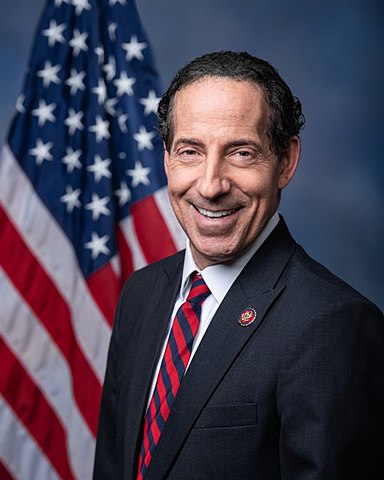
Until today, the conventional wisdom was that Senate Republicans would hide behind their claim that it was not constitutional to try Donald Trump on the single count of impeachment for inciting an insurrection, and Democrats would lose badly in an effort to convict Donald Trump. That’s still likely.

But Donald Trump’s inability to follow good legal advice and Jamie Raskin’s exploitation of that weakness may change that.

In response to the opening brief Trump’s lawyers submitted earlier this week, in which Trump went beyond a claim that the entire trial was unconstitutional and feigned responses to the actual facts alleged, Lead Impeachment Manager Raskin invited Trump to testify.

Two days ago, you filed an Answer in which you denied many factual allegations set forth in the article of impeachment. You have thus attempted to put critical facts at issue notwithstanding the clear and overwhelming evidence of your constitutional offense. In light of your disputing those factual allegations, I write to invite you to provide testimony under oath, either before or during the Senate impeachment trial, concerning your conduct on January 6, 2021. We would propose that you provide your testimony (of course including cross-examination) as early as Monday, February 8, 2021, and not later than Thursday, February 11, 2021. We would be pleased to arrange such testimony at a mutually convenient time and place.

Presidents Gerald Ford and Bill Clinton both provided testimony while in office–and the Supreme Court held just last year that you were not immune from legal process while serving as President–so there is no doubt you can testify in these proceedings.

[snip]

If you decline this invitation, we reserve any and all rights, including the right to establish at trial that your refusal to testify supports a strong adverse inference regarding your actions (and inaction) on January 6, 2021.

It’s not clear which specific claims Raskin has in mind. The letter specifically asks about January 6 and not Trump’s claims he fashions as “Answer 4,” that he didn’t lie about winning the election — though Trump reiterates that claim in Answer 6, claiming that he denies that his January 6 expression of “his opinion that the election results were suspect … is factually in error.” Still, he presents that as an opinion, not a knowingly false claim. Then there’s a claim about his January 2 call to Brad Raffensperger, so unrelated to the January 6 questions mentioned in Raskin’s letter, but which would nevertheless make great fodder for questioning under oath.

The more factual claims about January 6 that Trump made include:

  • It is denied that President Trump intended to interfere with the counting of the Electoral votes. [Answer 6]
  •  It is denied he threatened the integrity of the democratic system, interfered with the peaceful transfer of power, and imperiled a coequal branch [sic] Government. [Answer 8]
  • To the extent there are factual allegations made against the 45th President of the United States contained in Article I that are not specifically addressed above, the allegations are denied and strict proof at time of hearing is demanded. [Answer 8]

To some degree, for Raskin’s gambit to work, which false claims in specific he has in mind don’t matter.

But given that Trump’s response entirely blew off the allegations about Mike Pence in the article of impeachment, which include factual observations about Trump riling up the mob against Pence in particular, Trump has effectively, with the language in the last bullet above, denied an attack on Pence which goes well beyond any First Amendment speech.

As I said, though, it doesn’t matter, because the gambit (even ignoring that Trump is constitutionally incapable of telling the truth, under oath or not) is about forcing Trump to adopt an impossible position. The safest response to this letter would be to refuse, and let the House assume Trump’s entire claim to offering any factual response is false (as it is). But because Trump is Trump, he’s likely to choose between two more dangerous options:

  • Invoke the Fifth, thereby admitting that his First Amendment speech might expose him criminally
  • Testify, thereby undoubtedly setting up sworn lies

The former will get him in trouble for any civil suits arising out of the January 6 insurrection, the very thing that (per reports) Trump was trying to avoid with his decision not to self-pardon.

The latter will set Trump up for (at best) a perjury prosecution and at worst more substantial criminal prosecution based on his responses. Plus, it might pave the way for Mike Pence testimony, which would be compelling.

And by inviting Trump this way, without a subpoena, Raskin avoids all the drama Lindsey Graham has been trying to set up about contentious votes on witnesses. It is Trump’s choice, with no coercion.

Trump got through the Mueller investigation and Impeachment 1.0 by successfully avoiding something like this. It may finally be that the third time’s a charm.

Update: Trump has responded, claiming without legal citation that there is no negative inference in this proceeding.

Share this entry

The Soft Bigotry of Expecting the Commander in Chief to Only Tweet

Based on what source does the lawyer for Donald Trump — a client who never listened to security briefings when he used to be President — state (in an interview with Maggie Haberman, but not in his written defense) that the January 6 insurrectionists planned their attack in advance?

Mr. Schoen pointed to another potential argument that could help Mr. Trump, one not related to free speech: that at least some of the Trump supporters who stormed the Capitol planned their attack in advance, suggesting that Mr. Trump was not the inciting force.

“I have no reason to believe anyone involved with Trump was in the know,” he said of the violence that unfolded at the Capitol.

This defense doesn’t help Doug Schoen as much as he thinks. After all, the House brief lays out how, even before the Proud Boys were overtly planning for the insurrection (and meeting with Lindsey Graham and finding a spot on a tour of the White House), Trump had called on the extremist group to

During a debate on September 29, for instance, he told the Proud Boys— a violent extremist group with ties to white nationalism—to “stand back and stand by.”48

[snip]

On January 2, for example, Fox News reported on a social media declaration by Proud Boys Leader Enrique Tarrio that the Proud Boys would come to the January 6 rally prepared for violence.59 Another Proud Boys organizer said, “We are going to smell like you, move like you, and look like you. The only thing we’ll do that’s us is think like us! Jan 6th is gonna be epic.”60

As someone who has spent much of the last four weeks tracking what is publicly known about the terrorist attack, anyone following closely enough to know how the Proud Boys, especially, plotted in advance also knows that Trump was coordinating with them going back months and his rat-fucker Roger Stone was coordinating with them even longer, also knows that the mobs breaking into the Capitol timed their move closely with (among other things) Trump’s speech, and knows as well that Trump and Rudy were both coordinating with events on the Hill using the mob as a delaying tactic.

But Schoen seems to be considering talking about what someone who refused briefing knew and did not know about an attack while he was still President.

I especially find Schoen’s certainty about what an ongoing investigation shows given a fairly remarkable passage in the House trial brief. There’s an 11-paragraph section describing, “President Trump’s Dereliction of Duty During the Attack.” The first describes how Trump watched in delight.

As armed insurrectionists breached the Capitol—and as Vice President Pence, the Congress, and the Capitol Police feared for their lives—President Trump was described by those around him as “borderline enthusiastic because it meant the certification was being derailed.”141 Senior administration officials described President Trump as “delighted” and reported that he was “walking around the White House confused about why other people on his team weren’t as excited as he was as you had rioters pushing against Capitol Police trying to get into the building.”142

But it’s another five paragraphs before the House brief mentions that Trump was the Commander in Chief.

During this time, not only did President Trump fail to issue unequivocal statements ordering the insurrectionists to leave the Capitol; he also failed in his duties as Commander in Chief by not immediately taking action to protect Congress and the Capitol. This failure occurred despite multiple members of Congress, from both parties, including on national television, vehemently urging President Trump to take immediate action.

That is, the House brief focuses on what Trump did or didn’t tweet, and what victims he never called (while calling Tommy Tuberville to coordinate his delaying tactics).

But it barely mentions that Trump sat in the White House watching an attack on the Nation’s Capitol — one his lawyer now suggests he had some knowledge of — and he did literally nothing to intervene. True, there is a thoroughly unreliable Vanity Fair piece quoting Trump’s flunkies claiming that Trump made preparations the night before. But that account doesn’t match the known events, nor does it accord with the long delay in deploying the Guard troops.

In the middle of the impeachment case against Trump is a tacit admission not just that Trump did nothing as he watched a terrorist attack on the Capitol, but no one expected him to be able to do more than Tweet.

The former President’s defense claims, with no proof, that he faithfully executed his duty to protect and defend the Constitution and served to the best of his ability.

To the contrary, at all times, Donald J. Trump fully and faithfully executed his duties as President of the United States, and at all times acted to the best of his ability to preserve, protect and defend the Constitution of the United States, while never engaging in any high Crimes or Misdemeanors

[snip]

It is denied he betrayed his trust as President, to the manifest injury of the people of the United States. Rather, the 45th President of the United States performed admirably in his role as president, at all times doing what he thought was in the best interests of the American people. The 45th President believes and therefore avers that in the United States, the people choose their President, and that he was properly chosen in 2016 and sworn into office in 2017, serving his term to the best of his ability in comportment with his oath of office.

Perhaps that’s right. But if that’s true, it’s a confession that when the nation’s capital came under attack, Trump was helpless to do the least demanded of him as Commander in Chief.

Yes, the case against Trump is deeply rooted in his Tweets inciting terrorists and he should be impeached based just on those and his speech. But along the way, all sides seem to admit that Trump didn’t even consider doing anything as Commander in Chief as the country was attacked.

Share this entry

Trump’s Impeachment Defense Is Silent about His Unconstitutional Demand of Mike Pence

There are some weaknesses and gaps in the House impeachment case against the former President (which I’ll probably return to).

But there’s one giant gap in Trump’s defense.

Generally, Trump argues three things: his incitement was speech protected by the First Amendment. The House moved too quickly to impeach but having impeached him while he was still President the Senate can’t now try him, as required by the Constitution. Along the way he makes a soft case that his attempts to undermine the election results can’t be proven to be unjustified (in at least two places, those claims are demonstrably false).

But I’m most struck by Trump’s silence about his treatment of Mike Pence.

The House brief mentions Pence, by title and sometimes by name, 36 times. Those mentions include a description of how Pence was presiding over the counting of the electoral vote, how he fled when Trump’s mobsters flooded into the Capitol, how the attackers targeted him by name, how Secret Service barely kept him safe, how Trump’s own actions made Pence’s danger worse.

The House brief dedicates a section to how Pence refused to do what Trump explicitly asked him to do, to unilaterally discount certain electoral votes.

C. Vice President Pence Refuses to Overturn the Election Results

By the time the rally began, President Trump had nearly run out of options. He had only one card left to play: his Vice President. But in an act that President Trump saw as an unforgivable betrayal, Vice President Pence refused to violate his oath and constitutional duty—and, just hours later, had to be rushed from the Senate chamber to escape an armed mob seeking vengeance.

In the weeks leading up to the rally, President Trump had furiously lobbied Vice President Pence to refuse to count electoral votes for President Biden from any of the swing states.68 These demands ignored the reality that the Vice President has no constitutional or statutory authority to take that step. Over and over again, President Trump publicly declared that if Vice President Pence refused to block the Joint Session from finalizing President Biden’s victory, then the election, the party, and the country would be lost. “I hope Mike Pence comes through for us, I have to tell you,” President Trump said in Georgia on January 4.69 The next day, he tweeted: “If Vice President @Mike_Pence comes through for us, we will win the Presidency.”70 President Trump reiterated this demand just hours before the rally: “States want to correct their votes, which they now know were based on irregularities and fraud, plus corrupt process never received legislative approval. All Mike Pence has to do is send them back to the States, AND WE WIN. Do it Mike, this is a time for extreme courage!”71 On the morning of January 6, President Trump reportedly told Vice President Pence, “You can either go down in history as a patriot, or you can go down in history as a pussy.”72

Later that day, while President Trump was speaking at his rally, Vice President Pence issued a public letter rejecting President Trump’s threats. “It is my considered judgment,” he wrote, “that my oath to support and defend the Constitution constrains me from claiming unilateral authority to determine which electoral votes should be counted and which should not.”73

This letter sounded the death knell to any peaceful methods of overturning the election outcome. It was well known that the House and Senate were going to count the lawfully certified electoral votes they had received. President Trump’s efforts to coerce election officials, state legislatures, the DOJ, Members of Congress, and his own Vice President had all failed. But he had long made it clear that he would never accept defeat. He would fight until the bitter end. And all that remained for President Trump was the seething crowd before him—known to be poised for violence at his instigation—and the Capitol building just a short march away, where Vice President Pence presided over the final, definitive accounting of President Trump’s electoral loss.

The House brief describes how, even as Pence released his letter saying that he could not, constitutionally, do what Trump asked, Trump demanded again that the Vice President do anything besides certify the vote.

He also demanded again that Vice President Pence illegally interfere with the work of the Joint Session—a position that the Vice President rejected even as President Trump spoke.

The House brief then describes how the rioters threatened to, “hang Mike Pence” and left targeted threats for him.

Videos of the events show that dozens of the insurrectionists specifically hunted Vice President Pence and House Speaker Nancy Pelosi—the first and second in the line of Presidential succession, respectively. “Once we found out Pence turned on us and that they had stolen the election, like, officially, the crowd went crazy,” said one rioter. “I mean, it became a mob.”98 Rioters chanted, “Hang Mike Pence!” 99 Another shouted, “Mike Pence, we’re coming for you … fucking traitor!”100

[snip]

One of them shouted “Trump won that election!” on the Senate dais where Vice President Pence had presided. 115 Another rioter climbed onto the dais, announcing that “I’m gonna take a seat in this chair, because Mike Pence is a fucking traitor.”116 He left a note on the Vice President’s desk stating, “ITS ONLY A MATTER OF TIME / JUSTICE IS COMING.”117

It describes how, even as the attack was going on, Trump continued to complain that Pence had upheld his own oath to the Constitution.

Just over thirty minutes later, at 2:24 PM, while rioters were still attacking police and after Vice President Pence had been evacuated from the Senate floor, President Trump again tweeted to excoriate the Vice President for refusing to obstruct the Joint Session: “Mike Pence didn’t have the courage to do what should have been done to protect our Country and our Constitution.”144 President Trump thus singled out Vice President Pence for direct criticism at the very same time the Vice President and his family were hiding from a violent mob provoked by President Trump. [emphasis original]

In other words, a key part of the House brief describes Trump giving Pence an illegal order, and then, after Pence refused to follow that order and announced he would do his own Constitutional duty, Trump took actions to focus the anger of the mob on his own Vice President.

It’s not just what Trump said about Pence, the incitement of an assassination attempt against his Vice President that Trump claims is protected by the First Amendment, but it’s about an illegal order Trump gave to Pence, which Pence duly ignored.

That order was unconstitutional, and as such is not protected by the First Amendment.

Trump’s brief, by contrast, mentions the Vice President (only by title) just three times, two of which are simply citations from the House brief. The sole mention of the man he almost got hanged involves a concession that the Vice President was, indeed, presiding over the counting of the votes.

It is admitted that on January 6, 2021 a joint session of Congress met with the Vice President, the House and the Senate, to count the votes of the Electoral College.

But in response to the second citation from the House brief mentioning Pence, Trump instead pivots to defending the Republican members of Congress challenging state results. As part of that discussion, Trump denies any intention of interfering with the counting of Electoral votes. That denial focuses exclusively on the actions of Members of Congress, not Pence.

6. He also willfully made statements that, in context, encouraged – and foreseeably resulted in – lawless action at then Capitol, such as: “if you don’t fight like hell you’re not going to have a country anymore.” Thus, incited by President Trump, members of the crowd he had addressed, in an attempt to, among other objectives, interfere with the Joint Session’s solemn constitutional duty to certify the results of the 2020 Presidential election, unlawfully breached and vandalized the Capitol, injured and killed law enforcement personnel, menaced Members of Congress, the Vice President, and Congressional personnel, and engaged in other violent, deadly, destructive, and seditious act.

Answer 6: Admitted in Part, denied in part. It is admitted that persons unlawfully breached and vandalized the Capitol, that people were injured and killed, and that law enforcement is currently investigating and prosecuting those who were responsible. “Seditious acts” is a term of art with a legal meaning and the use of that phrase in the article of impeachment is thus denied in the context in which it was used. It is denied that President Trump incited the crowd to engage in destructive behavior. It is denied that the phrase “if you don’t fight like hell you’re not going to have a country anymore” had anything to do with the action at the Capitol as it was clearly about the need to fight for election security in general, as evidenced by the recording of the speech. It is denied that President Trump intended to interfere with the counting of Electoral votes. As is customary, Members of Congress challenged electoral vote submissions by state under a process written into Congressional rules allowing for the respective Houses of Congress to debate whether a state’s submitted electoral votes should be counted. In 2017, Democratic Members of Congress repeatedly challenged the electoral votes submitted from states where President Trump prevailed. In 2021, Republican Members of Congress challenged the electoral votes submitted from states where President Biden prevailed. The purpose of the Joint Sessions of Congress in 2017 and on January 6, 2021 was for Members of Congress to fulfill their duty to be certain the Electoral College votes were properly submitted, and any challenges thereto properly addressed under Congressional rules. Congress’ duty, therefore, was not just to certify the presidential election. Its duty was to first determine whether certification of the presidential election vote was warranted and permissible under its rules. [my italics]

Trump undoubtedly solicited Members of Congress to do just that, challenging individual states, which was itself an abuse of power (indeed, one weakness of the House brief is they don’t mention Rudy Giuliani’s second attempt to call Tommy Tuberville asking for a specific delay on vote counting, which shows that Trump was indeed trying to use the mob to delay the certification).

But Trump also made an explicit demand of Pence, one Pence refused. That demand, by itself, was proof that Trump intended to interfere with the Constitutional counting of votes.

And he doesn’t address that — speech which is in no way protected — in his defense.

Nor does he address how he almost got Pence killed.

Share this entry

Donnie The Wimp And His Impeachment Coffin

There was a pretty astounding report by CNN early this morning depicting the, and I am being kind here, disarray in Trump’s impeachment defense. The gist is this:

Butch Bowers and Deborah Barbier, who were expected to be two of the lead attorneys, are no longer on the team. A source familiar with the changes said it was a mutual decision for both to leave the legal team. As the lead attorney, Bowers assembled the team.
Josh Howard, a North Carolina attorney who was recently added to the team, has also left, according to another source familiar with the changes. Johnny Gasser and Greg Harris, from South Carolina, are no longer involved with the case, either.

No other attorneys have announced they are working on Trump’s impeachment defense.

A person familiar with the departures told CNN that Trump wanted the attorneys to argue there was mass election fraud and that the election was stolen from him rather than focus on the legality of convicting a president after he’s left office. Trump was not receptive to the discussions about how they should proceed in that regard.

That sounds ominous!

But here is the part that even more stuck out to me:

“As the lead attorney, Bowers assembled the team.”

and, most notably,

“The attorneys had not yet been paid any advance fees and a letter of intent was never signed.”

Lol, for the uninitiated, that means Trump never paid a dime as to a retainer, and never signed a fee agreement. That not only is inappropriate, in most jurisdictions it is, in and of itself, unethical. Even when the lawyer is agreeing to do work pro bono, there is a retainer agreement. Always, because real lawyers don’t blithely hang their asses out on the line without specified parameters. That is just how it is.

As I said on Twitter:

A rather large discussion ensued. Go look if you so desire, but I will stand by that for now. No, I do not really know, but it almost makes sense.

Trump is not cash rich. Expending collected campaign funds to perpetrate a fraudulent defense might be a dicey proposition. And no competent attorneys are lining up to pitch that. Trump may literally be down to Rudy and Jenna Ellis. Dershowitz and Jon Turley are squirrely as shit, but even they may not be that stupid.

So, where art thou go Donald?

Share this entry