emptywheel
  • Home
  • About
  • Posts
      • Posts by Categories
  • Timeline Collection
      • Hillary Clinton Investigation
      • Internet Dragnet
      • Disappearing White House Emails
      • Exigent Letters
      • Anthrax Investigation
      • Targeted Killing
      • Phone Dragnet Orders
      • Jeffrey Sterling Materials
      • Iran NIE
      • Warrantless Wiretap Memos
      • Torture Tape
      • Torture Document Dump
      • The Ghorbanifar Meetings
  • Support
  • Click to open the search input field Click to open the search input field Search
  • Menu Menu

Archive for category: 2024 Presidential Election

Stephen Miller, Not (Just) Kristi Noem and Greg Bovino, Must Be Held Accountable

January 26, 2026/77 Comments/in 2024 Presidential Election, Immigration /by emptywheel

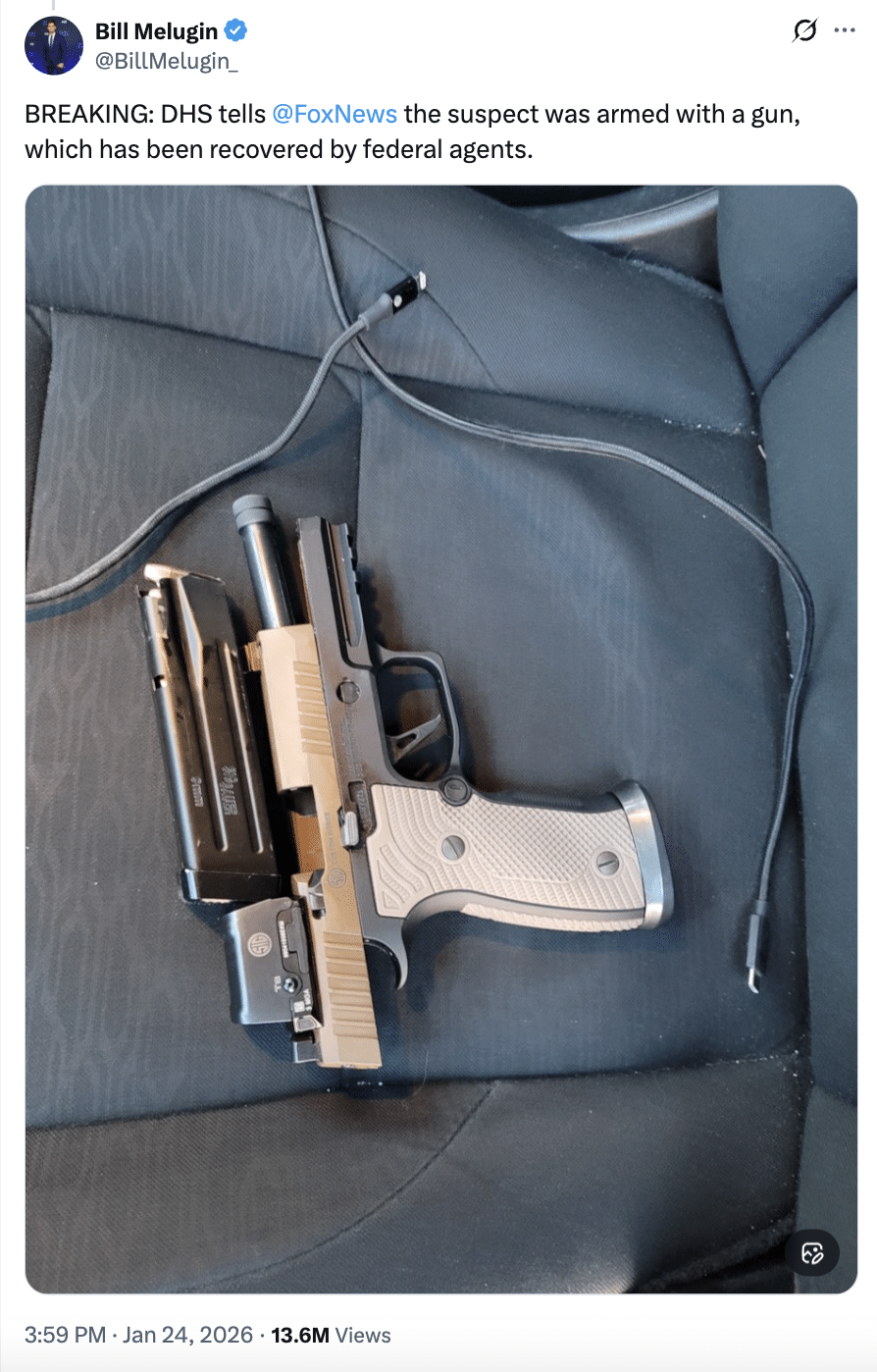
Bill Melugin, whom I call the Fox News Chief Deportation Propagandist (though he has been moved to cover Congress) was the person who first reported that Alex Pretti had a weapon.

Around 56 minutes after CBP killed Pretti at 9:02 AM CT, so 3:02 IT, they had already gotten Melugin this picture (and in the process proven that they were not securing evidence from the crime scene, which damning fact Melugin has never, AFAIK, pointed out).

Among the lies that Melugin disseminated after the murder were that:

  • The person CBP was snatching was “an illegal alien wanted for violent assault”
  • That Pretti “approached US Border Patrol officers with a 9 mm semi-automatic handgun”
  • “[T]he armed suspect violently resisted”
  • “Medics on scene immediately delivered medical aid to the subject”
  • “[T]his looks like a situation where an individual wanted to do maximum damage and massacre law enforcement”
  • “200 rioters arrived at the scene”

Plus, there’s no sign that CBP ever looked for an ID, so I suspect we may one day confirm that DHS claims Pretti had no ID will be proven false.

The Star Tribune debunked most of these lies.

As to the claim that the target of the operation was “wanted for violent assault”? The MN Department of Corrections has launched a dedicated website to correcting DHS lies, including a press release explaining that the guy Greg Bovino claimed they were pursuing had, in fact, been released by ICE during Trump’s first term.

In the hours following the shooting, U.S. Border Patrol Chief Gregory Bovino held a press conference asserting that the operation was targeting an individual named Jose Huerta-Chuma and characterized him as having a significant criminal history. Because federal statements have repeatedly included inaccurate information about Minnesota custody and criminal records, the DOC reviewed available records to determine whether the individual referenced had any connection to Minnesota state prison custody.

Based on DOC records and publicly available Minnesota court data:

  • The individual identified by federal officials has never been in Minnesota DOC custody.
  • DOC and court records show no felony commitments associated with this
    Public Minnesota court records reflect only misdemeanor-level traffic offenses from more than a decade ago.
  • The individual is not currently under DOC supervision.

DOC records further indicate that an individual by this name was previously held in federal immigration custody in a local Minnesota jail in 2018, during President Trump’s first administration. Any decisions regarding release from federal custody at that time would have been made by federal authorities. DOC has no information explaining why this individual was released.

Importantly, the lies Melugin told were the maximal lies that adjudged liar Greg Bovino would himself tell. Fox News’ Chief Deportation propagandist immediately aired the claims of Greg Bovino, even though Melugin has to be aware of the many times Bovino has been proven a liar in court proceedings, including this two page passage from Judge Sara Ellis’ 233-page memorandum enjoining DHS from further abusive methods (which the Seventh Circuit overturned):

Turning to Bovino, the Court specifically finds his testimony not credible. Bovino appeared evasive over the three days of his deposition, either providing “cute” responses to Plaintiffs’ counsel’s questions or outright lying. When shown a video of agents hitting Rev. Black with pepper balls, Bovino denied seeing a projectile hit Rev. Black in the head. Doc. 191- 3 at 162:21–165:17; Doc. 22-44 (Ex. 44 at 0:10–12, available at https://spaces.hightail.com/space/ZzXNsei63k). In another video shown to Bovino, he obviously tackles Scott Blackburn, one of Plaintiffs’ declarants. Doc. 191-3 at 172:13–173:7; Doc. 22-45 (Ex. 45 at 0:19–30, available at https://spaces.hightail.com/space/ZzXNsei63k). But instead of admitting to using force against Blackburn, Bovino denied it and instead stated that force was used against him. Doc. 191-3 at 173:9–176:11, 179:11–181:5. Bovino also testified that, in Little Village on October 23, 2025, several individuals associated with the Latin Kings were found taking weapons out of the back of their car, and that they, as well as at least one individual on a rooftop and one person in the crowd of protesters, all wore maroon hoodies. Id. at 227:2– 228:21. He further testified that he believed the “maroon hoodies . . . would signify a potential assailant or street gang member that was making their way to the location that I was present” and that “there did begin to appear, in that crowd, maroon hoodies, both on top of buildings and in the crowd.” Doc. 237 at 18:22–19:10. But Bovino also admitted that he could not identify a street gang associated with the color maroon, id. at 19:11–13, although Hewson acknowledged that while Latin Kings members usually wear black, “they also can throw on maroon hoodies,” Doc. 255 at 264:17–20.10 Even were maroon hoodies to signify gang membership, the only evidence on footage from the relevant date of individuals dressed in maroon protesting in Little Village consists of a male wearing a maroonish jacket with an orange safety vest over it, Alderman Byron Sigcho-Lopez wearing a maroon sweater with a suit jacket over it, a female in a maroon shirt, a female in a maroon sweatshirt, and a man with a maroon hoodie under a green shirt and vest. Axon_Body_4_Video_2025-10-23_1053_D01A38302 at 10:03–10:33; Axon_Body_4_Video_2025-10-23_1106_D01A32103 at 16:12–17:17. Bovino’s and Hewson’s explanations about individuals in maroon hoodies being associated with the Latin Kings and threats strains credulity.

Most tellingly, Bovino admitted in his deposition that he lied multiple times about the events that occurred in Little Village that prompted him to throw tear gas at protesters. As discussed further below, Bovino and DHS have represented that a rock hit Bovino in the helmet before he threw tear gas. See Doc. 190-1 at 1; Homeland Security (@DHSgov), X (Oct. 28, 2025 9:56 a.m.), https://x.com/dhsgov/status/1983186057798545573?s=46&t=4rUXTBt_W24muWR74DQ5A. Bovino was asked about this during his deposition, which took place over three days. On the first day, Bovino admitted that he was not hit with a rock until after he had deployed tear gas. Doc. 191-3 at 222:24–223:18. Bovino then offered a new justification for his use of chemical munitions, testifying that he only threw tear gas after he “had received a projectile, a rock,” which “almost hit” him. Doc. 191-3 at 222:24–223:18. Despite being presented with video evidence that did not show a rock thrown at him before he launched the first tear gas canister, Bovino nonetheless maintained his testimony throughout the first and second days of his deposition, id. at 225–27; Doc. 237 at 11–17. But on November 4, 2025, the final session of his deposition, Bovino admitted that he was again “mistaken” and that no rock was thrown at him before he deployed the first tear gas canister. Doc. 238 at 9:12–21 (“That white rock was . . . thrown at me, but that was after . . . I deployed less lethal means in chemical munitions.”); id. at 10:20–23 (Q. [Y]ou deployed the canisters, plural, before that black rock came along and you say hit you in the head, correct? A. Yes. Before the rock hit me in the head, yes.”).

10 John Bodett testified at the preliminary injunction hearing about his experiences in Little Village. As a resident of that neighborhood, he stated that he observed Latin King colors to be black and gold. Doc. 255 at 84:10–17.

Everyone who has followed Stephen Miller’s invasions knows Bovino is a confirmed and committed liar. Yet Melugin still airs his claims, as if they might be credible, and rushed to do so after Pretti’s murder.

Melugin is an integral part of DHS’ propaganda apparatus.

And that’s why it matters that, yesterday, Melugin published a very long tweet describing how sad the goons are to be treated as goons. The statement is still full of bullshit (which I’ve annotated in bold comments).

NEW: Since yesterday’s deadly shooting in MN, I’ve talked to more than half a dozen federal sources [wow! six whole sources!] involved immigration enforcement, including several in senior positions, who all tell me they have grown increasingly uneasy & frustrated w/ some of the claims & narratives DHS pushed in the aftermath of the shooting.

Specifically, I’m told there is extreme frustration with DHS officials going on TV and putting out statements claiming that Alex Pretti was intending to conduct a “massacre” of federal agents or wanted to carry out “maximum damage”, [this claim was first aired by Melugin] even after numerous videos appeared to show those claims were inaccurate. While they say it was a terrible decision to show up with a gun and inject himself into a federal law enforcement operation, there is no indication Pretti was there to murder law enforcement, as videos appear to show he never drew his holstered firearm.

These sources say this messaging from DHS officials has been catastrophic from a PR and morale perspective, as it is eroding trust and credibility – comparing it to when Democrats falsely claimed the border was closed or that Haitians were being whipped at the border. [huh?]

Some of these sources have described DHS’ response to the shooting as “a case study on how not to do crisis PR”, one said they are so “fed up” that they wish they could retire, [I mean, you could just quit] another said “DHS is making the situation worse”, and another added that “DHS is wrong” and “we are losing this war, we are losing the base and the narrative.” [war? who are you in a war with?]

These sources all believe this is going to end up being what they call a “bad shoot”, a “shitty” situation that happened in seconds where agents likely heard “gun!” [one excuse], then the disarmed firearm may have had an accidental discharge [another excuse] that spooked the agents [boo!], and they shot. The agents do not have the luxury of multiple slow motion angles – and had to make split second decisions. [Alex Pretti doesn’t have the luxury of yet more thin excuses]

All of the sources support the mass deportation agenda, but have serious hesitations about the way it is being carried out [again, you could just quit] and the messaging that comes with it. Many of the sources have expressed frustration that ICE is routinely blamed for the actions of Border Patrol, a completely separate agency. [and yet ICE officer Jonathan Ross (who may have been working with Bovino) acted just as badly as Pretti’s murderers]

And as bullshit, we should treat it as yet more far right, probably white male, attempts to disavow personal responsibility for their own actions.

The entire country is seeing that the goons are trigger-happy goons, and in response, they’ve (well, six of them, anyway) run to Melugin to try to blame other goons for the bad behavior of all the goons.

The sentiment that the propaganda is not working anymore is shared more broadly, especially among Murdoch rags. WSJ issued an editorial calling on Trump to pause the invasion of MN. While it still tries to blame Pretti for helping a woman who was assaulted by CBP, it called bullshit on the lies that Stephen Miller and Kristi Noem were telling.

The Saturday shooting of Alex Pretti, as he lay on the ground surrounded by ICE agents, is the worst incident to date in what is becoming a moral and political debacle for the Trump Presidency.

Videos of an event aren’t always definitive, but this is how it looks to us. Pretti attempted, foolishly, to assist a woman who had been pepper-sprayed by agents. Multiple agents then tackled Pretti, and he had a phone in one hand as he lay on the ground. An agent discovered a concealed gun on Pretti, and disarmed him. An agent then shot Pretti, and multiple shots followed.

The Trump Administration spin on this simply isn’t believable. Stephen Miller, the political architect of the mass deportation policy, called Pretti a “domestic terrorist.” He was a nurse without a criminal record.

Kristi Noem, the Homeland Security secretary, said the fact that he carried a gun and (she said) two magazines, meant he “arrived at the scene to inflict maximum damage on individuals and to kill law enforcement.”

But he had a license to carry a gun, which was legally concealed, not carried in his hand as some claimed. He was carrying his phone. To hear the ardent gun-rights advocates of the Trump Administration claim he had malicious intentions because he carried a concealed weapon is bizarre.

[snip]

Whether he likes it or not, most of the burden now lies with Mr. Trump as the President who controls ICE. He would be wise to pause ICE enforcement in the Twin Cities to ease tensions and consider a less provocative strategy. Yes, many on the left would conclude that their civil disobedience has paid off. But Mr. Trump can still pursue enforcement with a smaller force and a strategy aimed at criminals, not at hotel maids and gardeners.

Mr. Trump and his advisers could also help themselves, and the country, by explaining what they are trying to do and sounding conciliatory. Ms. Noem and Mr. Miller aren’t credible spokesmen. Their social-media and cable-TV strategy is to own the libs, rather than to persuade Americans. [my emphasis]

And WSJ’s Trump-whisperer Josh Dawsey described Trump equivocating even as his advisors, starting with his chief gatekeeper, Stephen Miller, debate about what to do.

“I don’t like any shooting. I don’t like it,” Trump added. “But I don’t like it when somebody goes into a protest and he’s got a very powerful, fully loaded gun with two magazines loaded up with bullets also. That doesn’t play good either.”

Trump also signaled a willingness to eventually withdraw immigration enforcement officials from the Minneapolis area.

“At some point we will leave. We’ve done, they’ve done a phenomenal job,” he said. Trump didn’t offer a time frame for when agents might depart. Asked if agents would leave soon, he praised what the administration had done already in Minnesota and said, “We’ll leave a different group of people there for the financial fraud.”

[snip]

Trump’s advisers have been in discussions for weeks about the administration’s aggressive deportation policies, and Saturday’s shooting brought new urgency to those conversations.

Some of the president’s aides have come to see the increasingly volatile situation in Minneapolis as a political liability even as the White House has publicly doubled down on its operations in the city, according to administration officials. White House chief of staff Susie Wiles has taken repeated calls from Minnesota officials, the administration officials said.

Some in the administration worry that public polling and sentiment has turned against the administration’s immigration actions in cities, and some discussions have centered on how to continue deportations without clashing with protesters, officials said. Trump adviser Stephen Miller has continued to push for aggressive immigration enforcement, arguing the administration shouldn’t back down in Minneapolis.

Perhaps the savviest response among Republicans trying to talk sense to Trump came from OK Governor Kevin Stitt, who as Chair of the National Governor’s Association, has already spoken to federalism concerns during the Chicago invasion. Stitt told CNN that Trump was getting bad advice, a comment that — if Trump took it seriously — might lead him to question the garbage Stephen Miller tells him.

Oklahoma Gov. Kevin Stitt, a Republican, expressed concerns about Trump’s goals.

“Americans are asking themselves: ‘What is the endgame? What is the solution?’ We believe in federalism and state rights. And nobody likes feds coming into their states. And so what’s the goal right now? Is it to deport every single non-US citizen? I don’t think that’s what Americans want,” Stitt told CNN’s Dana Bash on “State of the Union.”

Pressed by Bash on whether federal agents needed to pull out of Minnesota, Stitt said, “I think that the president has to answer that question. He is a dealmaker and he’s getting bad advice right now.”

(It is a failure of journalism that Stitt, who is of Cherokee descent, has not been asked about the multiple ICE arrests of Native Americans in Minnesota; neither has Markwayne Mullins, among Trump’s closest allies in the Senate, who is also Cherokee.)

The Pretti murder has, whatever else it has done, made blaming liars — starting with Kristi Noem — for the illegitimacy of the DHS invasions fashionable.

It’s the kind of collapsing legitimacy I envisioned when I laid out, starting 24 days ago, that three things we should try to accomplish this year were to:

  • Hold Stephen Miller accountable for his failures
  • Visualize how Stephen Miller took money for cancer research and veterans care to pay for a goon army snatching grandmothers
  • Discredit Key Spokespeople, including Stephen Miller, Todd Blanche’s office, DHS spox Tricia McLaughlin, and Greg Bovino.

Right wingers are looking at the polling and begging for an out and their immediate instinct is to scapegoat.

Thus far, Kristi Noem is the primary target of the scapegoating. Not even I have focused enough attention on Corey Lewandowski, not even in this post, even though he has overstayed the legal limits of the Special Government Employee appointment and has long exhibited the kind of quick trigger that DHS goons have.

Ultimately, though, Stephen Miller is responsible for both the invasions and Trump’s commitment to sustaining them, even as they destroy the US and Trump’s legacy.

From the start, Stephen Miller has believed that if he just created enough fascist spectacle, people would learn to love his thuggery. That was always failing because — it turns out — not as many people get erotic pleasure out of watching armed men roll around in the street on top of a brown person as Miller imagined; Miller created negative spectacle that drowned out his planned fascist spectacle.

Now that effort has gotten multiple people killed, Republicans want to distance themselves from it.

Their efforts to blame just Kristi Noem and/or Stephen Miller is, itself, just another propaganda campaign — after all, Bill Melugin is carrying it.

But if the right wing wants to tell that story, let’s make sure Miller is included in that story.

Update: Even NYP has called on Trump to deescalate.

Update: Kate Starbird describes that Melugin and other right wing spin artists actually got less engagement on Xitter than the left wing accounts that first posted about the murder.

Note the cluster of posts between 10am and 10:40am CST. (I’ve added a red box there.) These posts received, by far, the most engagement in our dataset. These are the posts that shape the broader discourse. And the vast majority of them were critical of ICE, sometimes implicitly, and other times explicitly calling out and blaming them for the “murder” or “execution” of “another person.” Below are a selection of the most highly reposted posts from that time:

During this same time period, a counter frame began to emerge — with the help of a Fox News journalist. Shortly after 10am CST, Bill Melugin reported via X that the victim, which he referred to as the “suspect,” had been armed. His post was sourced to DHS (the Department of Homeland Security) and contained an image of gun. This new information, which could be easily fit into a counter frame, set off a flurry of activity on the right.

We can see this in our data, as several right wing influencers posted content highlighting the “evidence” that DHS produced and using that to place blame on the victim. Here’s a selection of some of those posts, sized by number of reposts:

[snip]

These five posts, shared between 10am and 11am CST, reveal the prominent frames on the right, suggesting that the victim was responsible for his killing, that he was armed and resisting arrest, and that Democratic leadership contributed. Some of these posts seemingly extend beyond claims from official sources to make false allegations that the victim was an “illegal alien” and contested claims that he brandished and/or fired the weapon. Others simply spin the new evidence — of the victim’s gun — into alternative interpretations about the causes of the event.

But perhaps the most striking thing about this graph is that these posts from influencers on the right framing the event as self defense by ICE agents do not get anywhere near the same amount of engagement as the posts by influencers on the left framing the event as another “murder” by ICE.

Share this entry
https://empty.runengine.com/wp-content/uploads/2026/01/Screenshot-2026-01-26-at-09.56.45.png 1398 894 emptywheel https://www.empty.runengine.com/wp-content/uploads/2016/07/Logo-Web.png emptywheel2026-01-26 06:52:022026-01-26 17:05:03Stephen Miller, Not (Just) Kristi Noem and Greg Bovino, Must Be Held Accountable

What Is DOJ Really After in Raiding Hannah Natanson?

January 24, 2026/9 Comments/in 2024 Presidential Election, DOGE, emptywheel, Leak Investigations, Weaponized DOJ /by emptywheel

I shuddered when I read this article from Hannah Natanson in real time, in December, which was the first I really took notice of the name behind a flood of important reporting on Trump’s attack on the government. A chronicle of the hell Trump had subjected government workers to, it was a great article.

Signal message sent Feb. 23

I think about jumping off a bridge a couple times a day.

Signal message sent March 21

I want to die. It’s never been like this.

Signal message sent May 21

I have been looking at how much I am worth alive, as opposed to dead.

But in telling that story, Natanson told how she protected the anonymity of her sources.

Colleagues told me to join our internal tip-sharing Slack channel #federal-workers, then talk to Washington economics editor Mike Madden, who was coordinating our DOGE coverage. I started copying and pasting tips there as fast as I could, scraping out identifying details. Then, phone buzzing every few seconds, I speed-walked around the building until I found Mike. Skipping with grace over the fact we’d never met (and I didn’t work for him), he ferried me to every corner of the seventh floor: Meet the team covering technology. The team covering national security. The White House editors. Eventually, The Washington Post created a beat for me covering Trump’s transformation of government, and fielding Signal tips became nearly my whole working life.

[snip]

After consulting Post lawyers, I developed what we felt was the safest possible sourcing system. If I planned to use someone in a story, I asked them to send me a picture of their government ID, then tried to forget it. I kept notes from reporting conversations in an encrypted drive, never writing down anyone’s name. To Google-check facts and identities, I used a private browser with no search history. I retitled every Signal chat by agency — “Transportation Employee,” “FDA Reviewer,” “EPA Scientist” — until the app, unable to keep up, stopped accepting new nicknames. (Then I started moving contacts into two-person group chats, which I could still rename.)

Three weeks later, FBI seized the phone on which all those contacts were labeled with aliases. When they searched her home, she was logged into the Slack on which she had shared all those leads with colleagues. They seized the encrypted drive on which she had her notes.

In short, she publicly revealed where to look for everything else, and three weeks later, Trump agents came and took it all.

(For the record, this is not the only time I’ve shuddered about publicly disclosed operational security lately; far too many profiles on anti-ICE activism describe how their Signal trees are structured and what tools the central dispatcher uses to keep everything flowing.)

And that’s one of many reasons the unusual openness of the indictment against Aurelio Perez-Lugones — the pretext FBI used for raiding Natanson — terrifies me.

As I laid out here, I find it exceedingly unusual that DOJ laid out precisely what information got leaked and its classification level, described to be the following stories to which Natanson contributed.

  • This October 31, 2025 story about Venezuela asking Russia and China for security assistance included Top Secret/SCI/NOFORN information.
  • This November 11, 2025 story about potential targets in a US attack included Secret/NOFORN information.
  • This December 8, 2025 story about Maduro’s plans includes Confidential information.
  • This January 6, 2026 story tallying 75 dead in Trump’s invasion includes Secret information.
  • This January 9, 2026 story about an unsuccessful attempt to find an escape for Maduro includes Secret/NOFORN information.

Even as a legal issue, identifying the specific information that got leaked and how sensitive it is only serves to further compromise the information. It undermines prosecutors’ ability to prove that DOD (which is obscured in the indictment but which Pam Bondi freely identified) was trying to protect this information, a necessary element of the offense.

Seizing two MacBook Pros, an iPhone, a portable hard drive, her Garmin running watch, and a voice recorder from a journalist (while also sending WaPo a subpoena) when you already had proof that Perez-Lugones sent her classified information is more than overkill.

It’s the Garmin that really gets me. According to the declaration Natanson submitted in a bid to get her stuff back, she only communicated with Perez-Lugones via Signal or phone. The FBI is trying to obtain evidence about other people she met with, face-to-face.

So I want to consider what else DOJ might be looking for.

Did Perez-Lugones obtain proof of what Trump is really pursuing in Venezuela?

First, Garmin watch aside, it’s possible that Perez-Lugones took things that did not show up in Natanson’s reporting, yet, that DOJ is attempting to remove from her custody. The only thing classified at TS/SCI that Perez-Lugones is accused of leaking is a report based on an intercept of a letter Nicolás Maduro sent to Putin.

In mid-October, [Ramón Celestino] Velásquez, the transportation minister, traveled to Moscow for a meeting with his Russian counterpart, according to Russia’s Transport Ministry. According to documents obtained by The Post, he was also meant to deliver the letter from Maduro to Putin.

In the letter, Maduro requested that the Russians help boost his country’s air defenses, including restoring several Russian Sukhoi Su-30MK2 aircraft previously purchased by Venezuela. Maduro also asked for assistance overhauling eight engines and five radars in Russia, acquiring 14 sets of what were believed to be Russian missiles, as well as unspecified “logistical support,” according to the documents.

Maduro emphasized that Russian-made Sukhoi fighters “represented the most important deterrent the Venezuelan National Government had when facing the threat of war,” according to the U.S. records.

Maduro asked Russia for a “medium-term financing plan of three years” through Rostec, the Russian state-owned defense conglomerate. The documents did not specify an amount.

The documents also indicate that Velásquez was slated to meet with and deliver a second letter to Russian First Deputy Prime Minister Denis Manturov. They do not state whether or how the Russian government responded to Maduro’s outreach or whether the trip took place.

Nevertheless, DOJ successfully defeated an initial release order by citing all the TS/SCI information in Perez-Lugones’ brain.

Perez-Lugones is similarly positioned as the defendants in these cases: he has had decades of access to TS/SCI systems and, like these other defendants, what he knows is not erased simply because his access to the information ended. Further, like these defendants, because Perez-Lugones has “transcribed” and “photographed” highly classified information, it is likely he can recall it. Therefore, as the Government argued at the detention hearing, Perez-Lugones will be able to disseminate this information if released.

There is one document, classified Secret/Rel to NATO and identified as Document E, which Perez-Lugones allegedly photographed and sent to Natanson, that the indictment does not describe to be incorporated in this story including an account of an effort by the Pope to arrange an off-ramp for Maduro, the last of Natanson’s stories before his arrest.

On Christmas Eve, Cardinal Pietro Parolin, second-in-command to the pope and a longtime diplomatic mediator, urgently summoned Brian Burch, the U.S. ambassador to the Holy See, to press for details on America’s plans in Venezuela, according to government documents obtained by The Washington Post.

[snip]

For days, the influential Italian cardinal had been seeking access to Secretary of State Marco Rubio, the documents show, desperate to head off bloodshed and destabilization in Venezuela. In his conversation with Burch, a Trump ally, Parolin said Russia was ready to grant asylum to Maduro and pleaded with the Americans for patience in nudging the strongman toward that offer.

[snip]

In his Dec. 24 meeting with Burch, according to the documents obtained by The Post, Parolin said Russia was prepared to receive Maduro. He also shared what is described in the documents as a “rumor”: that Venezuela had become a “set piece” in Russia-Ukraine negotiations, and that “Moscow would give up Venezuela if it were satisfied on Ukraine.”

The materials Perez-Lugones shared are consistent with Trump having a quid pro quo with Russia, a swap of Venezuela for Ukraine. If he had obtained proof that he may or may not have shared, it might explain the need to seize any shred that he shared; but if so, the raid has nothing to do with national security, but instead with covering up Trump’s secret alliance with Russia.

A potentially related story describes that State was going to blow $50 million protecting Greenland’s polar bears, basically slush in support of Trump’s bid to conquer the entire hemisphere.

Is DOJ targeting specific whistleblowers, including Chuck Borges?

Remember how I noted that the new disclosures about DOGE’s unlawful access to Social Security data referenced an ongoing investigation?

“SSA first learned about this agreement during a review unrelated to this case in November 2025.”

WaPo was not the first outlet to report on Borges’ allegations of grave compromise of Social Security data, allegations that were partly confirmed by these recent disclosures; NYT was.

But WaPo, including Natanson, was the first outlet to interview Borges after he quit in October.

“Prove me wrong,” Borges told The Washington Post last week in his first media interview since his disclosure. “The only way I feel like we’re going to get to that point is with continued public interest, continued public pressure, and I’m willing to lend my name.”

Although he had until now avoided talking to the media, Borges told Post reporters that he had decided to go public to draw attention to his concerns about the safety of Americans’ data and his hope that the agency will share documentation to prove that the data wasn’t put at risk. At his Maryland home — decorated with photos of his family, his prolific board game collection and Navy paraphernalia — the self-described “data geek” said his fears while working at Social Security had kept him up at night.

And that interview linked several earlier WaPo articles, including an earlier Natanson one.

At the same time, the agency was exploring plans to lay off workers, and others were getting reassigned to jobs they were unfamiliar with or choosing to voluntarily leave. In those especially taxing days, Borges said, he saw co-workers breaking down in meetings or while sitting at their desks.

“I cannot count how many employees I saw cry, and that is at all levels of the agency, from executives downward,” Borges said.

In the summer, Borges first heard from colleagues that DOGE had transferred sensitive data to a cloud environment. He began to ask questions but got little information in response.

In Natanson’s Christmas Eve piece, she cited both a Social Security employee (the interview with Borges cites multiple others who back Borges’ claims, one of whom is Leland Dudek) and an IRS official who sent data to DOGE.

A Social Security employee: “Every piece of our data may be at the mercy of unscrupulous people.”

An IRS staffer: There is “a team figuring out how to get … data sent to Doge,” referring to the U.S. DOGE Service, Elon Musk’s cost-cutting team.

In short, DOJ may have raided Natanson in attempt to target a different whistleblower, one who went through formal channels to reveal an unprecedented assault on US person privacy.

Natanson’s sustained reporting of Trump’s dragnet

But it’s not just the Social Security data.

An earlier Natanson story described DOGE’s effort to effectively merge a bunch of massive government databases.

The U.S. DOGE Service is racing to build a single centralized database with vast troves of personal information about millions of U.S. citizens and residents, a campaign that often violates or disregards core privacy and security protections meant to keep such information safe, government workers say.

The team overseen by Elon Musk is collecting data from across the government, sometimes at the urging of low-level aides, according to multiple federal employees and a former DOGE staffer, who all spoke on the condition of anonymity for fear of reprisals. The intensifying effort to unify systems into one central hub aims to advance multiple Trump administration priorities, including finding and deporting undocumented immigrants and rooting out fraud in government payments. And it follows a March executive order to eliminate “information silos” as DOGE tries to streamline operations and cut spending.

At several agencies, DOGE officials have sought to merge databases that had long been kept separate, federal workers said. For example, longtime Musk lieutenant Steve Davis told staffers at the Social Security Administration that they would soon start linking various sources of Social Security data for access and analysis, according to a person briefed on the conversations, with a goal of “joining all data across government.” Davis did not respond to a request for comment.

Natanson was part of a story revealing the Postal Service is involved in the migrant dragnet.

The law enforcement arm of the U.S. Postal Service has quietly begun cooperating with federal immigration officials to locate people suspected of being in the country illegally, according to two people familiar with the matter and documents obtained by The Washington Post — dramatically broadening the scope of the Trump administration’s government-wide mass deportation campaign.

The U.S. Postal Inspection Service, a little-known police and investigative force for the mail agency, recently joined a Department of Homeland Security task force geared toward finding, detaining and deporting undocumented immigrants, said the people, who spoke on the condition of anonymity for fear of professional reprisals.

She revealed the effort to use Medicare data to target immigrants.

Trump immigration officials and the U.S. DOGE Service are seeking to use a sensitive Medicare database as part of their crackdown on undocumented immigrants, according to a person familiar with the matter and records obtained by The Washington Post.

And another describing how DOGE was using HUD data for a similar purpose.

At the Department of Housing and Urban Development, for example, officials are working on a rule that would ban mixed-status households — in which some family members have legal status and others don’t — from public housing, according to multiple staffers who spoke on the condition of anonymity out of fear of retribution.

These are some of Trump’s most egregious privacy violations, potentially the cornerstone of vast new data mining on Americans, including both immigrants (the ostensible focus) and citizens (clearly implicated in Borges’ allegations). If the Trump Administration believes Natanson has details about the real purpose of these data grabs, it might explain their raid of her devices: to prevent her from building on this reporting.

Relatedly, a Natanson story that should have generated more attention described how Trump is effectively trying to usurp DC’s policing sovereignty by boosting the numbers of Park Police.

The U.S. Park Police is seeking to double its ranks in D.C. over the next six months, according to documents obtained by The Washington Post detailing plans of an expansion that would bolster the federal agency’s role in the Trump administration’s crime crackdown in the nation’s capital.

[snip]

The Park Police website now boasts of a $70,000 hiring bonus, promotion potential and a “streamlined, virtual hiring process with quick turnaround.”

This was a one-off story. But it felt to me when I read it like a parallel to Stephen Miller’s creation of a national paramilitary force at ICE (the expansion of which has also been featured in Natanson reporting).

Like Natanson’s reporting on Trump’s data violations, this could reveal underlying plans for authoritarian power grabs.

Elon Musk’s corruption

Or maybe DOJ is after Natanson’s more general reporting on DOGE.

A number of her stories last year described how DOGE served to benefit Elon Musk and implant Musk’s businesses even more centrally in the Federal government.

One story last year (also relying on court filings and interviews) described all the agencies that Musk gained access while overseeing DOGE.

The Post reviewed court documents and interviewed dozens of current and former U.S. government officials to determine which records DOGE aides were able to examine while Musk led the unit. Reporters also spoke with experts and business competitors about how that information, if improperly shared with Musk’s companies, could give them a competitive advantage.

DOGE aides, for example, were given near-blanket access to records at the Consumer Financial Protection Bureau, court records show. The agency holds proprietary information about algorithms used by payment apps similar to ones that Musk has said he wants to incorporate into his social media platform, X.

NASA employees told The Post that DOGE aides were able to review internal assessments of thousands of contracts, including those awarded to rivals of Musk’s SpaceX rocket company, which has already won billions of dollars of government work and is competing for more. (Among SpaceX’s competitors is Blue Origin, a company owned by Jeff Bezos, who also owns The Washington Post. Blue Origin and its executives did not respond to requests for comment.)

And Labor Department employees said in court filings that DOGE aides were allowed to examine any record at the agency, which holds files detailing dozens of sensitive workplace investigations into Tesla and other Musk companies as well as their competitors.

Another broke the story of how State was pushing foreign countries to adopt Starlink (which would put Musk at the center of a global surveillance network).

Less than two weeks after President Donald Trump announced 50 percent tariffs on goods from the tiny African nation of Lesotho, the country’s communications regulator held a meeting with representatives of Starlink.

The satellite business, owned by billionaire and Trump adviser Elon Musk’s SpaceX company, had been seeking access to customers in Lesotho. But it was not until Trump unveiled the tariffs and called for negotiations over trade deals that leaders of the country of roughly 2 million people awarded Musk’s firm the nation’s first-ever satellite internet service license, slated to last for 10 years.

[snip]

A series of internal government messages obtained by The Post reveal how U.S. embassies and the State Department have pushed nations to clear hurdles for U.S. satellite companies, often mentioning Starlink by name. The documents do not show that the Trump team has explicitly demanded favors for Starlink in exchange for lower tariffs. But they do indicate that Secretary of State Marco Rubio has increasingly instructed officials to push for regulatory approvals for Musk’s satellite firm at a moment when the White House is calling for wide-ranging talks on trade.

She was part of a series of stories on Starlink’s bid to replace an existing FAA contract.

So some of her many sources on DOGE last year exposed the corruption at the core of DOGE.

Obviously, DOJ could have targeted Natanson for no other reason than they want to go after all 1200 Signal contacts she had.

But whatever the reason, or reasons, the Aurelio Perez-Lugones seems like a pretext, a convenient national security case DOJ can invoke to try to identify thousands of whistleblowers, including whistleblowers who have firsthand evidence about the increasing authoritarianism of the Trump power grab.

Share this entry
https://empty.runengine.com/wp-content/uploads/2026/01/Screenshot-2026-01-24-at-16.23.43.png 1188 720 emptywheel https://www.empty.runengine.com/wp-content/uploads/2016/07/Logo-Web.png emptywheel2026-01-24 12:13:092026-01-26 17:08:09What Is DOJ Really After in Raiding Hannah Natanson?

Fridays with Nicole Sandler

January 23, 2026/47 Comments/in 2024 Presidential Election, Immigration, Leak Investigations, Ukraine /by emptywheel

Listen on Spotify (transcripts available)

Listen on Apple (transcripts available)

Share this entry
https://empty.runengine.com/wp-content/uploads/2024/06/Fridays-with-Nicole-Sandler_1500pxw1000pxh.jpg 1000 1500 emptywheel https://www.empty.runengine.com/wp-content/uploads/2016/07/Logo-Web.png emptywheel2026-01-23 15:00:292026-01-26 17:08:29Fridays with Nicole Sandler

Trump’s Vulnerability and the Bunker-Ballroom

January 21, 2026/55 Comments/in 2024 Presidential Election /by emptywheel

I have long suspected that one reason Stephen Miller has so much control over Donald Trump right now is he played a big part of getting Trump back on his feet after the Butler shooting, which really (and unsurprisingly) rattled him for weeks. Trump’s return coincided with a particular turn to the fascist.

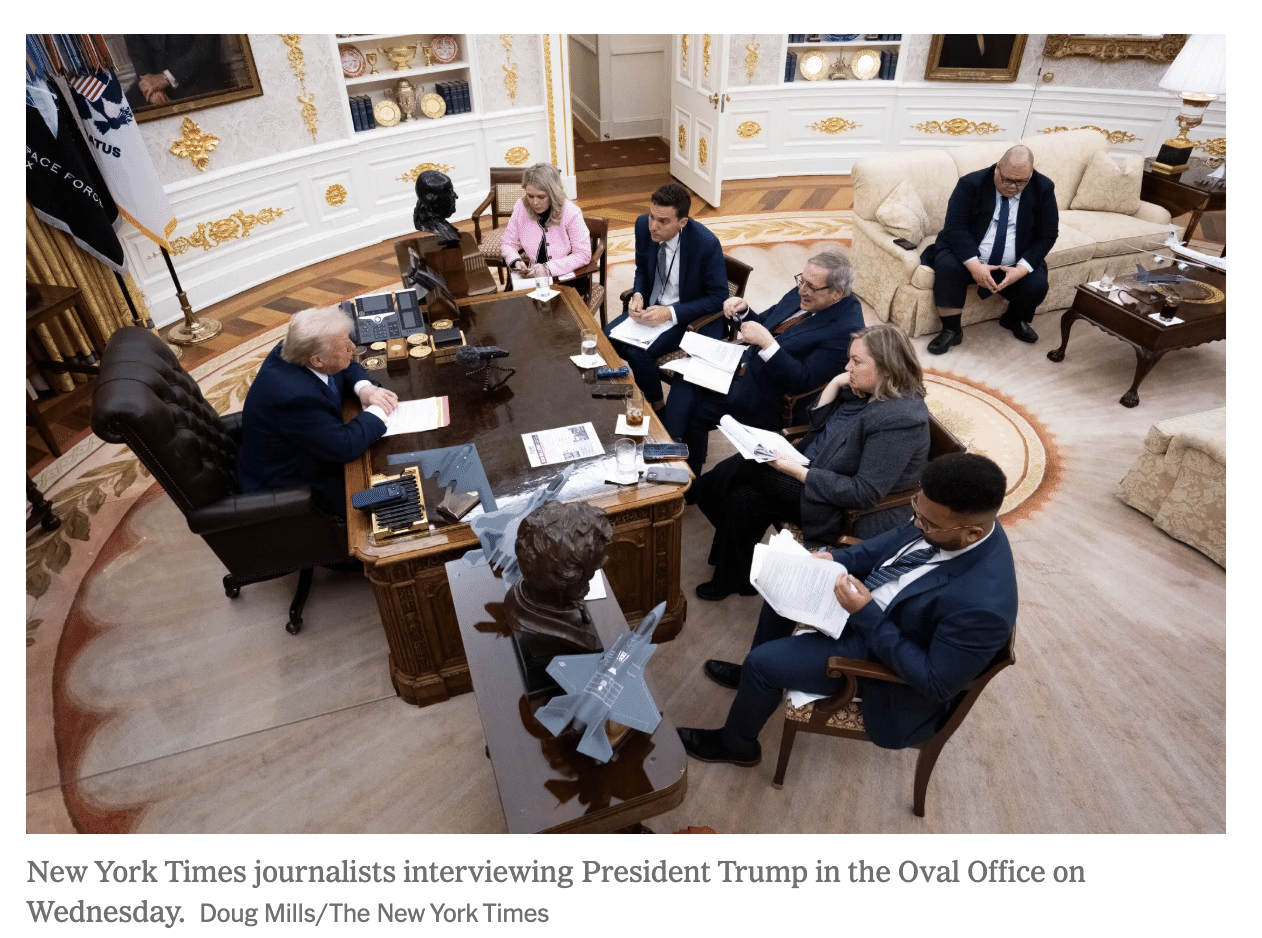
That’s one reason I find this exchange from NYT’s “interview” with Donald Trump interesting.

He directly tied the security of the bunker-ballroom to some trauma (he had earlier raised it, and sent a valet to get all his ballroom models).  Then they spoke off the record (one of perhaps four times they do so, aside from the call with Colombian President Gustavo Petro).

President Trump

This is a much more important thing to do. So, this is the ballroom right here. It’s beautiful. People love it. It’ll hold — it’s being designed with bulletproof glass, 4 to 5 inches thick. Can take just about any weapon that we know of. I wish I was in it about a little while ago. [Mr. Trump laughs.]

[Mr. Trump speaks briefly off the record.]

Tyler Pager

Mr. President, on the record, you haven’t even been here a year yet, and you’ve made many renovations. Are there other plans for you to make changes?

They came back on the record with a slightly different topic: renovations generally.

From there, Trump discussed a plan to add a second floor to the West Wing, because the roof that’s there now is not used given that long range rifles could hit them.

Tyler Pager

What about at the White House complex?

President Trump

I may do an upper West Wing. This area. Cover it with one floor because it needs more space. It would be —

David E. Sanger

Including the Oval? Or Oval would be separate?

President Trump

No, less. Short of the Oval. If you take the L [shape] —

David E. Sanger

So you’d put it up — there’s a second floor. It’s sort of in the attic.

President Trump

Well there’s a second floor now that was, that was meant to be a park. People don’t use it as a park. Now with long-range rifles, you tend not to use it.

[snip]

Katie Rogers

The L. Is that why you were on the roof that day?

President Trump

Exactly.

Katie Rogers

What were you doing?

President Trump

I was looking at doing office space.

Grandpa Sundown took a diversion to show a picture of Don Jr holding a rattlesnake while wearing flip-flops.

Then Trump brought out one after another model of the ballroom. When David Sanger asked him about its cost, he distinguished between the aboveground portion — the ballroom — from the stuff below ground (which has not been discussed on the record) — the bunker.

The current $400 million cost does not include the bunker.

President Trump

But I said, “Ultimately, they win.” You better be careful. So ready? Don’t take any pictures of this ’cause you’ll scare people. So I started off with a building half of the seats —

[Mr. Trump puts a model for a new White House ballroom on the table.]

— and then it just kept growing and growing, and the money kept pouring in and pouring in. No, no, please. So I started with that — started with this.

[Mr. Trump puts a model of what he said was the smaller, original planned ballroom on the table.]

And I said: “Wow, I’ve got all this beautiful land. I don’t want to waste it.” So I said: “All right. I’ll go a little bit larger.” This would have seat — seated 450 people. So I said, “Let’s go a little bit larger.” So then I said, “Let’s do this.”

[Mr. Trump removes the smaller model and puts another model for the new ballroom on the table.]

Zolan Kanno-Youngs

What’s the updated price tag on all this?

President Trump

Well, every time I make it larger it goes — but I’ll do it for — I’m under budget and ahead of schedule. You know, I’m — I’d build it larger.

David E. Sanger

Are you at about $400 million now?

President Trump

I’ll bring it in for less than — it’s, it’s ahead of schedule and under budget so far.

David E. Sanger

What’s the budget?

President Trump

Under $400 million.

David E. Sanger

And that’s just the aboveground, not —

President Trump

That’s the aboveground.

According to CNN a White House official acknowledged the security enhancements going on underground.

During a recent meeting of the National Capital Planning Commission where the ballroom was discussed, White House director of management and administration Joshua Fisher said broadly that the overall ballroom project will “(enhance) mission critical functionality,” “make necessary security enhancements” and “(deliver) resilient, adaptive infrastructure aligned with future mission needs.”

Fisher was pressed on why the project broke with precedent by starting the demolition process without the commission’s approval — and he indicated that the “top-secret” work taking place underground was the motivation.

“There are some things regarding this project that are, frankly, of top-secret nature that we are currently working on. That does not preclude us from changing the above-grade structure, but that work needed to be considered when doing this project, which was not part of the NCPC process,” he said.

And to the NYT, Donald Trump tied the bunker-ballroom to his own sense of vulnerability.

Share this entry
https://empty.runengine.com/wp-content/uploads/2026/01/Let-them-eat-ballroom.png 720 1280 emptywheel https://www.empty.runengine.com/wp-content/uploads/2016/07/Logo-Web.png emptywheel2026-01-21 18:04:322026-01-21 18:04:32Trump’s Vulnerability and the Bunker-Ballroom

The Truth of Dead Exceptionalism

January 21, 2026/33 Comments/in 2024 Presidential Election, Economics /by emptywheel

Yesterday, the anniversary of Trump’s second inauguration, may be forever measured in two speeches. Trump gave a long, racist grievance-fest full of false claims denying that he is actively destroying the country.

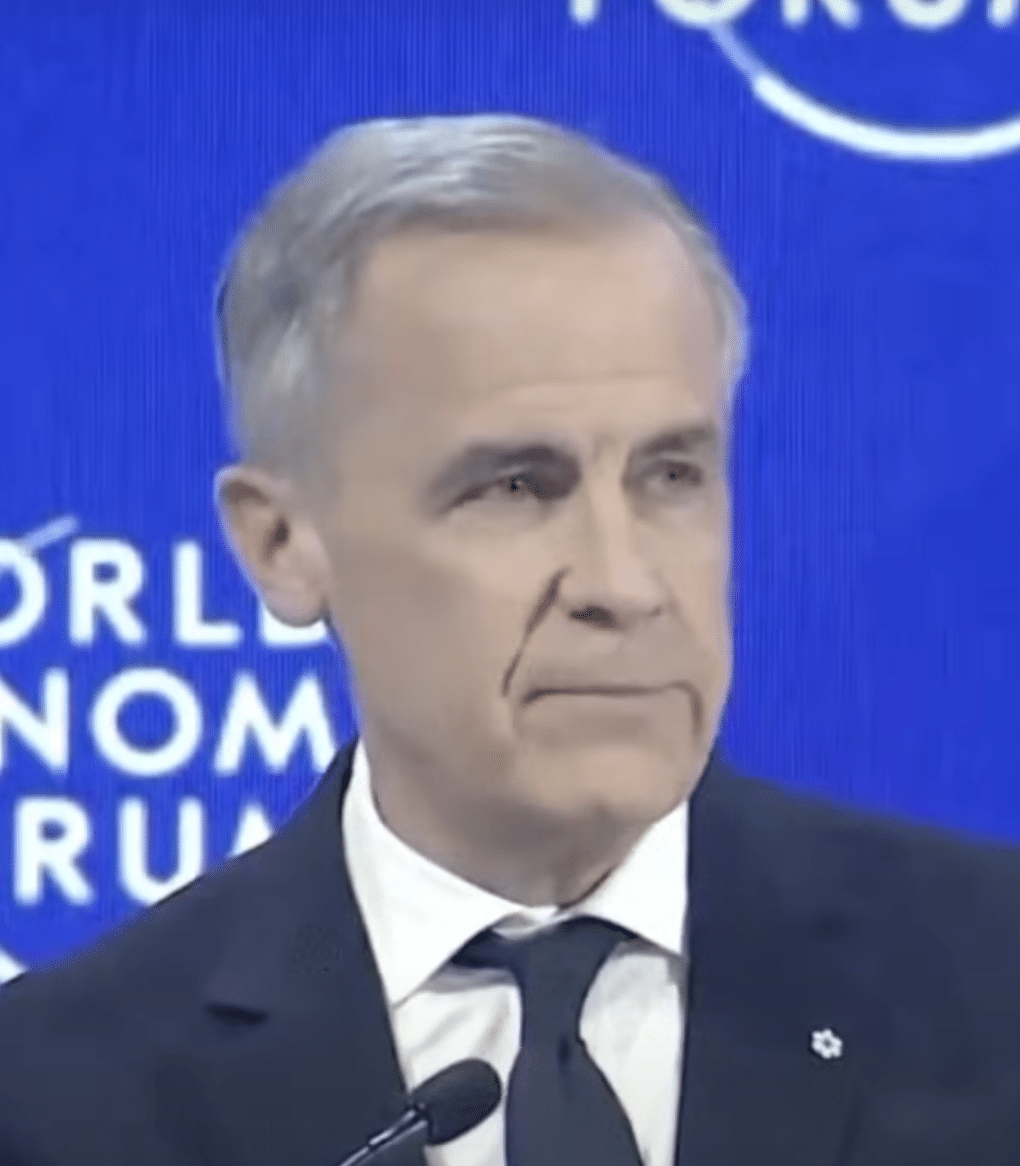
And Mark Carney gave a speech where he declared the end of American Exceptionalism.

He didn’t describe it that way. Instead, he pitched alliances of “middle powers” that continue to live by the values purportedly enshrined in the Western order, even as superpowers operate nakedly eschewing such limits.

Now, Canada was amongst the first to hear the wake-up call, leading us to fundamentally shift our strategic posture. Canadians know that our old, comfortable assumptions that our geography and alliance memberships automatically conferred prosperity and security, that assumption is no longer valid. And our new approach rests on what Alexander Stubb, the president of Finland, has termed value-based realism.

Or, to put it another way, we aim to be both principled and pragmatic. Principled in our commitment to fundamental values, sovereignty, territorial integrity, the prohibition of the use of force except when consistent with the UN Charter and respect for human rights.

And pragmatic in recognizing that progress is often incremental, that interests diverge, that not every partner will share all of our values.

So we’re engaging broadly, strategically, with open eyes. We actively take on the world as it is, not wait around for a world we wish to be.

We are calibrating our relationships so their depth reflects our values, and we’re prioritizing broad engagement to maximize our influence, given the fluidity of the world at the moment, the risks that this poses and the stakes for what comes next.

And we are no longer just relying on the strength of our values, but also the value of our strength.

[snip]

Our view is the middle powers must act together because if we’re not at the table, we’re on the menu.

But I’d also say that great powers can afford, for now, to go it alone. They have the market size, the military capacity, and the leverage to dictate terms. Middle powers do not. But when we only negotiate bilaterally with a hegemon, we negotiate from weakness. We accept what’s offered. We compete with each other to be the most accommodating.

This is not sovereignty. It’s the performance of sovereignty while accepting subordination.

Much of that speech was the speech of a two-time central banker describing how to pursue national gain; indeed, he boasted of how much he had achieved in the last year, a year when Trump has rolled out one after another framework of a deal that served as nothing more than a point of leverage.

But Carney bookended that discussion with an explicit nod to Václav Havel’s Power of the Powerless, an essay that — in 1978, over a decade before the demise of communism — envisioned combatting an ideologically driven empire by simply refusing to affirmatively perform blind obedience to the ideology anymore.

And I’m fascinated by that frame, and not even just because I was once an expert on the essay and the dissident movement from which it arose.

Havel’s essay arose from a debate about how one can be a dissident, a heated debate about the relationship between leader and led (my dissertation argued that Havel was actually on the wrong side of that debate, even while he won the mantle of leadership). But it envisioned that simple non-participation — the ethical act of refusing to affirmatively play the role assigned by ideology anymore — might build power for the powerless.

The manager of a fruit-and-vegetable shop places in his window, among the onions and carrots, the slogan: “Workers of the world, unite! Why does he do it? What is he trying to communicate to the world? Is he genuinely enthusiastic about the idea of unity among the workers of the world? Is his enthusiasm so great that he feels an irrepressible impulse to acquaint the public with his ideals? Has he really given more than a moments thought to how such a unification might occur and what it would mean?

[snip]

This, of course, does not mean that his action has no motive or significance at all, or that the slogan communicates nothing to anyone. The slogan is really a sign, and as such it contains a subliminal but very definite message. Verbally, it might be expressed this way: “I, the greengrocer XY, live here and I know what I must do. I behave in the manner expected of me. I can be depended upon and am beyond reproach. I am obedient and therefore I have the right to be left in peace.” This message, of course, has an addressee: it is directed above, to the greengrocers superior, and at the same time it is a shield that protects the greengrocer from potential informers. The slogans. real meaning, therefore, is rooted firmly in the greengrocers existence. It reflects his vital interests. But what are those vital interests?

Let us take note: if the greengrocer had been instructed to display the slogan “I am afraid and therefore unquestioningly obedient; he would not be nearly as indifferent to its semantics, even though the statement would reflect the truth. The greengrocer would be embarrassed and ashamed to put such an unequivocal statement of his own degradation in the shop window, and quite naturally so, for he is a human being and thus has a sense of his own dignity. To overcome this complication, his expression of loyalty must take the form of a sign which, at least on its textual surface, indicates a level of disinterested conviction. It must allow the greengrocer to say, “Whats wrong with the workers of the world uniting?” Thus the sign helps the greengrocer to conceal from himself the low foundations of his obedience, at the same time concealing the low foundations of power. It hides them behind the facade of something high. And that something is ideology.

Ideology is a specious way of relating to the world. It offers human beings the illusion of an identity, of dignity, and of morality while making it easier for them to part with them. As the repository of something suprapersonal and objective, it enables people to deceive their conscience and conceal their true position and their inglorious modus vivendi, both from the world and from themselves. It is a very pragmatic but, at the same time, an apparently dignified way of legitimizing what is above, below, and on either side.

Carney’s speech — the speech of the two-time central banker — barely scratches at what this ideology is, without which his reliance on Havel makes little sense.

It might be generally described as the fiction within the UN and World Trade system that permanent Security Council members ever adhered to the rules-based order.

We knew the story of the international rules-based order was partially false, that the strongest would exempt themselves when convenient, that trade rules were enforced asymmetrically, and we knew that international law applied with varied rigor, depending on the identity of the accused or the victim.

Carney’s statement about this fiction certainly included China…

Over the past two decades, a series of crises in finance, health, energy and geopolitics have laid bare the risks of extreme global integration. But more recently, great powers have begun using economic integration as weapons, tariffs as leverage, financial infrastructure as coercion, supply chains as vulnerabilities to be exploited.

You cannot live within the lie of mutual benefit through integration when integration becomes the source of your subordination.

But this is obviously (in the paragraph following from the rules-based order one) directed at Donald Trump and the security he has destroyed in the last year.

This fiction was useful, and American hegemony in particular helped provide public goods, open sea lanes, a stable financial system, collective security, and support for frameworks for resolving disputes.

In truth, I’m not sure the frame borrowed by Havel — at least as adopted in this speech by the two-time central banker — entirely works. Carney is not so much newly asserting that the world order no longer works. Trump, and especially, Stephen Miller already asserted that. As such, Carney’s assertion of a rupture is of little value; what matters are the strategy discussions of a two-time central banker on how to respond.

Hegemons cannot continually monetize their relationships. Allies will diversify to hedge against uncertainty. They’ll buy insurance, increase options in order to rebuild sovereignty, sovereignty that was once grounded in rules but will increasingly be anchored in the ability to withstand pressure.

But the reason why Canada and the other middle powers put up with the US in the last two decades — the period he addresses, the period I addressed here — is that the US broke the rules a lot, with invasions, with torture, abusing its hegemonic financial position to avoid consequences for the crash, but rarely got called on it, because the US also kept shipping lanes secure, security guarantees it now refuses to abide by itself.

I’m not sure whether Carney envisioned more, envisioned costs Trump will pay for having disavowed American Exceptionalism. Those costs may be primarily born, internalized, by Americans who have yet to understand.

Share this entry
https://empty.runengine.com/wp-content/uploads/2026/01/Screenshot-2026-01-21-at-11.44.16.png 1166 1020 emptywheel https://www.empty.runengine.com/wp-content/uploads/2016/07/Logo-Web.png emptywheel2026-01-21 07:35:092026-01-21 09:50:18The Truth of Dead Exceptionalism

Time to Unplug the American Century and Restart the Machine

January 19, 2026/73 Comments/in 2016 Presidential Election, 2024 Presidential Election, Financial Fraud, Immigration, Terrorism /by emptywheel

Mr. EW and I are closing on our 25th wedding anniversary in a few months.

Yeah, us!

I raise that not because I’m expecting you all to start shopping silver (that’s what I’m supposed to buy anyway, right? Mr. EW insists it’s power tool anniversary again anyway).

I say that as a way of conveying that, in a literal sense, I have been married to Europe for (effectively) the entirety of this century.

Sure, I had an affinity before that. In a Czech class in Prague in 1997 , for example, on a day when the other American was absent, the entire class told me I seemed like a European and why didn’t I just move. Without a beat, one of them said, “But you stay there and fix it for the rest of us.” I can’t tell you how deeply I felt (and feel) an obligation to fulfill that order.

And so I think of where we go from here, both in the larger effort to defeat Trumpism, but more specifically in a week when Europe contemplates what to do about the Greenland crisis, I’m cognizant what a shitty hegemon the US has been in this century.

Three of the four things that gave Trump a foothold, in my opinion, were failures in this century (the fourth is the legacy of slavery and the organized political violence that replaced it).

The other three, though, are the War on Terror, the financial crisis, and social media. (COVID was the final catalyst, I think; having moved during the height of COVID, I can’t express how much worse the US dealt with it than much of the EU, and now Trump is using the aftermath of his own jerry-rigged system — COVID fraud — as his excuse to invade Minnesota.)

I had been thinking this anyway. As we optimistically imagine things we would need to do recover from Trump, I think the US should simply reset the computer to 2000 (preferably before Bush v. Gore), and start over again. Don’t spend 20 years creating new terrorists in response to a terrorist attack. Don’t expand emergency and executive power beyond all recognition, in the process foreswearing America’s rickety Cold War claim to be an exceptional nation. Don’t bail out bankers who destroyed the global economy and, especially, wiped out the wealth of broad swaths of the population. And sure as hell don’t demand austerity in response, a betrayal of the post-war consensus that staved off the kind of malaise we’re seeing drive extremism. And whatever you do, do not grant the banksters’ counterpart, the techbros, their own chance to remake the world, mainstreaming far right extremists in the process. I feel like the coming AI collapse may be social media’s crisis point, and sadly, the techbros have prepared for it by implanting David Sacks in the White House.

Thinking in these terms does not provide immediate solutions. Reminding EU ministers how much of today’s economic malaise and immigration scapegoating arose from American failures doesn’t provide a solution. But it does provide one possible frame, one that can exploit increasing global animosity towards Trump, as a scapegoat.

Mark Carney got elected on a wave of animosity to Trump and he is not the only one.

There was a Defense One report on the National Security Strategy — not matched by any other outlet and therefore of uncertain provenance — that nevertheless haunts me. It disavows the inexpensive power projection of hegemony by imagining American hegemony as nothing more than American domination.

The full NSS also spends some time discussing the “failure” of American hegemony, a term that isn’t mentioned in the publicly released version.

“Hegemony is the wrong thing to want and it wasn’t achievable,” according to the document.

In this context, hegemony refers to the leadership by one country of the world, using soft power to encourage other countries to consent to being led.

“After the end of the Cold War, American foreign policy elites convinced themselves that permanent American domination of the entire world was in the best interests of our country,” the NSS states. “Yet the affairs of other countries are our concern only if their activities directly threaten our interests.”

I don’t think that’s right at all. Whoever wrote this, for example, seems to misunderstand how fragile an invasion of Venezuela without regime change can be — and importantly, how much worse Venezuela will be if, instead of attempting to reign in Maduro’s mafia state, instead blesses it. (In reality, America’s failures started before my designated reset date, when the US believed Shock Doctrine was a good way to cure communism rather than foster mafia states.) I don’t think the person who wrote that “Hegemony is the wrong thing to want” has considered how many advantages the dollar exchange has given the US. I don’t think the person who wrote, “Hegemony is the wrong thing to want” has thought through all the ways that coercion is more likely to backfire.

America was a piss poor global policeman, but the alternative we’re facing down now is worse for the US and worse for much of the world.

And if Donald Trump wants to embody those failures, providing a ready political response, well then, he asked for it.

Donald Trump has abdicated America’s role as a hegemon.

Well, okay then.

However else the rest of the world responds, they (we) should keep in mind that we can reject the underlying choices that created Trump as a symptom.

Share this entry
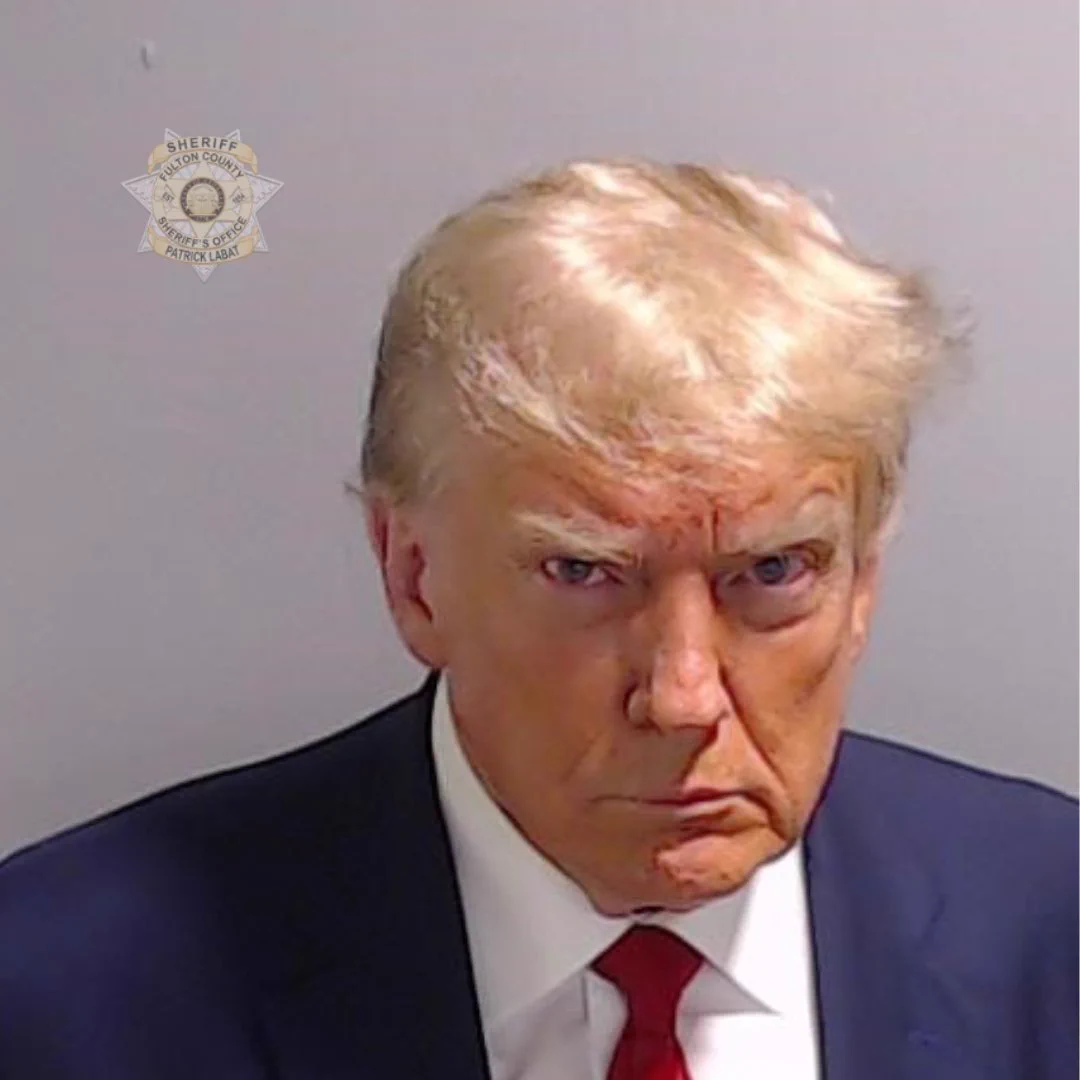
https://empty.runengine.com/wp-content/uploads/2023/08/Trump-Mug-Shot.webp 1080 1080 emptywheel https://www.empty.runengine.com/wp-content/uploads/2016/07/Logo-Web.png emptywheel2026-01-19 06:46:212026-01-19 06:46:21Time to Unplug the American Century and Restart the Machine

Where We Go from Here

January 13, 2026/53 Comments/in 2024 Presidential Election, Economics, Financial Fraud, Weaponized DOJ /by emptywheel

At the beginning of 2026, I did a post piggybacking on what had succeed against Trump last year, laying out ways to use Trump’s own conspiracism and grievance against him. That post linked an assessment of our success in five ways fighting fascism, and also explained why I think we need to fight Trump using his own tools against him.

This page repeats the same categories from that post, and fleshes out developments that accord with my original framework.

Treat Epstein as the base layer

Remember that Marc Caputo column — it was published on December 23 — stating that the Epstein releases could last a whole ‘nother week? On the day that would mark that week, December 30, Devlin Barrett published a story saying that, “The document review” of what is now believed to be 5.2 million documents “is expected to take until at least Jan. 20, according to a person familiar with the matter.” Even if they could finish it by January 20 (they won’t), that’ll just be the first go-around. DOJ has not done what they need to do to document the redactions, so there’ll be demands from Congress for them to do that (with obvious areas — including DOJ names and some deliberative documents specifically included in the law, where they’re in violation), they’ll need to repeat the entire process over again, Congress will begin to bring more legal pressure, and all the while survivors will be pointing out things they missed.

A week, Marc Caputo reported, as if that were credible!

This will go on for some time. This will go on for a very long time.

Still, while the Epstein scandal has been absolutely instrumental in loosing Trump’s grip on things, people are naive in thinking that will be enough. “My friends will get hurt,” Trump predicted, but what does it really mean for Trump’s power that Les Wexner has been implicated in the Epstein scandal as a co-conspirator? What is the use of creating right wing cognitive dissonance about Les Wexner, when Wexner is not the oligarch currently helping Trump destroy the country?

In my opinion, the Epstein scandal is a tool. It undercuts Trump’s ability to grab and redirect attention. It can create moments of cognitive dissonance, as it did for MTG. It is a way to turn Trump’s conspiracism and populism against him and may make other related narrative lines more salient. And if there’s a surprise disclosure — perhaps about Melania’s origin story — all the better. But as you keep the focus on Epstein, remember that there needs to be a direction beyond Epstein as well, a direction which incorporates the oligarchs who are still key players in Trump’s network of power.

Focus on the Broligarchs and AI

The Broligarchs who’ve been a key part of Trump’s power are one way to do that (and that’s before we’ve really gotten into Steve Bannon and Peter Thiel’s ties to Epstein).

Tesla Takedown was one of the most successful campaigns of 2025. At a time when Tesla faced cheaper competitors worldwide, the protests incurred a cost on Musk for his DOGE depredations.

Elon was installed in the White House in significant part by fellow South African “alien invader” David Sacks, who is even more conspiratorial and even more pro-Russian than Musk. Sacks was installed in the White House as a Special Government Employee (who, Elizabeth Warren suggests, has overstayed his welcome) to force a bunch of policy decisions that suck for America but ensure that Broligarchs won’t pay any consequences for their rash business deals. When one or both of crypto and AI crash (this is a really good story on how and why AI will burst), he’ll be there to ensure the government bails them out, as he did after playing a role in the failure of Silicon Valley Bank.

And even as Trump sheds support based on his mockery of affordability, even as MTG split with Trump over that and his support for crypto, Sacks is trying to brand Democrats as being more populist than even Zohran Mamdani is.

Fine. You want Democrats to be the party attending to the needs of working people? You’ve just made the GOP the party of “alien invader” billionaires who got tax cuts as millions lost their health care.

This happened even as AI has become a political liability. It has happened as local groups successfully stave off new data centers. It has happened as more instances of AI-inflamed suicide, murder, and porn — including porn exploiting children — appear. And it happens before the aforementioned crash.

Sacks and the other Broligarchs are going to do something for which they’ll try to dodge accountability. Now is the time to make sure his name comes up as people look for culprits.

January 12, 2026: Trump seeks to quell data center rebellion (WaPo)

January 12, 2026: America’s Biggest Power Grid Operator Has an AI Problem—Too Many Data Centers (WaPo)

Emphasize Trump’s loser stench

Another thing that will lead people to defect is to realize that Trump is a loser. He has done things — like the takeover of the Kennedy Center — that makes it easy to demonstrate he’s a loser in tangible fashion. Better still, every time Trump attaches his name to something, it provides an opportunity to hijack that brand, as comedian Toby Morton auspiciously managed to do by anticipating Trump’s most venal instincts and buying the domain.

The same is true of his businesses. Trump and his entire family is getting rich off the presidency 2.0. But his businesses are built as cons, sometimes Ponzi schemes. The idea is to leverage the loyalty of MAGAts to get them to invest in something, run up its value, only to collapse, leaving the most vulnerable screwed. In the past, at least, the cult effect was such that even MAGAts bilked by Trump associates, as with Steve Bannon’s Build the Wall graft, were reluctant to turn on the fraudsters; that may change. But at the very least, the volatile nature of Trump’s frauds makes it easy to show that as a businessman, he’s a loser.

Visualize Trump’s corruption

While there has been good reporting on Trump’s corruption — see, for example, NYT’s nifty visualization from New Year’s Eve — there has not been a systematic effort to take on his corruption.

Nevertheless, possibly because of the Epstein scandal, a majority of the country does think Trump is corrupt.

That may actually not be in a bad place to be as we move into 2026. That’s because Democrats can make Republican inaction in the face of Trump’s corruption a campaign issue (and then, if it leads to a Democratic sweep in midterms, the electoral buy-in will be in place to do a lot of oversight and defunding of Trump’s corruption).

Trump’s pardons are similar. There’s actually a solid stream of reporting on how corrupt they are, without yet any political direction to it. Democrats running against Republican incumbents — especially in the Senate — should state as presumed that it is the job of Senators to respond to the kind of naked corruption Trump is engaged in.

Where activists can magnify the good reporting on both Trump’s corruption and his pardons is to focus on the victims. This is actually showing up in the reporting on both topics. WaPo focused on the victims of Trevor Milton who might have gotten restitution had Trump not pardoned him. LAT similarly focused on the victims fucked over by Trump’s pardon of David Gentile.

Rosenberg, a retired wholesale produce distributor living in Nevada, has supported Trump since he entered politics, but the president’s decision in November to commute the sentence of former private equity executive David Gentile has left him angry and confused.

“I just feel I’ve been betrayed,” Rosenberg, 68, said. “I don’t know why he would do this, unless there was some sort of gain somewhere, or some favor being called in. I am very disappointed. I kind of put him above this kind of thing.”

Trump’s decision to release Gentile from prison less than two weeks into his seven-year sentence has drawn scrutiny from securities attorneys and a U.S. senator — all of whom say the White House’s explanation for the act of clemency is not adding up. It’s also drawn the ire of his victims.

“I think it is disgusting,” said CarolAnn Tutera, 70, who invested more than $400,000 with Gentile’s company, GPB Capital. Gentile, she added, “basically pulled a Bernie Madoff and swindled people out of their money, and then he gets to go home to his wife and kids.”

This superb Bloomberg story on the extent to which the Juan Orlando Hernández pardon unraveled years of work starts with a murder arranged by the network.

Five minutes later, González was circling a roundabout when a gray van braked in front of him. At the same time, a green SUV crowded his rear bumper. A motorcycle carrying two men emerged on his left. A man on the back of the bike fired six shots through the driver-side window. González’s head slumped toward his shoulder, and he tilted forward, held upright by the seatbelt. He died instantly.

More than a dozen men streamed out of the two vehicles that had sandwiched his Nissan. They scrambled to collect the spent shell casings on the ground, then scattered other casings across the pavement—decoys to complicate ballistics tracing. They jumped back into their vehicles, circled the roundabout and took the same road Julián had just driven down.

When they approached the Slaughterhouse, the gates opened to let them in, then closed behind them.

Every one of these pardons has a victim — and that’s before you get into the people newly victimized by people who’ve been pardoned by Trump, which NYT covered in November and others are tracking as well.

A New Jersey fraudster who was pardoned by President Trump in 2021 was sentenced to 37 years in prison this month for running a $44 million Ponzi scheme, one of a growing number of people granted clemency by Mr. Trump only to be charged with new crimes.

The man, Eliyahu Weinstein, was pardoned by Mr. Trump in 2021 and was re-indicted by the U.S. attorney’s office in New Jersey three years later. He was accused of swindling investors who thought their money was being used to buy surgical masks, baby formula and first-aid kits bound for Ukraine, and a jury convicted him in April of several crimes, including conspiracy to commit securities and wire fraud.

[snip]
Some of those pardoned for their role in the Jan. 6, 2021, riot at the U.S. Capitol have quickly drawn new attention from law enforcement. The group Citizens for Responsibility and Ethics in Washington said in June that at least 10 of the more than 1,500 who were pardoned had been rearrested and charged, and the number has only grown since then.

Earlier this month, a man who was pardoned after having participated in the Jan. 6 attack was charged with sex crimes against two children. Another man whose original sentence Mr. Trump commuted in 2021 was recently sentenced to 27 months in prison after convictions on physical and sexual assault, among other crimes.

These stories provide an important way to explain the costs of Trump’s corruption.

Brand Trump as the criminal he is

And while we’re talking about telling these stories: We must never ever cede the ground of crime to Stephen Miller’s attempt to brand immigrants as criminals.

Trump — a felon who freed hundreds of cop assailants on his first day on the job — has an entire infrastructure devoted to trying to spin brown people as criminal. Every time that infrastructure goes into action, including with the effort to brand Somalis in Minnesota as inherently fraudulent when Trump himself is a serial fraudster, we need to repeat, relentlessly, that Trump is a serial criminal who coddles other criminals.

This is something Gavin Newsom just started doing, with an entire website devoted to cataloging Trump’s crime and that of his pardon recipients.

Do not let a conversation about crime go by without focusing on how much of it Trump does.

Crime, in Trump’s era, is a rich white man’s thing. And while it will take a lot of work to adjust a lot of racist priors, until people start seeing Trump as a criminal it will be far too easy for them to make excuses for him.

Hold Stephen Miller accountable for his failures

I focused on Stephen Miller — and the import of making his failures clear — last week.

The import of shifting how we speak of Miller’s considerable power is clear. That’s true because he frankly has done huge damage, even to Trump’s goals, and well more so to average Americans. He’s someone that people, including Republicans, can scapegoat for Trump’s failures (and they’ll be right). And if we don’t make sure that happens, then he’ll scapegoat brown people.

Again, are Somali day care workers or billionaires systematically defrauding average people the problem? One easy to way to drown out Miller’s case that it’s the former is to make it clear how much he personally has harmed average Americans.

Visualize how Stephen Miller took money for cancer research and veterans care to pay for a goon army snatching grandmothers

On January 12, AOC explained this shift better than anyone has.

Relatedly, particularly as the huge injection of funding Republicans approved last year starts landing at DHS, it will become increasingly necessary to tie the goon squads in the streets to the loss of benefits elsewhere.

We need to make it clear that this is a direct trade. 50,000 ICE goons in, 300,000 other government employees out, including people who cure cancer, help learning disabled kids get through school, protect our National Parks, ensure your Social Security comes on time, and care for veterans.

Christopher Ingraham did a handy graphic to show the trade-off.

Stephen Miller’s dragnet is unpopular in the abstract and wildly unpopular in the lived sense, even — if meekly — among local Republican leaders.

But it still retains support of a big chunk of the population, probably because Trump officials routinely blame their own failures to address American problems on migrants, when as often as not, Trump’s response to immigration is the source of the problem.

America can’t have nice things, like cures for cancer and welcoming public schools, because Republicans in Congress took the money used to pay for those things and gave it to Stephen Miller to use to invade America’s neighborhoods.

Discredit Key Spokespeople

Right wingers like Jonah Goldberg and David French have expressed alarm by an old promo for a 60 Minutes piece (the piece itself was from October) that an influencer reposted yesterday, describing dozens of times when the government lied in court filings.

Judges have caught Trump’s DOJ in several major lies since then. In Chicago, Judge Sara Ellis wrote a 233-page opinion documenting the many lies DHS has told about their Chicago invasion.

And in December, judges in both Kilmar Abrego’s case caught the government obfuscating. In the criminal case, on December 30, Judge Waverly Crenshaw unsealed a December 3 opinion describing how Nashville’s US Attorney lied about how centrally involved Todd Blanche’s office was in demanding Abrego face trial.

The central question after Abrego established a prima facie case of vindictiveness is what information in the government’s control sheds light on its new decision to prosecute Abrego, after removing him from the United States without criminal charges. These documents show that McGuire did not act alone and to the extent McGuire had input on the decision to prosecute, he shared it with Singh and others. (Doc. No. 178-1). Specifically, the government’s documents may contradict its prior representations that the decision to prosecute was made locally and that there were no outside influences. For example, Singh contacted McGuire on April 27, 2025, to discuss Abrego’s case. (See Doc. No. 229 at Abrego-Garcia000001). On April 30, 2025, Singh asked McGuire what the potential charges against Abrego would be, whether the charging document would reference Abrego’s alleged MS-13 affiliation, and asked for a phone call before any charges were filed. (Id. at Abrego-Garcia000007–000008). In a separate email on April 30, 2025, Singh made clear that Abrego’s criminal prosecution was a “top priority” for the Deputy Attorney General’s office (Blanche). (Id. at Abrego-Garcia000037). He then told McGuire to “sketch out a draft complaint for the 1324 charge [making it unlawful to bring in and harbor certain aliens].” (Id.). On May 15th, McGuire emailed his staff that “DAG (Blanche) and PDAG would like Garcia charged sooner rather than later.” (Id. at Abrego-Garcia000060).

And as I’ve already noted, Judge Paula Xinis cataloged the many deliberately ignorant declarations DOJ filed about whether DHS had deportation plans for Abrego when she ruled that he must be released.

Respondents showcased Cantú’s ignorance about the content of his Declaration pertaining to Costa Rica. As the pointed questions of Respondents’ counsel made clear, Cantú’s lack of knowledge was planned and purposeful.

Counsel: So paragraph 4, final sentence [of the Cantú Declaration], do you see where it says the word—the words “certain understandings”?

Cantú: I found it. Yes, I do. I see it.

Counsel: What are the certain understandings referenced in the last sentence?

Cantú: I don’t know . . .

Counsel: What are the “contingencies” referenced in the last sentence?

Cantú: I do not know . . .

Counsel: What are the “interim developments” referenced in paragraph 5?

Cantú: I don’t know.

ECF No. 107 at 26:8–27:12 (counsel for Respondents, Jonathan Guynn (“Guynn”), questioning Cantú). See also id. at 53:8–9 (Guynn, at sidebar with Court, stating “I’ll just say I told you this was exactly what was going to happen,” regarding the witness’ ignorance on Costa Rica as a viable country of removal).

Ultimately, Respondents’ calculated effort to take Costa Rica “off the table” backfired. Within 24 hours, Costa Rica, through Minister Zamora Cordero, communicated to multiple news sources that its offer to grant Abrego Garcia residence and refugee status is, and always has been, firm, unwavering, and unconditional.

It’s a problem that, after huge scoldings like these, right wing critics of Trump don’t understand how much Trump’s people lie — not least because the Supreme Court still credits the most outlandish claims Trump makes, even after they’ve been thoroughly debunked by lower court judges.

Many of these lies are coming from the same people: Stephen Miller, Todd Blanche’s office, DHS spox Tricia McLaughlin, and Greg Bovino.

It is remarkable that so many of these people have been caught lying to courts (or publicly, about people before courts). But it needs to become common knowledge for everyone, so every time Tricia says something, they start from the assumption she’s lying, because she almost always is.

There comes a time when the credibility of systematic liars not named Trump collapse entirely such that every utterance they make discredits the claims they try to sell. Tricia McLaughlin, at least, is close those levels of propaganda, and Stephen Miller is not far behind.

Use Trump’s claimed opposition to antisemitism against him

Within days of his inauguration last year, Trump signed an EO — adding to one he signed in 2019 — claiming to oppose antisemitism. There has been some discussion about the bad faith of this EO and a DOJ lawyer implementing it, Michael Velchik, once wrote a paper from Hitler’s perspective. While it is explicitly targeted at universities (and has been a key tool to attempt to takeover universities), it nevertheless claimed to oppose antisemitism everywhere.

It shall be the policy of the United States to combat anti-Semitism vigorously, using all available and appropriate legal tools, to prosecute, remove, or otherwise hold to account the perpetrators of unlawful anti-Semitic harassment and violence.

This is the kind of statement of principle that can form the basis of political pressure — particularly as the MAGAt movement splinters around the overt antisemitism of people like Nick Fuentes and Candace Owen, and as political opportunists like Ted Cruz attempt to exploit that splinter.

We’re going to have to fight this battle in any case. As part of the revocation of everything Eric Adams did after he was indicted for bribery yesterday, Zohran Mamdani revoked an EO that gave Israel preferential treatment, which Israel is using to stoke division; yet Mamdani preserved the office Adams opened to combat antisemitism.

We need to call out the dripping antisemitism of Trump’s team, from top (at least JD Vance, who refuses to disavow Fuentes) to bottom.

There are two key Trump aides who should be targeted. Most notably, Paul Ingrassia, who had to withdraw his nomination to be Special Counsel after Politico exposed texts in which he confessed to a Nazi streak been installed at GSA instead. In addition, Kingsley Wilson became DOD spokesperson in spite of Neo-Nazi comments. NPR has done good work unpacking these ties.

Reclaim disinformation research

Republicans plan on exporting fascism via US tech platforms.

That’s not new. I’ve been talking about Elon’s plans to use Xitter as a machine for fascism for some time.

But since then, Trump’s minions worked it into the National Security Strategy.

And, in the wake of the EU’s sanctions against Elon Musk for — basically — lying about why I have a blue check, Marco Rubio stripped the visas of five people, including US Green Card holder Imran Ahmed, a long time adversary of Elon’s.

But there are several developments that suggest it is time to renew efforts to defend disinformation research, not least the White House’s absurd effort to attack real journalism, what is sure to be a snowballing failure on Bari Weiss’ part to make propaganda popular, and the meltdown the head of DOJ’s Civil Rights division, Harmeet Dhillon, had over the holidays about right wing “misinformation” targeting Pam Bondi.

The right wingers are doing what they themselves established is unlawful. And that presents both political and legal opportunities to demonize their propaganda.

Which in turn cycles back to the increasing problem of AI propaganda, including Grok’s flagrant willingness to nudify children in recent days.

Some people write short resolutions. I guess I write 4,000-word To Do lists. Join me in my efforts!

Share this entry
https://empty.runengine.com/wp-content/uploads/2026/01/Screenshot-2026-01-02-at-3.26.59-PM.png 1354 1560 emptywheel https://www.empty.runengine.com/wp-content/uploads/2016/07/Logo-Web.png emptywheel2026-01-13 09:16:392026-01-13 09:18:26Where We Go from Here

On Same Day Robert McBride’s Firing Is Reported, Stan Woodward “Errs” His Grievances

January 13, 2026/29 Comments/in 2024 Presidential Election, January 6 Insurrection, Jim Comey prosecution, Leak Investigations, Weaponized DOJ /by emptywheel

A slew of outlets — starting with MS and including NYT but not including ABC, which usually gets the details right — have reported the firing of Robert McBride because, the MS headline claims, he “declined to pursue James Comey case.” All suggested that, even with the appeal of Lindsey Halligan’s firing before the Fourth Circuit (the Fourth just granted DOJ’s request to stall two weeks and keep the two appeals consolidated), McBride’s sins involved recharging the case in EDVA, even though DOJ abandoned its attempts to reindict Letitia James (on the mortgage fraud; now they’re pursuing hairdresser fraud) before it appealed.

No one mentioned news of the firing happened on the day the SDFL grand jury convenes, or the Comey-related role McBride has been willingly playing, as the single non-defense lawyer litigating Dan Richman’s efforts to get his files returned.

Associate Attorney General Stanley Woodward’s latest prank — an “erring” of grievances — may explain McBride’s firing.

When last we checked in on the Richman litigation before Christmas, after spending some time making sure that someone had ethical skin in her courtroom, Colleen Kollar-Kotelly attempted to juggle the genuinely complex issues before her, granting one after another notice of defiances masquerading as emergency motions for delay for the government, before — seemingly — issuing a final order on December 23, requiring the government to turn over all materials it had, but allowing it to delete the single no-longer classified file they used to obtain the materials back in 2017.

For the foregoing reasons, the Court shall GRANT IN PART the Government’s [22], [33] Emergency Motions to Clarify and Modify the Court’s Order and AMEND its [20] Order dated December 12, 2025, to make explicit that the Government may delete the purportedly classified document identified in 2017 from any material that it returns to Petitioner Richman. Because the Government has not shown that it has a lawful right to retain and use any of the materials at issue, the Court shall not otherwise alter its Order to relieve the Government from its obligation to return those materials to Petitioner Richman.

The next day, in a filing signed by Todd Blanche, Lindsey Halligan, and McBride, DOJ asked for an emergency extension. Again. Because of the holiday, they couldn’t technically remove that single classified file they supposedly removed back in 2017.

7. However, because of significant operational constraints caused by the imminent Christmas and New Year’s holidays (i.e., the lack of sufficient, technically qualified Government personnel in the Washington, DC area for the remainder of this week and the next), which make the current compliance deadline fall a mere one business day after the Court’s revised clarifying order, the Government anticipates that it will not be able to review all electronic storage devices containing classified information, delete that information, and return those devices to Richman’s counsel by December 29, 2025.

But on Christmas Eve, they were going to delete that file.

Days later Kollar-Kotelly granted that extension while reiterating that they only thing they were allowed to do was to delete that file.

Then Stan Woodward, the guy who defended all the people covering up Trump’s crimes across two criminal investigations, got involved. Without filing a notice of appearance — so Stan has no ethical skin in this game — On January 2, he effectively indicated that DOJ was going to defy Kollar-Kotelly’s order, because deleting that single classified file would destroy the forensic copy of this.

In the days since the Court last extended the foregoing deadline, the undersigned counsel has endeavored to negotiate in good faith with counsel for Petitioner-Movant the particulars of the parties’ understanding of what compliance with the Court’s Orders requires. For example, classified information cannot be deleted from the government’s forensic copy of electronic media without the destruction of the entire media. Thus, although the Court’s Orders, “permit the Government to permanently delete a single classified document from the material seized from Petitioner Richman’s personal computer hard drive . . . from any of these materials before returning them to Petitioner Richman,” ECF No. 41 at 2, such limited deletion of classified information from a forensic image is not technologically feasible.

Now, this may be bullshit. Richman’s lawyers, at least, understand that DOJ still retains the actual hard drive, not a forensic copy. The reasons why they believe that are mostly redacted, but it appears the serial number on the subsequent search warrants matches the serial number of Richman’s original hard drive, meaning they kept the original and gave him a different hard drive.

Nicholas Lewin at least believes DOJ gave Richman a different hard drive back in 2017, effectively stealing his actual hard drive in defiance of the consent he gave.

If so, it’s not a forensic image.

And, anyway, someone should have started asking — I know I did — why the Associate Attorney General and the President’s third defense attorney involved in just this matter got involved in a seemingly minor issue that seemed to be settled at all.

Nevertheless, for reasons (probably professional comity) that I cannot fathom, Richman’s lawyers agreed to discuss how DOJ could get out of complying with Kollar-Kotelly’s order, so long as DOJ promised it wouldn’t do anything with his stuff. Kollar-Kotelly granted that extension too.

At that point, it was clear to me at least, DOJ had succeeded in dicking Kollar-Kotelly around long enough to facilitate a different grand jury — the one in SDFL and possibly convened before Aileen Cannon — to issue a warrant and therefore create competing orders from two District Courts.

Then, last night at 7:50PM, and so well after McBride was fired, Stan Woodward asked for another extension. With a flourish, the guy who badly struggled with basic technical issues during the stolen documents case elaborated on his blather about forensic copies (again, if it’s true that DOJ kept Richman’s original hard drive, then this is all bullshit).

The Parties dispute what the Court has authorized the United States to delete. However, when a device contains classified information the only way to properly remove that information is to destroy the device and all the information on that device. Put differently, the United States cannot delete just the documents containing classified material from the device. Further complicating matters is the fact that regardless of the presence of classified information, a single file cannot be deleted from a forensic copy of a device. Either the entire forensic copy is deleted or none of it is. Nevertheless, Petitioner-Movant has requested the United States not destroy any devices containing classified material absent further Order of the Court. The United States will honor this request and hopes the Parties can propose language for the Court’s consideration promptly.

But the bulk of Woodward’s filing consisted of, as he described it, “erring” his grievance that — around the time McBride may have disappeared –Richman’s lawyers did not immediately respond to Woodward’s attempts to keep a full set of Richman’s data on January 10.

To that end, the United States provided counsel for Petitioner-Movant a draft joint consent motion proposing modification to the Courts Orders on December 31, 2025, following a call to outline the contours of the same with Petitioner-Movant’s counsel the previous day. On January 5, 2025, Petitioner-Movant’s counsel wrote to question whether an agreement between the Parties was conceivable. The United States requested a call with counsel for Petitioner-Movant the next day, January 6, 2026, but counsel for Petitioner-Movant advised they were unavailable before January 8 for such a call. Given the desire for the United States to promptly resolve this matter, the United States implored counsel for Petitioner-Movant to provide a redline to the proposed consent motion, which counsel for Petitioner-Movant did after business hours on January 8. The United States provided further edits to the joint motion the next morning, on January 9. Since that time – and at the time of this filing – the United States has not received feedback on that draft despite representations that such feedback would be forthcoming on January 10.

Despite the undersigned representing to Petitioner-Movant’s counsel multiple times a desire to resolve this matter promptly, no agreement has been reached. The undersigned does not err this grievance lightly, but does so only out of respect for the Court’s deadline and out of regret for not seeking an extension earlier. [my emphasis]

It’s Richman’s fault, Woodward suggests by claiming grievance, not his own.

I have no idea whether Kollar-Kotelly saw the news that the only line prosecutor who filed a notice of appearance before her got fired in the middle of all this, but she seemed unimpressed that Woodward was erring grievances about delay when he filed his motion for an extension well after hours the day of his deadline.

The Court is in receipt of the Government’s Unopposed 45 Motion for Extension of Time. Given the late hour of this filing, which the Court received at 7:50 p.m. this evening, and with the understanding that the Government has complied with the Court’s 20 Order (as clarified and amended) in all respects except for the narrow unresolved issues identified in the 45 Motion, it is ORDERED that the deadline for the Attorney General or her designee to certify compliance with the Court’s Order is STAYED through January 13, 2026. The Court otherwise DEFERS RULING on the Government’s 45 Motion for Extension of Time. The Court shall resolve the 45 Motion by further order in due course.

She’s going to deal with it today.

But by firing McBride (who would have had cause to talk with EDVA judges about the supposedly intact copy DOJ stored in their SCIF, another of the crimes for which he was fired), there’s no longer anyone with real ethical skin in the game before Kollar-Kotelly, just Donald Trump’s defense attorneys, all of whom have chummy ties with Aileen Cannon.

Effectively, the promises not to access Dan Richman’s stuff have become virtually unenforceable.

Update: I missed that Stan Woodward did file a notice of appearance on January 2. It remains true that Trump’s defense attorneys likely aren’t that worried about bar complaints.

Update: Kollar-Kotelly has given DOJ a week from today.

MINUTE ORDER: Upon further consideration of the Government’s 45 Motion for Extension of Time, it is ORDERED that the Government’s 45 Motion is GRANTED to the following extent: It is ORDERED that the deadline for the Attorney General or her designee to certify to this Court, with specificity, that the Government has complied with this Court’s 20 Order dated December 12, 2025, as clarified and modified by any subsequent Order of this Court, including the provisions regarding both the return of certain materials to Petitioner Richman and the deposit of certain materials in the U.S. District Court for the Eastern District of Virginia, is EXTENDED to 5:00 p.m. ET on January 20, 2026.It is further ORDERED that the parties shall file a joint status report, no later than 9:00 a.m. ET on January 16, 2026, advising the Court of (1) the progress of the Government’s efforts to comply with the Court’s 20 Order, and (2) whether Petitioner Richman possesses a copy of any files or other materials that the Government proposes to delete or destroy on the basis that they are stored on a device or in an image that contains classified information.As previously ordered, the Government and its agents shall not access Petitioner Richman’s covered materials, except for the limited purpose of deleting the purportedly classified memorandum already identified in the record, or share, disseminate, disclose, or transfer those materials to any person, without first seeking and obtaining leave of this Court. Signed by Judge Colleen Kollar-Kotelly on 01/13/2026.

Share this entry
https://empty.runengine.com/wp-content/uploads/2026/01/Screenshot-2026-01-13-at-10.37.47.png 620 628 emptywheel https://www.empty.runengine.com/wp-content/uploads/2016/07/Logo-Web.png emptywheel2026-01-13 06:07:532026-01-13 11:22:00On Same Day Robert McBride’s Firing Is Reported, Stan Woodward “Errs” His Grievances

Annals of Sanewashing: NYT Labels Trump’s Confession of Psychological Unfitness as Leadership

January 9, 2026/30 Comments/in 2024 Presidential Election, Press and Media /by emptywheel

Remember the term “sanewashing,” which Parker Malloy used to describe how the press minimizes Trump’s ramblings to describe them as something reasonable to people who don’t see them personally?

Four years ago, in an article for Media Matters for America, I warned that journalists were sanitizing Donald Trump’s incoherent ramblings to make them more palatable for the average voter. The general practice went like this: The press would take something Trump said or did—for instance, using a visit to the Centers for Disease Control to ask about Fox News’s ratings, insult then–Washington Governor Jay Inslee, rant about his attempt to extort Ukraine into digging up dirt on Joe Biden, and downplay the rising number of Covid-19 cases in the U.S.—and write them up as The New York Times did: “Trump Says ‘People Have to Remain Calm’ Amid Coronavirus Outbreak.” This had the effect of making it seem like Trump’s words and actions seemed cogent and sensible for the vast majority of Americans who didn’t happen to watch his rant live.

[snip]

This “sanewashing” of Trump’s statements isn’t just poor journalism; it’s a form of misinformation that poses a threat to democracy. By continually reframing Trump’s incoherent and often dangerous rhetoric as conventional political discourse, major news outlets are failing in their duty to inform the public and are instead providing cover for increasingly erratic behavior from a former—and potentially future—president.

The consequences of this journalistic malpractice extend far beyond misleading headlines. By laundering Trump’s words in this fashion, the media is actively participating in the erosion of our shared reality.

These three paragraphs about why Donald Trump wants to take over Greenland when the US already has a base there, the rights to establish more bases, the ability to mine its minerals really exist in NYT’s third milking of their interview with Donald Trump:

“Ownership is very important,” Mr. Trump said as he discussed, with a real estate mogul’s eye, the landmass of Greenland — three times the size of Texas but with a population of less than 60,000. He seemed to dismiss the value of having Greenland under the control of a close NATO ally.

When asked why he needed to possess the territory, he said: “Because that’s what I feel is psychologically needed for success. I think that ownership gives you a thing that you can’t do, whether you’re talking about a lease or a treaty. Ownership gives you things and elements that you can’t get from just signing a document.”

The conversation made clear that in Mr. Trump’s view, sovereignty and national borders are less important than the singular role the United States plays as the protector of the West.

First of all, NYT interjected that “real estate mogul’s” comment; I assure you, Trump is not going to start building hotels in Greenland.

But more … uh … insane still, after Trump describes contemplating blowing up the alliance that has been the centerpiece of American national security since World War II out of a psychological need to own other people and other countries, nothing more, the NYT describes it to be a comment about Trump’s imagination that he is “the protector of the West.”

You’re both fucking insane! Donald Trump, for contemplating making the US and Europe less safe because of his own psychological inadequacies that drive him to covet big empty spaces on a map, and the NYT for describing it as the exact opposite of what it is, not Donald Trump needing to tend to Donald Trump’s increasing fragile psyche, but instead as something that protects the West rather than destroys the very concept of it.

This is how access journalism works. You give an outlet that spent the entirety of the Biden Administration bitching that they didn’t get any sitdown interviews with the President two hours to watch the President ramble incoherently, and in return for that access — the latest of a series of stories screaming, look at us!! Donald Trump takes our calls and tells us nothing!! — you describe the most dangerous kind of malignant Narcissism as the opposite of what it is.

Update: The exchange is far worse in the transcript.

David E. Sanger

Why is ownership important here?

President Trump

Because that’s what I feel is psychologically needed for success. I think that ownership gives you a thing that you can’t do, whether you’re talking about a lease or a treaty. Ownership gives you things and elements that you can’t get from just signing a document, that you can have a base.

David E. Sanger

So you’re going to ask them to buy it?

Katie Rogers

Psychologically important to you or to the United States?

President Trump

Psychologically important for me. Now, maybe another president would feel differently, but so far I’ve been right about everything.

Share this entry
https://empty.runengine.com/wp-content/uploads/2026/01/Screenshot-2026-01-08-at-09.03.46.png 938 1262 emptywheel https://www.empty.runengine.com/wp-content/uploads/2016/07/Logo-Web.png emptywheel2026-01-09 03:23:552026-01-12 12:05:13Annals of Sanewashing: NYT Labels Trump’s Confession of Psychological Unfitness as Leadership

The Bankrupt Premise of Trump’s Venezuela Colony

January 8, 2026/54 Comments/in 2016 Presidential Election, 2024 Presidential Election, Drug War, Energy Policy, Venezuelan Coup /by emptywheel

The headline and opening paragraphs of a 1,400-word story basically reporting that Trump had sat for the interview Joe Biden had denied the NYT (okay, they didn’t mention the latter bit) focus on Trump’s plan to run Venezuela’s oil industry indefinitely.

Trump Says U.S. Oversight of Venezuela Could Last for Years

President Trump said on Wednesday evening that he expected the United States would be running Venezuela and extracting oil from its huge reserves for years, and insisted that the interim government of the country — all former loyalists to the now-imprisoned Nicolás Maduro — is “giving us everything that we feel is necessary.”

“Only time will tell,” he said, when asked how long the administration will demand direct oversight of the South American nation, with the hovering threat of American military action from an armada just off shore.

“We will rebuild it in a very profitable way,” Mr. Trump said during a nearly two-hour interview. “We’re going to be using oil, and we’re going to be taking oil. We’re getting oil prices down, and we’re going to be giving money to Venezuela, which they desperately need.”

[snip]

During the wide-ranging interview with The New York Times, Mr. Trump did not give a precise time range for how long the United States would remain Venezuela’s political overlord. Would it be three months? Six months? A year? Longer?

“I would say much longer,” the president replied.

That he said that is surely news. And while I assume David Sanger will do a follow-up story that might explain this, NYT did not here.

The headline gives Trump something he badly needs — false assurances to oil companies that have been disabusing Trump of his insane notions that oil will pay for a Venezuela invasion that the US would stick around to make investments worthwhile.

But it doesn’t get into all the problems with Trump’s rapidly moving attempt to turn this into a win: even with that much longer security guarantee, it’s not at all clear this will work.

It started 10 days before the invasion, when Trump told oil companies they had to invest now to get reimbursed for nationalizations in the past.

Administration officials have told oil executives in recent weeks that if they want compensation for their rigs, pipelines and other seized property, then they must be prepared to go back into Venezuela now and invest heavily in reviving its shattered petroleum industry, two people familiar with the administration’s outreach told POLITICO on Saturday. The outlook for Venezuela’s shattered oil infrastructure is one of the major questions following the U.S. military action that captured leader Nicolás Maduro.

But people in the industry said the administration’s message has left them still leery about the difficulty of rebuilding decayed oil fields in a country where it’s not even clear who will lead the country for the foreseeable future.

“They’re saying, ‘you gotta go in if you want to play and get reimbursed,’” said one industry official familiar with the conversations.

The offer has been on the table for the last 10 days, the person said. “But the infrastructure currently there is so dilapidated that no one at these companies can adequately assess what is needed to make it operable.”

Apparently, Trump didn’t heed these warnings, and in the aftermath of the invasion he has made grandiose promises that oil would pay for the invasion.

To be fair, his first announcement — that “the Interim Authorities in Venezuela” had agreed to give the United States (or perhaps Trump personally)  between 30 and 50 MILLION Barrels of High Quality, Sanctioned Oil” which would “be sold at its Market Price, and that money will be controlled by me, as President of the United States of America, to ensure it is used to benefit the people of Venezuela and the United States!” may well be an effort to pay for the costs of the invasion.

It’s not at all clear a $2 billion payment would even do that.

DOD has been conducting periodic murderboat strikes every several days, each of which surely costs millions of dollars.

One hellfire missile, for example, typically costs about $150,000, and reaper drones cost around $3,500 per hour to fly. An F-35 costs around $40,000 per hour to fly. The cost per flight hour of an AC-130J gunship is not public but its predecessor, the AC-130U, which was phased out in 2019, cost over $40,000 per hour to fly.

The Gerald Ford has been in the Caribbean since November 16, which works out to be about $424 million (though there were already ships there). One of the $50 million Chinooks used in the attack was badly damaged. Similarly, the Delta Force lead was seriously injured, so taxpayers are paying his recovery and possibly his retirement. There were 150 aircraft used in the attack.

It was a tremendously successful attack.

It wasn’t cheap.

But within days of promising that oil would pay for his new colony, outlets started reporting that taxpayers might have to subsidize that effort.

Donald Trump has suggested US taxpayers could reimburse energy companies for repairing Venezuelan infrastructure for extracting and shipping oil.

Trump acknowledged that “a lot of money” would need to be spent to increase oil production in Venezuela after US forces ousted its leader, Nicolás Maduro, but suggested his government could pay oil companies to do the work.

“A tremendous amount of money will have to be spent and the oil companies will spend it, and then they’ll get reimbursed by us or through revenue,” the president said.

The reasons why are clear: even assuming Venezuela remains stable long enough to develop investments (the promise Trump is floating to the NYT), the cost of refining Venezuelan oil is just too high, particularly given current prices.

The energy-intensive upgrading process also increases the carbon footprint of these heavy grades, which could push up costs further if more governments start taxing emissions or raising existing levies.

Breakeven costs for key grades in the Orinoco belt already average more than $80 a barrel, according to estimates by consultancy Wood Mackenzie. That places Venezuelan oil at the higher end of the global cost scale for new production. By comparison, heavy oil produced in Canada has an average breakeven cost of around $55 a barrel.

Exxon’s breakeven target for its global oil production by 2030 is $30 a barrel, driven by low-cost fields in Guyana and the U.S. Permian shale basin. Chevron has a similar target, while Conoco has a long-term plan to generate free cash flow even if oil prices fall to $35 a barrel. Oil , currently trades at around $60.

While energy boards have increasingly supported greater exploration in recent years, they are insisting that this be done with spending discipline in mind in the face of rising global supplies and uncertainty over the energy transition.

Here’s a table from Bloomberg that shows that Venezuela, even ignoring the potential instability, is just not a competitive investment.

The rest of the article explains what better alternatives the majors are investing in.

Trump seems not to understand this math (or he’s engaged in another con job), because he keeps bragging about the price of oil coming down which … yeah, that’s the point. That’s precisely why imagining you’re going to have willful takers for your offer to invest in expensive-to-refine Venezuelan oil at today’s prices is a pipe dream.

Thus the bribes … er, subsidies, that American taxpayers will end up paying. On top of any deployment, taxpayers will bribe oil companies.

So it doesn’t make sense for the oil companies.

But it also doesn’t make sense for Venezuelans, because the first thing Trump’s backers will demand is that Venezuela pay off years of debt.

Analysts estimate Venezuela now owes $150-$170 billion and JP Morgan calculates that $102 billion of that is in the form of bonds, while bilateral debt to China totals $13-$15 billion.
Venezuela has not reported debt figures for around a decade and state oil company Petroleos de Venezuela (PDVSA) has in the meantime struck complex oil-backed debt deals with China.

Despite Washington’s ousting of Maduro, the main hurdles to a debt restructuring remain in place.

U.S. sanctions — including against Venezuela’s interim President Delcy Rodriguez – mean that even sitting down for creditor talks could breach U.S. Treasury Department curbs.

[snip]

“The U.S. administration has an interest in moving the restructuring forward, because without that restructuring, these oil companies will not be participating and will not be investing anything,” said Ed Al-Hussainy of Columbia Threadneedle Investments, which has Venezuelan bond exposure.

“The possibility of a U.S. government financial line of credit or a guarantee or a backstop of some sort is going to be music to the ears of investors,” the portfolio manager added.

Lee Robinson, founder of Altana Wealth which also holds Venezuelan bonds, said there was enough at stake for the U.S. itself to put a loan in place to kickstart Venezuela’s recovery.
JP Morgan said a recognition of Rodriguez’s new government by the Trump administration would open many questions.

“Should the Fund be bypassed in favour of a faster-track, oil-based bilateral program, we could be going down the road of a faster-track, less orthodox bond restructuring than what we have seen in the years since the pandemic and the advent of the Common Framework,” JP Morgan said.

Sounds like the taxpayers will be on the hook for the debt restructuring, just like the bailout to keep “libertarian” Javier Milei in office.

Moe Tkacik has written a bunch on the extraction involved here, as in this November story on Juan Guaidó’s role in it, during the last time Trump tried to milk Venezuela, making it easier for Paul Singer to acquire CITGO.

On January 23, 2019, when Guaidó proclaimed himself the “interim president” of an incredulous Venezuela, Secretary of State Mike Pompeo announced that the Trump administration would recognize Guaidó as the Bolivarian Republic’s genuine leader, and unveiled a suite of tough new sanctions on PDVSA, pitched as a bid to force Maduro to step down. The whole thing seemed like a joke, a throwback to the days when our foreign-policy establishment insisted a drug-trafficking warlord on an island of six million was the “real” leader of the world’s most populous country—though at least most Chinese knew who Chiang Kai-shek was when he fled to Taiwan in 1949 to preside over what the United Nations insisted on calling the “Republic of China.” Only the Miami Herald noted an unusual provision of the new arrangement, explained by then-Treasury Secretary Steve Mnuchin, who told the newspaper “that if Guaidó succeeds in forming a government, the money” from international sales of Venezuelan oil that he was freezing under the new sanctions regime “would go to him.” On Twitter, Guaidó promised this new arrangement would “prevent the looting from continuing.”

[snip]

Venezuela, PDVSA, and Citgo were legally separate entities. But in mid-February, Guaidó named entirely new slates of board members to PDVSA, its U.S. holding company, and Citgo, a move Rodríguez knew would strengthen Crystallex’s case. That same week, the glass manufacturer Owens-Illinois, which had been awarded a half-billion-dollar arbitration judgment over two Coke bottle factories Chávez had expropriated in 2010, sued Citgo on the basis that it was an “alter ego” of the state. Owens-Illinois had expert witness assistance from none other than José Ignacio Hernández, whom Guaidó had just named the attorney general of the shadow government.

That is, Trump proposes to fix the problem he, in significant part, caused in his first term.

Plus, until you fix Venezuela’s corruption problem — which Trump has pointedly declined to do in retaining Delcy Rodríguez, partly because he’s relying on Maduro’s suppression regime to offer stability to oil companies, partly because he affirmatively loves corruption — then the Venezuelan people aren’t going to see anything, even while Trump is attempting to oust China’s slightly more favorable float.

And all this is happening on a time frame — big investments and risks on the front end, very long timetable for returns to anyone — that I imagine China is taking some solace about being surprised, if it was surprised, by looking at how Trump’s obsession with becoming a petro-autocrat leaves it untouched to dominate renewables for the foreseeable future, renewables that will continue to put pressure on oil prices in a way that Trump seems not to understand.

And all that assumes Trump, or Dalcy Rodríguez, can ensure stability, something for which there’s no evidence. All that assumes that no one decides to make a target of the resources Trump has put in the middle of an increasingly volatile Caribbean.

Trump is literally making up Colonialism 2.0 on the fly. And the serially bankrupt businessman appears to be doing funny math at every turn.

So yeah, Trump is making expansive claims to the NYT. But they are part of an elaborate con job to prevent this Venezuela adventure from backfiring in a spectacular way.

Share this entry
https://empty.runengine.com/wp-content/uploads/2026/01/Situation-MAL.webp 496 600 emptywheel https://www.empty.runengine.com/wp-content/uploads/2016/07/Logo-Web.png emptywheel2026-01-08 09:00:152026-01-08 09:00:15The Bankrupt Premise of Trump’s Venezuela Colony
Page 1 of 64123›»

PRINT FRIENDLY VERSION

image_print

Resize your Font

(keep clicking for changes)

  • A A A

Support Emptywheel

This site's work is possible through readers' support. Choose a support option at the link below.

Donate

Recent Posts

  • Closed for Renovations
  • Stephen Miller, Not (Just) Kristi Noem and Greg Bovino, Must Be Held Accountable
  • By Lying about Alex Pretti’s Murder, Kristi Noem Makes Herself a Co-Conspirator In It
  • How Do You Want Your Family to Remember You?

Recent Comments

  • Matt___B on Stephen Miller, Not (Just) Kristi Noem and Greg Bovino, Must Be Held Accountable
  • Matt___B on Stephen Miller, Not (Just) Kristi Noem and Greg Bovino, Must Be Held Accountable
  • Snowdog of the North on Stephen Miller, Not (Just) Kristi Noem and Greg Bovino, Must Be Held Accountable
  • Snowdog of the North on Stephen Miller, Not (Just) Kristi Noem and Greg Bovino, Must Be Held Accountable

Interesting links

Here are some interesting links for you! Enjoy your stay :)

Pages

  • Community Guidelines
  • Get Notified
  • January 6 Phone Call Log
  • Log In
  • Log Out
  • Lost Password
  • Mastodon Verification
  • Register
  • Reset Password
  • Trump and U.S.-Afghanistan, U.S.-Iran Policy Timeline
  • Home
  • About
  • Posts
  • Posts by Categories
  • Timeline Collection
  • Contact
  • Support
  • Comment Policy
  • Privacy Policy
  • About
  • Contact
  • Support
  • Privacy Policy
Copyright © 2026 emptywheel. All rights reserved. Developed by CurlyHost.
Scroll to top