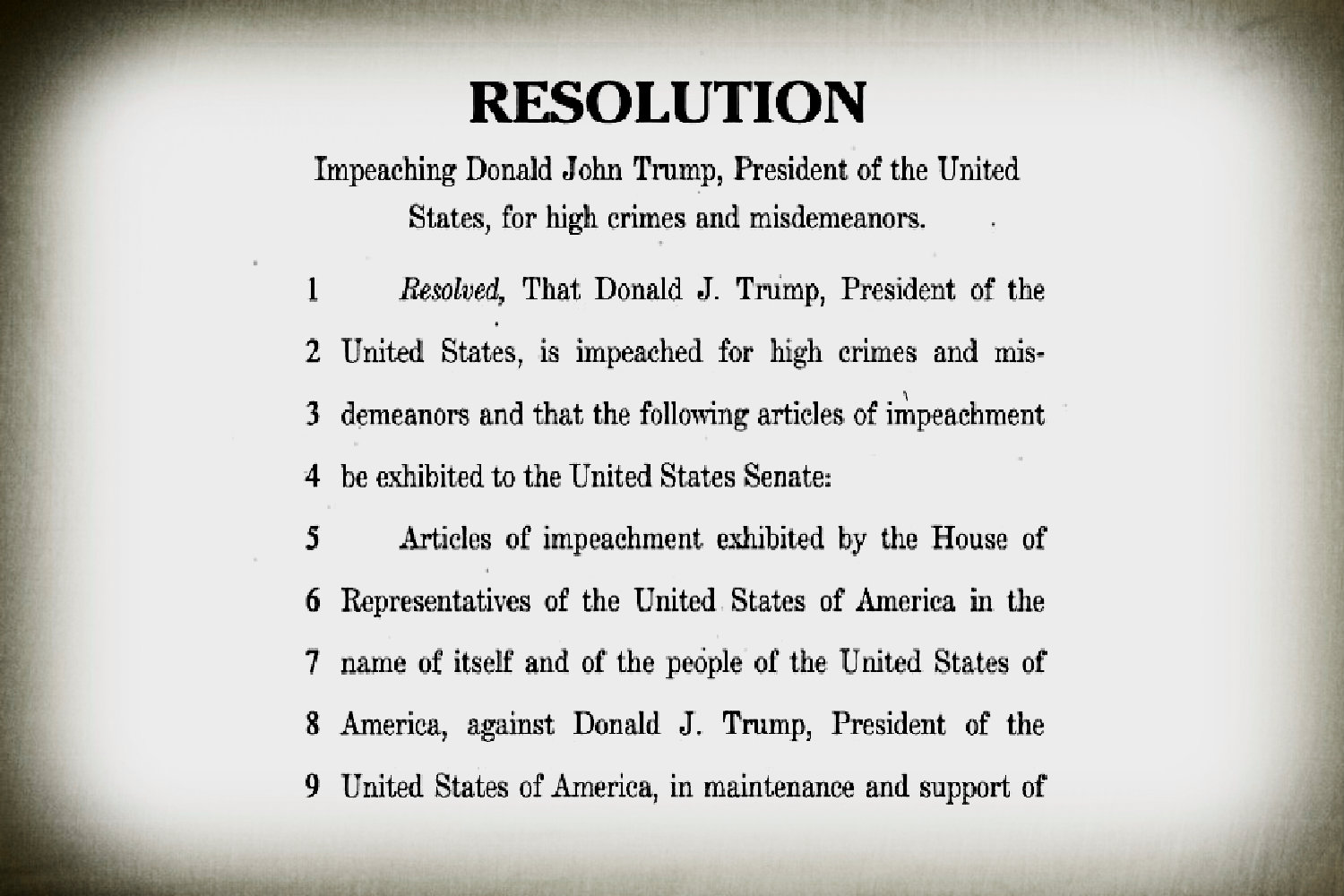
Trump was impeached Tuesday evening under two Articles of Impeachment — one for abuse of power, and another for obstruction of Congress.
Got it. This is pretty straightforward.
The House has “the sole Power of Impeachment” according to Article I, Section 2, subsection 5 of the Constitution.
Understood, no problem. That’s what the House exercised under Nancy Pelosi’s leadership.
We’re now to Article I, Section 3, subsection 6 after last night:
The Senate shall have the sole Power to try all Impeachments. When sitting for that Purpose, they shall be on Oath or Affirmation. When the President of the United States is tried, the Chief Justice shall preside: And no Person shall be convicted without the Concurrence of two thirds of the Members present.
Nothing between Article I, Section 2, subsection 5 and Article I, Section 3, subsection 6 says that the House MUST or SHALL forward any impeachment to the Senate for a trial.
I think we’re all of us watching to see how this shakes out. Since Senate Majority Leader Mitch “Sits on 400 Bills” McConnell said last week he is coordinating the handling of the senate trial with the White House — a gross conflict of interest undermining Congress’s separate powers — and senators like Majority Whip Lindsey Graham have already decided to vote to acquit Trump, it doesn’t make much sense to forward the impeachment if already moot.
It makes sense to hang on to the impeachment articles until there is clarification about the Senate acting in good faith, “on Oath or Affirmation” as Article I, Section 3, subsection 6 says.
~ ~ ~
Now we arrive at my first question: is Trump still qualified to run for re-election?
See Article I, Section 3, subsection 7:
Judgment in Cases of impeachment shall not extend further than to removal from Office, and disqualification to hold and enjoy any Office of honor, Trust or Profit under the United States: but the Party convicted shall nevertheless be liable and subject to Indictment, Trial, Judgment and Punishment, according to Law.
Emphasis mine. Does “judgment” refer solely to conviction by the Senate after a trial once the impeachment has been forwarded to them? Or is the “judgment” when the impeachment has been pronounced by the House since the House has the sole power of impeachment? The Constitution says “Indictment, Trial, Judgment and Punishment” in subsection 7 but the wording, “Judgment in Cases of impeachment” may not mean “Judgment in Cases of conviction” — the latter would clearly limit the outcome of the House’s impeachment to a pre-indictment or indictment determination before the Senate’s trial.
This subsection occurs under Section 3 which defines the Senate’s composition and its most fundamental powers — specifically, trying the subject after impeachment — so we might assume this is the Senate’s “judgment.” But the Constitution’s wording is muddy.
We don’t have the benefit of precedent to rely upon for guidance. Andrew Johnson, impeached by the House in 1868 but not removed by the Senate, did not win his party’s nomination that year and left office in 1869 having never been elected to the presidency. In 1998 Bill Clinton was impeached by the House during his second term, though not removed by the Senate; he was ineligible to run for re-election.
~ ~ ~
My second question relates to a point Robert Reich made about a pardon for the impeached president:
… Regardless of whether a sitting president can be indicted and convicted on such criminal charges, Trump will become liable to them at some point. But could he be pardoned, as Gerald Ford pardoned Richard Nixon 45 years ago?
Article II, section 2 of the Constitution gives a president the power to pardon anyone who has been convicted of offenses against the United States, with one exception: “In Cases of Impeachment.”
If Trump is impeached by the House, he can never be pardoned for these crimes. He cannot pardon himself (it’s dubious that a president has this self-pardoning power in any event), and he cannot be pardoned by a future president.
Even if a subsequent president wanted to pardon Trump in the interest of, say, domestic tranquility, she could not. …
Apart from the specific reference to the House’s sole power to impeach, is this why the two Articles of Impeachment do not use the words “bribery” or “extortion” to describe what Trump did with regard to Ukraine — to limit the described crimes against the U.S. for which Trump could be pardoned by an interim successor or the next elected president?
Or if the crime(s) have not been spelled out in an impeachment, identified as a violation of specific U.S. law, can Trump still be pardoned for them, in essence given carte blanche after the fact?
Is this why the Articles were scoped so narrowly, to prevent an over-broad pardon?
So often it’s said the president’s pardon power is absolute, but impeachment appears to place the single limit. Where and when is that limit placed?
~ ~ ~
These questions have been chewing at me since Pelosi’s second gavel upon completion of the vote on the second article. I imagine the Republican Party will do as it’s done since 2015: roll over and let Trump run an obnoxious and corrupt re-election campaign, looking every bit as repulsive as he did Tuesday evening during his Battle Creek rally.
It’s also been niggling at me that twice in the text of the Articles of Impeachment it was written, “the President ‘shall be removed from Office on Impeachment for, and Conviction of, Treason, Bribery, or other high Crimes and Misdemeanors’.”
Shall, not may, be removed, on conviction for Bribery.
I noted also the use of the word “betrayed” in the Articles’ text:
… He has also betrayed the Nation by abusing his high office to enlist a foreign power in corrupting democratic elections. …
It’s not treason as we’ve discussed in comments, but a traitor shouldn’t get a pass for selling out his country’s national security interests for personal gain.
You can bet McConnell and Graham would already have ensured the conviction and removal of a Democratic president who likewise betrayed the nation. If only they moved with the same alacrity on those 400 bills sitting on McConnell’s desk.
Share this entry
https://empty.runengine.com/wp-content/uploads/2019/12/Trump_ArticlesOfImpeachment_1500x1000-1.jpg10001500Raynehttps://www.empty.runengine.com/wp-content/uploads/2016/07/Logo-Web.pngRayne2019-12-20 01:14:122019-12-20 01:20:30Explain It To Me: What Does Impeachment Mean Now?
Both articles of impeachment just passed Congress, with the only non-partisan votes coming from Justin Amash (voting yes on both), Tulsi Gabard (voting present on both), Jeff Van Drew and Collin Peterson (no on both) and Jared Golden (who split his vote). In spite of a pretty damning speech about Republican lack of courage from Steny Hoyer, no Republican had the courage to support the Constitution.
President Trump will be shown to have committed more crimes, even more grievous ones than withholding duly appropriate aid to cheat in an election. It probably won’t be that long from now. And the entire Republican party will own those crimes.
The Republican party favors cheating over the national security of the United States.
Yesterday, Meet the Press did what it billed as a “focus group,” in one of five counties it predicts will decide the 2020 election (the full clip starts at 31:00). That county is Kent County, where I live. As a slew of outlets (including CJR) and individuals have noted, the sample of voters was irresponsibly unrepresentative of voters in this county. Yes, the county as a whole is very white, but the white Republicans included in the panel are far more affluent than the norm in the county (which has a median household income of $57,000).
Worse still, Meet the Press staged the “focus group” in my neighborhood brewpub, Brewery Vivant (though, predictably, none of the panelists were enjoying its superb beer), which is one of my local haunts.
What pissed me off the most is that Chuck Todd mispronounced the name of the brewery, “Vie-vant,” rather than “Vee-vant,” as if Todd has been stuck inside the Beltway for so long he doesn’t know what real life is like anymore.
And so I took matters into my own hands. With state political reporter Nick Manes and video from Carl Morrison, I decided to interview six totally random people at Brewery Vivant. To be sure, this panel is only somewhat more representative than NBC’s. The neighborhood is a liberal hotspot, even in the city as a whole, so all but one of the people we spoke with voted for Hillary in 2016. And while the people we interviewed weren’t as rich as the partner of the city’s largest law firm interviewed by Meet the Press, the neighborhood is still more affluent than the city or county. The neighborhood is predominantly white (though gets more diverse quickly just two blocks south). So these interviews aren’t meant to capture what swing voters think about impeachment or what a real cross-sample think, just what real people who could normally be found at Brewery Vivant think about it.
I’m going to post the six interviews without commentary, as I think all six offer thoughtful comment.
Chris
Nate
Jessica
Margaret
Kelly
Mark
Share this entry
https://empty.runengine.com/wp-content/uploads/2019/12/Brewery-Vivant.jpg13252000emptywheelhttps://www.empty.runengine.com/wp-content/uploads/2016/07/Logo-Web.pngemptywheel2019-12-16 13:15:522019-12-16 13:41:21What Real Voters Think about Impeachment at Grand Rapids’ Brewery Vivant
I’m sitting about six blocks from one of Gerald Ford’s childhood homes. That means I live in a city with an outsized role in America’s history with impeachment. Since the time I’ve lived in this city, our Federal Building added a sign reading (over-optimistically), “Our Constitution works; our great Republic is a government of laws and not of men.”
It also means I’m a constituent of Justin Amash, who has an office in that Federal Building named after Gerald Ford.
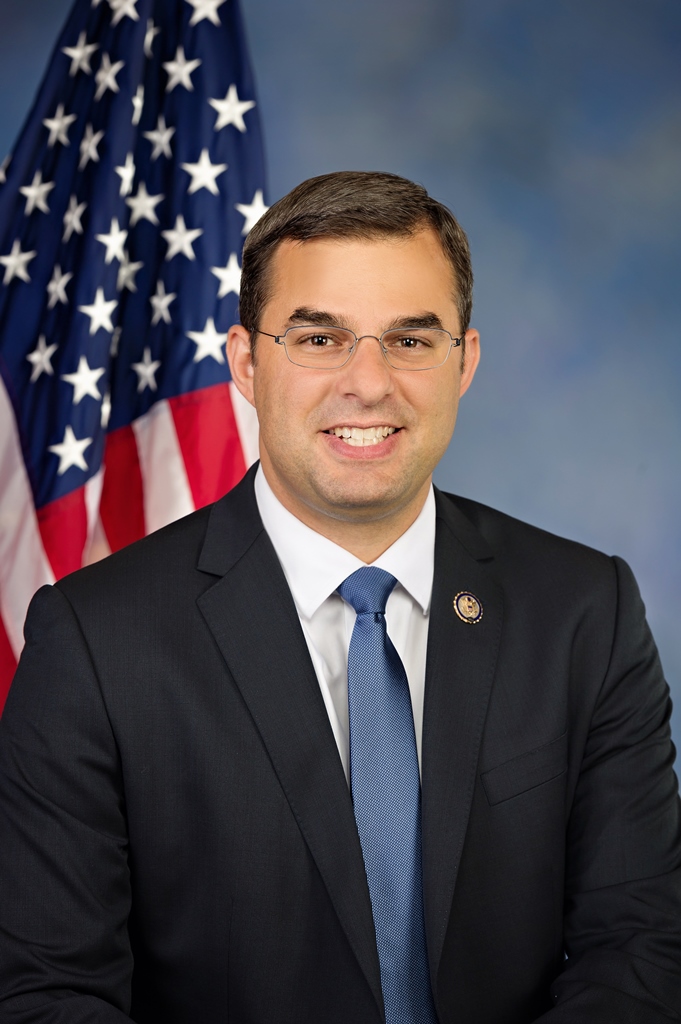
And I’m solidly in support of the idea — floated by thirty freshman Democrats — for Amash to be among the Impeachment Managers presenting the case in the Senate.
I think Amash brings several things this impeachment effort could badly use.
First, Democrats missed an opportunity in the House Judiciary hearing on Constitutional issues behind impeachment to call someone like Paul Rosenzweig, a Republican who worked on the Whitewater investigation, who backs impeachment in this case. While a bunch of Democratic lawyers were testifying, Amash was and has continued tweeting to his colleagues about how important impeachment is to the Constitution. It is critical to have a voice making the conservative case for upholding the Constitution. Just this morning, a long time local Democratic activist I was speaking to was hailing how Amash has used his University of Michigan law degree to make the case for impeachment.
Meanwhile, even as the national press has spent countless hours interviewing demographically unrepresentative panels of voters from my county to understand how swing state voters feel about impeachment, Amash has risked his career in that swing state district. Well before queasy Democrats in swing districts came around to the necessity of impeaching President Trump, Amash left his party and took a stand to defend the Constitution. I think his courage may serve as inspiration for Republicans in the Senate who secretly recognize the necessity of impeaching Trump, even while they may worry they’ll ruin their political career. Amash also has close ties with (especially) Rand Paul and other libertarian leaning Senators (like Mike Lee and Ted Cruz), so might be persuasive with them, even if all of them have already basically opposed impeachment.
Finally, a point that some of the more hawkish people involved in impeachment (like Adam Schiff) may not understand, Amash works really well in bipartisan coalitions. He has long been a key member of the privacy coalition and currently serves as the “Republican” co-chair, with Zoe Lofgren as the Democratic co-chair, of the Fourth Amendment coalition. The cornerstone of that coalition, over more than a decade, has been honesty about where progressives and libertarians (and even traditional conservatives) share goals and where we disagree, sometimes dramatically. But with that cornerstone of shared understanding, and with a sense of responsibility for what each side can and should do to support the Constitution, he has been an invaluable member of a team. Some of the people who might also be considered as Impeachment Managers — like Jamie Raskin — would have experience with Amash in such a context. At the very least, Lofgren should be able to give Pelosi reassurances that Amash is utterly reliable when working as part of a bipartisan coalition. This is a topic, the President’s abuse of his authority, on which Amash took a Constitutional stand, which is precisely the kind of common foundation his past work with Democrats was built on.
I don’t get a vote. Speaker Pelosi gets to decide. But as an Amash constituent who has long found common ground with Amash on issues rooted in the Constitution, I think his involvement would be a tremendous value.
Share this entry
https://empty.runengine.com/wp-content/uploads/2019/12/AmashJustin114HeadShot.jpg1024681emptywheelhttps://www.empty.runengine.com/wp-content/uploads/2016/07/Logo-Web.pngemptywheel2019-12-15 15:29:572019-12-15 20:34:47Why Justin Amash Should Be an Impeachment Manager
Ed. note: Longtime friend of the blog Cynthia Kouril moderated a CLE on impeachment. She wrote up this statement after the panel. She has given us permission to post her statement from that here.
For all of you out there wondering what “High Crimes & Misdemeanors” means and whether or not there has to be an ‘underlying crime’ let me help you out here.
Last week I moderated a CLE on Impeachment and you are welcome to the fruits of my labors on that topic.
A basic rule of legal interpretation is that you cannot define a legal term using information not yet in existence at the time the term was used. At the time the Constitution was debated and adopted, there was no federal criminal code, much less the US Code we have today. So, you cannot use anything in the current Code to define “High Crime & Misdemeanor”.
You have to use that term, and it is a legal ‘term of art’ as the phrase was understood when it was inserted into the Constitution. It is interesting to note that this phrase is ONLY used in connection with impeachment. Crimes in the criminal code are low crimes.
The term is first recorded in the impeachment of of the King’s Chancellor, Michael de la Pole, in 1386. One of the “High Crimes & Misdemeanors” de la Pole was charged with, was the failure to expend moneys appropriated by Parliament as the appropriation directed him to do, just like Trump withholding funds appropriated by Congress which was required to be given to Ukraine by a date in September. Contrary to the GOP’s claims, not all the Ukraine aide was committed in time and Congress had to do a second appropriation to restore the unspent money.
Not every impeachment in the next 400 years used this phrase, but in each instance where it was used, it was 1) only in the context of impeachment, and 2) referred to offenses that implicated either misuse of their office (including using their office for self enrichment) or failure to obey Parliament (basically a failure to observe separation of powers).
At the time the Constitution was being written and edited there was a famous impeachment trial going on involving the Viceroy of India. A Viceroy (“vice king”, ‘roi’ being french for king) is the representative of the crown in a way far more important than a governor. A British governor was subject to instruction from London, the Viceroy was imbued with the monarch’s own Majesty and ruled an entire country (such as Ireland or India) rather than an individual colony.
So, the impeachment of Warren Hastings ran from 1786 to 1795, while the Constitution was being debated and was the “trial of the century” of its day. Everybody talked about it. He was charged with “gross maladministration, corruption in office, and cruelty towards the people of India”.
At the time of Nixon’s impeachment Peter Rodino commissioned a staff report on the history of impeachment including the meaning of this phrase. The report which runs some 60 pages with footnotes and endnotes, is fascinating to read. It’s conclusion with respect to this term of art: “[t]wo points emerge from the 400 years of English parliamentary experience with the phrase “high Crimes and Misdemeanors”. First, the particular allegations of misconduct alleged damages to the state in such forms as misapplication of funds, abuse of official power, neglect of duty, encroachment on Parliament’s prerogatives, corruption, and betrayal of trust. Second the phrase “high Crimes and Misdemeanors” was confined to parliamentary impeachments; it had no roots in ordinary criminal law, and the particular allegations of misconduct under that heading were not necessarily limited to common law or statutory derelictions or crimes.”
I hope you find the above helpful.
Update: I updated the intro to make it clear that Kouril moderated, did not put together, the CLE, and this contribution was written afterwards.
Share this entry
https://empty.runengine.com/wp-content/uploads/2019/12/Screen-Shot-2019-12-13-at-10.38.49-AM.png11182020emptywheelhttps://www.empty.runengine.com/wp-content/uploads/2016/07/Logo-Web.pngemptywheel2019-12-14 13:09:002019-12-14 15:43:13The History of High Crimes and Misdemeanors
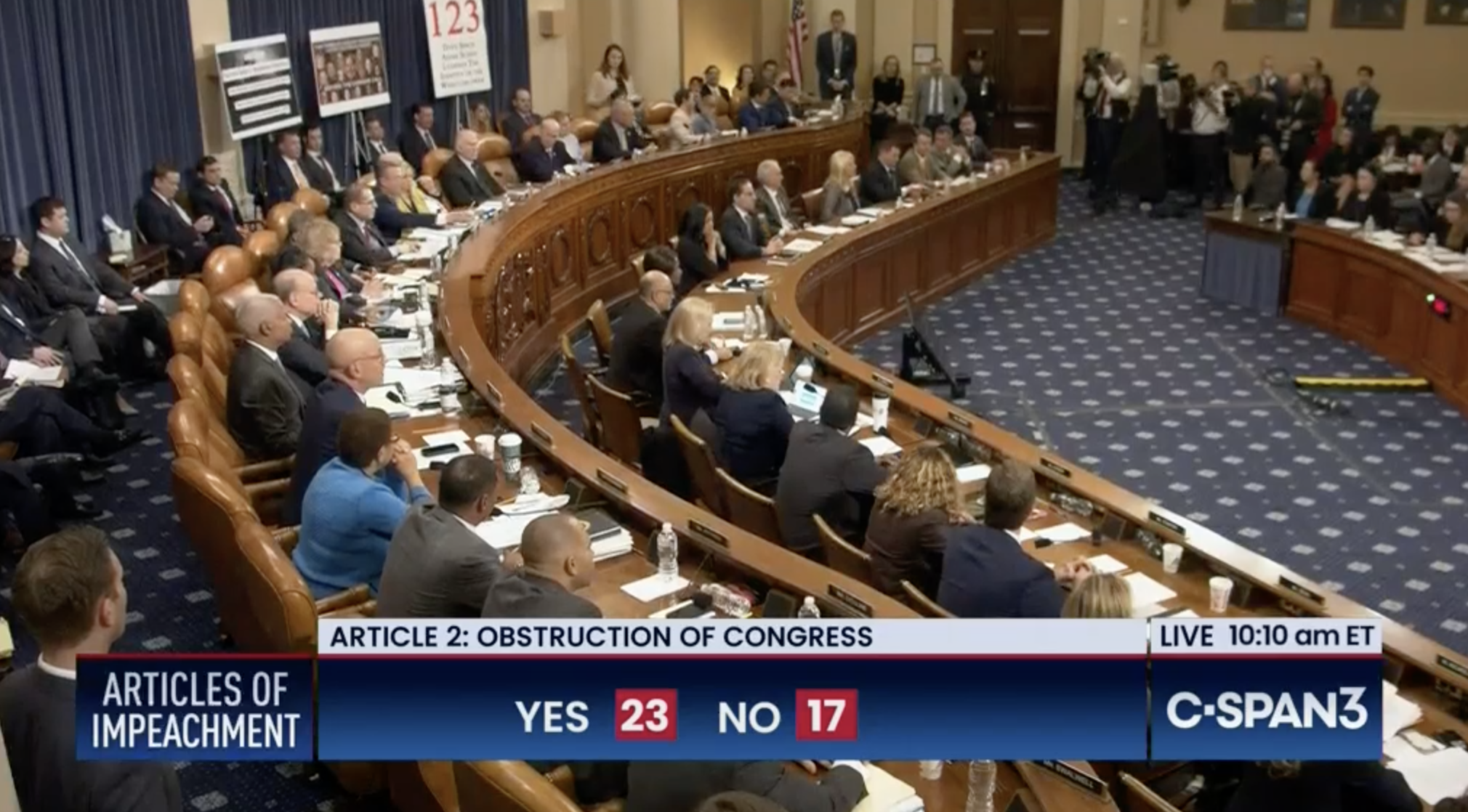
The House Judiciary Committee just voted to send two articles of impeachment against Donald Trump to the full House.
The entire vote took just minutes. But it said so much about the state of America today.
It will forever be portrayed as a party line vote, with 23 Democrats in favor, and 17 Republicans against. But it was also a tribute to the degree to which polarization in America today pivots on issues of diversity.
The Democrats who voted in favor included 11 women, and 13 Latinx and people of color (Ted Lieu missed the vote recovering from a heart procedure). Three (plus Lieu) are immigrants. One is gay. These Democrats voted to uphold the Constitution a bunch of white men, several of them owners of African-American slaves, wrote hundreds of years ago.
The Republicans who voted against were all white. Just two were women. These Republicans voted to permit a racist white male President to cheat to get reelected in violation of the rule of law.
This is about a clash between the rising America and the past. And it’s unclear who will win this battle for America. But the stakes are clear.
Share this entry
https://empty.runengine.com/wp-content/uploads/2019/12/Screen-Shot-2019-12-13-at-10.38.49-AM.png11182020emptywheelhttps://www.empty.runengine.com/wp-content/uploads/2016/07/Logo-Web.pngemptywheel2019-12-13 10:40:102019-12-13 20:16:31A Diverse America Votes to Uphold the Constitution; A Largely Male White America Votes to Abrogate It
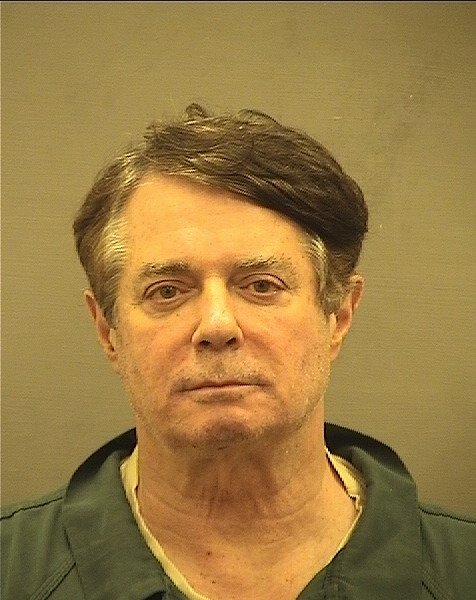
On August 2, 2016, Donald Trump’s campaign manager took a break from his campaign work for a secret meeting with his former employee, Konstantin Kilimnik. Kilimnik first pitched the meeting on 10:51AM on July 29 after meeting in person in Moscow with Viktor Yanukovych, explaining that, “It has to do about the future of [Yanukovych’s] country, and is quite interesting.” Paul Manafort accepted the meeting that same day, saying Tuesday was the best day for it. After Kilimnik returned to Ukraine on July 31, he told Manafort he needed two hours for the meeting and would arrive at JFK at 7:30 PM on August 2 for the meeting.
At the meeting, Manafort and Kilimnik discussed three things. First, they discussed a plan to make “peace” in Ukraine by creating an autonomous region in Donbas and getting Yanukovych “elected” to head it. Manafort later told Mueller’s team that he cut the meeting short before Kilimnik asked him to get Trump to come out for the peace plan, though Mueller’s team argued and Amy Berman Jackson agreed that Manafort was lying about what happened at the meeting.
After Rick Gates showed up (he came late), Manafort laid out for Kilimnik how the campaign planned to win Michigan, Wisconsin, Pennsylvania, and Minnesota.
Finally, Kilimnik told Manafort how he could get back on the gravy train of Oleg Deripaska and the Party of Regions. Specifically, Kilimnik explained what Manafort would have to do to get Ukrainian oligarchs Rinat Akhmetov and Serhiy Lyovochkin to pay him money that Manafort claimed they owed him from past work. Eight days later, on August 10, Manafort — who was badly underwater and working for Trump for “free” — would tell his accountant to book $2.4M in income from those oligarchs, to be paid in November.
This recognition of payment from Yanukovych’s allies just a week after meeting to talk about a way to help Yanukovych do Russia’s bidding is the only known instance of Ukraine interfering with people working directly for one of the candidates running for President. It is the only known instance of Ukrainian interference in 2016.
In early January, Manafort would meet with a senior Deripaska associate in a meeting set up by another Deripaska associate sanctioned along with a bunch of GRU officers to “recreat[e] old friendship” between Deripaska and Manafort.
Shortly thereafter (possibly the day he returned, on January 12), Manafort reportedly told Reince Priebus to undercut claims that Trump had close ties to Russia by debunking the Steele dossier, a strategy that — because the dossier turned out to be largely shit and possible disinformation — turned out to be wildly successful. As the DOJ IG Report describes in new detail, Christopher Steele had been working for Deripaska in an effort to help the oligarch settle his score with Manafort during the period he was working on the dossier.
From that point forward, Manafort would continue to pursue a “peace” plan in Ukraine that would give Russia what it wanted up until shortly before he was jailed in June 2018.
These are the events that about which Paul Manafort lied to prevent Mueller from fully understanding. To give Manafort an incentive to lie, John Dowd started telling him he would be “taken care of” in early 2018. Then, around the time he faced jail, Trump started making those pardon offers more explicit.
On June 15, 2018, the day the judge presiding over Manafort’s D.C. case was considering whether to revoke his bail, the President said that he “felt badly” for Manafort and stated, “I think a lot of it is very unfair.” And when asked about a pardon for Manafort, the President said, “I do want to see people treated fairly. That’s what it’s all about.” Later that day, after Manafort’s bail was revoked, t.he President called it a ” tough sentence” that was “Very unfair!” Two days later, the President’s personal counsel stated that individuals involved in the Special Counsel’s investigation could receive a pardon ” if in fact the [P]resident and his advisors .. . come to the conclusion that you have been treated unfairly”-using language that paralleled how the President had already described the treatment of Manafort.
These details — about what really happened in that meeting on August 2, 2016 and what Manafort did afterwards — are some of the things that Trump successfully obstructed the Mueller investigation in an effort to cover up.
And around the time Mueller publicly announced that Manafort had breached his plea deal by lying about all these things, Rudy Giuliani launched the campaign that would ultimately lead to getting the anti-corruption Ambassador in Ukraine, Marie Yovanovitch, fired, then would subsequently lead Trump to demand (in the same call while attacking Mueller) that the newly elected anti-corruption President of Ukraine, Volodymyr Zelensky, gin up investigations into his opponents Hillary Clinton and Joe Biden. Rudy conducted that campaign, significantly, while consulting Manafort in prison, and the effort is, at least in part, an effort to give Trump an excuse to pardon Manafort so Manafort will continue to remain silent about what really happened.
The Republican Party spent the entire day yesterday claiming that Donald Trump demanded those investigations out of concern for corruption in Ukraine. The Republican Party claimed, with a straight face, that the man who obstructed an investigation into what his own campaign manager did to get the pro-corruption pro-Russian party in Ukraine to pay him $2.4 million while he worked for Trump for “free,” opposed corruption in Ukraine.
This is the story the Democrats need to lay out over the next several weeks. The Republicans don’t much care that their arguments are transparently ridiculous. They care about defending a process that, at least in part, is an effort to make sure Paul Manafort never tells the truth about what happened in 2016.
Share this entry
https://empty.runengine.com/wp-content/uploads/2018/07/Paulie.jpg600476emptywheelhttps://www.empty.runengine.com/wp-content/uploads/2016/07/Logo-Web.pngemptywheel2019-12-13 08:57:072019-12-13 15:33:13Trump “Cares” about Corruption in Ukraine because It Ensures Paul Manafort Will Keep His Secrets
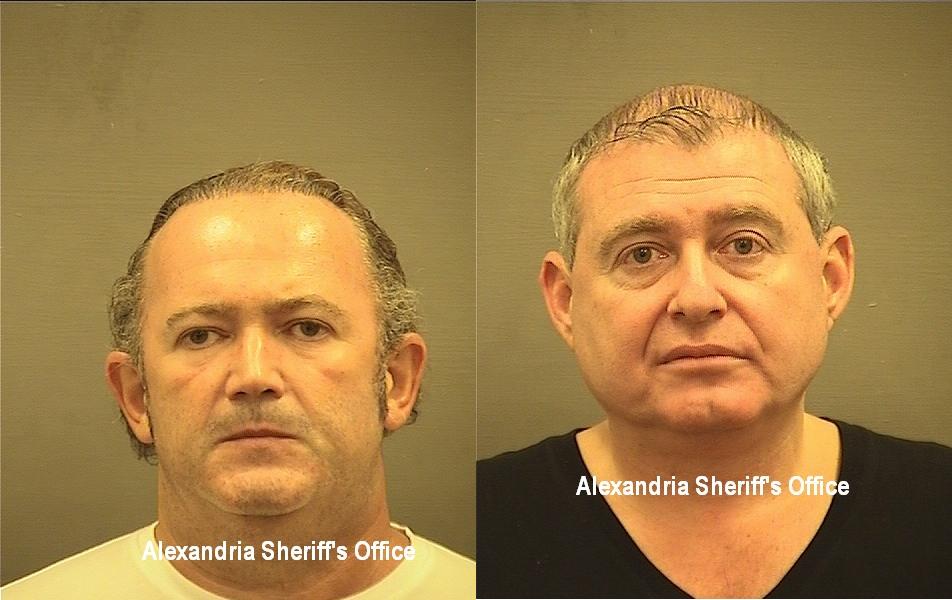
During the first status hearing for Lev Parnas and his co-conspirators, the government stated clearly that no Title III wiretaps had been used in the case. I recognized at the time that didn’t necessarily mean they weren’t wiretapped. As people engaged in transnational political influence peddling, they were prime candidates to have been collected under FISA, either targeted at them or (under 702) their co-conspirators overseas.
I’m not the only one who noticed that. The lawyers for Andrey Kukushkin — who was indicted on the Nevada marijuana part of the grift, one that explicitly described funding from an unidentified Russian — have asked Judge Paul Oetken to make the government tell them whether their client or any of his co-conspirators (including unindicted co-conspirators) were the subject of any of various forms of surveillance, including 12333 and FISA. The government responded with the kind of non-denial that suggests it is quite likely one or some of these grifters (or their Russian unindicted co-conspirator) were collected under those authorities.
As we have previously told you, the Government did not obtain or use Title III intercepts in the course of this investigation. Additionally, the Government does not intend to use any information that was obtained or derived from the Foreign Intelligence Surveillance Act or the other forms of surveillance identified in your letter.
Remember: The government doesn’t have to tell defendants who were targeted under FISA that they were so long as the government doesn’t rely on any evidence obtained under FISA in their prosecution. But Kukushkin seems to have a pretty clear suspicion that the government knows what he has said in his communications.
The government has said (including in a motion asking the court to revoke Parnas’ bail last night) that there are likely going to be follow-on charges. And Foreign Agent charges are the kind of thing you might expect given the way the grifters were funneling foreign money into politics. Which would mean they’re precisely the kind of people that FISA was envisioned for.
That said, Lev Parnas and Igor Fruman were in close contact with the President’s lawyer, and Parnas also spoke at key times to Devin Nunes (who consistently only cares about surveillance implicating him), John Solomon, and other people squealing when Adam Schiff revealed just their metadata.
So if FISA were used, a bunch of people who’ve just learned to hate FISA may have been incidentally collected in conversations with indicted fraudsters.
The thing is, Bill Barr has repeatedly said that he was briefed on this case and fully approved of it. Which means Barr may soon be in the position of defending a controversial FISA, one possibly approved under him or another Trump Attorney General.
Share this entry
https://empty.runengine.com/wp-content/uploads/2019/10/Fruman-Parnas.jpeg600952emptywheelhttps://www.empty.runengine.com/wp-content/uploads/2016/07/Logo-Web.pngemptywheel2019-12-12 13:56:152019-12-12 14:05:05Days after America Learns to Hate FISA, Lev Parnas’ Co-Conspirator Focuses the Issue
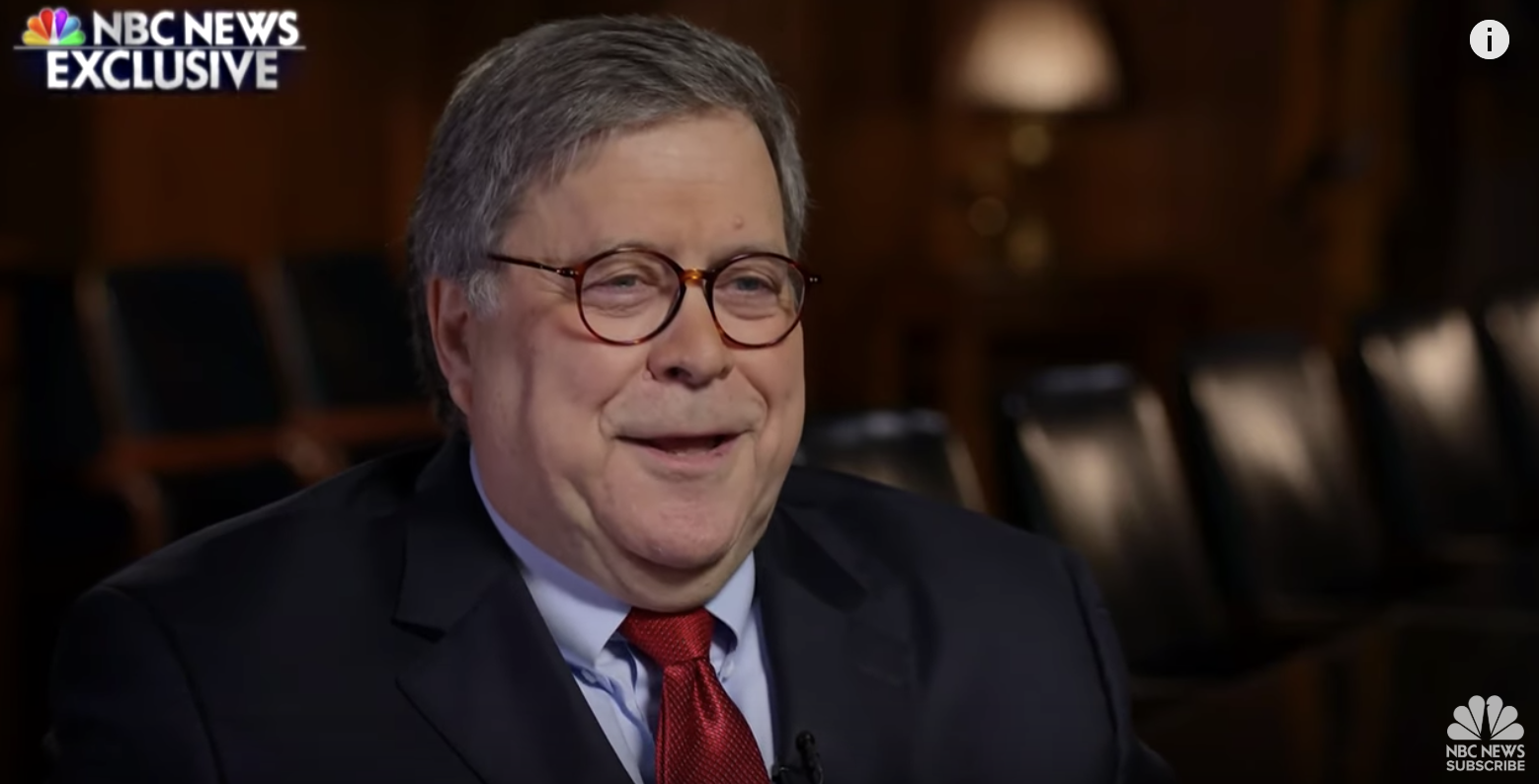
Bill Barr made big news yesterday saying intemperate things in what has charitably been called an “interview” with NBC’s Pete Williams. Those comments have distracted from other details of the so-called interview, which deserve further attention for the way that Williams was utterly useless in guiding the interview towards any of the questions that needed to be answered. Given Barr’s assault on the rule of law, garbage interviews like this undermine the Constitution.
Williams helps Barr continue to cover up his role in the Ukraine investigation
First, consider the exchange that Williams and Barr have to exonerate the Attorney General in involvement in Rudy Giuliani’s Ukraine conspiracy.
Williams: Were you ever asked by the White House to talk to anybody in Ukraine about an investigation of Joe Biden? (18:40)
Barr: No.
Williams: Are you concerned that Ukraine has a missing server from the Hillary Clinton emails?
Barr [searching look]: Fortunately I haven’t gotten into the Ukraine thing. I don’t know. I’m not even sure about the nature of these allegations.
Williams: What about the allegation that it was the Ukrainians who meddled in the election, not the Russians. Are you satisfied that’s not the case?
Barr: I am confident the Russians attempted to interfere in the election. I don’t know about the Ukrainians. I haven’t even looked into it, frankly.
Williams: What was your involvement in the Department’s decision not to investigate the President’s phone call to Ukraine?
Barr: We put out a statement that explained the process, which was the Criminal Division made that decision and in the process consulted with the senior most career employees who are the experts on campaign finance laws and that process was supervised by the Deputy but I’m not going to go beyond what we’ve already said about that process.
Williams: Well, were you satisfied that everything that was done–
Barr: Absolutely.
I wouldn’t be surprised if Williams were using a script DOJ gave him, because Williams asks none of the questions that remain unanswered about DOJ’s role in the Ukraine investigation, such as why they didn’t do the bare minimum of connecting the dots implemented after 9/11, why the didn’t refer the complaint to the FEC, why they didn’t abide by the whistleblower protection act, why (on demand, apparently) they issued a statement exonerating the President, or who the three Ukrainians that DOJ admitted have been fed into John Durham’s investigation are.
Instead, Williams lets Barr ignore his question about his role in reviewing the whistleblower complaint and claim — as the person who knew of the Lev Parnas investigation that also knew of the whistleblower complaint — he has no role in the Ukraine thing. This exchange raises more questions about Barr’s involvement, but Williams instead allows him to claim a clean bill of health.
Williams allows Barr to pretend bypassing MLAT is normal
Perhaps the most alarming part of this so-called interview is how Williams let Barr claim that entirely bypassing the Mutual Legal Assistance Treaty (MLAT) process in requesting law enforcement assistance from other countries is normal.
[Why he went to three countries] The presentation of that in the media [laughs] has been silly. The person running the investigation is John Durham. But this is a very unusual circumstance where we are going to foreign governments where we are asking them to assist and cooperate including some of their sensitive materials and personnel. A US Attorney doesn’t show up on the doorstep of some of these countries like London and say, Hey, I want to talk to your intelligence people and so forth. All the regularities were followed. I went through the — my purpose was to introduce Durham to the appropriate people and set up a channel where he could work with these countries. At the request of these countries — I went through the Ambassadors of each country, and the governments wanted to initially talk to me to find out, what is this about, what are the ground rules, is this going to be a criminal case, are you going to do a public report. They wanted to understand the ground rules before I met with Durham and I met with them and I set up appropriate channels. This was perfectly appropriate. (14:37)
This issue goes to the core of the problem with Trump’s Ukraine conspiracy. Barr’s nervous answer suggests he knows bypassing normal process might implicate him in a criminal conspiracy.
And Williams, supposedly a DOJ beat journalist who should know better, just lets this bullshit answer sit there, unchallenged.
Williams allows Barr to lie about techniques used by the FBI
Barr’s attack on the FBI is based on a lie about how it operates. The FBI has what’s called the Domestic Investigations and Operations Guide. The entire point of it is to make sure paperwork is filed before any investigative steps are taken. Barr turns that on its head when he complains that the FBI opened an investigation before taking an investigative step.
They jump right into a full-scale investigation before they even went and talked to the foreign officials about exactly what was said the opened an investigation of the campaign
The DIOG lists what an agent can do at each of three levels of investigation — assessment, preliminary investigation, and full investigation. It permits the government to use Confidential Human Sources — the basis for most of Barr’s complaint about “spying” on the campaign — at the Assessment level (which is basically a tip). Thus, in spite of what Barr says, the fact that FBI opened this as a full investigation (which DOJ IG found to be proper) had nothing to do with the FBI’s ability to use informants.
Suggests the investigation shouldn’t have been sustained once it got opened (0:20)
There has to be some basis before we use these very potent powers in our core First Amendment activity, and here, I thought this was very flimsy (2:18)
The Department as a rule of reason, … Is what you’re relying on sufficiently powerful to justify the techniques you’re using
What are the alternatives … When you step back and ask what was this all based on, it’s not sufficient (2:48)
they used very intrusive techniques they didn’t do what would normally be done under those circumstances, which is to go to the campaign and certainly there were people in the campaign who could be trusted including a member of the Senate Judiciary Committee and the governor of New Jersey (5:13)
Anyone covering DOJ has an obligation to point out that this is a lie, especially because Barr has never in his history leading the DOJ complained about such techniques being used with others, especially minorities, when exercising their First Amendment rights. Indeed, Barr’s DOJ currently investigates not only Muslims in mosques (which has been going on under both parties), but people protesting Trump’s immigration policies or legally representing immigrants. Barr’s DOJ used a wiretap in a garden variety leak investigation when it already knew the leaker this year. Williams has an obligation with calling Barr out for his very selective concern about the First Amendment.
But that’s not the only complaint about process. Barr keeps demanding not just that the FBI give Trump a defensive briefing (one of the subjects of the investigation, Mike Flynn, attended his first campaign briefing, and that was within days of the time Flynn inked his deal to become an undisclosed agent of Turkey), but that they just waltz to the campaign and start asking questions.
From day one they say they’re not going to talk to the campaign, they’re going to put people in there, wire them up, and have these conversations with people involved in the campaign because that way we’ll get the truth (8:44)
Barr would never let FBI approach any other investigation like this, starting by allowing the subject of the investigation to excuse their actions.
Note, one of the people Barr thought FBI should have asked — Jeff Sessions — ultimately came to be a subject of this investigation.
Barr takes this so far that he complains that John Brennan and Barack Obama tried to limit an ongoing Russian attack that was going on whether or not Trump’s flunkies were involved.
What I find particularly inexplicable is that they talked to the Russians but not to the Presidential campaign. On August 4 Brennan braced the head of Russian intelligence, he calls the head of Russian intelligence, … they go and confront the Russians, who clear are the bad guys, and they won’t go and talk to the campaign and say what is this about (5:51)
He’s basically complaining, here, that Obama tried to keep the country safe from hostile interference in the election.
And Williams just sat there looking at his list of questions like a child.
Williams lets Barr minimize what happened in the Russian investigation
Predictably, Barr minimizes what the Russian investigation showed. He claims that what has subsequently been explained to be a suspected Russian asset with ties to both sides of the Russian operation, Joseph Mifsud, telling George Papadopoulos they were going to drop emails that later got dropped was not worthy of investigation.
In May 2016, a 28 year campaign volunteer says in a social setting … a suggestion of a suggestion that Russians had adverse information from Hillary that they might dump in the campaign (3:24)
Barr then claims there was no evidence of “collusion,” something Williams agrees with.
There never has been any evidence of collusion … completely baseless (2:57) [Well, it doesn’t turn out that way at the beginning, at the start ]
According to Mark Meadows’ definition of “collusion,” it was proven by the guilty verdict in the Roger Stone trial. Moreover, the Mueller Report makes it clear there was evidence not just of “collusion,” but also conspiracy, just not enough to charge. In this case, Williams affirmatively adds to the disinformation on this point.
Barr conflates the investigation into Carter Page and everyone else
Barr did something that the Republicans have been doing all day: conflating the investigation into Carter Page with the investigation into Trump’s other flunkies, in spite of the fact that the investigation of each individual was also individually predicated and that the investigation into Page was based off stuff going back years before he joined the Trump campaign and most of the investigative activities took place after he was fired from the campaign. In one comment, Barr literally conflates Carter Fucking Page with the President himself, and ignores that the President was only investigated after he tried to obstruct the investigation into Mike Flynn.
At that point [when FBI talked to Steele’s source], when their entire case collapsed, what did they do? They kept on investigating the President well into his administration. (10:26)
He repeats that claim a second time.
Their case collapsed after the election (13:57)
Barr not only does that, but ignores the incriminatory evidence against Page, so as to be able to claim that the investigation should never have started.
From the very first day of this investigation, which was July 31 … all the way to September 2017, there was not one bit of incriminatory evidence to come in, it was all exculpatory. The people they were taping denied any involvement with Russia, denied the very specific facts that the FBI was relying on, … the FBI ignores it, presses ahead, withholds that information from the court, withholds critical exculpatory information from the court (9:07)
Barr made an interesting claim — that the sole reason the FBI got a FISA (including a physical search FISA, which allows them to obtain stored communications like email) was to access his comms from the campaign.
I think going through people’s emails, which they did as a result of the FISA warrant, they went through everything from Page’s life. … his emails go back. The main reason they were going for the FISA warrant initially was to go back historically and seize all his emails and texts … that’s exactly why they got the FISA (12:30)
That may be true (obviously, the FBI would have wanted to know why Page went to Moscow during the campaign), but DOJ imposed minimization procedures to limit dissemination of those materials.
The final PMPs restricted access to the information collected through FISA authority to the individuals assigned to the Crossfire Hurricane team and required the approval of a DAD or higher before any FISA-derived information could be disseminated outside the FBI. In normal circumstances, the FBI is given more latitude to disseminate FISA-derived information that appears to be foreign intelligence information or evidence of a crime. Evans told us that he believed these added restrictions were warranted here because of the possibility that the FISA collection would include sensitive political campaign related information.
Barr’s conflation of Page with the campaign as a whole and Trump himself was all a ploy, and a journalist could have noted the game Barr was playing in real time. Williams did not.
Williams lets additional Barr bullshit go unquestioned
In addition to those general problems, Barr made a number of other bullshit assertions. For example, Barr claimed the investigation into Trump was the first counterintelligence investigation into a candidate even though that’s what the Hillary email investigation was.
Greatest danger to our free system is that the incumbent use apparatus of state to spy and effect outcome, first time in history this has been done (1:14)
Later, Williams lets a renowned authoritarian to claim not just that he cares about civil liberties, but that his primary job is protecting them.
[In response to Williams’ suggestion that this authoritarian cares about civil liberties] I think our nation was turned on its head for three years based on a completely bogus narrative that was largely fanned and hyped by an irresponsible press … the Attorney General’s primary responsibility is to protect against the abuse of the law enforcement and intelligence apparatus and make sure it doesn’t play an improper role in our political life. That’s my responsibility. (18:06)
Barr poo poos the regularity of illegal foreign money coming into campaigns.
In most campaigns signs of illegal foreign money coming in (2:01)
Don’t assume campaign is acting in league with foreign powers, there has to be some basis (2:13)
This makes me, for the first time, concerned about how DOJ rolled out the Andy Khawaja indictment.
Finally, Williams asks, but doesn’t follow up on his question about whether it was appropriate for Durham to make a comment.
[After Williams mentions the grand jury] I think it was definitely appropriate because it was necessary to avoid public confusion. … Durham’s work was not being preempted, Durham was doing something different, (15:33)
Interestingly, Barr effectively confirmed Williams’ insinuation this was now a grand jury investigation, which would amount to sharing grand jury information.
I have been pointing out increasingly often that many members of the press seem uninterested in defending the parts of the Constitution that don’t directly affect press protections. The duty to uphold the rule of law is particularly important for DOJ reporters, who should know enough about how investigations work to identify when something is abnormal (as Barr’s direct involvement, generally, is, to say nothing of his international field trip).
Williams was not up to the task in this interview.
Share this entry
https://empty.runengine.com/wp-content/uploads/2019/12/Screen-Shot-2019-12-11-at-9.44.23-AM.png7941558emptywheelhttps://www.empty.runengine.com/wp-content/uploads/2016/07/Logo-Web.pngemptywheel2019-12-11 12:24:152019-12-11 16:44:18American Democracy Needs Better Reporters than Pete Williams
Democrats are going to roll out at least two articles of impeachment today.
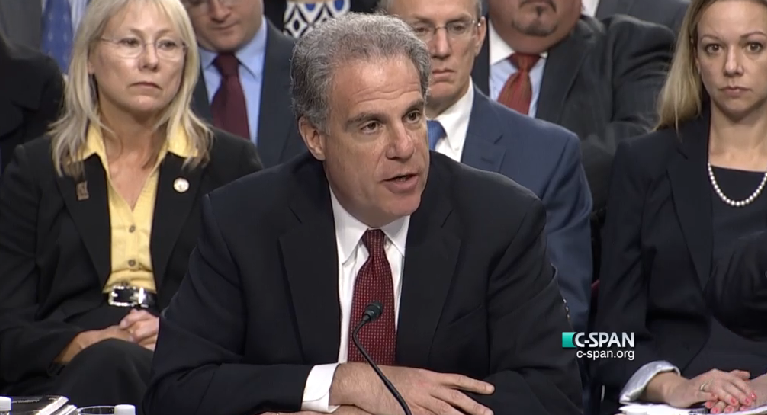
But I think, in the wake of the release of the DOJ IG FISA Report, they should take a brief pause.
Don’t get me wrong. I think impeachment is necessary and urgent. I can see why Democrats might want to impeach even as Trump meets with Sergei Lavrov — particularly given Trump’s assault on Chris Wray for making some honest comments about the IG Report yesterday.
But I’ve gotten far enough into the IG Report to believe that it merits a pause for both sides to consider what it says. That’s because it basically says both parties were right. Democrats were right to think the investigation into Trump was fair and legitimately predicated. The Mueller Report has provided abundant evidence not only that Paul Manafort and Roger Stone (at a minimum) were willing to “collude” in the Russian hack-and-leak, but that they both took affirmative efforts to prevent Mueller from finding out whether they succeeded in doing so. Trump was a key player in that effort to obstruct the investigation. So the investigation was warranted, fairly predicated, and produced results that confirmed Trump’s people wanted to conspire with the Russian operation, whether or not they succeeded.
Republicans, however, were right that the Steele dossier was not adequately vetted by the FBI, and the FISA on Carter Page may not have been adequately substantiated (and the vetting on the follow-ups was even worse). That doesn’t mean Page shouldn’t have been investigated; he was already being investigated in April 2016, and things he did through December 2016 provided more cause for concern.
But neither of those things — the dossier’s shoddy vetting or the Page FISA — were key to the more substantive investigation into Trump. Indeed, Stone wasn’t even a subject in this early process; the first big investigative steps on him took place in August 2017, under Mueller.
I’ve got some quibbles with the report (mostly about how it treats exonerating information and Bruce Ohr and information sharing).
That said, the report should be an opportunity to step back and reflect on how the key issue — that Russia aggressively interfered in the US and a number of Americans embraced that effort — has gotten lost. That focus might make a few people, including Republicans who otherwise would not support impeachment but are appalled by the way Rudy has doubled down on his Ukrainian escapades, even meeting with KGB trained thugs, rethink the investigation into Trump.
Plus, the FISA Report provides one basis for bipartisan work in the near term.
Section 215 of the PATRIOT Act was due to get reauthorized on December 15. That got extended 3 months in the continuing resolution, but it will need reauthorized at that point. Meanwhile, over the past year, evidence that FBI misused FISA under both Jim Comey (with this IG Report) and Chris Wray (with the earlier report on problems with 702).
I’ve been arguing since at least February — and more aggressively since September, when I got the first concrete descriptions of how much this report would focus on process issues at FBI — that this IG Report would present an opportunity to call more substantive review of FISA. I got pushback among allies, because Carter Page is such an unsympathetic person to Democrats. But I think the report really demonstrates that, no matter how unsympathetic he is, no matter how warranted the investigation into him, the FISA process used against him was appalling.
So the surveillance community, which previously was able to unite Jim Jordan and the most Progressive Dems, really ought to take a step back and propose a three-part fix for FISA, one that could guide the further audit of FISA Michael Horowitz announced and one that might implement immediate legislative fixes to known FISA problems. At least beginning those conversation would provide some of the people yelling most loudly at each other a chance to talk about something they claim to agree on.
Let me be clear: I’m just arguing for a pause — maybe a week. Trump has violated every word of his oath of office and he threatens to undo our Constitution. But let’s take a few days and reflect on the way that the events of 2016 have sown division without getting us to do the things to prevent further Russian aggression. It won’t happen, but it’s what I think should happen.
Share this entry
https://empty.runengine.com/wp-content/uploads/2015/08/Screen-Shot-2015-08-05-at-1.15.53-PM.png415767emptywheelhttps://www.empty.runengine.com/wp-content/uploads/2016/07/Logo-Web.pngemptywheel2019-12-10 07:53:482019-12-10 08:02:57With Release of DOJ IG FISA Report, Democrats Should Pause on Impeachment